Artwork
Arhanghelul Mihail
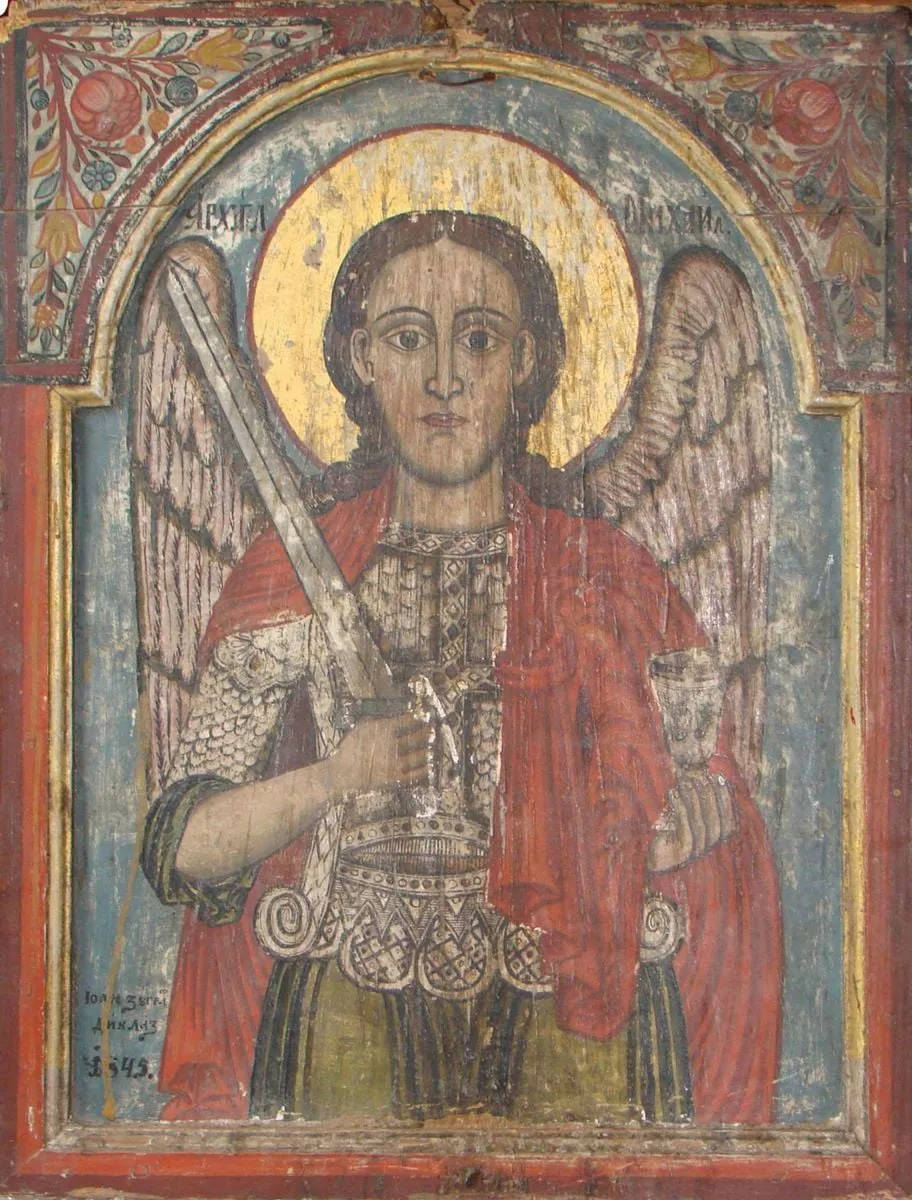
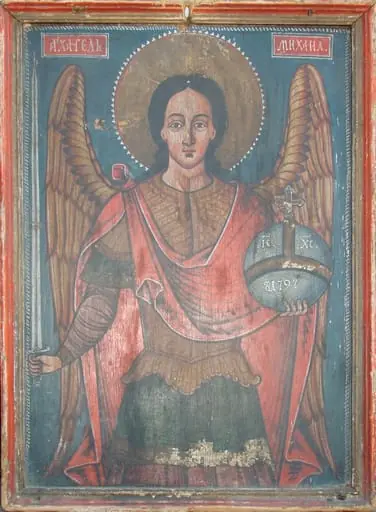
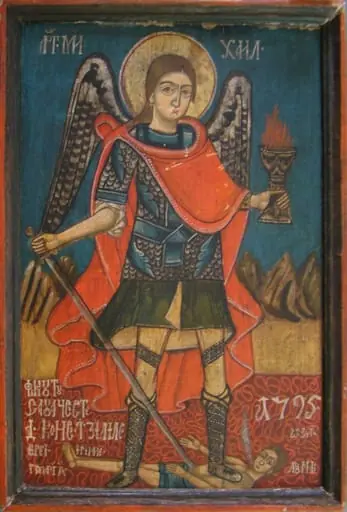
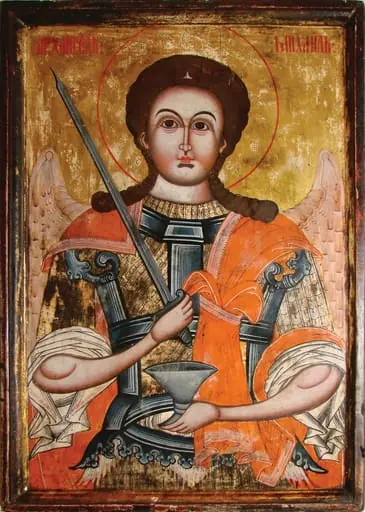
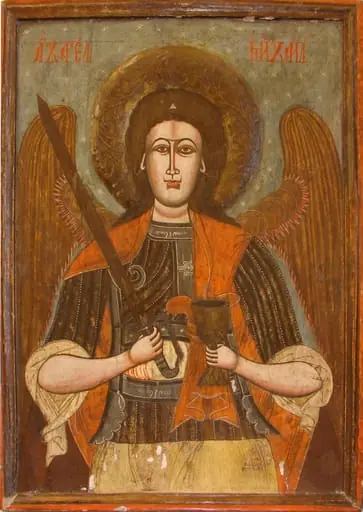
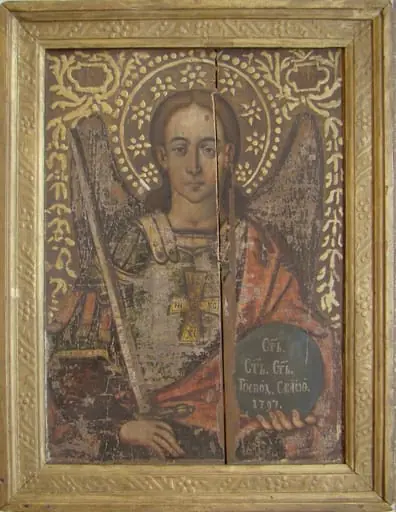
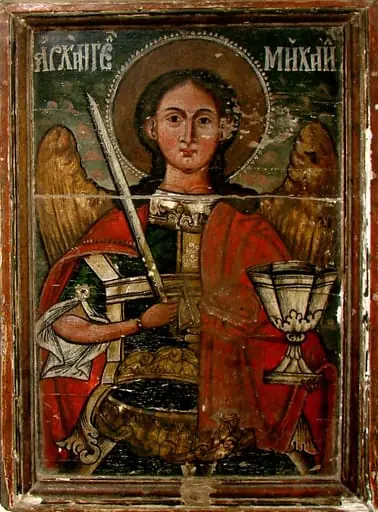
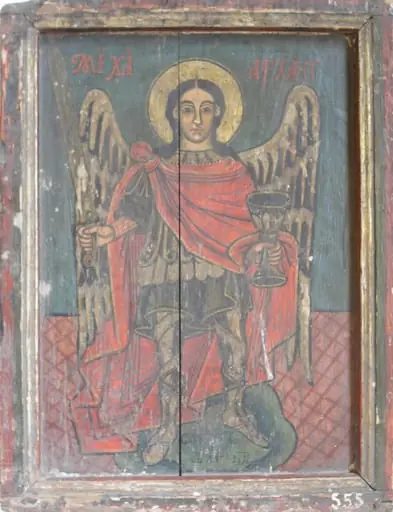
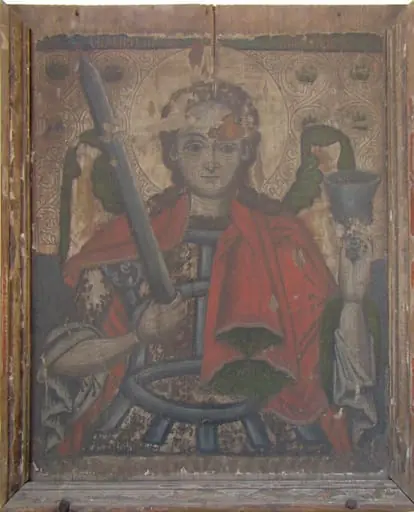
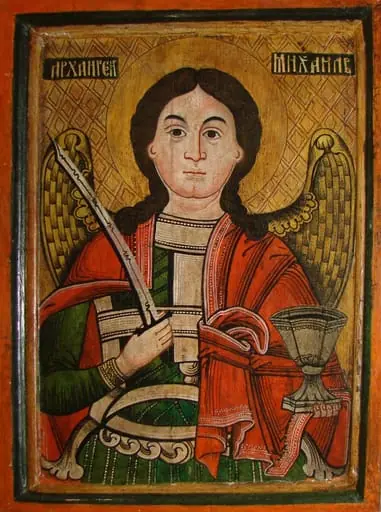
Arhanghelul Mihail is an unspecified painting by the Byzantine icon painting artist Ioan Morar din Laz. It dates from 1845 and is held in the collection of the Alba Iulia Unification National Museum.
About this work
Overview
The work reflects regional devotional practices in 19th-century Romanian territories, blending local artistic conventions with broader Byzantine influences.
Painted in 1845 by Ioan Morar din Laz, this religious image depicts the Archangel Michael in a traditional Eastern Christian iconographic style. Executed on a wooden panel, it is part of the collection at the Museum of Ethnography. The work reflects regional devotional practices in 19th-century Romanian territories, blending local artistic conventions with broader Byzantine influences. Its condition shows signs of age, with pigment loss and surface wear consistent with decades of liturgical use and environmental exposure.
Subject & Meaning
The central figure is the Archangel Michael, portrayed as a celestial warrior in armor, symbolizing divine protection and spiritual combat. In his other hand, he holds a small object, likely a scepter or orb, denoting authority. Behind him, a winged seraphim with folded hands represents heavenly reverence. The composition follows established theological symbolism: the archangel as defender of the faithful, the seraphim as a witness to divine presence. The solemn expressions reinforce the sacred gravity of the scene.
Technique & Style
The painting employs tempera or oil on wood, with bold, flat areas of color typical of folk iconography. Gold leaf forms the background, evoking divine light, while red and blue dominate the figures’ garments. Detailed chainmail and ornamental belts on Michael’s armor suggest careful attention to armoric realism within a stylized framework. The winged figure’s partially obscured face and one visible eye follow conventions of mystical anonymity. Surface cracking and pigment fading indicate aging materials and hand-applied pigments.
History & Provenance
Created in 1845 by Ioan Morar din Laz, a known regional iconographer, the work likely originated in a local church or private chapel in Moldavia or Wallachia. It entered the Museum of Ethnography’s collection in the 20th century as part of efforts to preserve religious artifacts from rural communities. Its survival through periods of political and religious change suggests it was valued as both sacred object and cultural artifact, though its exact journey before museum acquisition remains undocumented.
Context
This image emerged during a period when Orthodox Christian communities in Romanian principalities maintained strong traditions of icon painting despite increasing Western influence. Local artisans like Morar din Laz adapted Byzantine models using accessible materials and regional aesthetics. The use of gold backgrounds and hierarchical composition aligns with centuries-old liturgical norms, while the specific rendering of armor and drapery reflects contemporary folk interpretations of celestial figures in a pre-industrial artistic environment.
Legacy
The painting contributes to the understanding of 19th-century religious art in Eastern Europe, illustrating how iconographic traditions persisted in rural and provincial settings. It stands as an example of vernacular sacred art that resisted full assimilation into academic styles. Today, it serves as a reference for scholars studying the continuity of Byzantine-derived imagery in Romanian cultural memory, preserved not as elite art but as lived spiritual expression.
Artist & collection
Artist
A Transylvanian church artist of the mid-1800s, Ioan Morar din Laz filled altarpieces with bold colors and flowing gold in Arhanghelul Mihail (1845) and Iisus Hristos Pantocrator (1860).
Museum
Alba Iulia Unification National Museum
Continue through works from the same source collection.