Artwork
Arhanghelul Mihail
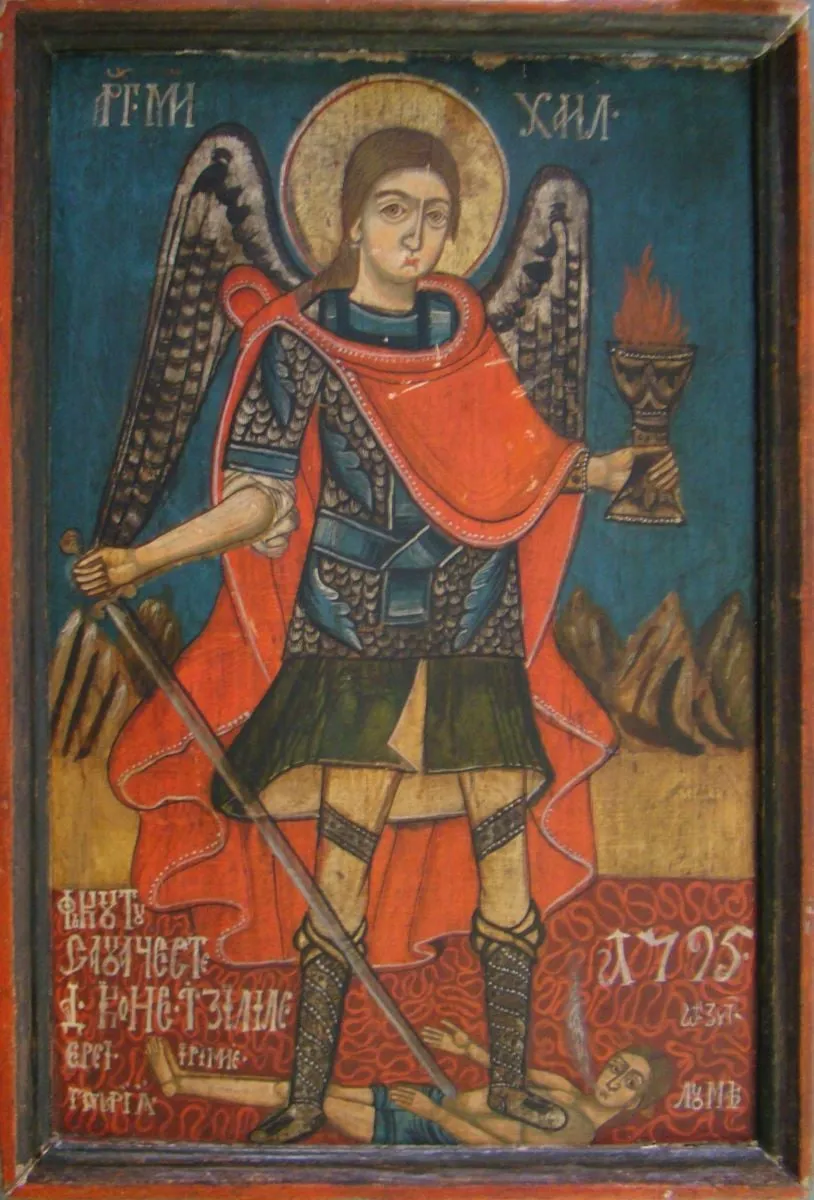
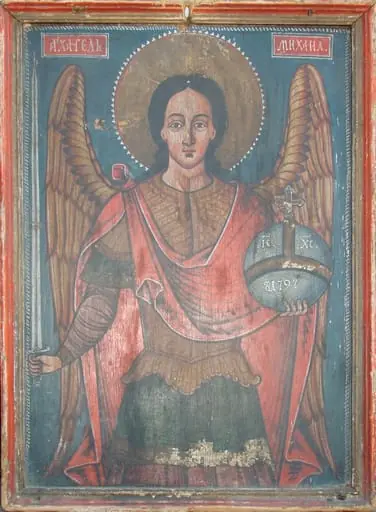
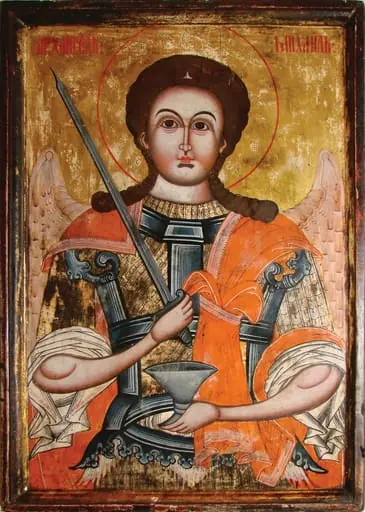
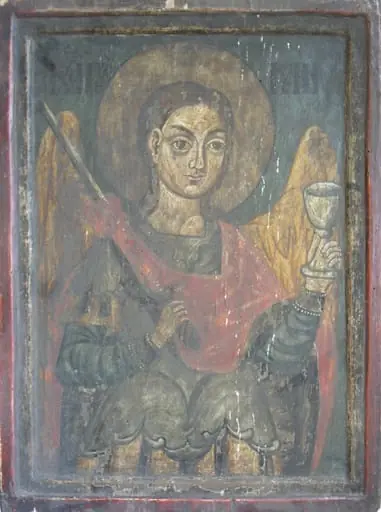
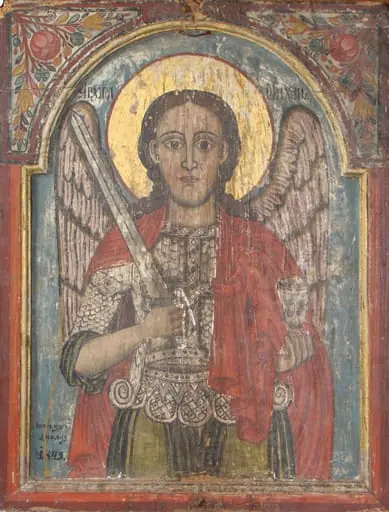
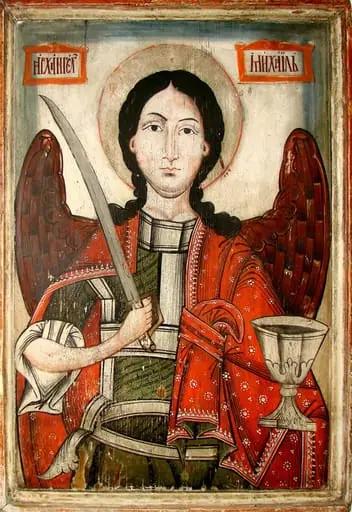
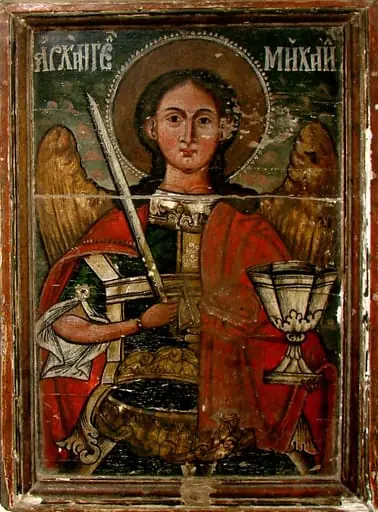
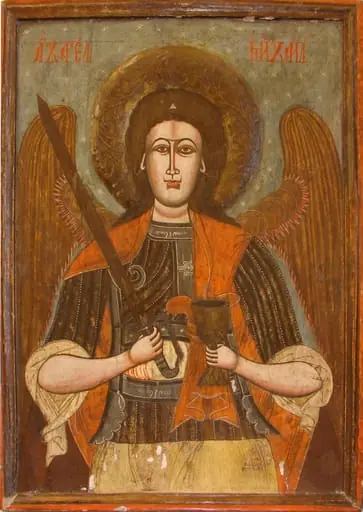
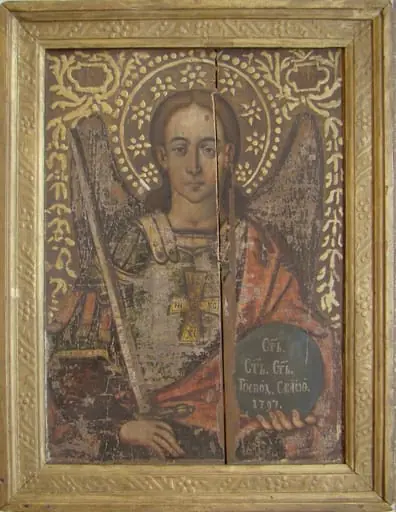
Arhanghelul Mihail is an unspecified painting by the Byzantine icon painting artist Oprea Zugravul. It dates from 1795 and is held in the collection of the Alba Iulia Orthodox Archdiocese.
About this work
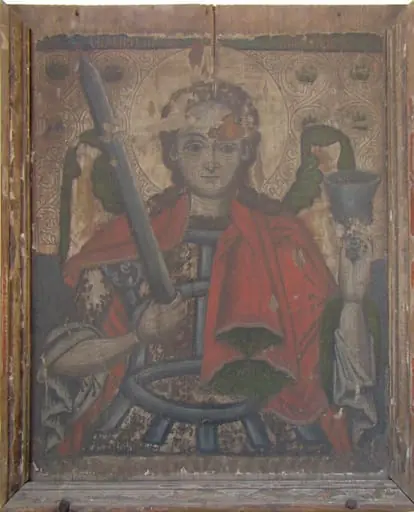
This painting shows a winged figure in bright red and blue armor, holding a sword in one hand and a flaming torch in the other.
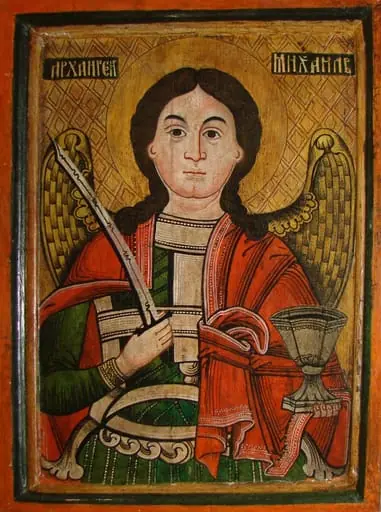
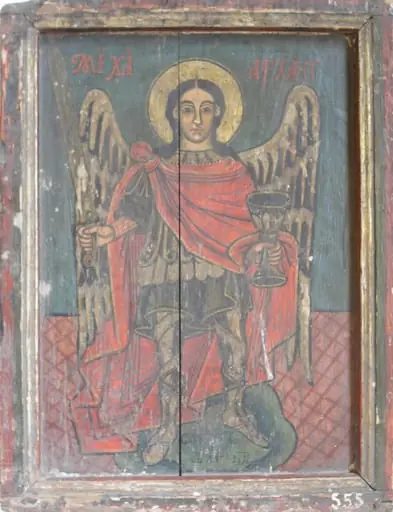
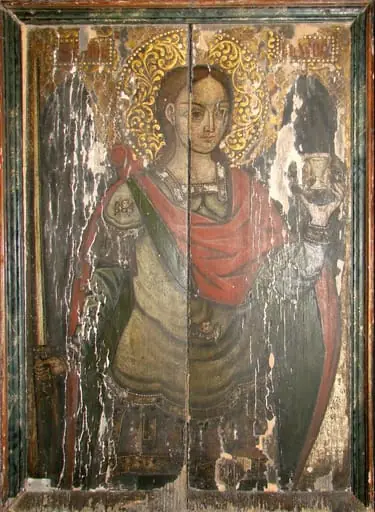
This painting shows a winged figure in bright red and blue armor, holding a sword in one hand and a flaming torch in the other. The background is a deep blue with rocky hills, and there’s a small figure lying on the ground. The figure’s face has a golden halo, and the colors are bold and flat, with no shading.
The painting is signed with the year 1795, which tells us it’s old. The words around the figure are in a different script, likely Greek or Cyrillic.
Look up Oprea Zugravul to see more of this artist’s work.
Overview
Arhanghelul Mihail is a painting created by Oprea Zugravul in 1795, currently housed at the Museum of Ethnography. The work depicts a winged figure, identified as Archangel Michael, in vibrant attire, set against a deep blue background with rocky hills.
Subject & Meaning
The subject, Archangel Michael, is portrayed holding a sword and a flaming torch, symbolizing his role as a protector and warrior. A small, prostrate figure at his feet may represent vanquished evil. The golden halo around the archangel's face emphasizes his divine nature.
Technique & Style
Characterized by bold, flat colors without shading, the painting reflects a traditional, possibly folkloric artistic approach. The use of bright red and blue for the archangel's armor adds to the work's visual immediacy. Inscriptions in a script likely of Greek or Cyrillic origin surround the figure.
History & Provenance
Created in 1795, as indicated by the artist's signature and date on the painting, Arhanghelul Mihail has been part of the Museum of Ethnography's collection. Little detailed provenance is provided before its museum acquisition.
Context
Given Oprea Zugravul's style and the subject matter, the painting may be rooted in religious traditions prevalent in the region during the late 18th century. The specific script used for the inscriptions could offer clues to the work's cultural or liturgical context.
Legacy
While specific impacts or influences of Arhanghelul Mihail on subsequent art are not detailed, it contributes to the understanding of late 18th-century religious art in its region of origin. For more on the artist's oeuvre, Oprea Zugravul's broader body of work can be consulted.
Artist & collection
Artist
Oprea Zugravul painted religious scenes in 18th-century Romania, part of a folk tradition called zugrav.