Artwork
A Bishop Saint and Saint Lawrence
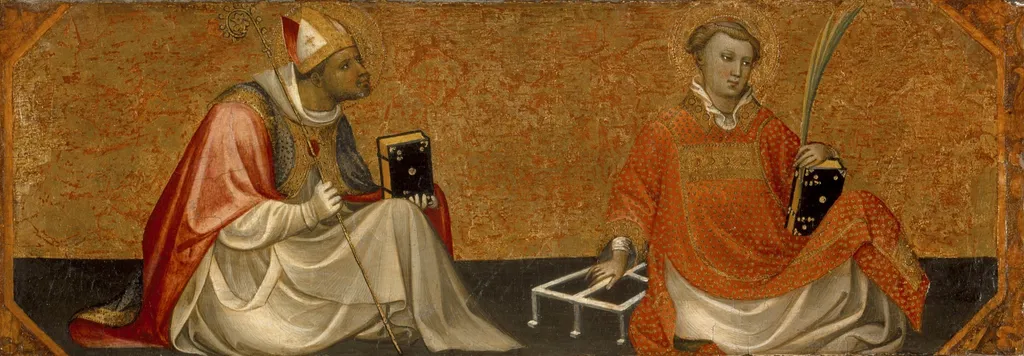
A Bishop Saint and Saint Lawrence is a tempera painting by the Early Renaissance artist Gherardo Starnina. It dates from 1404 and is held in the collection of the Los Angeles County Museum of Art.
About this work
Overview
Executed during the early Renaissance, the painting reflects the transitional style of the period, blending Byzantine conventions with emerging naturalism.
Painted in 1404 by the Florentine artist Gherardo Starnina, this tempera-on-panel work portrays two Christian saints in formal repose. Executed during the early Renaissance, the painting reflects the transitional style of the period, blending Byzantine conventions with emerging naturalism. It is now held in the collection of the Los Angeles County Museum of Art, where it remains a quiet example of devotional portraiture from early 15th-century Italy.
Subject & Meaning
The figures represent a bishop saint and Saint Lawrence, identifiable by their attributes. The left figure, in red and white vestments with a mitre and staff, signifies episcopal authority; the right, clad in orange with a palm frond, denotes martyrdom, a traditional symbol of Saint Lawrence. Their seated posture and shared books suggest contemplation and spiritual witness, reinforcing their roles as intercessors and models of faith for the viewer.
Technique & Style
Starnina employed tempera, a medium of pigment mixed with egg yolk, known for its fine detail and luminous finish. The robes are rendered with precise linear patterns and gold highlights, while the background remains flat and unmodulated, typical of the period’s emphasis on symbolic presence over spatial depth. The figures are arranged symmetrically, their forms defined by crisp contours and restrained modeling, reflecting the lingering influence of Gothic traditions.
History & Provenance
Gherardo Starnina trained under Antonio Veneziano and Agnolo Gaddi in Florence before moving to Spain, where he worked for the royal court. This painting, dated to 1404, likely originated in Florence as part of a larger altarpiece or devotional panel. Its journey to Los Angeles is undocumented prior to its acquisition by LACMA, though its style aligns with other works from Starnina’s Florentine period.
Context
In early 15th-century Florence, religious imagery remained central to both public and private devotion. Artists like Starnina bridged the late Gothic and early Renaissance worlds, maintaining hierarchical composition while introducing subtle anatomical awareness. The inclusion of specific saints in paired form was common in altarpieces, serving to reinforce theological narratives and the veneration of martyrs and clergy.
Legacy
Starnina’s work, though less widely known than contemporaries like Giotto or Masaccio, exemplifies the regional diversity of Italian painting during the transition to the Renaissance. His time in Spain influenced Iberian art, yet this panel remains a testament to his Florentine roots. Today, it contributes to understanding how devotional imagery evolved through technical precision and symbolic clarity rather than dramatic innovation.
Artist & collection

Artist
Gherardo Starnina (c. 1360–1413) was an Italian painter from Florence in the Quattrocento era. According to the biographer Giorgio Vasari, Starnina initially trained with Antonio Veneziano, then with Agnolo Gaddi. He is…

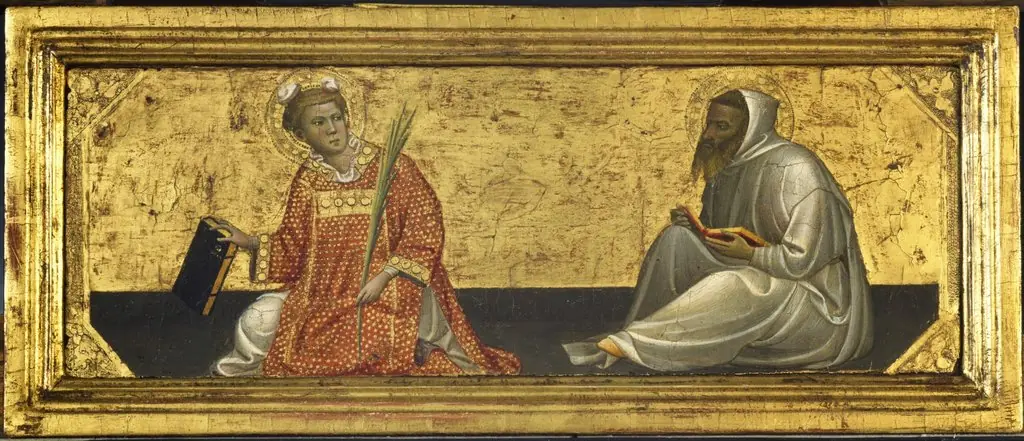 St. Stephen and St. Bruno
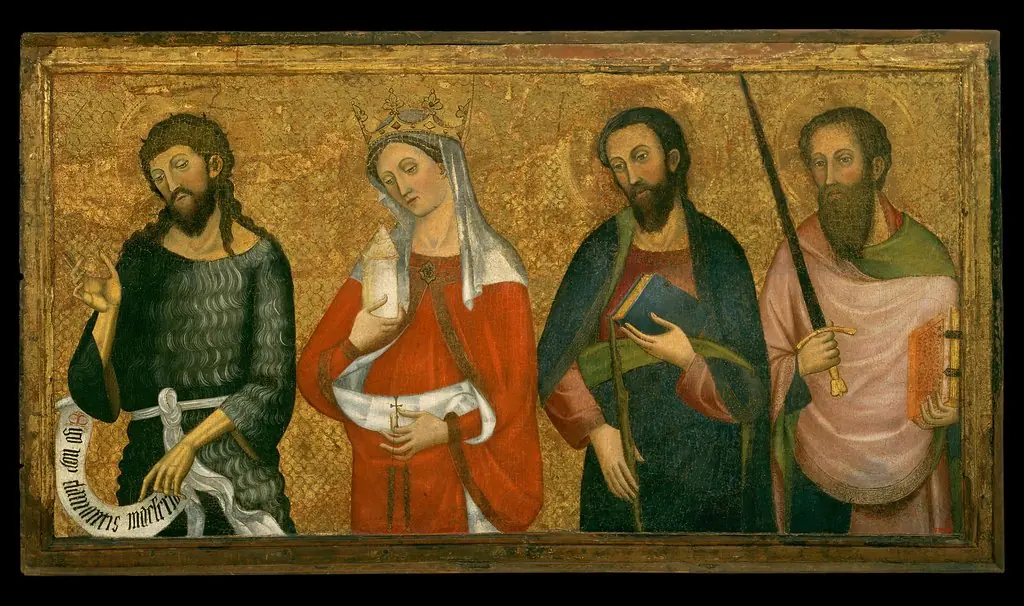 Saint John the Baptist, Saint Mary Magdalene, Saint James the Minor, Saint Paul
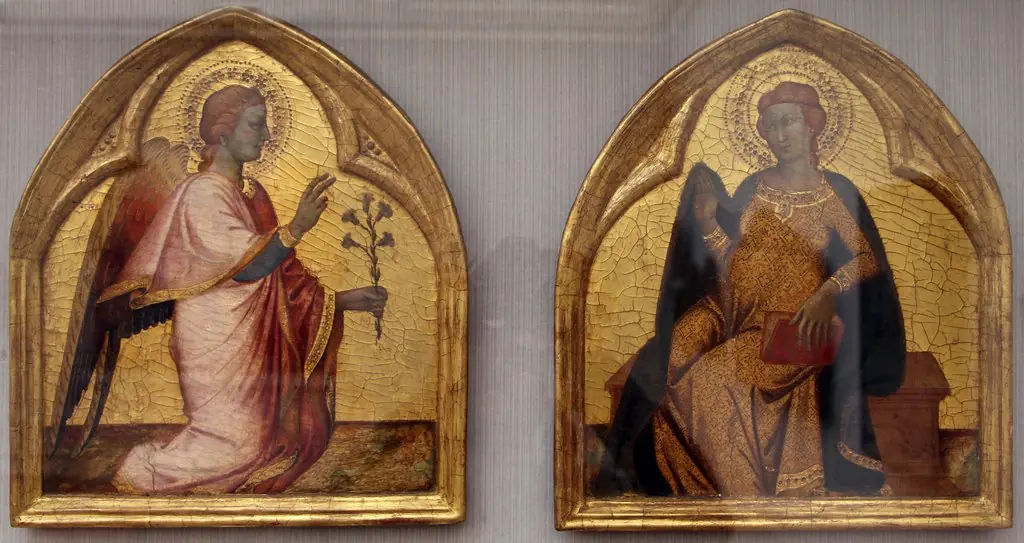 Mary of the Annunciation
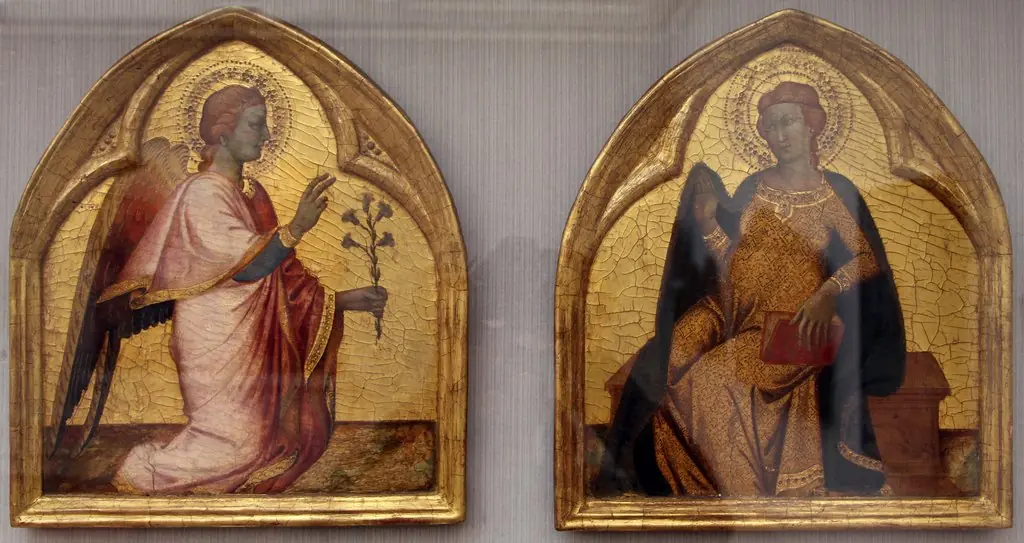 Angel of the Annunciation
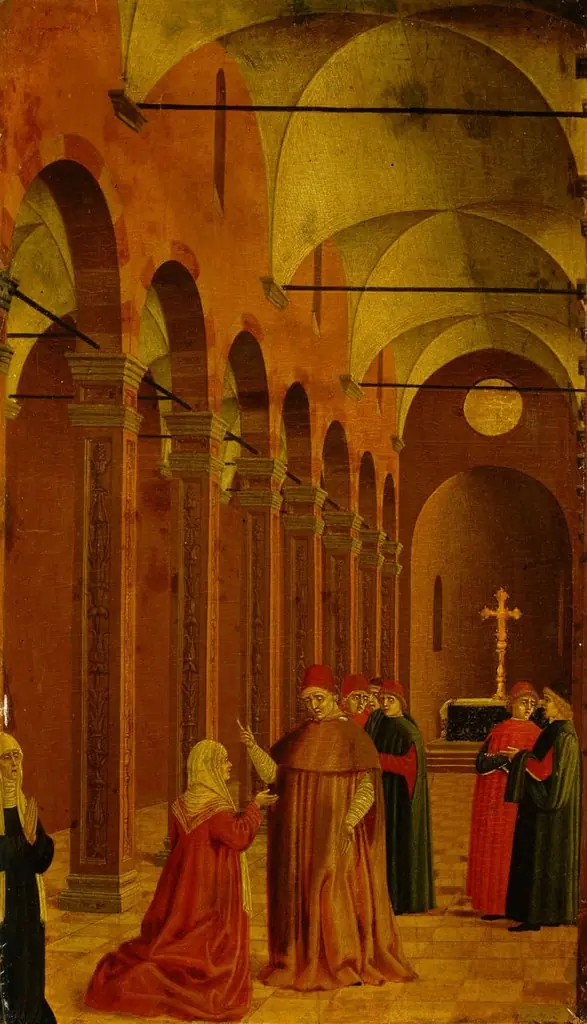 Szene aus dem Leben des Hl. Vinzenz Ferrer: Die Mutter des Heiligen fragt den Bischof von Valencia nach dem Sinn der wunderbaren Zeichen, die die Geburt ihres Kindes ankündigen
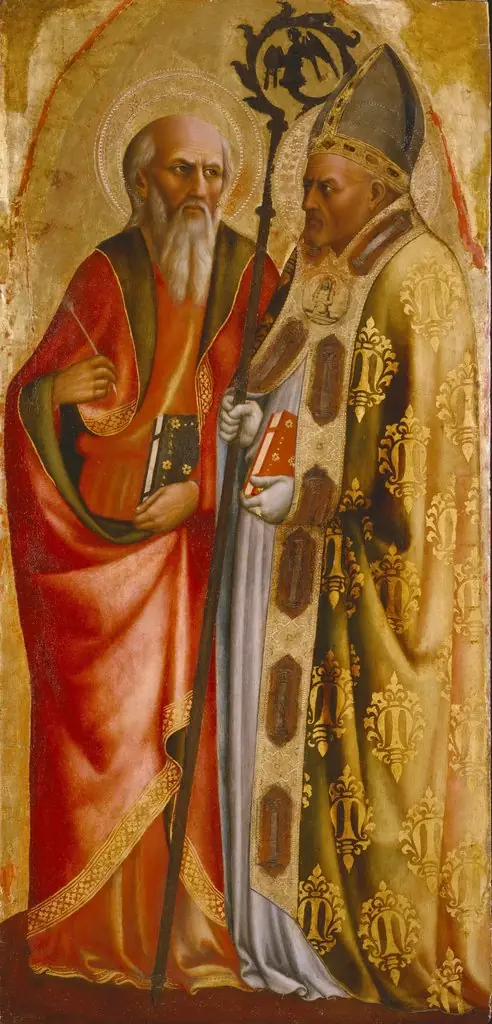 Saints John the Evangelist(?) and Martin of Tours
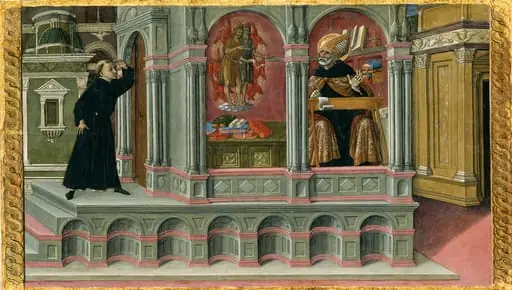 Saint Augustine's Vision of Saints Jerome and John the Baptist
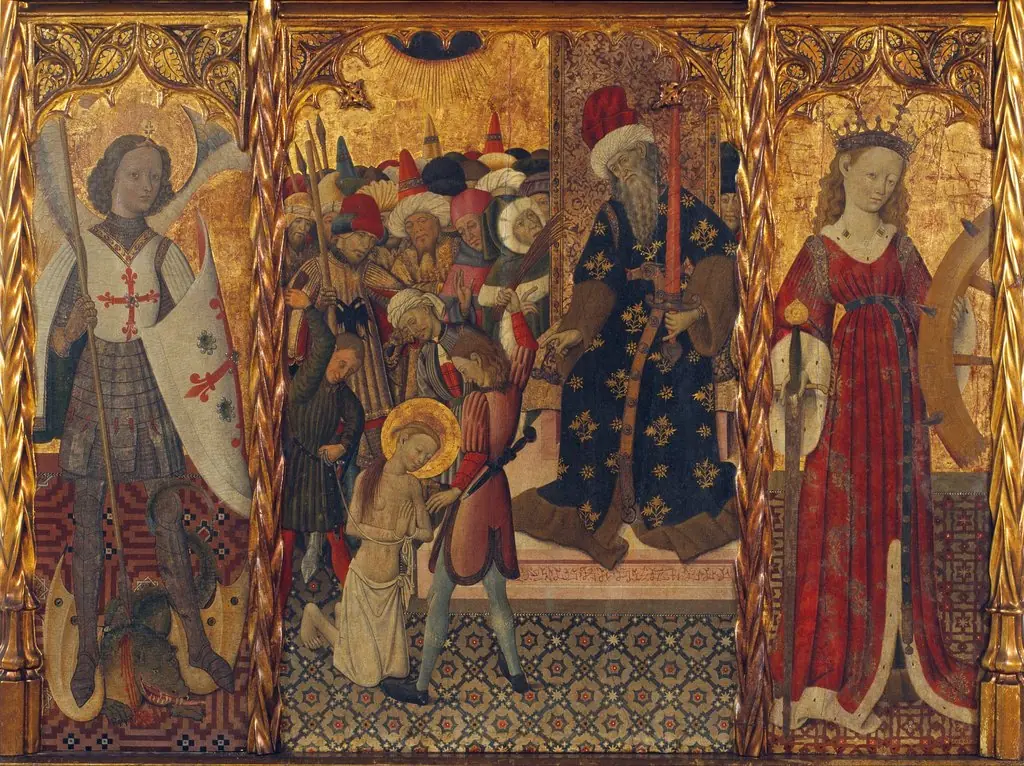 Saint Michael, Martyrdom of Saint Eulalia and Saint Catherine
![The Papacy Offered to Saint Gregory the Great [?], by Fra Angelico](https://artifactworldgallery.com/img/fra-angelico--the-papacy-offered-to-saint-gregory-the-great--6c28505dc47c9093-w320.webp) The Papacy Offered to Saint Gregory the Great [?]
The Papacy Offered to Saint Gregory the Great [?]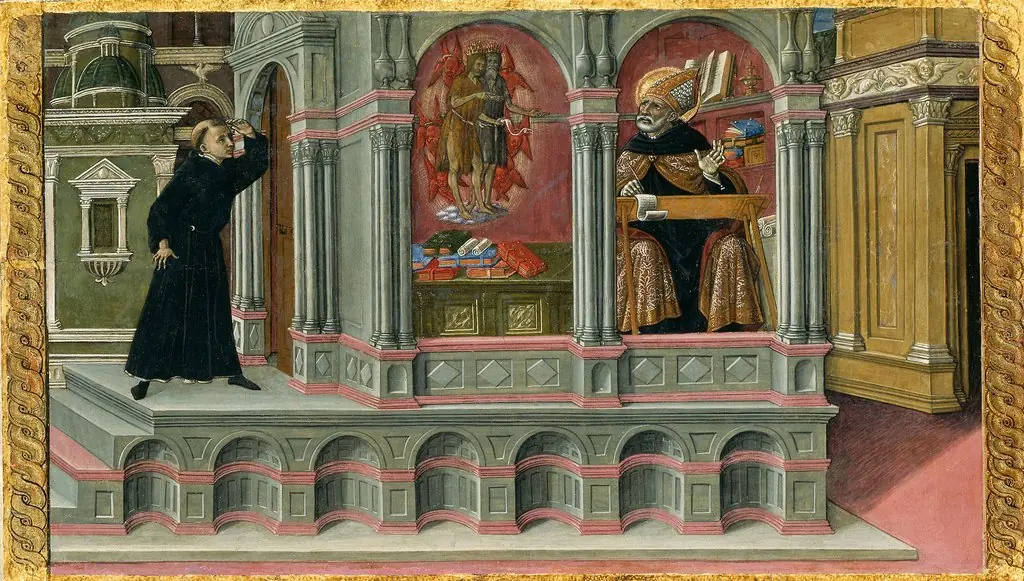 Saint Augustine's Vision of Saints Jerome and John the Baptist