Artwork
Saint Vincent
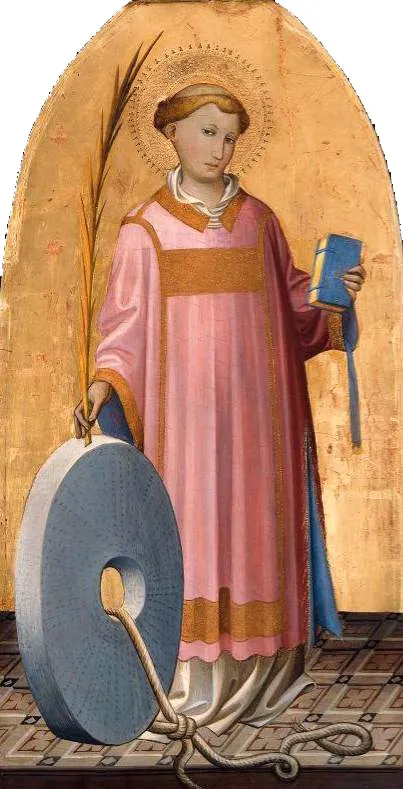
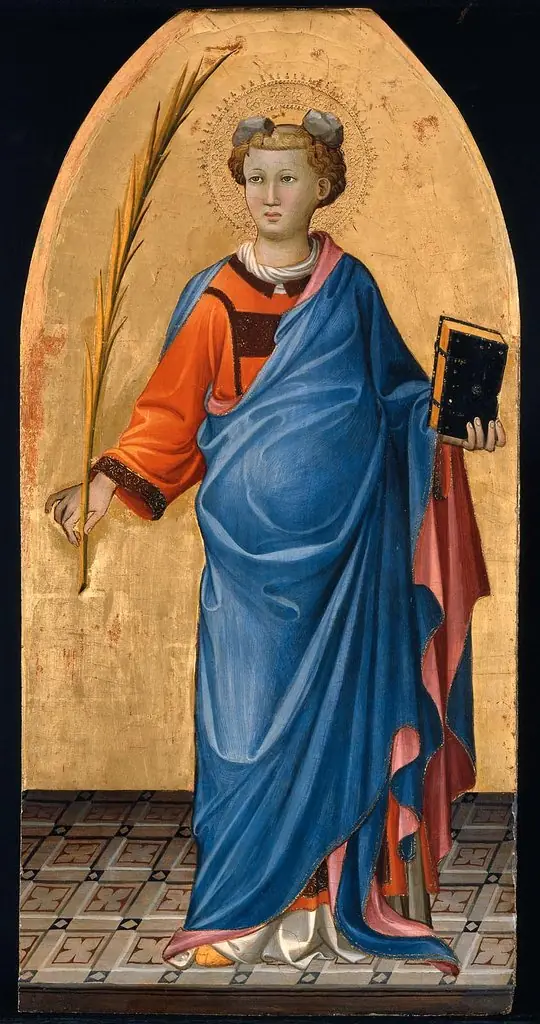
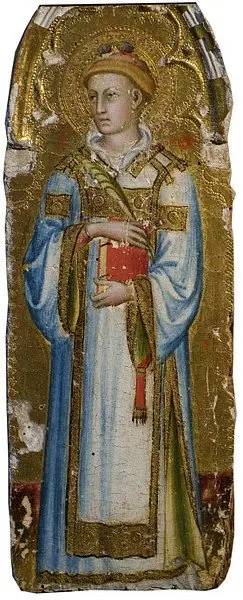
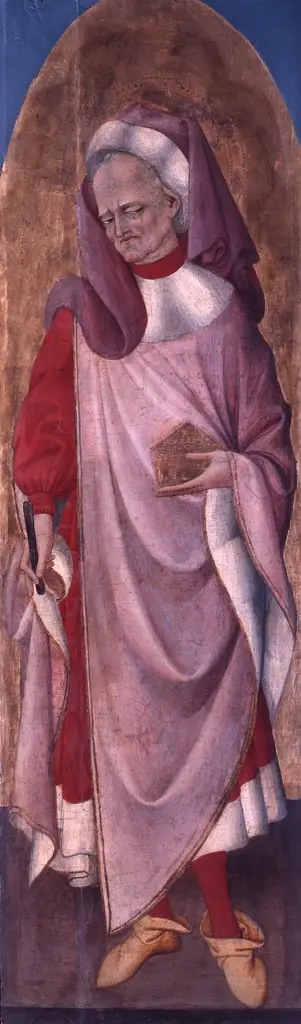
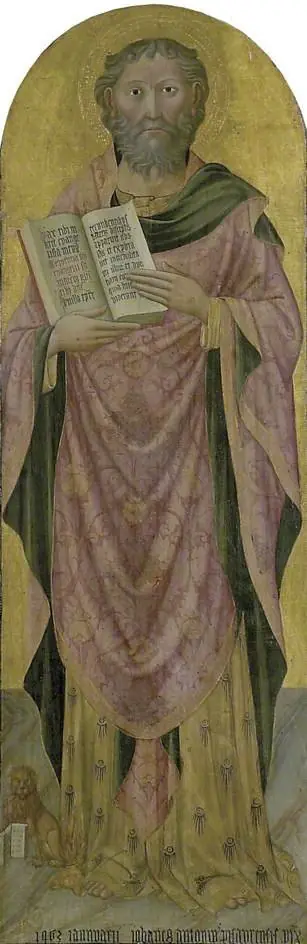
Saint Vincent is a tempera painting by the Early Renaissance artist Gherardo Starnina. It dates from 1410 and is held in the collection of the Museum of Fine Arts Boston.
About this work
Overview
Created around 1410, Saint Vincent is a tempera panel painted by Gherardo Starnina, an Italian artist active in the transitional period between the late Gothic and early Renaissance. The work is part of the Museum of Fine Arts, Boston’s collection and represents the saint’s iconic iconography within a gold‑ground composition.
Subject & Meaning
The figure portrayed is Vincent of Saragossa, a 4th‑century Christian martyr. He holds a book, symbolising his learned faith, and a shield bearing a cross, a traditional emblem of martyrdom. A palm frond, also present, reinforces his status as a saint who died for his beliefs.
Technique & Style
Executed in tempera on panel, the painting displays the crisp linearity and luminous gold background typical of early 15th‑century Italian art. Starnina’s use of a pinkish robe edged in gold and a delicate halo demonstrates the careful modeling and decorative detail characteristic of his workshop.
History & Provenance
Starnina, trained by Antonio Veneziano and Agnolo Gaddi, worked on frescoes in Florence before relocating to Spain in 1380, where he contributed to the San Blas chapel in Toledo Cathedral. Saint Vincent later entered the Boston museum’s holdings, where it remains on view.
Context
The painting belongs to the early Renaissance movement, a time when artists began to blend Gothic decorative conventions with emerging naturalistic approaches. Its iconography aligns with contemporary devotional practices that emphasized the visual identification of saints through standardized symbols.
Artist & collection

Artist
Gherardo Starnina (c. 1360–1413) was an Italian painter from Florence in the Quattrocento era. According to the biographer Giorgio Vasari, Starnina initially trained with Antonio Veneziano, then with Agnolo Gaddi. He is…