Artwork
Saints Mary Magdalene, Lawrence and a donor/ Angelo Acciaiuolo
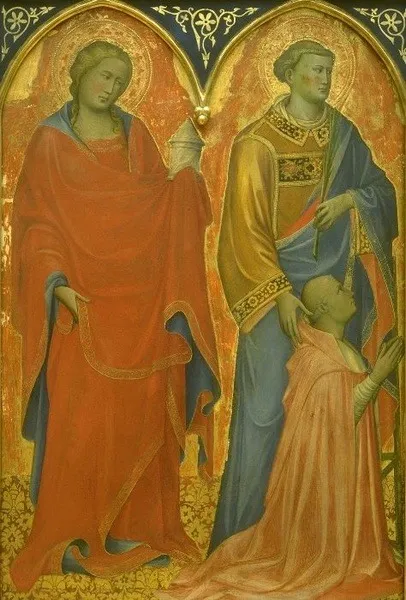
Saints Mary Magdalene, Lawrence and a donor/ Angelo Acciaiuolo is a paint painting by the Early Renaissance artist Gherardo Starnina. It dates from 1405 and is held in the collection of the Gemäldegalerie Berlin.
About this work
Overview
The composition follows the traditional tripartite structure of donor portraits, anchoring the sacred with the secular.
Painted in 1405 by Gherardo Starnina, this work is a devotional panel depicting three figures: Saints Mary Magdalene and Lawrence, alongside the donor Angelo Acciaiuolo. Executed in tempera and gold leaf on wood, it reflects the transitional style of early Renaissance Florence, blending Byzantine conventions with emerging naturalism. The composition follows the traditional tripartite structure of donor portraits, anchoring the sacred with the secular.
Subject & Meaning
The painting presents two venerated saints flanking a kneeling donor, a common arrangement in late medieval Italian altarpieces. Mary Magdalene, identified by her red garment and long hair, and Saint Lawrence, in deacon’s robes, serve as intercessors. Angelo Acciaiuolo, depicted in pink, presents himself in humble prayer, signaling his piety and social status. The inclusion of his portrait suggests a personal commission, likely for private devotion or chapel dedication.
Technique & Style
Starnina employed tempera paint with extensive gold leaf for halos, borders, and textile details, enhancing the sacred atmosphere. Figures are rendered with elongated proportions and refined linear contours, characteristic of late Gothic influence. While drapery folds show some volume, the background remains flat and ornamental—red and gold—emphasizing spiritual space over physical depth. The palette is rich but restrained, focusing attention on the central group.
History & Provenance
Gherardo Starnina, trained in Florence under Antonio Veneziano and Agnolo Gaddi, spent time in the court of Juan I of Castile before returning to Italy. This panel likely originated in Florence, possibly for a family chapel or private altar. Its survival suggests continued veneration; it entered institutional collections in the 19th or early 20th century, though its early ownership remains undocumented beyond the donor’s identity.
Context
In early 15th-century Florence, donor portraits became more personalized as wealthy families sought spiritual favor through patronage. Starnina’s work reflects this trend, merging traditional iconography with subtle individualization. While not yet fully embracing linear perspective, the painting shows a growing interest in human presence within sacred space, aligning with broader shifts in Florentine religious art before the full emergence of the Renaissance.
Legacy
Starnina’s painting stands as a modest but significant example of transitional Florentine art, illustrating how devotional practices shaped visual culture. Though not widely influential on major Renaissance figures, it preserves the aesthetic and social values of its time—piety, status, and craftsmanship—offering insight into the quiet, personal dimensions of early Renaissance spirituality beyond grand public commissions.
Artist & collection
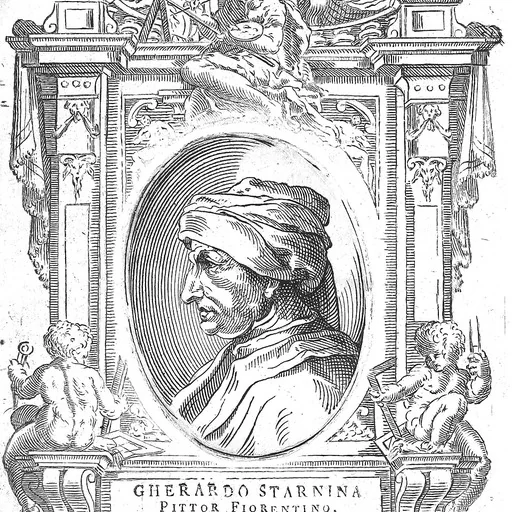
Artist
Gherardo Starnina (c. 1360–1413) was an Italian painter from Florence in the Quattrocento era. According to the biographer Giorgio Vasari, Starnina initially trained with Antonio Veneziano, then with Agnolo Gaddi. He is…

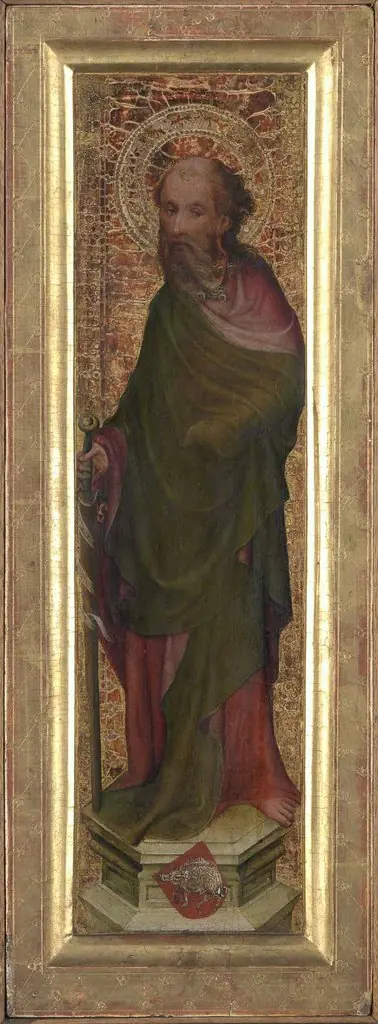 Hl. Paulus Rückseite: Hl. Reinoldus
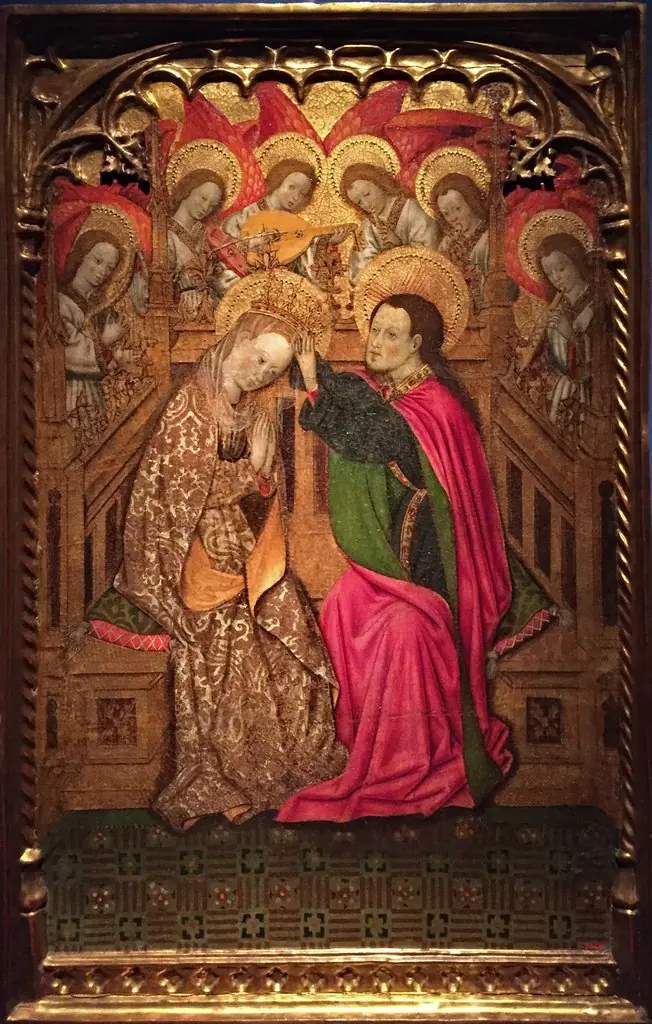 Coronació de la Mare de Déu amb àngels músics
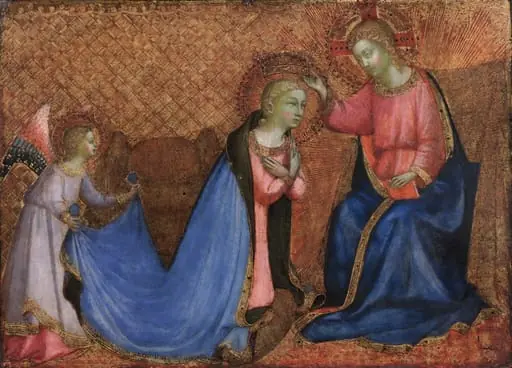 Coronation of the Virgin
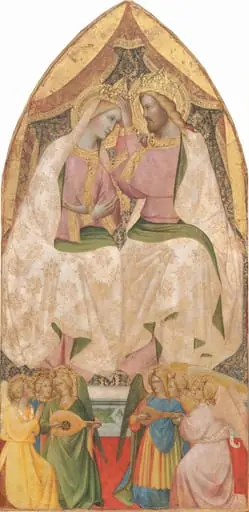 The Coronation of the Virgin with Six Angels
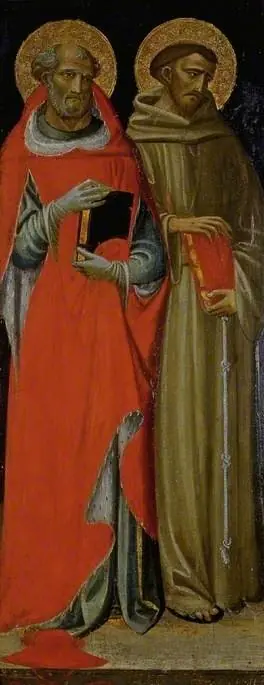 Saint Jerome and Saint Francis (recto, panel 1)
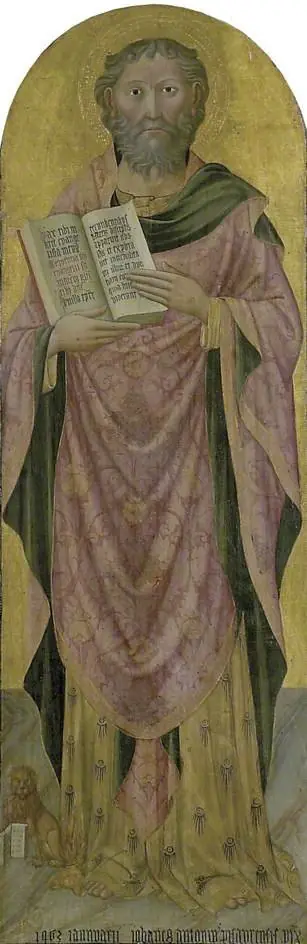 St Mark
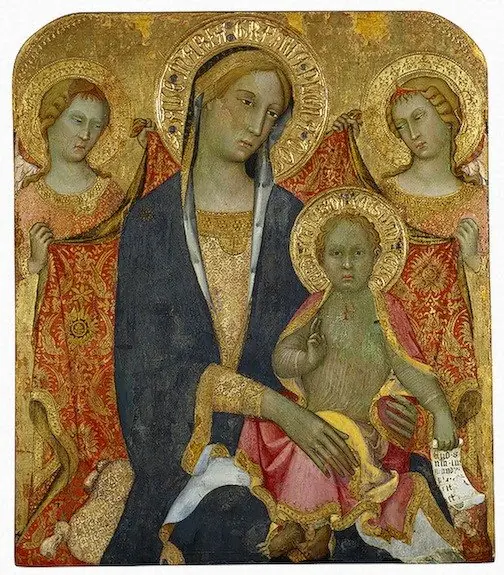 Madonna with Child and Two Angels
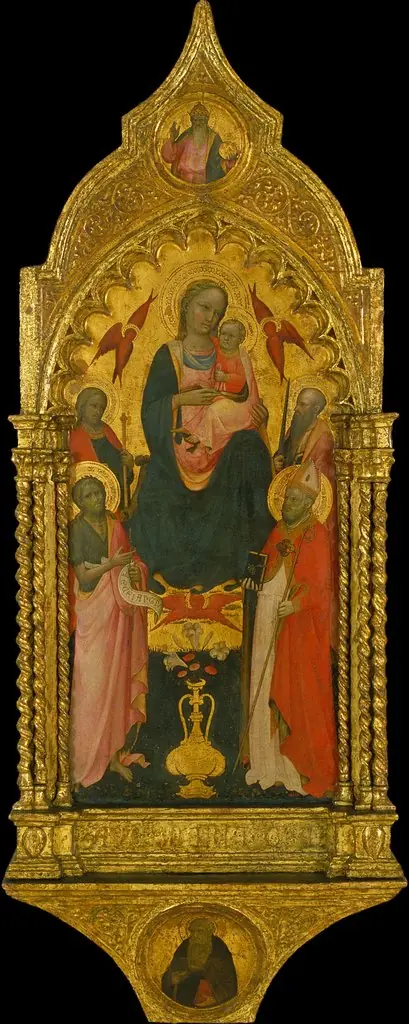 Virgin and Saints
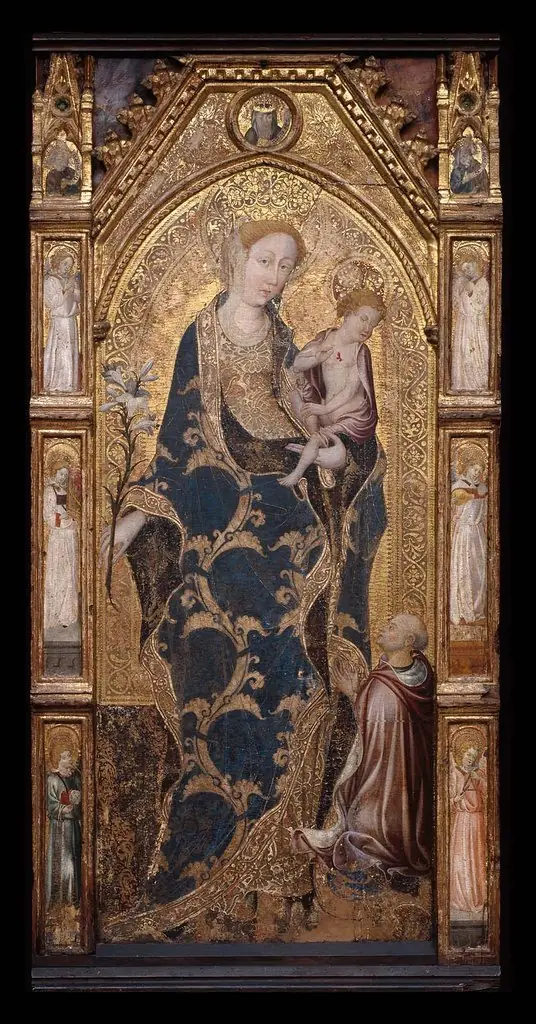 Virgin and Child Enthroned with Cardinal Alonso Borja (Borgia)