Artwork
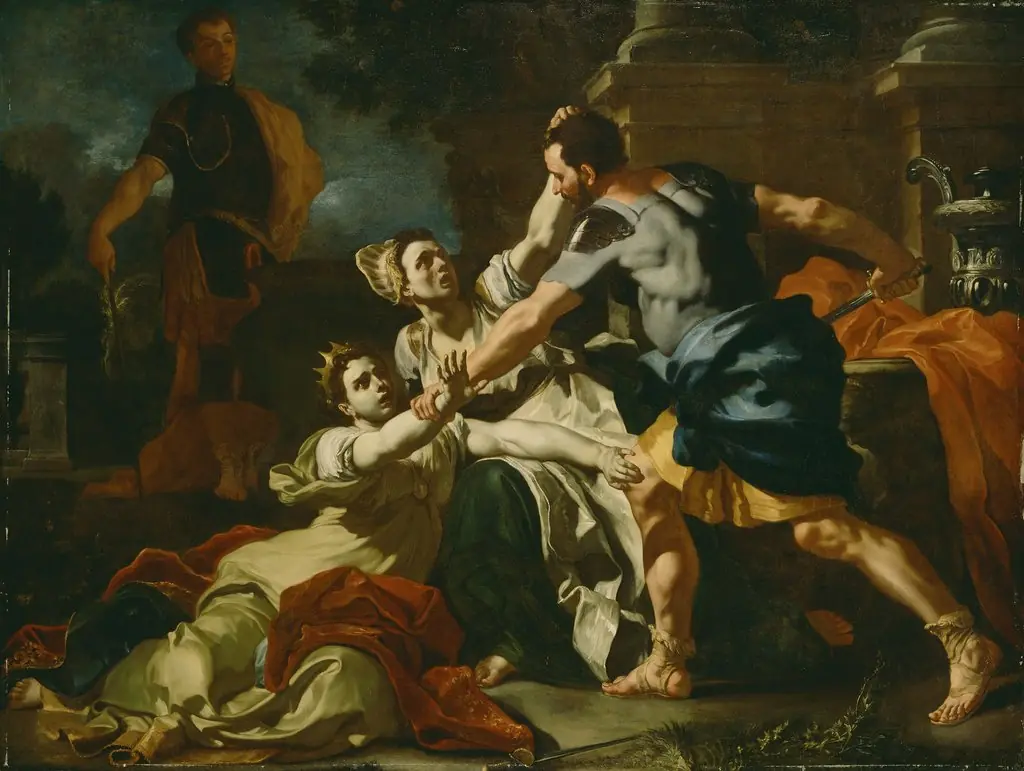
Death of King Candaules
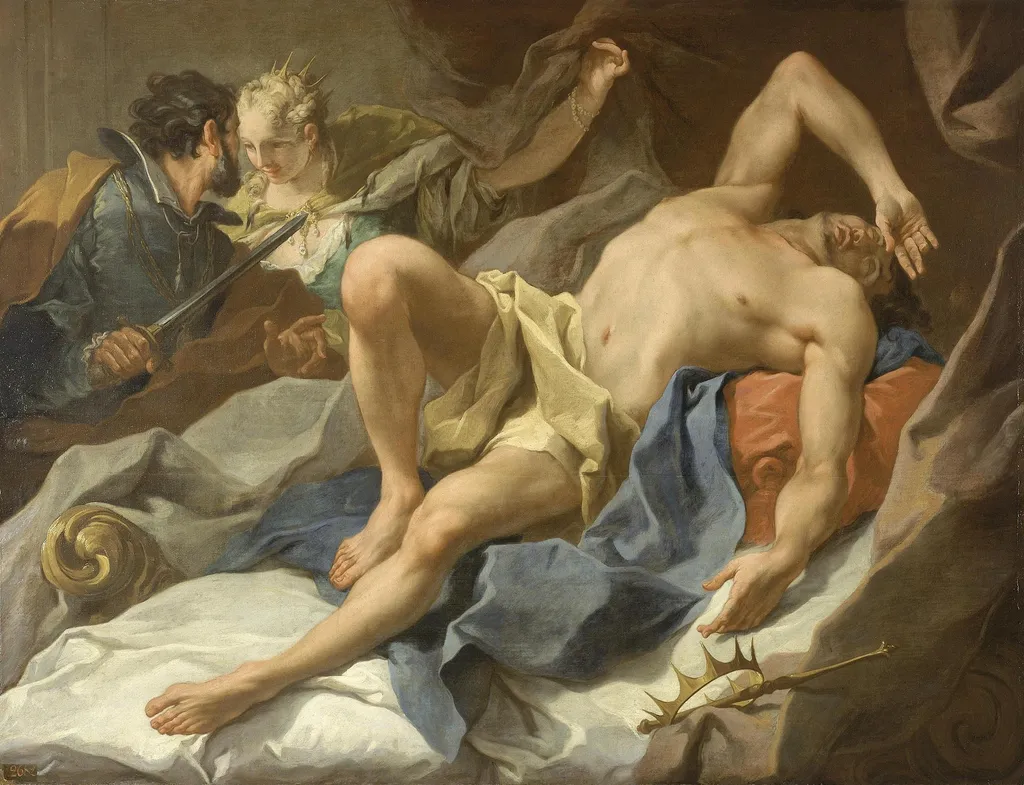
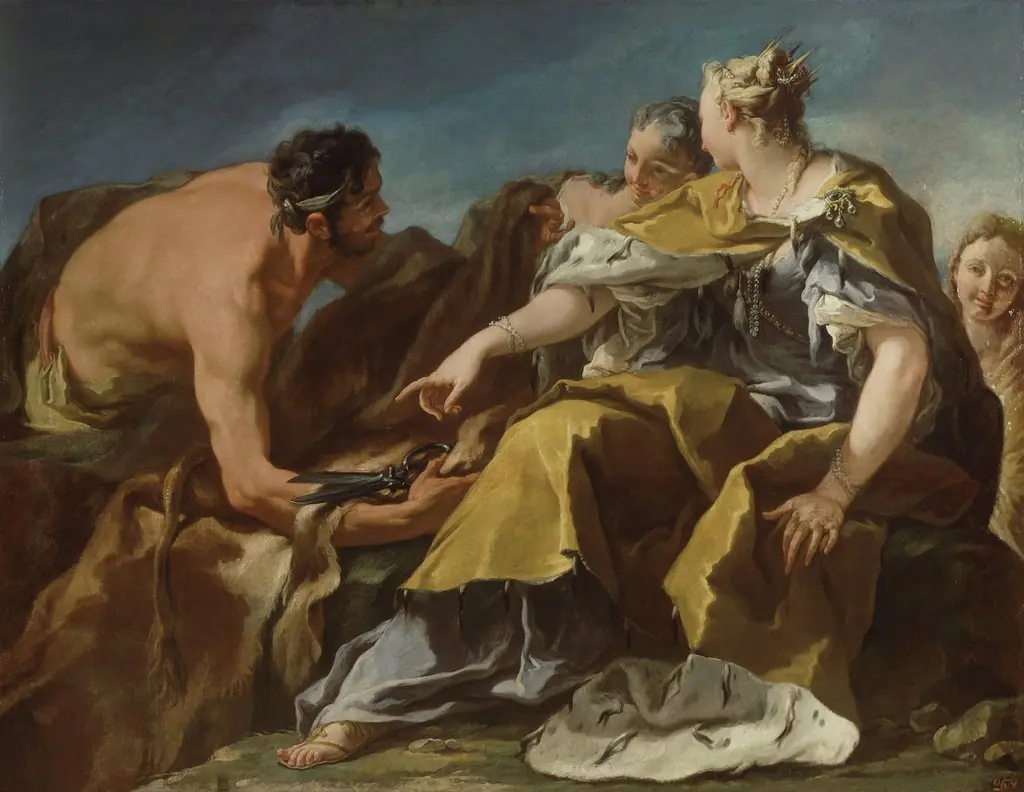
Death of King Candaules is an oil painting by the Rococo painting artist Giambattista Pittoni. It dates from 1720 and is held in the collection of the Hermitage Museum.
About this work
Overview
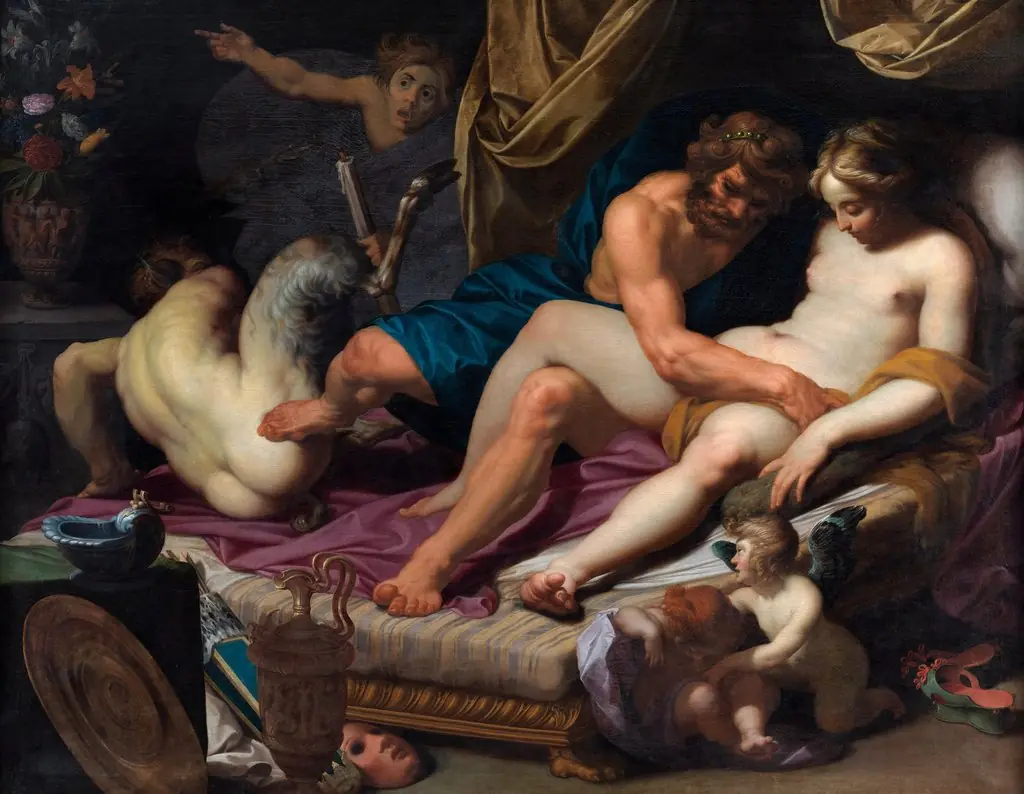
Giambattista Pittoni’s oil painting *Death of King Candaules* was executed in 1720. The work belongs to the late Baroque‑Rococo period and is part of the State Hermitage Museum’s collection in St. Petersburg. It portrays a moment from the classical legend of King Candaules, focusing on the king’s final moments.
Subject & Meaning
The composition centers on a nude king lying on a bed, his head thrown back, while a woman in a green dress leans over him holding a dagger. A second male figure in a dark coat watches the weapon, suggesting an imminent act of violence. The scene captures the tension and fatality of the mythic narrative.
Technique & Style
Pittoni employs strong chiaroscuro, using deep shadows to model the figures and create a dramatic spatial depth. The limited palette—rich blues, greens, and dark earth tones—highlights the central drama. The brushwork is smooth and refined, characteristic of Rococo elegance combined with Baroque vigor.
History & Provenance
The painting was produced during Pittoni’s mature period, when he was a founding member and later president of the Academy of Fine Arts of Venice. After its creation, the work entered the collection of the State Hermitage Museum, where it remains on public display.
Context
Pittoni’s *Death of King Candaules* reflects the 18th‑century Venetian interest in classical subjects rendered with theatrical intensity. The work aligns with contemporary tastes for narrative scenes that blend moral caution with visual splendor, a hallmark of the Rococo’s decorative yet narrative-driven approach.
Own this work as a print
Artist & collection
Artist
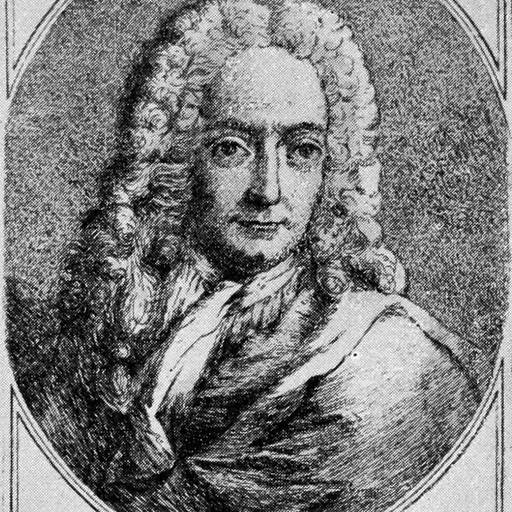
Giambattista Pittoni or Giovanni Battista Pittoni (6 June 1687 – 6 November 1767) was a Venetian painter of the late Baroque or Rococo period.