Artwork
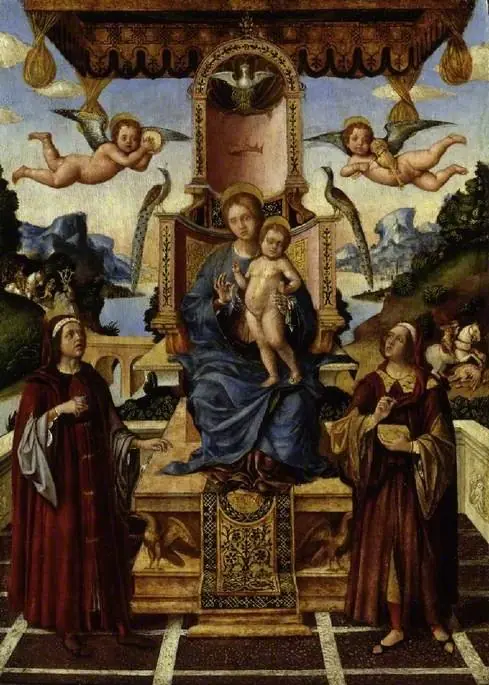
The Virgin and Child enthroned with Saints Cosmas and Damian with St Eustace and Saint George in the background
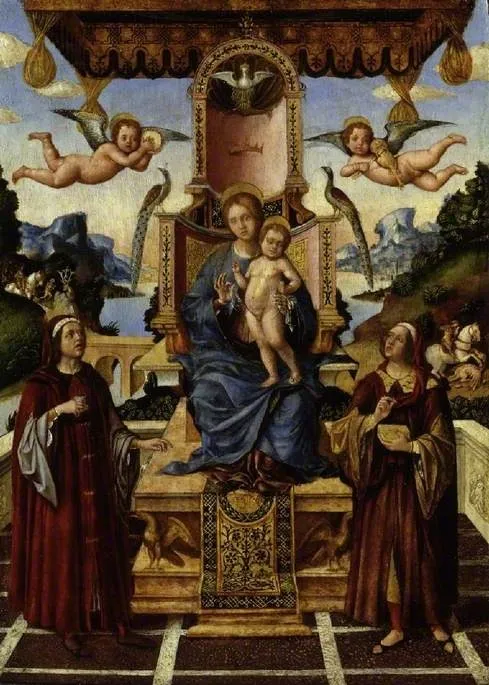
The Virgin and Child enthroned with Saints Cosmas and Damian with St Eustace and Saint George in the background is an unspecified painting by Gian-Francesco de Maineri. It dates from 1507 and is held in the collection of the Fitzwilliam Museum.
About this work
Overview
Two additional saints, Eustace and George, appear in the distant background, framed by architectural elements.
Painted around 1507 by Gian-Francesco de Maineri, this devotional panel depicts the Virgin Mary seated with the Christ Child on a raised throne, flanked by Saints Cosmas and Damian. Two additional saints, Eustace and George, appear in the distant background, framed by architectural elements. Created during Maineri’s time in Ferrara, the work reflects the regional Renaissance style shaped by local courtly patronage and the influence of Ercole de’ Roberti.
Subject & Meaning
The composition centers on the Virgin and Child as objects of veneration, surrounded by saints associated with healing and protection. Cosmas and Damian, patron saints of physicians, emphasize divine intercession in matters of health. Eustace and George, depicted in the distance, represent martyrdom and chivalric virtue. Together, the figures form a hierarchical sacred assembly, intended to inspire contemplation and devotion among viewers.
Technique & Style
Maineri employs chiaroscuro to model the figures with subtle gradations of light and shadow, lending volume to their forms. Drapery is rendered with precise, angular folds that suggest weight and movement. Facial expressions are restrained yet individualized, and the background recedes through atmospheric perspective. The palette is muted yet rich, with gold accents enhancing the sacred atmosphere without overt ornamentation.
History & Provenance
Commissioned during Maineri’s active years in Ferrara under the Este court, the painting likely served a private devotional or chapel setting. It entered the Fitzwilliam Museum’s collection in the 19th century, having passed through private hands in Italy before being acquired by British collectors. Its survival in relatively intact condition reflects careful preservation over centuries.
Context
In early 16th-century Ferrara, religious imagery was shaped by the Este family’s patronage and the city’s position between Venetian and Emilian artistic currents. Maineri’s work aligns with the naturalistic tendencies of the Ferrarese school, blending emotional restraint with detailed observation. This painting reflects a broader trend in northern Italian art toward integrating spatial depth and psychological presence within traditional iconography.
Legacy
Though not widely known outside regional circles, Maineri’s painting exemplifies the quiet sophistication of Ferrarese Renaissance devotional art. Its careful composition and restrained expressiveness offer insight into the spiritual priorities of courtly patrons and the evolving visual language of sacred narrative in early 16th-century Italy.
Artist & collection
Artist
Giovanni Francesco Maineri or Gianfrancesco de' Maineri (active 1489–1506) was an Italian painter of the Renaissance, active in Ferrara.

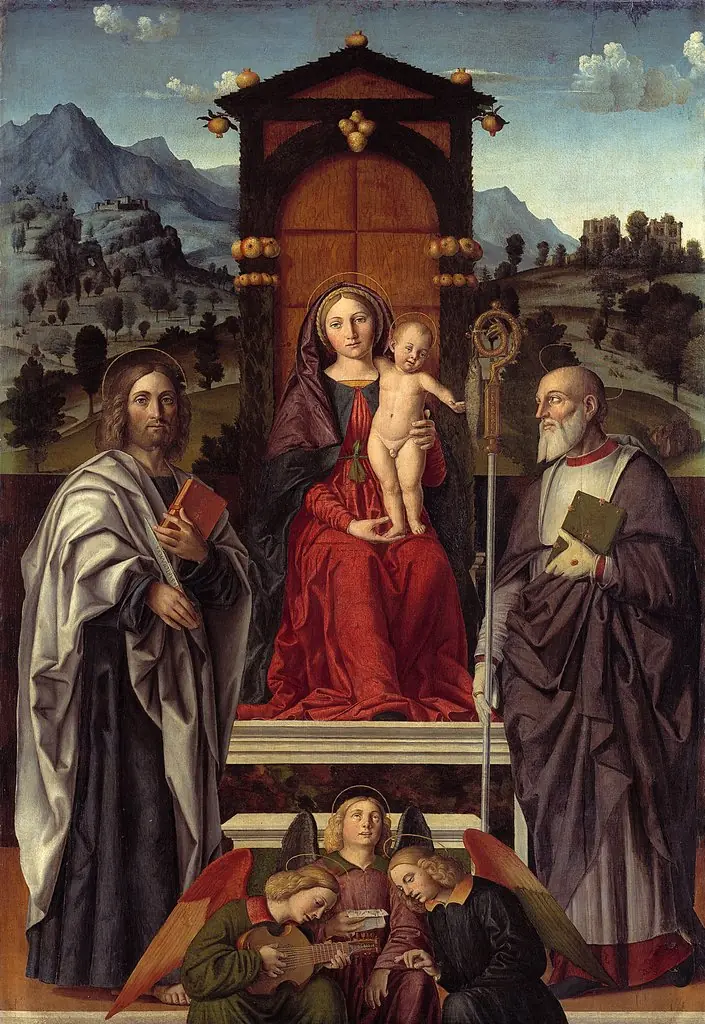 Mary and Child Enthroned with Saints
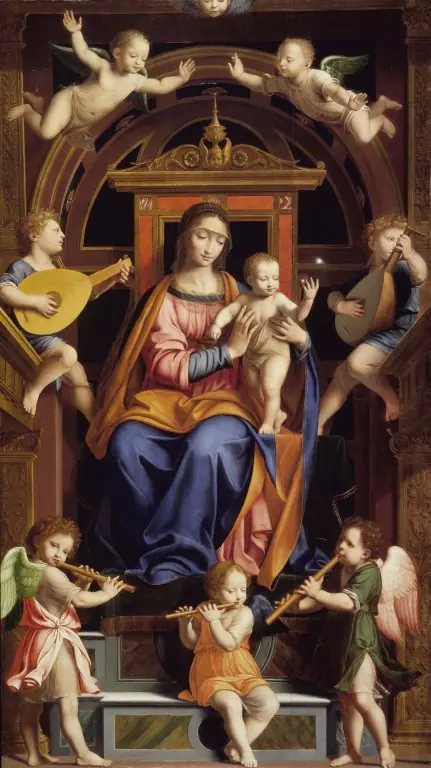 Madonna and Child Enthroned with Angels
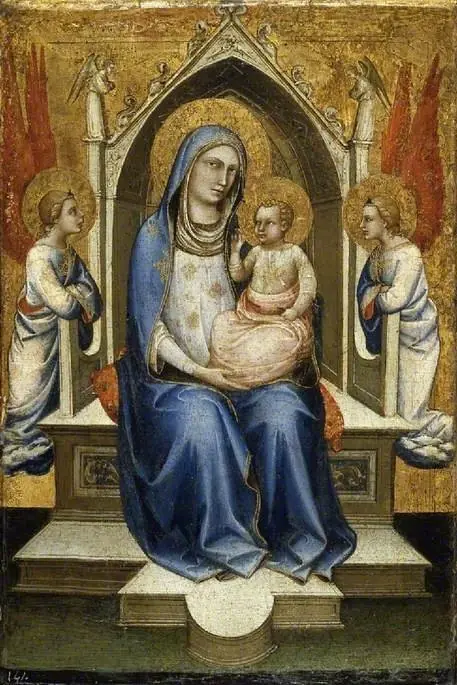 Virgin and Child enthroned
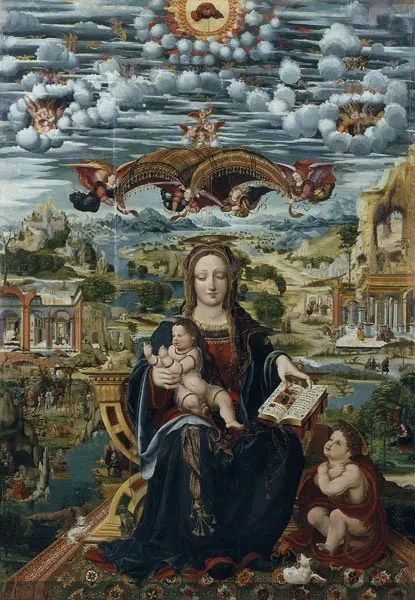 Virgin and Child with the Infant Saint John
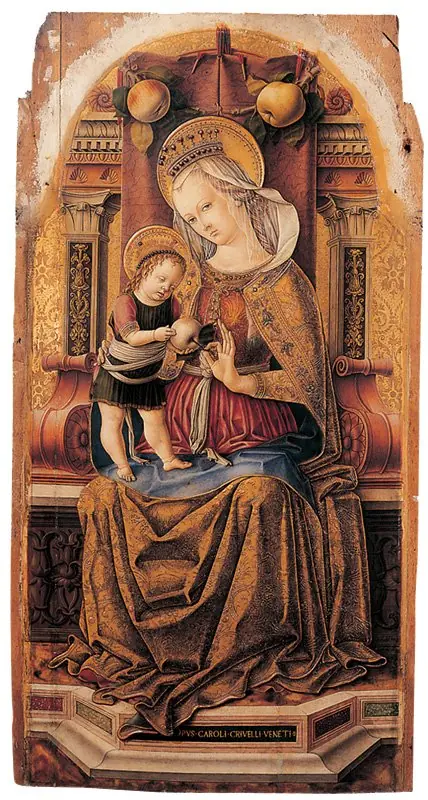 The Virgin and Child Enthroned
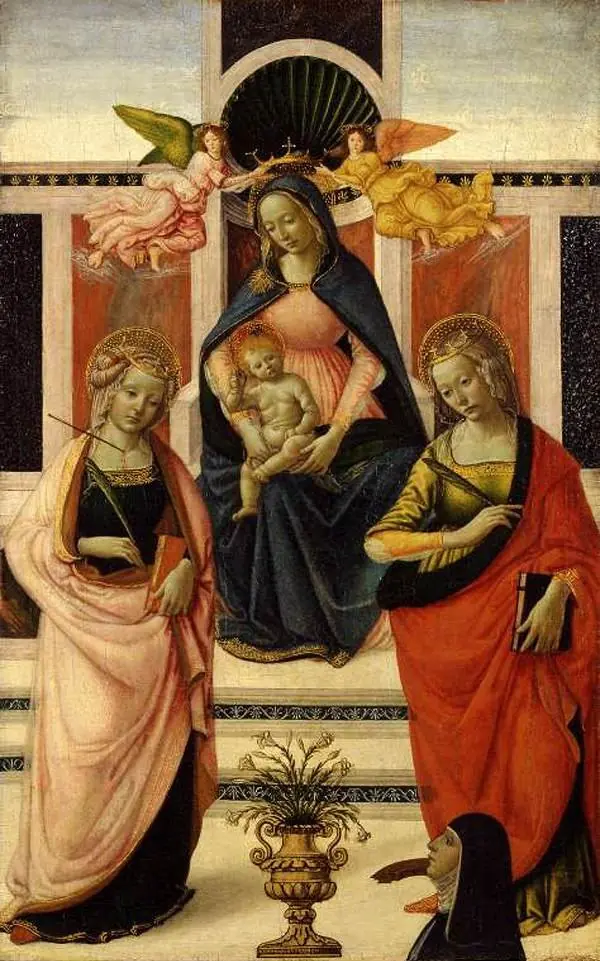 Virgin and Child enthroned between St Ursula and St Catherine
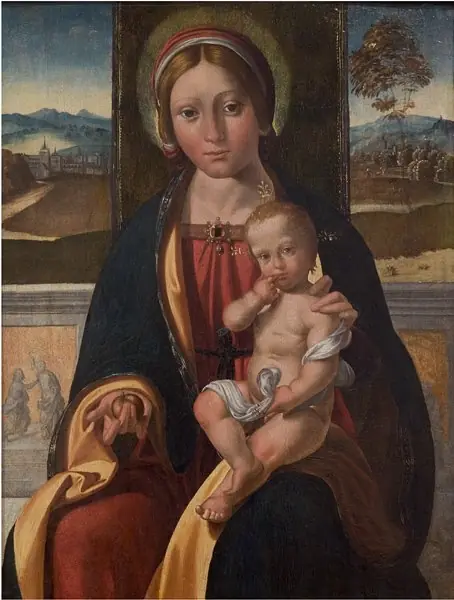 The Virgin and Child
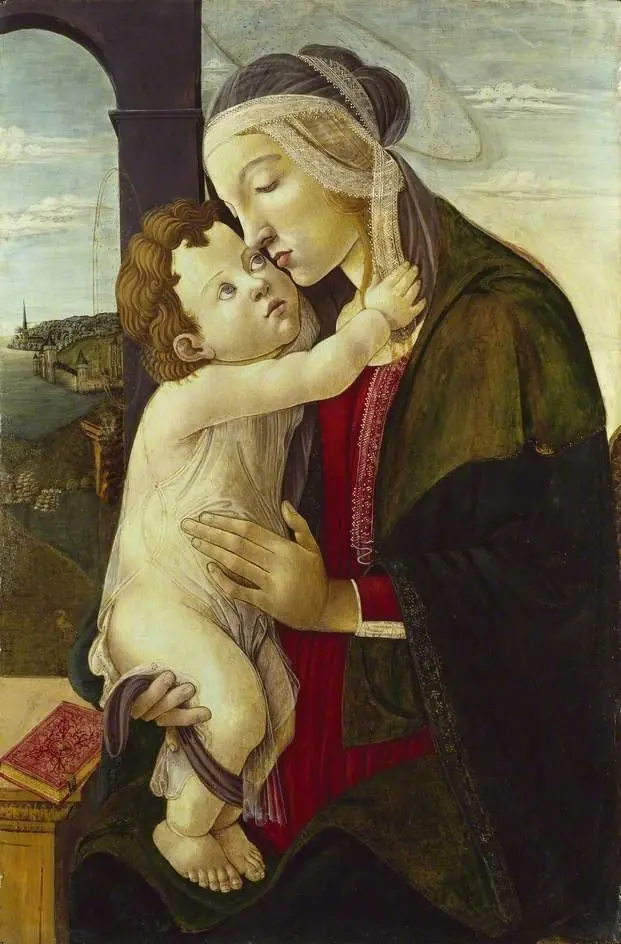 The Virgin and Child
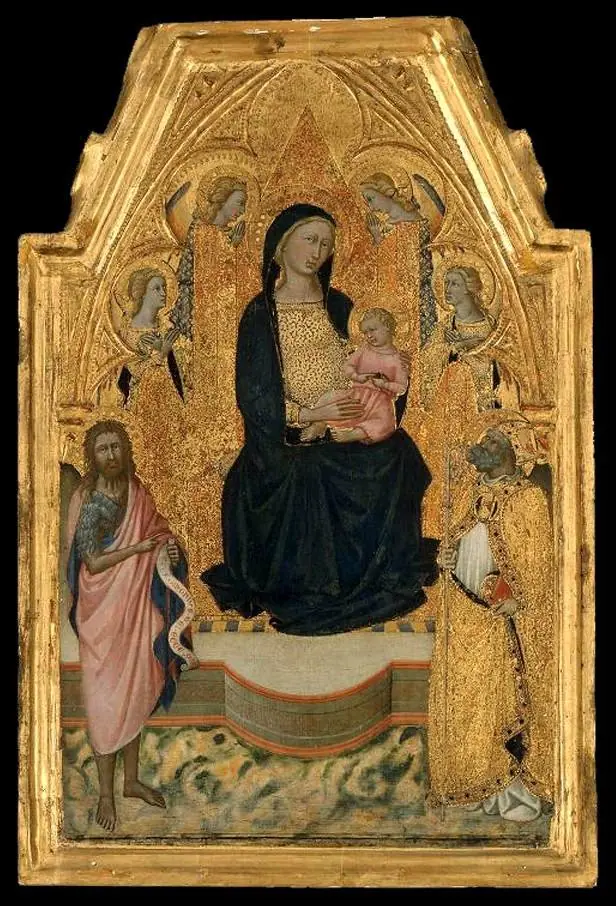 Virgin and Child Enthroned with a Bishop Saint, Saint John the Baptist, and Four Angels