Artwork
Woman praying in a vaulted shrine in the amphitheatre of Pozzuoli (Naples)
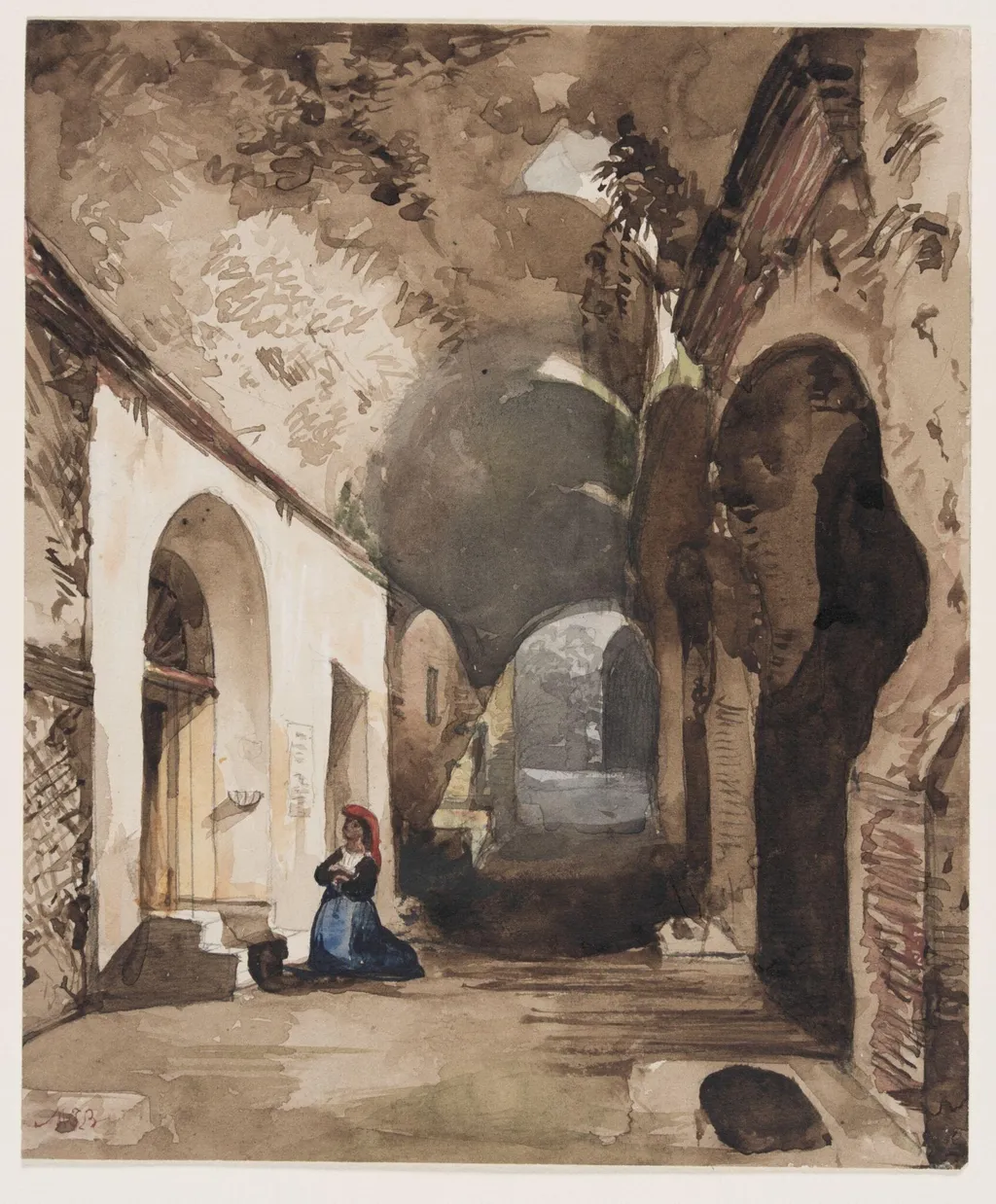
Woman praying in a vaulted shrine in the amphitheatre of Pozzuoli (Naples) is a watercolor work on paper by the Impressionist artist Giacinto Gigante. It dates from 1855 and is held in the collection of the Victoria and Albert Museum. This watercolour is one of fifty-seven works created around 1854 by the royal children of King Ferdinand II of the Two Sicilies.
About this work
Overview
This watercolour is one of fifty-seven works created around 1854 by the royal children of King Ferdinand II of the Two Sicilies.
This watercolour is one of fifty-seven works created around 1854 by the royal children of King Ferdinand II of the Two Sicilies. Under the instruction of Giacinto Gigante, a leading figure of the School of Posillipo, the students produced these pieces as part of a structured artistic education. Gigante typically initiated the compositions, which the pupils then refined, before he made final adjustments to ensure coherence and quality before presentation to the king.
Subject & Meaning
The scene depicts a solitary woman in quiet prayer within a vaulted niche of the ancient amphitheatre at Pozzuoli. The isolation of the figure and the subdued lighting evoke a contemplative stillness, suggesting a personal moment of devotion amid ruins. The setting, neither grand nor theatrical, emphasizes introspection rather than spectacle, aligning with the Romantic-era interest in quiet, emotional encounters with history.
Technique & Style
Executed in watercolour, the work reflects Gigante’s delicate handling of light and atmosphere, characteristic of the Posillipo school. The translucent washes suggest soft shadows and weathered stone, while the restrained palette enhances the meditative tone. Though the royal pupils contributed details, the underlying structure and tonal harmony reflect Gigante’s established compositional methods, blending topographical accuracy with lyrical sensitivity.
History & Provenance
The watercolour was originally part of a bound album compiled by Gigante for the royal family, likely intended as both educational material and a curated record of the children’s progress. These albums were presented to King Ferdinand II as demonstrations of their artistic development. The series remained within royal collections until dispersed in the late 19th century, after which individual works entered private and institutional holdings.
Context
Created during a period of renewed interest in classical antiquity in southern Italy, the work reflects a broader cultural trend of documenting ancient sites through art. Gigante’s pedagogical approach—using his own sketches as templates—was common among academic tutors of the time. The choice of Pozzuoli’s amphitheatre, a lesser-known ruin compared to Pompeii or Herculaneum, reveals a deliberate focus on intimate, overlooked heritage rather than monumental landmarks.
Legacy
Though created by royal students under supervision, these watercolours preserve a unique record of 19th-century artistic pedagogy in the Kingdom of the Two Sicilies. Gigante’s influence extended beyond his pupils, shaping the regional watercolour tradition. The series as a whole offers insight into how art education blended technical discipline with Romantic sensibility, leaving behind a quiet but significant archive of cultural observation.
Artist & collection


 An Eastern Market.
 A Courtyard at Anacapri
 Picturesque Sketches in Spain: Gate of the Vivarrambla, Granada
 Marchand de la Place Juba
 Tlemcen
 Old House, Bristol
 A Cloister
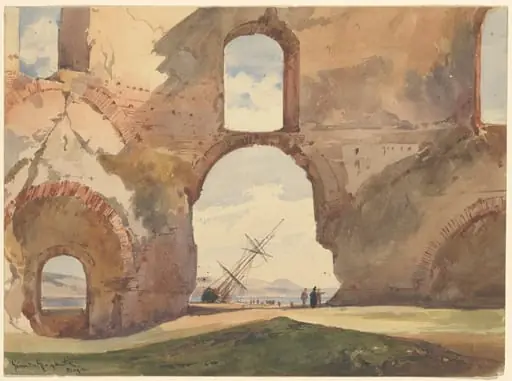 View through the Temple of Venus, Baia
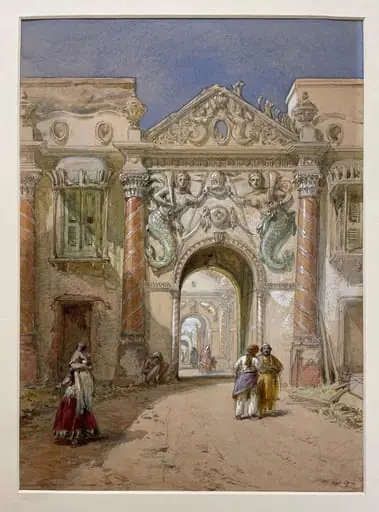 Mermaid gate, Kaiserbagh, Lucknow
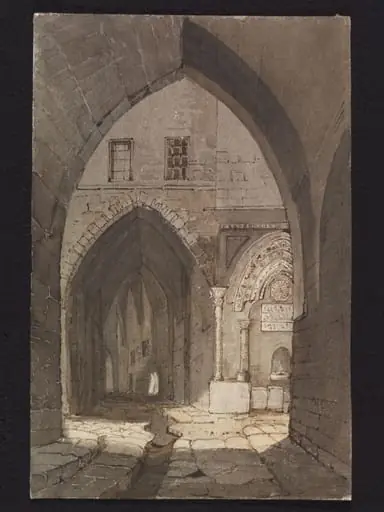 Fountain at Jerusalem near the House of Dives
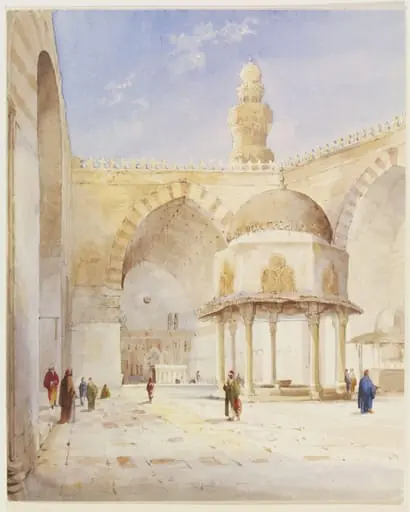 Interior of the Mosque of Sultan Hassan
 Mosque, possibly in North Africa