Artwork
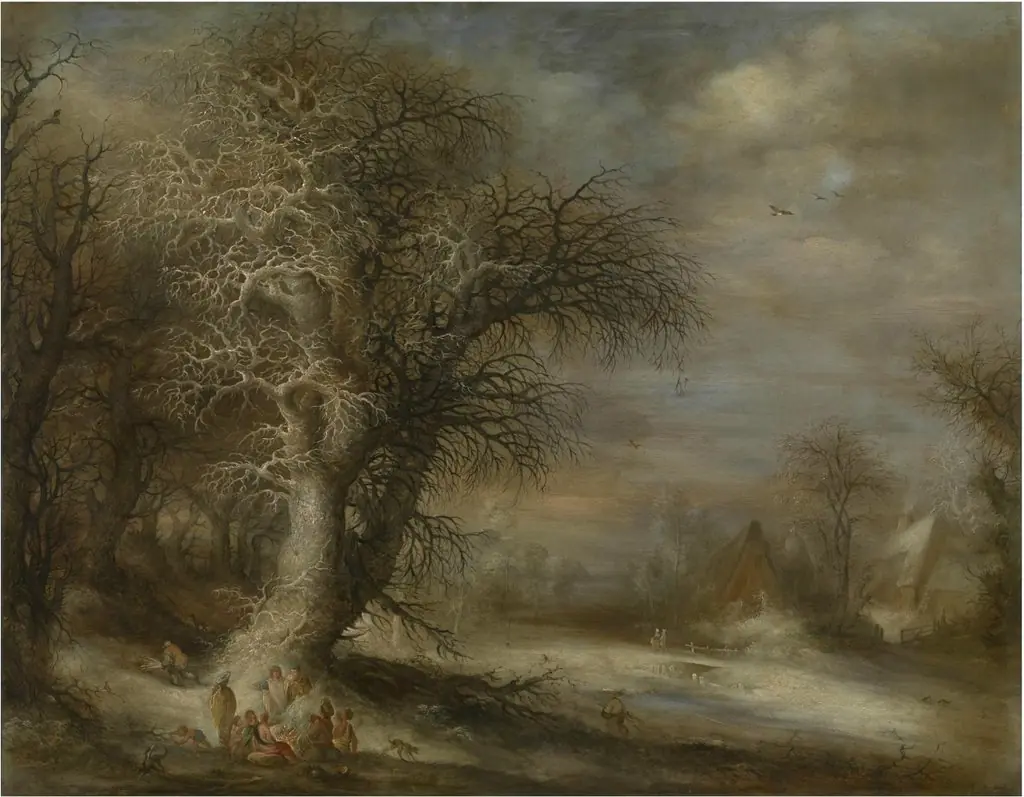
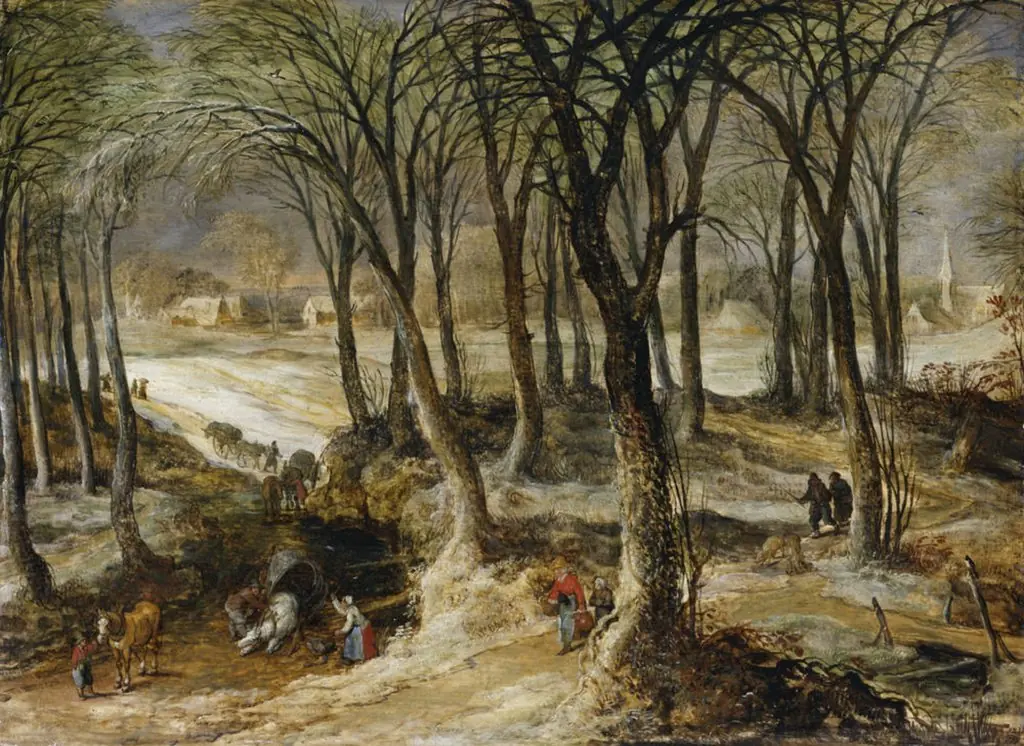
Winter Landscape with Woodcutters
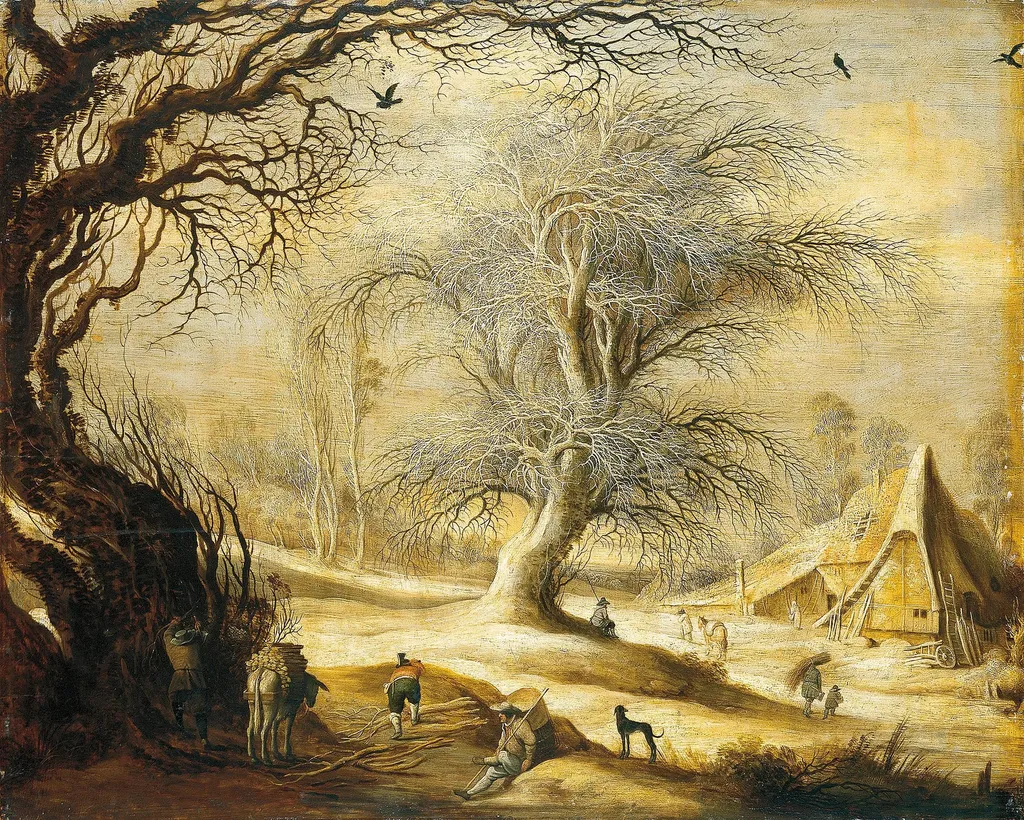
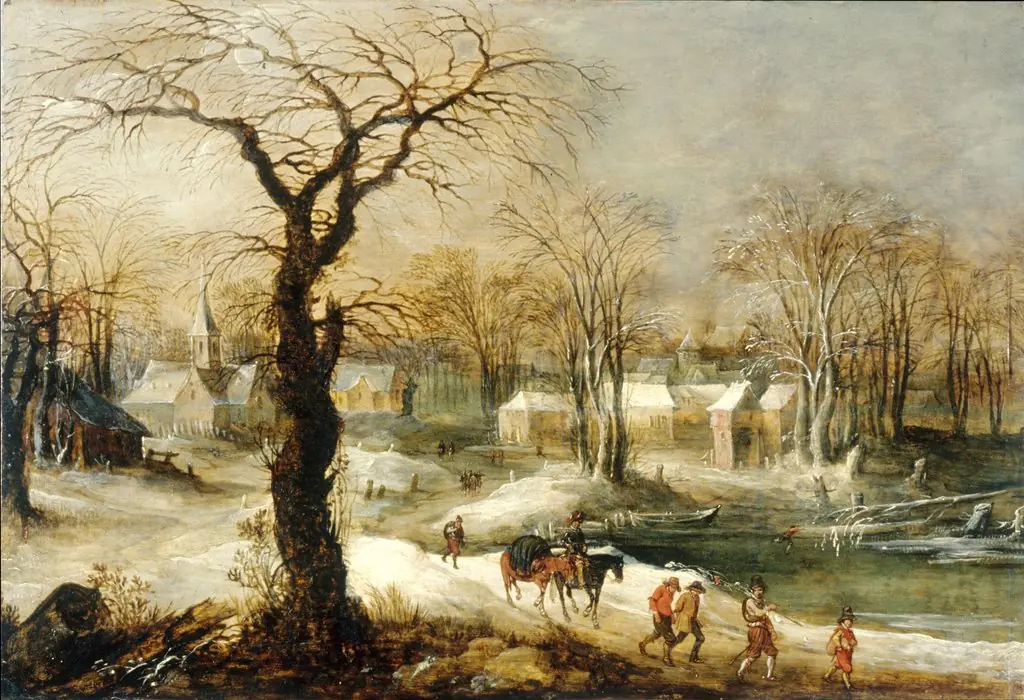
Winter Landscape with Woodcutters is an oil painting by the Flemish Baroque painting artist Gijsbrecht Leytens. It dates from 1630 and is held in the collection of the Hermitage Museum.
About this work
Overview
Once known only as the anonymous Master of the Winter Landscapes, his identity was later established through stylistic analysis.
Gijsbrecht Leytens, a Flemish artist active in the early 1600s, is recognized for his focused output of winter scenes. Once known only as the anonymous Master of the Winter Landscapes, his identity was later established through stylistic analysis. This 1630 oil painting, part of the State Hermitage Museum’s collection, exemplifies his signature subject matter: quiet, snow-covered rural environments inhabited by modest human activity.
Subject & Meaning
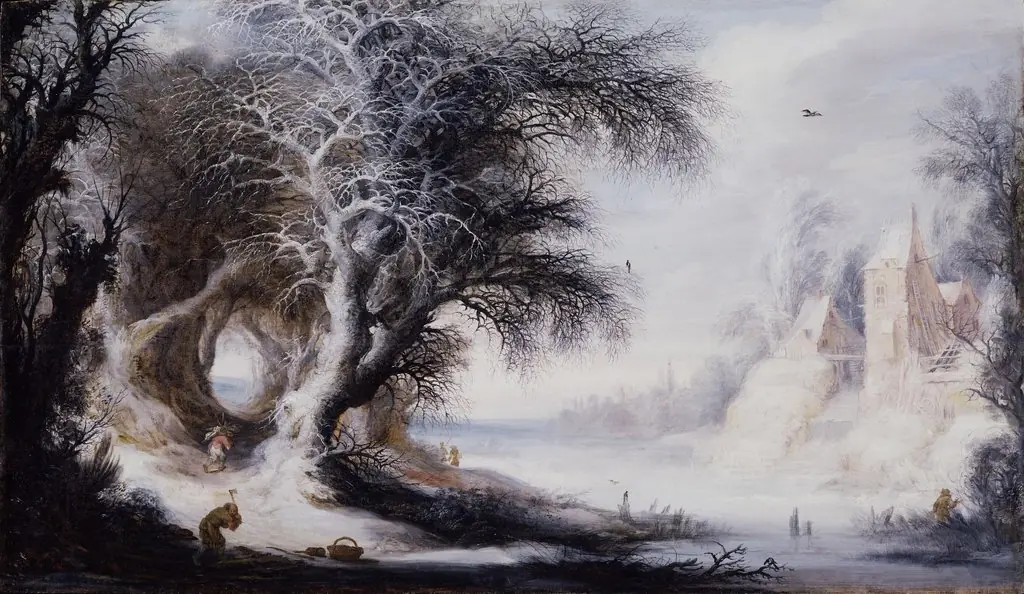
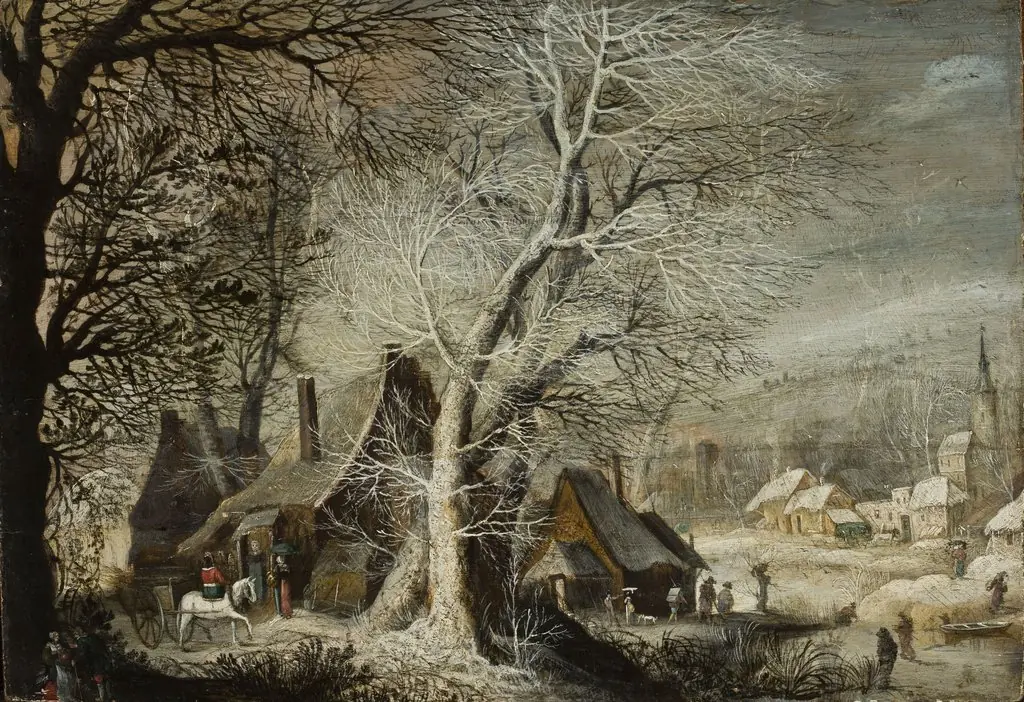
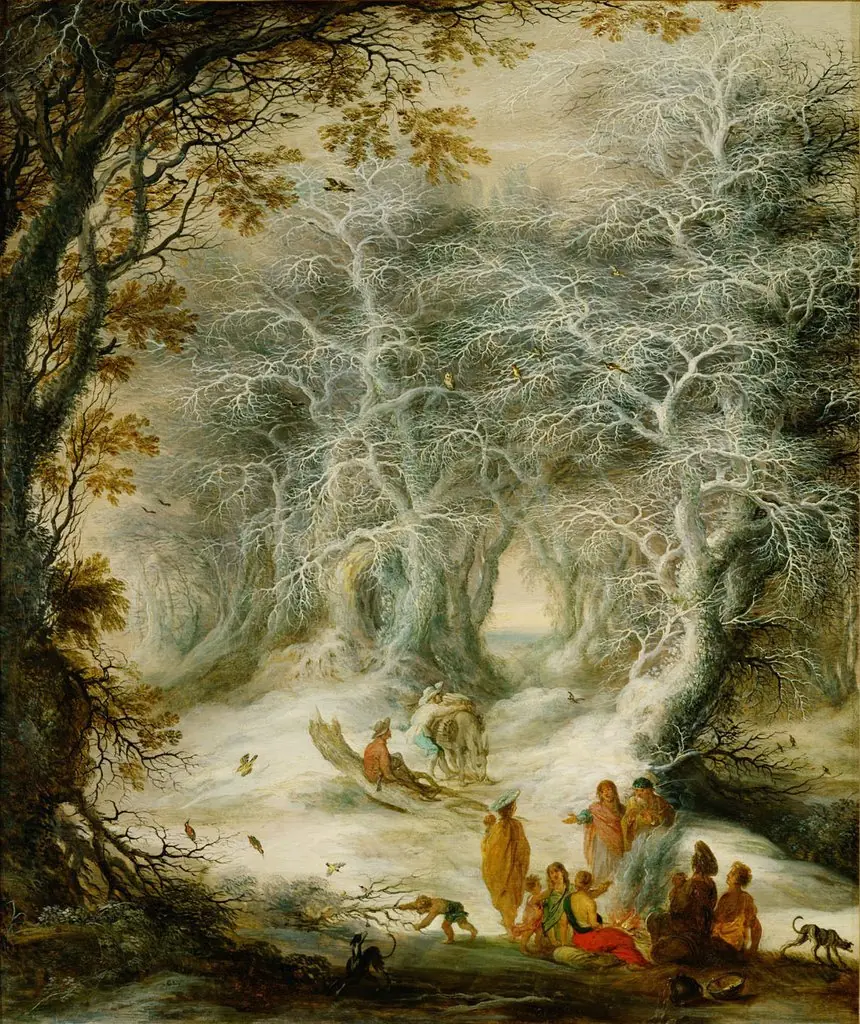
The painting portrays a tranquil winter day in a Flemish countryside, where figures gather firewood near a central tree. Their labor is unromanticized, integrated naturally into the frozen landscape. Distant buildings and a church spire suggest a settled community, reinforcing themes of survival and seasonal rhythm. The scene conveys neither grandeur nor drama, but a quiet endurance in the face of winter’s stillness.
Technique & Style
Leytens employs bold, textured brushwork to render snow-laden branches and frost-covered ground, creating tactile depth. A restrained palette of grays, whites, and muted browns enhances the cold atmosphere, while subtle contrasts of light and shadow—chiaroscuro—guide the viewer’s eye toward the central tree and figures. The composition is carefully balanced, with horizontal layers of land, village, and sky establishing spatial harmony.
History & Provenance
The painting was created in 1630 and remained within private collections until entering the State Hermitage Museum’s holdings. Its attribution shifted over time: initially grouped with anonymous winter landscape painters, Leytens was identified as its author through comparative study of his known works. The Hermitage acquired it as part of broader 19th-century efforts to consolidate Northern European Baroque art.
Context
In early 17th-century Flanders, winter scenes emerged as a distinct genre, reflecting both climatic reality and a growing interest in naturalism. Leytens worked alongside artists like Bruegel’s followers, but his approach was more subdued, emphasizing atmospheric cohesion over narrative. His paintings responded to urban patrons’ tastes for serene, contemplative views of rural life during a time of religious and political upheaval.
Legacy
Leytens helped define the Flemish winter landscape as a genre worthy of serious attention. Though not widely celebrated in his lifetime, his consistent treatment of snow, light, and quiet labor influenced later Northern painters. His works remain important for understanding how everyday rural existence was rendered with dignity and restraint in Baroque art, far from theatrical spectacle.
Own this work as a print
Artist & collection
Artist
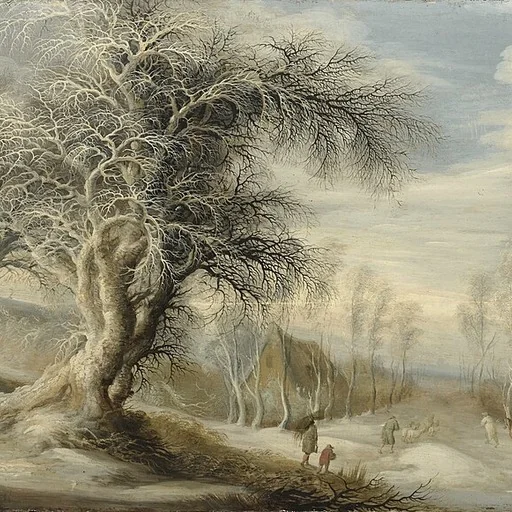
Gijsbrecht Leytens, formerly known as Meester van de Winterlandschappen or Master of the Winter Landscapes, (1586– after 1643 and before 1656) was a Flemish painter who specialized in landscapes and in particular winter landscapes.