Artwork
Cyprus Pioneers
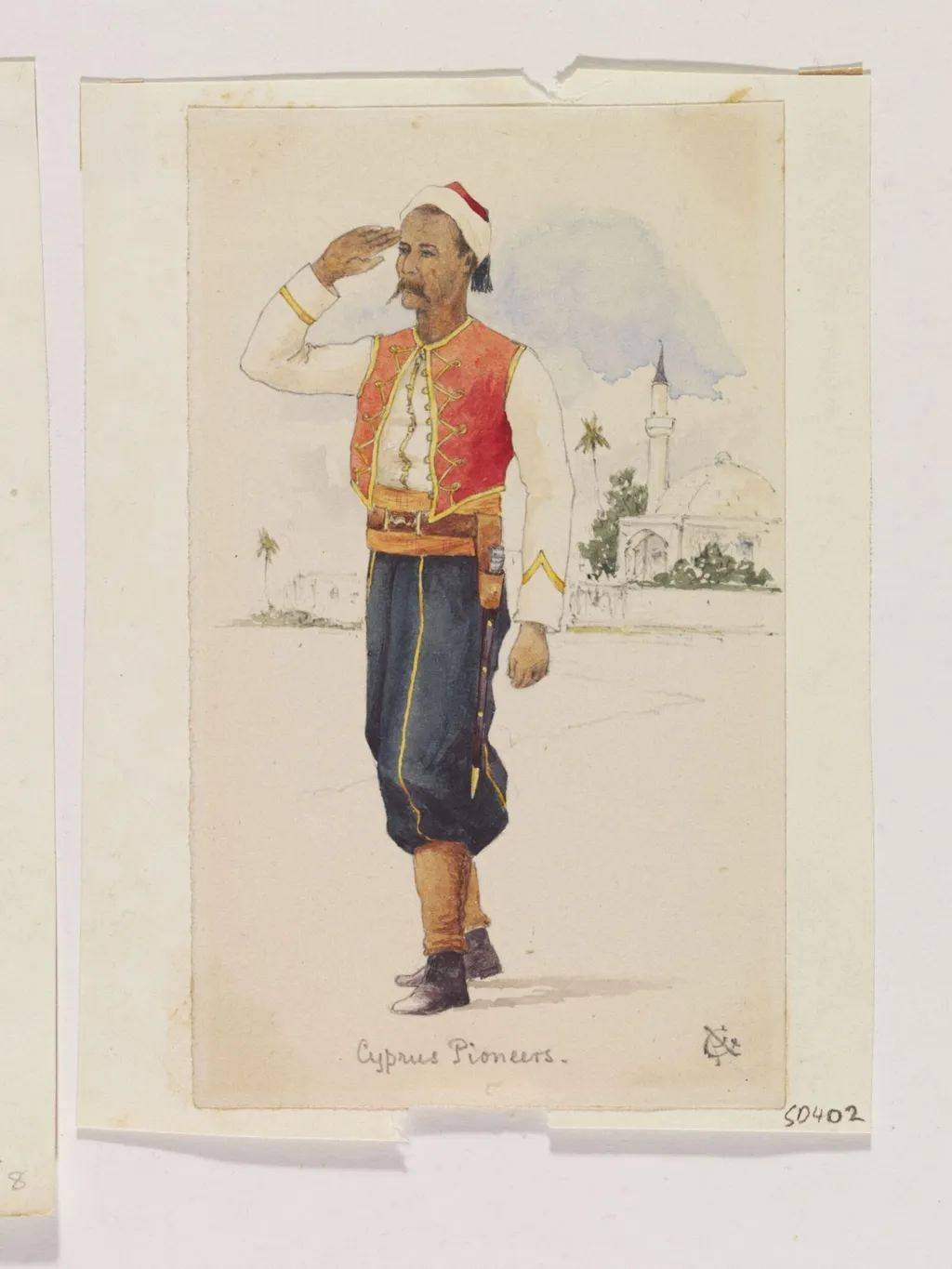
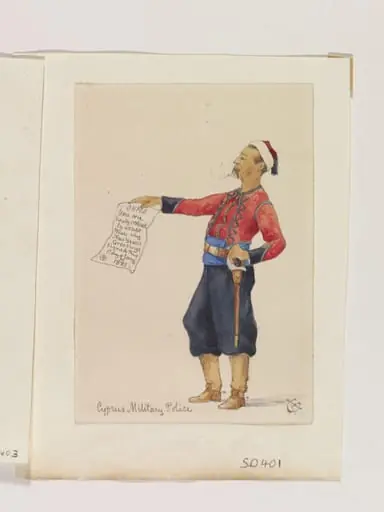
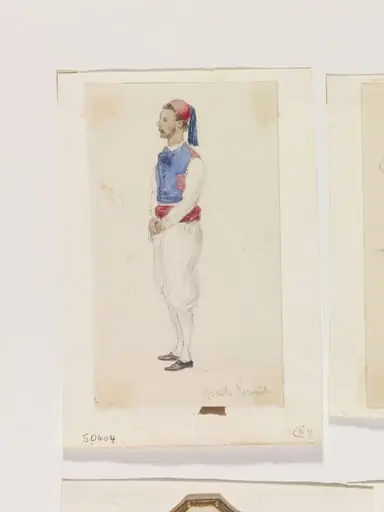
Cyprus Pioneers is a watercolor work on paper by the Impressionist artist Lt. Col. Gilmore. It dates from 1880 and is held in the collection of the Victoria and Albert Museum. Created in 1880 by Lt.
About this work
Overview
The work was later documented in Rodney Searight’s records as having been purchased by Alister Mathews for £36.
Created in 1880 by Lt. Col. Gilmore, *Cyprus Pioneers* is a watercolour depicting a solitary figure in a Cypriot landscape. The work was later documented in Rodney Searight’s records as having been purchased by Alister Mathews for £36. Its modest scale and medium reflect its origins as a personal or military sketch rather than a formal commission, capturing a moment of quiet observation in a colonial context.
Subject & Meaning
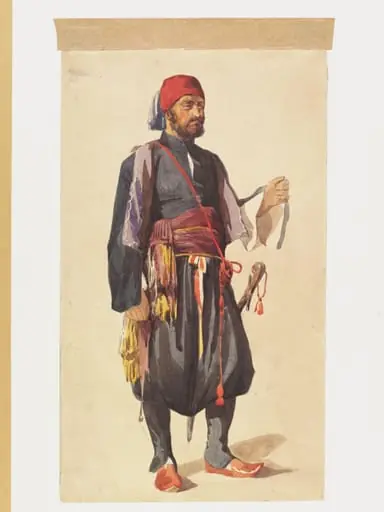
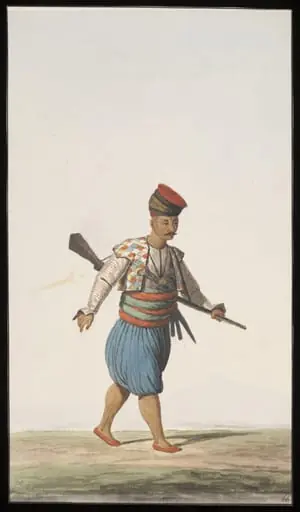
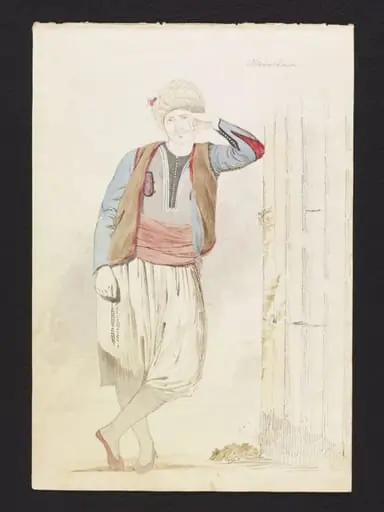
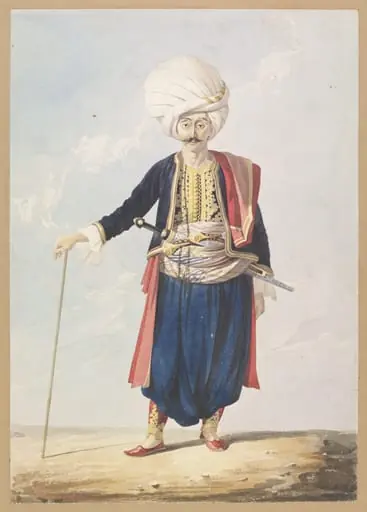
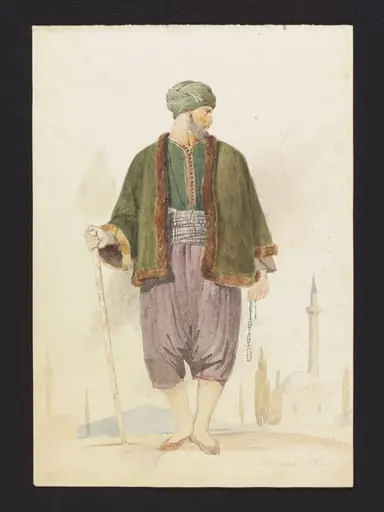
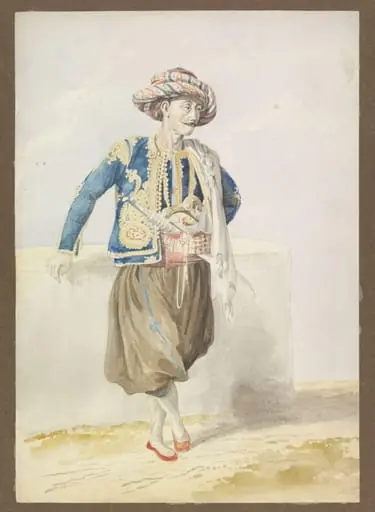
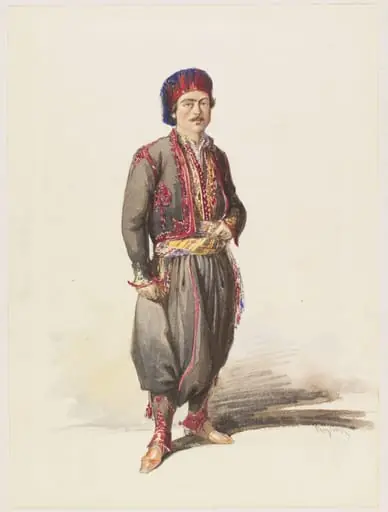
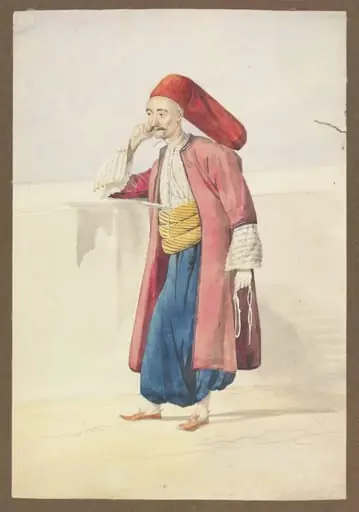
The central figure, a man in a red-and-white vest and white hat with a red band, raises his right hand in a salute, suggesting military bearing. He stands before a structure featuring a dome and minaret, hinting at local architecture. The gesture and setting imply a moment of recognition or respect, possibly between an officer and the landscape or its people. The absence of other figures emphasizes solitude and individual presence within a foreign environment.
Technique & Style
Gilmore employs transparent watercolour washes to suggest atmospheric depth, with soft gradients in the sky and background foliage. The man’s clothing is rendered with careful attention to pattern and texture, particularly the vest’s intricate design. Subtle contrasts in light and shadow guide focus toward the figure, though the work avoids dramatic chiaroscuro, favoring a restrained, observational tone consistent with topographical watercolour traditions of the period.
History & Provenance
The painting’s documented history begins with its creation in 1880 and continues with its acquisition by Alister Mathews, noted in Rodney Searight’s records. No earlier ownership or exhibition history is recorded. Its survival as a private collection piece suggests it was valued for its personal or documentary significance rather than as a public artwork, reflecting the informal circulation of military sketches from the era.
Context
Produced during British administrative involvement in Cyprus, the image reflects the presence of British officers in the region following the 1878 occupation. The architectural elements—dome and minaret—signal the island’s Ottoman heritage, while the figure’s uniform and salute point to imperial authority. The scene is neither celebratory nor critical, instead offering a quiet, unembellished glimpse into daily encounters within a colonial setting.
Legacy
Though not widely exhibited or reproduced, *Cyprus Pioneers* remains a tangible artifact of 19th-century British military engagement in the Eastern Mediterranean. Its preservation in private hands and inclusion in Searight’s notes attest to its role as a personal record. As a modest watercolour, it contributes to a broader, understudied corpus of colonial-era sketches that document place, posture, and perception beyond official narratives.
Artist & collection
Artist
This British officer turned his hand to watercolours while stationed in Cyprus, showing daily life under colonial rule.