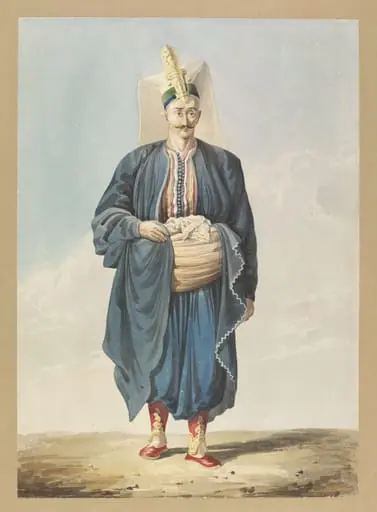
Artwork
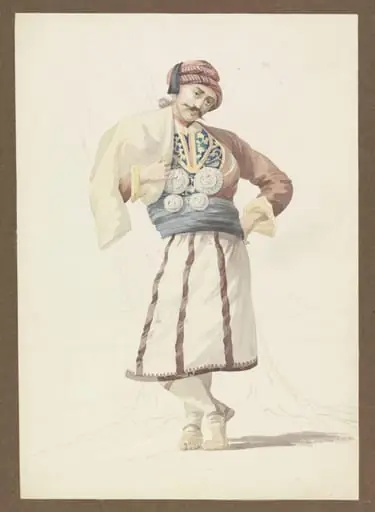
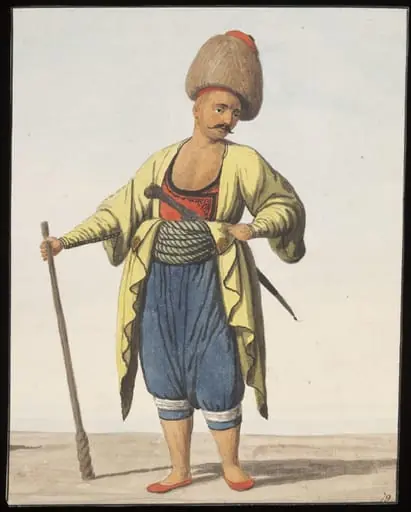
Janissary at the English Palace Constantinople
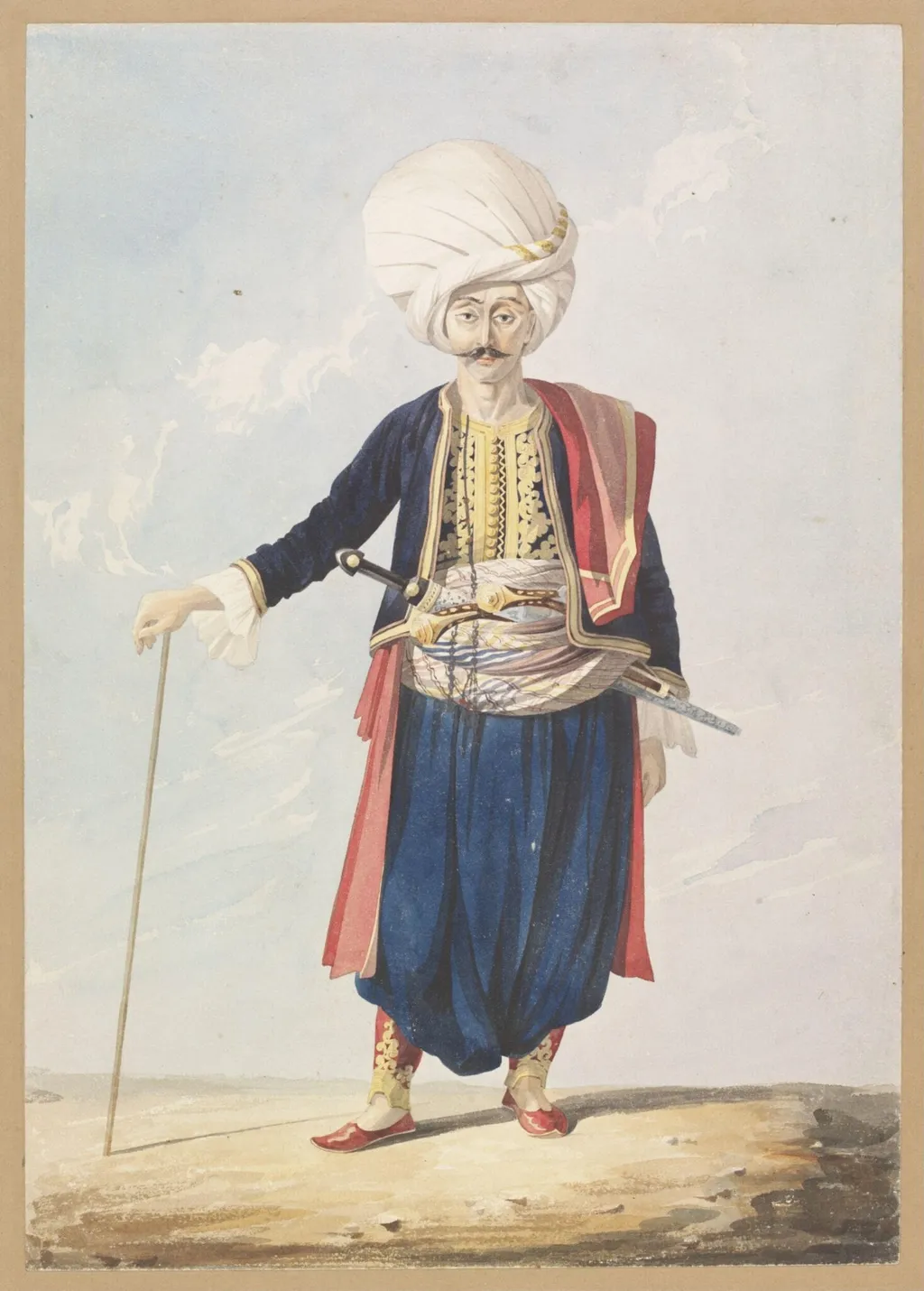
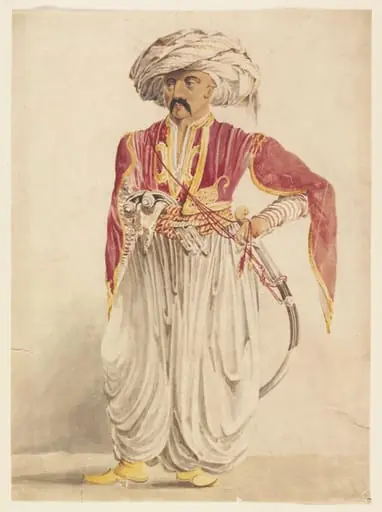
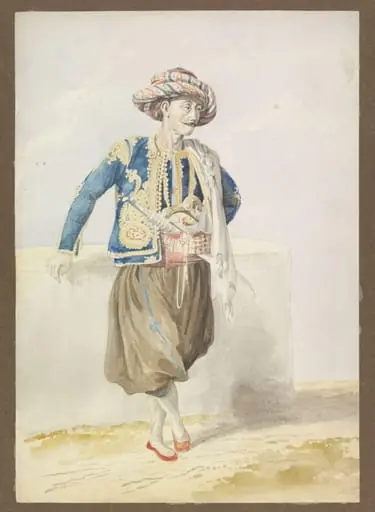
Janissary at the English Palace Constantinople is a watercolor work on paper by the American Folk Art artist William Page. It dates from 1820 and is held in the collection of the Victoria and Albert Museum.
About this work
Overview
Created in 1820 by William Page, this watercolour portrays a Janissary guard at the British Embassy in Constantinople.
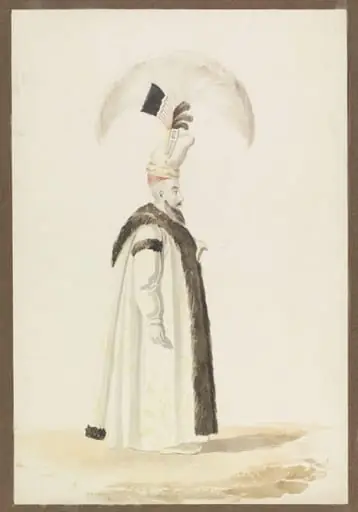
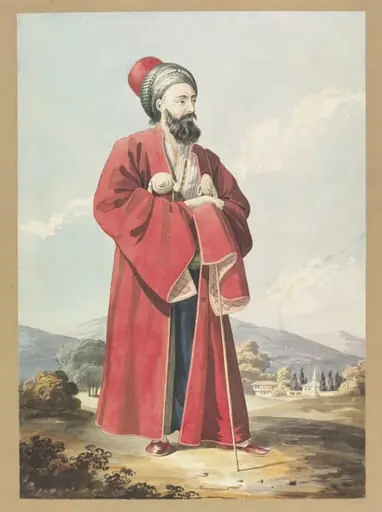
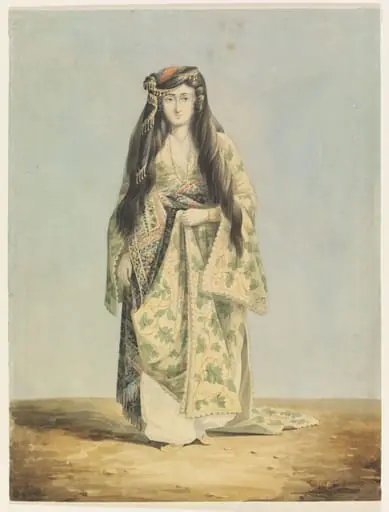
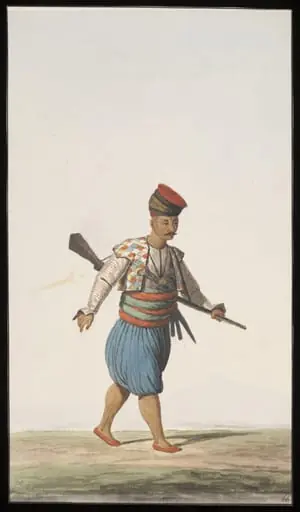
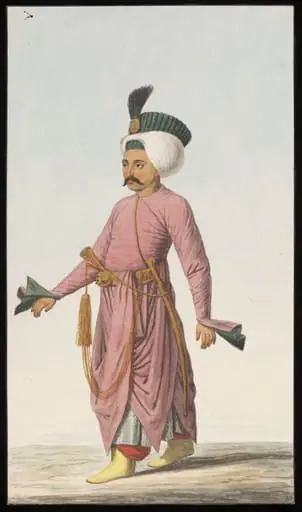
Created in 1820 by William Page, this watercolour portrays a Janissary guard at the British Embassy in Constantinople. Part of a broader series of costume studies, the work captures a figure from daily life in the Ottoman capital with attention to detail and cultural specificity. The medium’s delicacy suits the precision required for rendering textile patterns and military regalia, reflecting Page’s interest in ethnographic documentation through art.
Subject & Meaning
The figure is a Janissary, a member of the elite Ottoman military corps, stationed as a ceremonial guard at the British diplomatic residence in Pera. His attire—white turban, blue coat with gold embroidery, red slippers, and curved sword—signals rank and function within the imperial hierarchy. The pose, with one hand on the hip and a walking stick held loosely, suggests a blend of authority and routine duty, capturing the Janissary not as a warrior but as a visible symbol of Ottoman presence in a foreign diplomatic enclave.
Technique & Style
Page employed transparent watercolour washes to render the rich textures of fabric and metalwork, using fine linework to define embroidery and belt details. The background is deliberately muted and indistinct, directing focus to the figure’s costume and posture. This selective rendering aligns with 19th-century European practices of costume study, where accuracy in dress took precedence over environmental context, emphasizing cultural documentation over narrative.
History & Provenance
The watercolour was acquired by the British Museum in June 1967 from the London antiquarian bookseller Maggs Bros. It originated from Page’s personal collection of sketches made during his time in Constantinople. While the exact circumstances of its creation remain undocumented, its inclusion in later scholarly comparisons with Louis Dupré’s published illustrations suggests it was recognized early as a significant record of Ottoman military dress.
Context
In the early 1820s, European artists and diplomats in Constantinople increasingly documented Ottoman life as part of a broader fascination with the East. Page’s work emerged amid a wave of travel sketches and ethnographic studies, influenced by both firsthand observation and existing visual sources. The Janissary, though still a visible presence, was nearing the end of its institutional life—dissolved just six years after this drawing was made—making such records historically significant.
Legacy
Page’s watercolour contributes to a small but important archive of Western depictions of Ottoman military personnel before the Janissary corps was abolished in 1826. Its precision and restraint distinguish it from more romanticized portrayals of the period. The work remains a reference for scholars studying cross-cultural visual exchange and the representation of Ottoman institutions in European art during the early 19th century.
Artist & collection