Artwork
Untitled
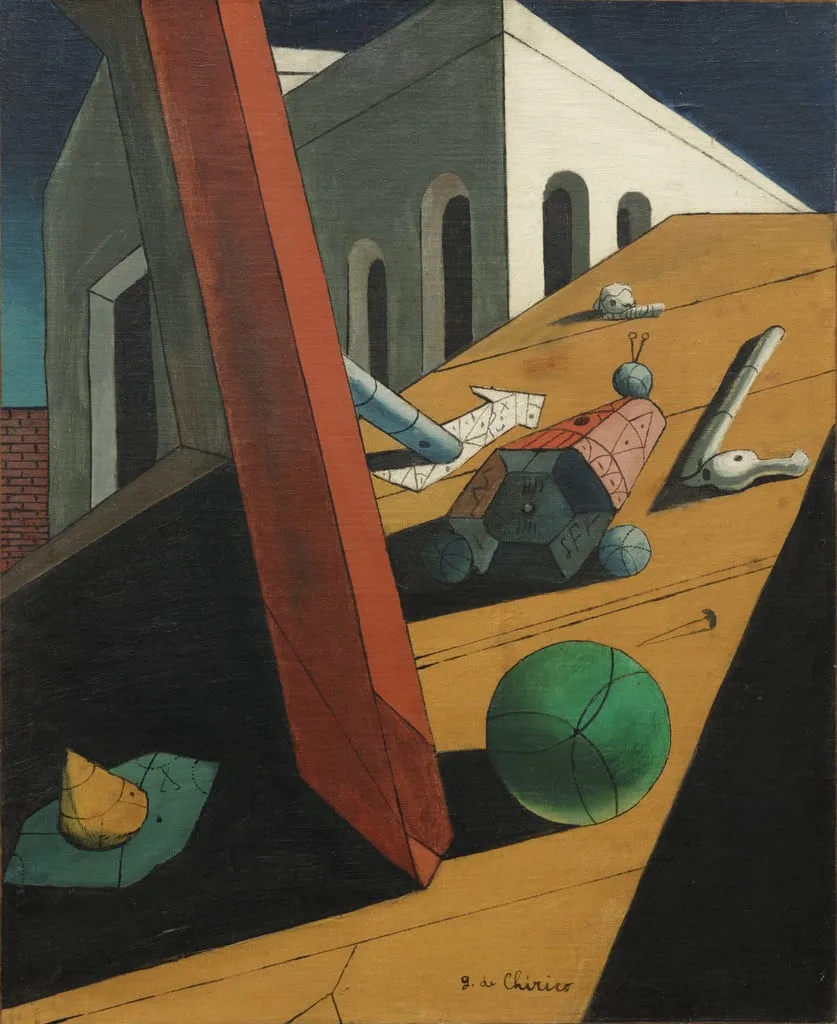
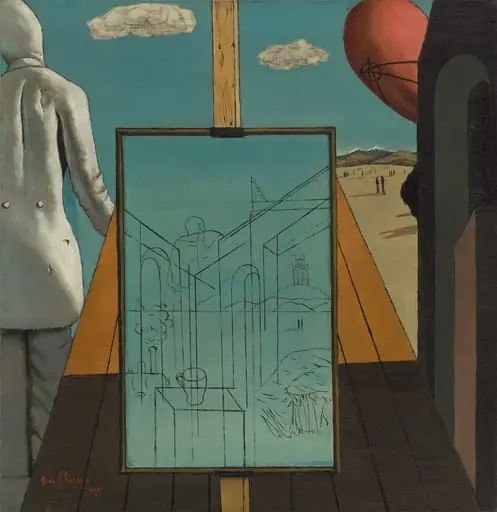
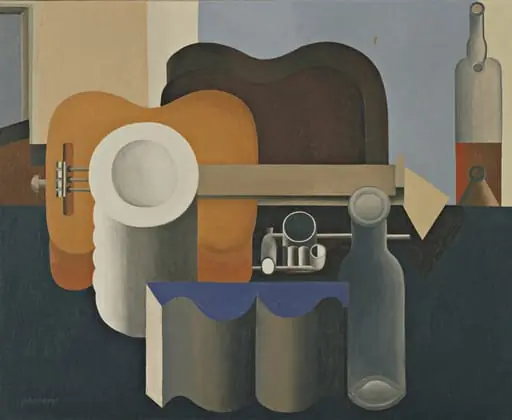
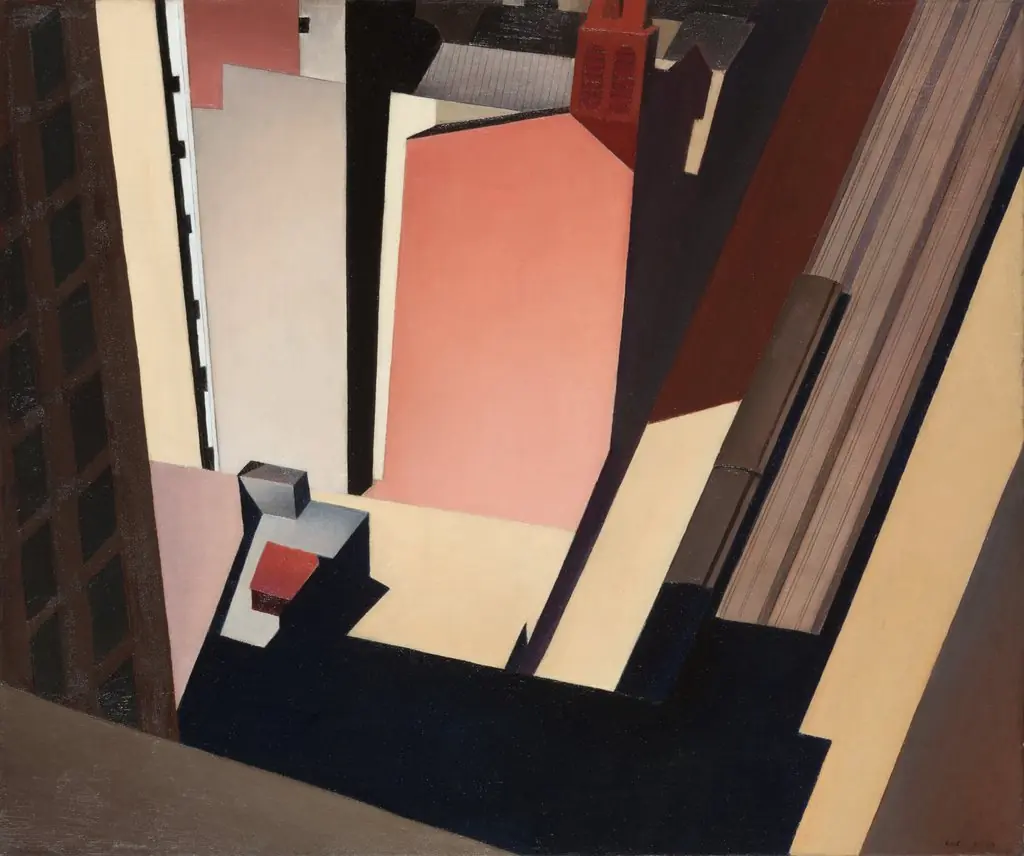
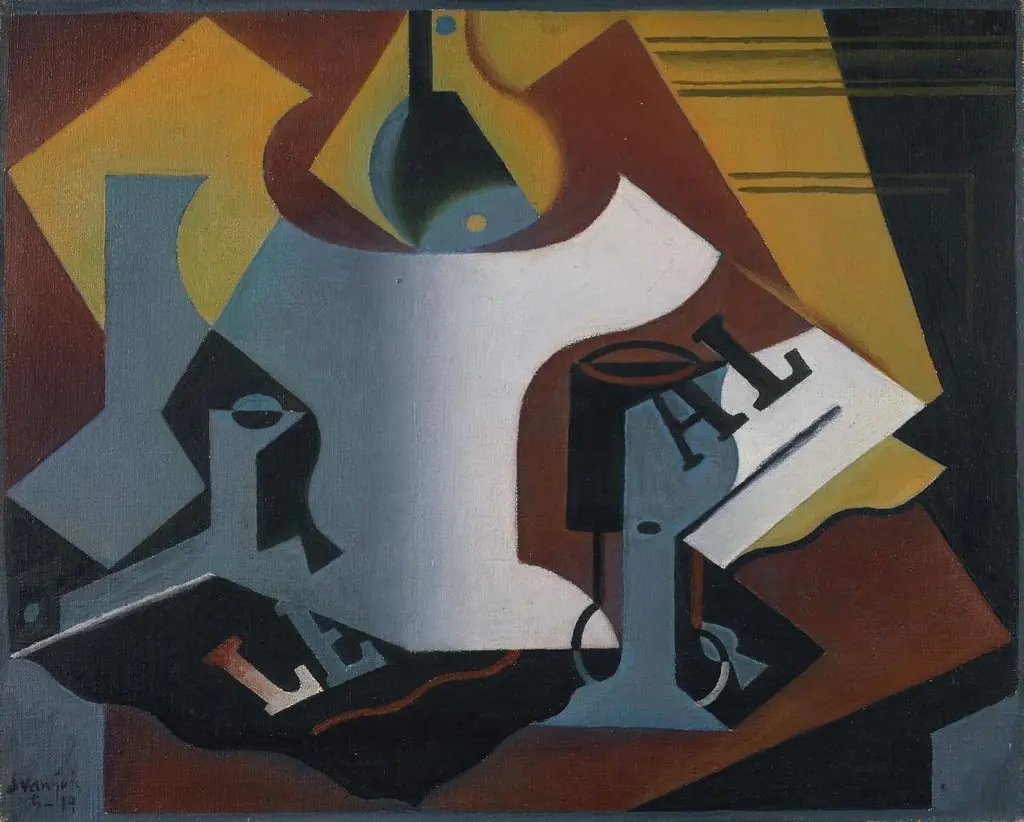
Untitled is an oil painting by Giorgio de Chirico. It dates from 1914 and is held in the collection of the Museum of Modern Art.
About this work
Overview
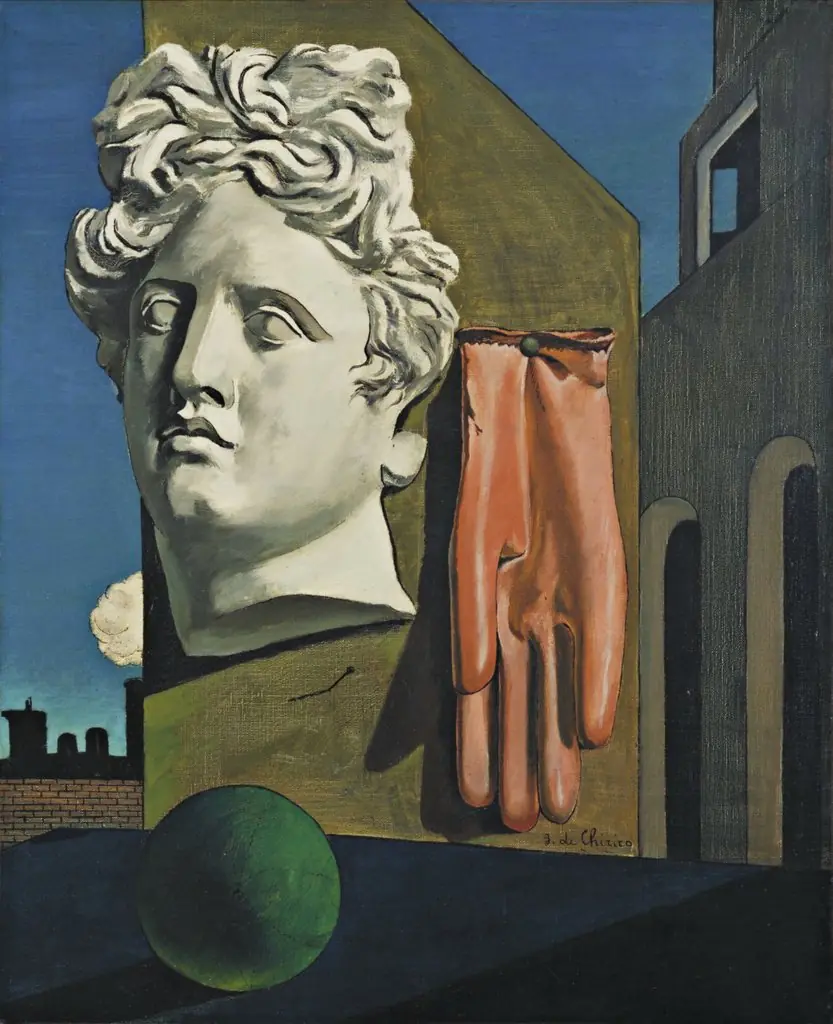
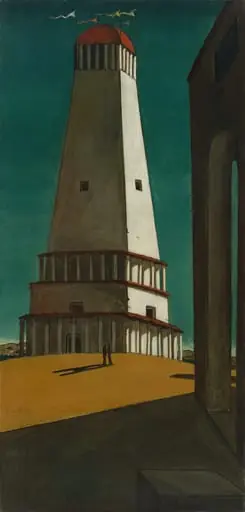
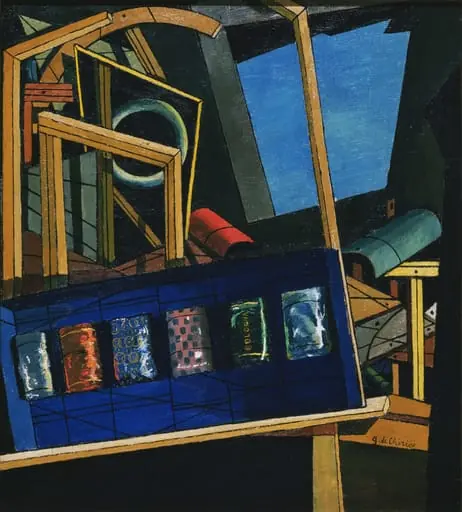
Painted in 1914, this oil on canvas work is one of Giorgio de Chirico’s early metaphysical compositions. Created during a formative period in his career, it exemplifies his departure from naturalism toward a vision of urban spaces charged with psychological tension. The painting lacks a clear narrative but evokes a sense of quiet unease through its distorted architecture and anomalous objects.
Subject & Meaning
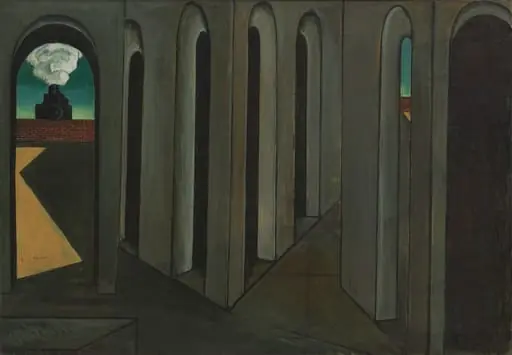
The arches in the background recall classical ruins, hinting at a lost order, while the empty space amplifies a feeling of isolation.
The scene presents an empty, dreamlike cityscape with a leaning red pole, a slanted sidewalk, and scattered objects—a green ball, a yellow hat, and a mechanical figure—arranged without apparent function. These elements resist symbolic resolution, instead suggesting the fragmentation of perception. The arches in the background recall classical ruins, hinting at a lost order, while the empty space amplifies a feeling of isolation.
Technique & Style
De Chirico employs sharp, linear perspective to construct an unnerving spatial logic. Forms are elongated, shadows are exaggerated, and proportions are deliberately distorted to unsettle the viewer’s sense of reality. The palette is muted yet punctuated by vivid accents—red, yellow, green—heightening the surreal dissonance. Brushwork is precise, emphasizing clarity over emotion, reinforcing the painting’s eerie stillness.
History & Provenance
Created in Florence during de Chirico’s most productive metaphysical phase, the work emerged from his personal engagement with German philosophy and classical architecture. It was painted before the formal establishment of the Scuola Metafisica but aligns with its early principles. The painting remained in private collections until entering a public institution, where it is now preserved as a key example of pre-Surrealist avant-garde experimentation.
Context
In 1914, Europe stood on the brink of war, and de Chirico’s imagery mirrored a cultural anxiety about rationality’s collapse. His work responded to Nietzsche’s ideas of eternal recurrence and Schopenhauer’s view of the world as will and representation. The painting’s alienating atmosphere resonated with broader modernist critiques of industrial progress and the erosion of traditional meaning.
Legacy
This painting contributed to the foundation of Metaphysical Art, influencing later Surrealist artists who admired its enigmatic compositions and psychological depth. Though de Chirico later disavowed his early style, these works remained touchstones for those seeking to explore the subconscious through visual dislocation. The painting’s unresolved tensions continue to invite interpretation without offering closure.
Artist & collection

Artist
Giuseppe Maria Alberto Giorgio de Chirico ( KIRR-ik-oh; Italian: ; 10 July 1888 – 20 November 1978) was a Greek-Italian artist and writer born in Volos, Greece.