Artwork
Untitled
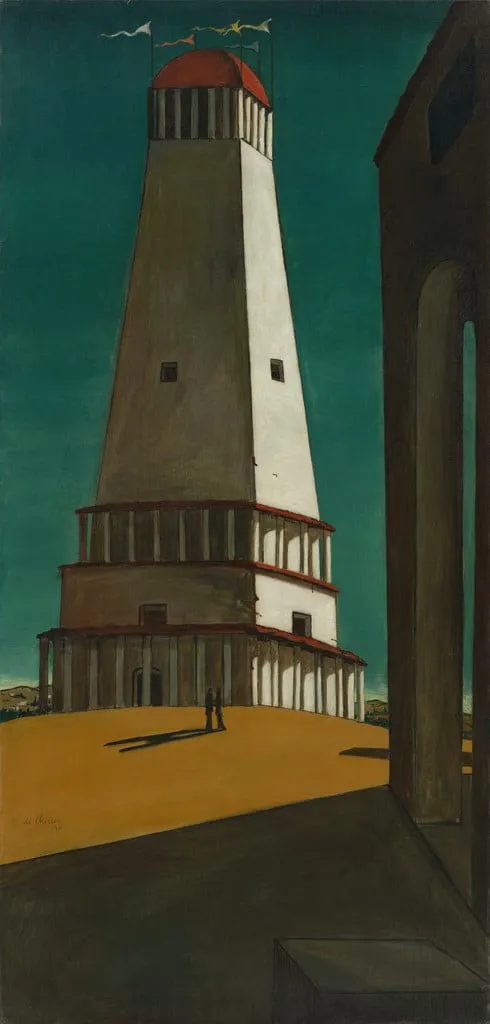
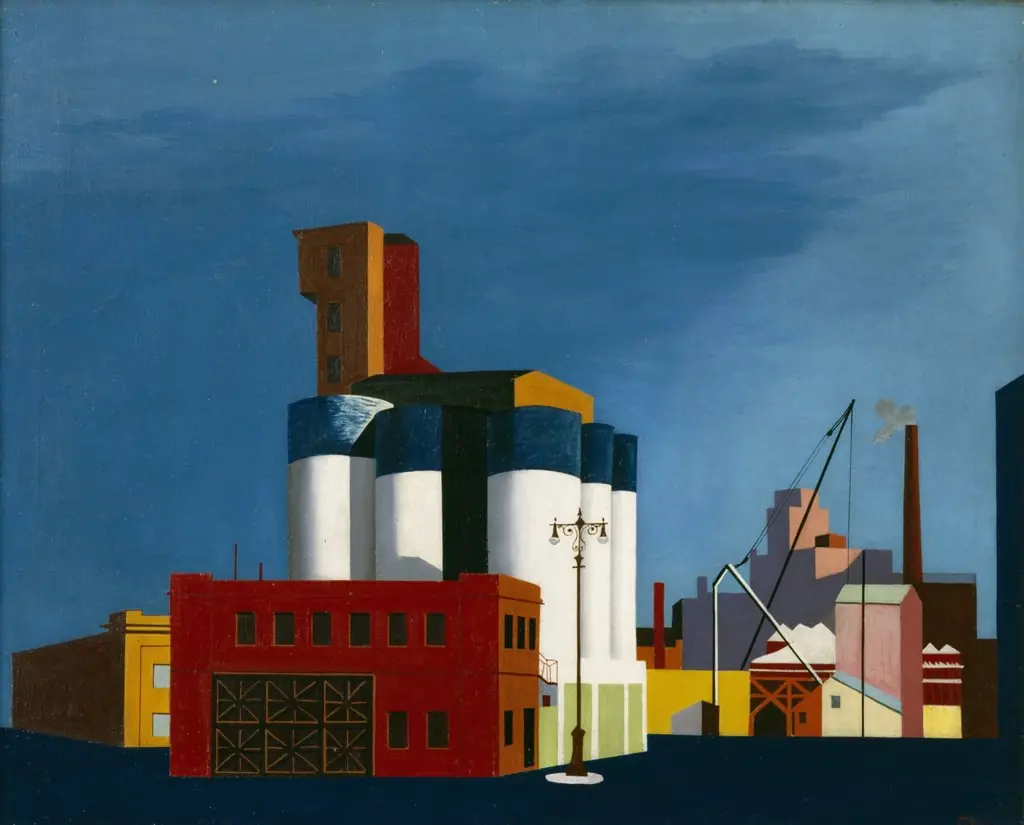
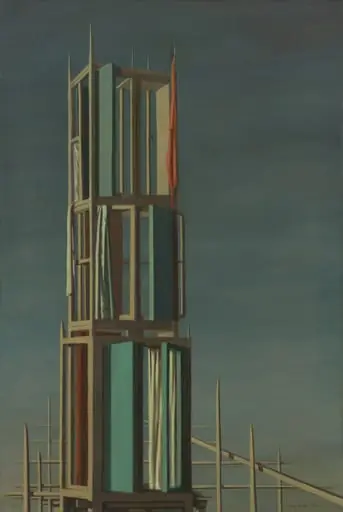
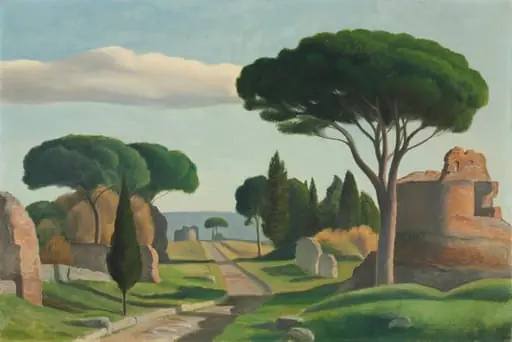
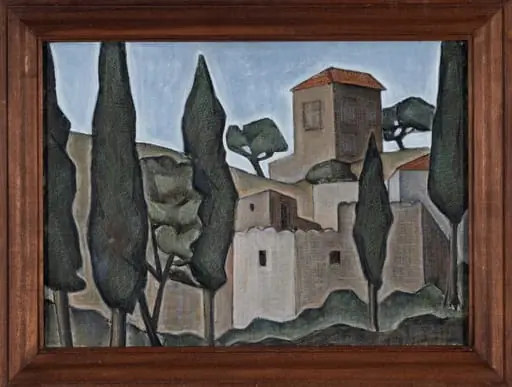
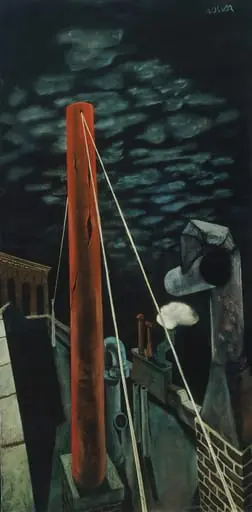
Untitled is an oil painting by the Futurist artist Giorgio de Chirico. It dates from 1912 and is held in the collection of the Museum of Modern Art.
About this work
Overview
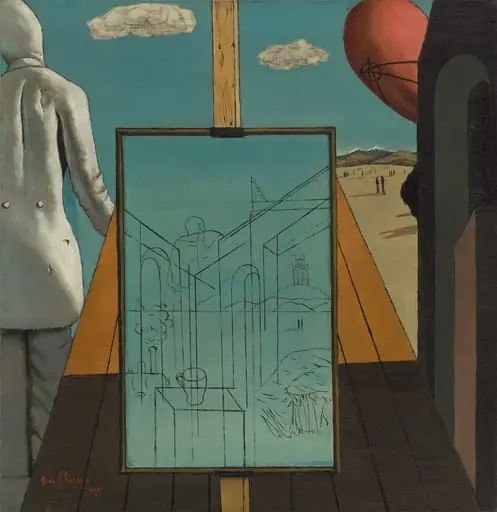
Painted in 1912, this oil on canvas work by Giorgio de Chirico presents a stylized urban structure devoid of functional architecture.
Painted in 1912, this oil on canvas work by Giorgio de Chirico presents a stylized urban structure devoid of functional architecture. Its rigid forms and unnatural proportions reject naturalistic representation, instead constructing a silent, dreamlike environment. The painting belongs to de Chirico’s early period, preceding his formal association with the Metaphysical school but already embodying its core sensibilities through spatial dislocation and stillness.
Subject & Meaning
A solitary figure stands beneath a towering, block-like structure with a red dome, evoking an anonymous monument rather than a recognizable building. The composition suggests isolation and mystery, with no narrative clues to explain the scene. The interplay of shadow and flat color intensifies the sense of detachment, hinting at psychological unease rather than physical reality. The figure’s small scale amplifies the monument’s dominance, implying themes of alienation within modern space.
Technique & Style
De Chirico employs sharp, unmodulated planes of color with no gradation or chiaroscuro, creating a flattened, stage-like depth. Architectural elements are rendered as geometric assemblies—columns, arches, and stacked forms—without structural logic. Hard edges define every shape, and shadows are cast as solid, opaque shapes rather than atmospheric transitions. This deliberate rejection of traditional perspective contributes to the painting’s unsettling, non-realistic atmosphere.
History & Provenance
Created during de Chirico’s time in Florence and Ferrara, this work predates his official founding of Metaphysical painting but shares its visual language. It emerged amid his engagement with Nietzschean philosophy and classical mythology, which informed his reimagining of urban environments as symbolic landscapes. The painting remained in private hands until entering a public collection in the mid-20th century, where it became recognized as an early indicator of his evolving aesthetic.
Context
While contemporaries like the Futurists celebrated motion and industrial energy, de Chirico turned inward, constructing stillness as a form of inquiry. His cityscapes responded to the alienation of modern life, drawing from Italian piazzas and classical ruins filtered through philosophical abstraction. This work reflects a broader European turn toward the irrational in art, anticipating Surrealism’s fascination with the unconscious and the uncanny.
Legacy
This painting helped establish a visual vocabulary later adopted by Surrealist artists, particularly in its use of eerie stillness and illogical space. Though not widely exhibited during de Chirico’s early career, its formal innovations influenced later generations seeking to depict psychological states through architecture. Its enduring presence in museum collections underscores its role as a quiet catalyst in 20th-century art’s shift away from realism.
Artist & collection

Artist
Giuseppe Maria Alberto Giorgio de Chirico ( KIRR-ik-oh; Italian: ; 10 July 1888 – 20 November 1978) was a Greek-Italian artist and writer born in Volos, Greece.