Artwork
Narcissus at the Fountain
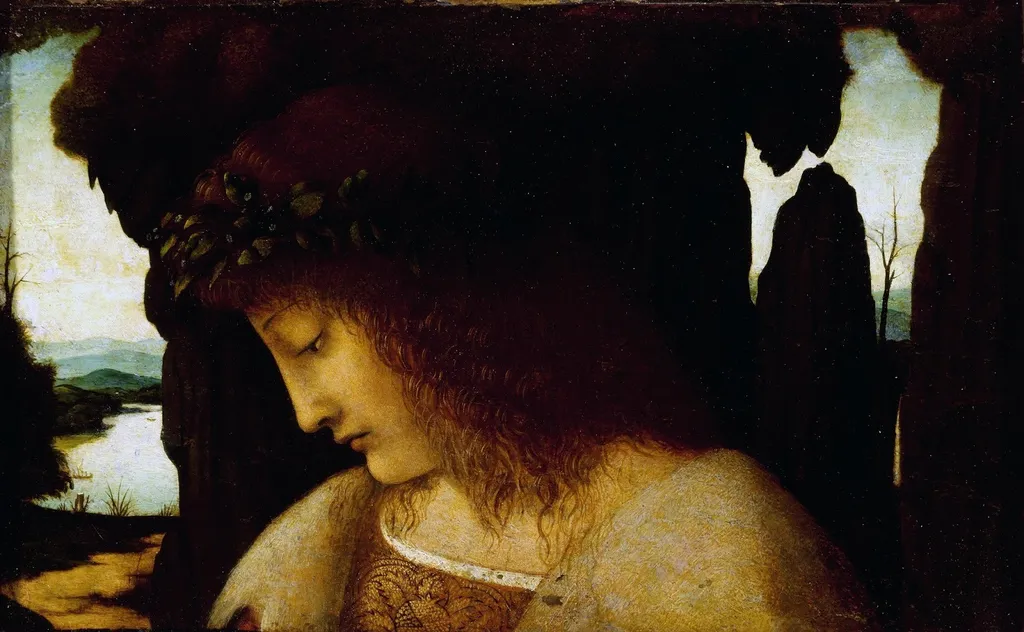
Narcissus at the Fountain is an unspecified painting by the High Renaissance artist Giovanni Antonio Boltraffio. It dates from 1500 and is held in the collection of the Uffizi Gallery.
About this work
Narcissus at the Fountain is a painting by Giovanni Antonio Boltraffio. It was created around 1500.
The painting is described as showing a young man in profile with a downward gaze. This gaze is what led to the interpretation of the subject as Narcissus.
To learn more about the style and methods used in this painting, consider looking into the technique of sfumato.
Overview
The painting is currently held in the Uffizi Gallery in Florence, with a closely related version in the National Gallery, London.
Painted between 1500 and 1510, Narcissus at the Fountain is an oil-on-panel work by Giovanni Antonio Boltraffio, an artist active in Milan during the High Renaissance. The painting is currently held in the Uffizi Gallery in Florence, with a closely related version in the National Gallery, London. Both versions depict a solitary youth in profile, gazing downward toward an unseen surface, a composition that has led to the identification of the figure as Narcissus from Ovid’s myth.
Subject & Meaning
The figure is understood as Narcissus, the youth from Greek myth who fell in love with his own reflection. His profile stance and lowered gaze suggest introspection and fixation, aligning with the tale’s theme of self-obsession. The absence of a visible water source or reflection leaves the narrative implied rather than literal, inviting contemplation of inner states over external action. The quiet solitude of the figure reinforces the psychological weight of the myth.
Technique & Style
Boltraffio’s handling of form and atmosphere reflects the influence of Leonardo da Vinci, particularly in the soft transitions between light and shadow—known as sfumato. The background, with its hazy, layered landscape, echoes the atmospheric depth seen in Leonardo’s Virgin of the Rocks. The figure’s smooth modeling and subtle gradations in skin tone demonstrate a refined approach to volume, characteristic of Milanese Renaissance practice and shared with contemporaries like Luini and Solario.
History & Provenance
The painting entered the Uffizi collection in the 18th century, likely through Medici acquisitions. The version in London, nearly identical in composition, was long considered a studio copy or variant. Both works have been subjects of scholarly debate regarding authorship, as their stylistic similarities to other Lombard painters complicated attribution. Modern analysis has reaffirmed Boltraffio’s hand in the Uffizi version, distinguishing it as the primary expression of his interpretation.
Context
Created in Milan during the height of Leonardo’s influence, the painting reflects the city’s artistic climate, where Leonardo’s innovations in naturalism and psychological depth were widely absorbed. Boltraffio, as a close associate of Leonardo’s circle, adapted these methods to secular subjects, expanding the reach of High Renaissance ideals beyond religious themes. The choice of a mythological figure also signals a growing interest in classical narratives among elite patrons of the time.
Legacy
Narcissus at the Fountain stands as an example of how Leonardo’s stylistic language was localized and adapted by his followers. While not widely known outside scholarly circles, the painting contributes to understanding the diffusion of Renaissance ideals in northern Italy. Its quiet intensity and technical precision continue to inform studies of Lombard painting and the evolution of portraiture in the early 16th century.
Artist & collection
Artist
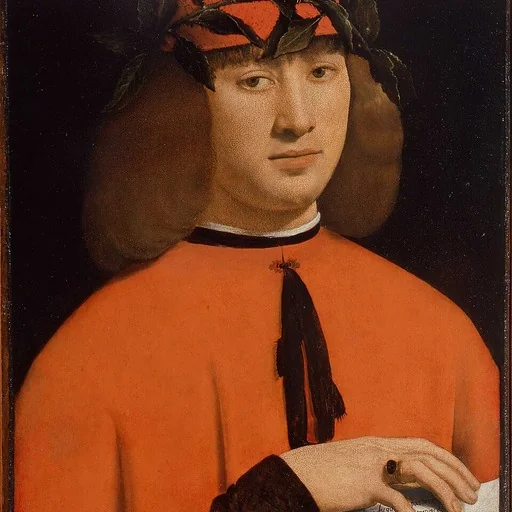
Giovanni Antonio Boltraffio (or Beltraffio) (1466 or 1467 – 1516) was an Italian painter of the High Renaissance from Lombardy, who worked in the studio of Leonardo da Vinci.




![Ginevra de' Benci [obverse], by Leonardo da Vinci](https://artifactworldgallery.com/img/leonardo-da-vinci--ginevra-de-benci-obverse--afb6ec3a3e65f392-w320.webp)