Artwork
Saint John the Baptist
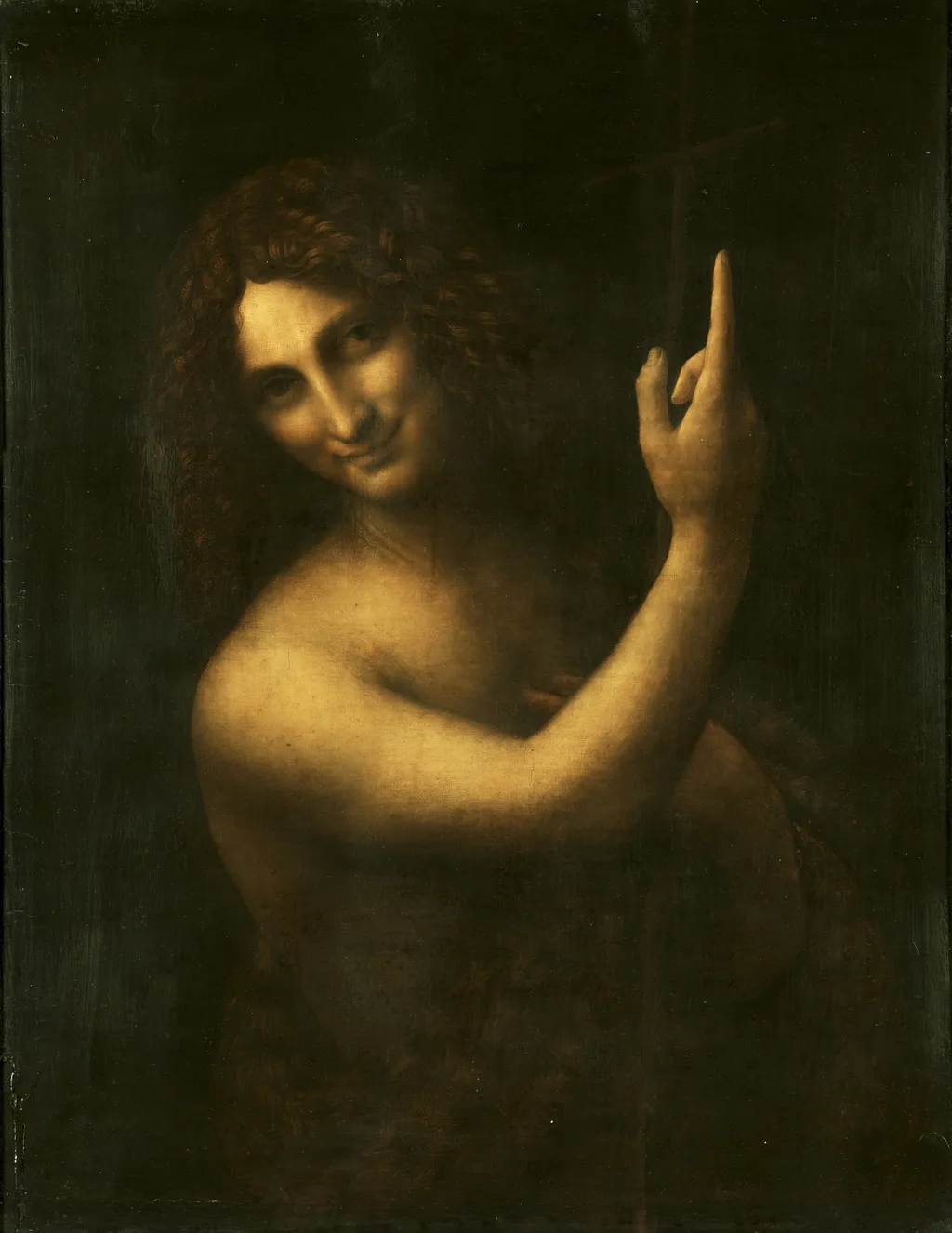
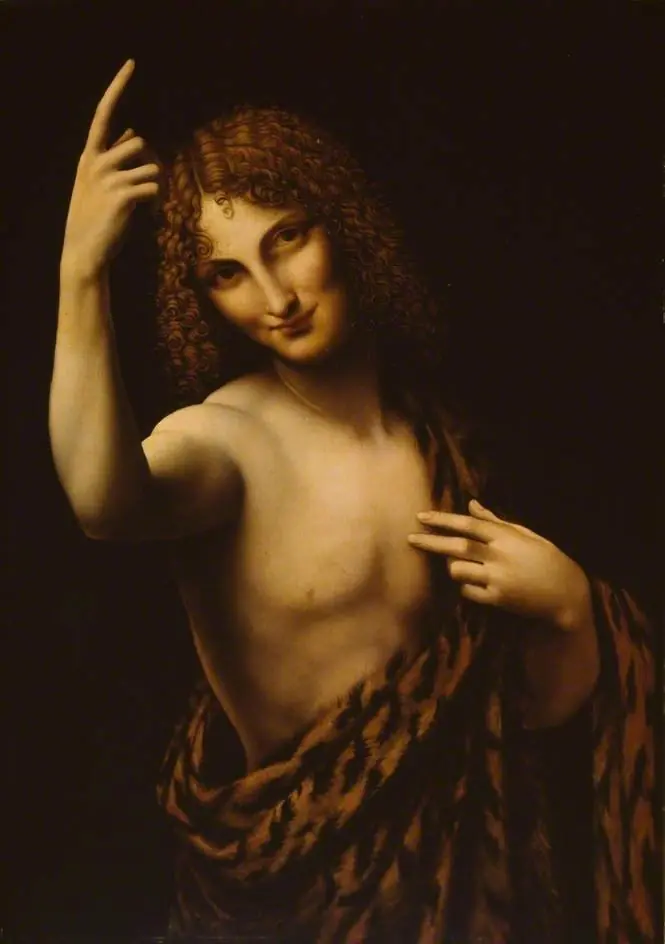
Saint John the Baptist is an oil painting by the High Renaissance artist Leonardo da Vinci. It is held in the collection of the Department of Paintings of the Louvre.
About this work
This painting is called Saint John the Baptist. It's an oil painting created by Leonardo da Vinci.
The painting is believed to have been completed between 1513 and 1516. It's also thought to be Leonardo da Vinci's final painting, which makes it a significant work.
To learn more about the style and methods used in this painting, look up the technique of glazing.
Overview
Saint John the Baptist is an oil painting on walnut panel attributed to Leonardo da Vinci, likely finished between 1513 and 1516.
Saint John the Baptist is an oil painting on walnut panel attributed to Leonardo da Vinci, likely finished between 1513 and 1516. Measuring 69 by 57 centimeters, it is considered his last known work. The painting has been part of the Louvre’s collection for centuries and was temporarily displayed at Louvre Abu Dhabi in 2022 as part of its fifth-anniversary exhibition, reflecting its enduring institutional significance.
Subject & Meaning
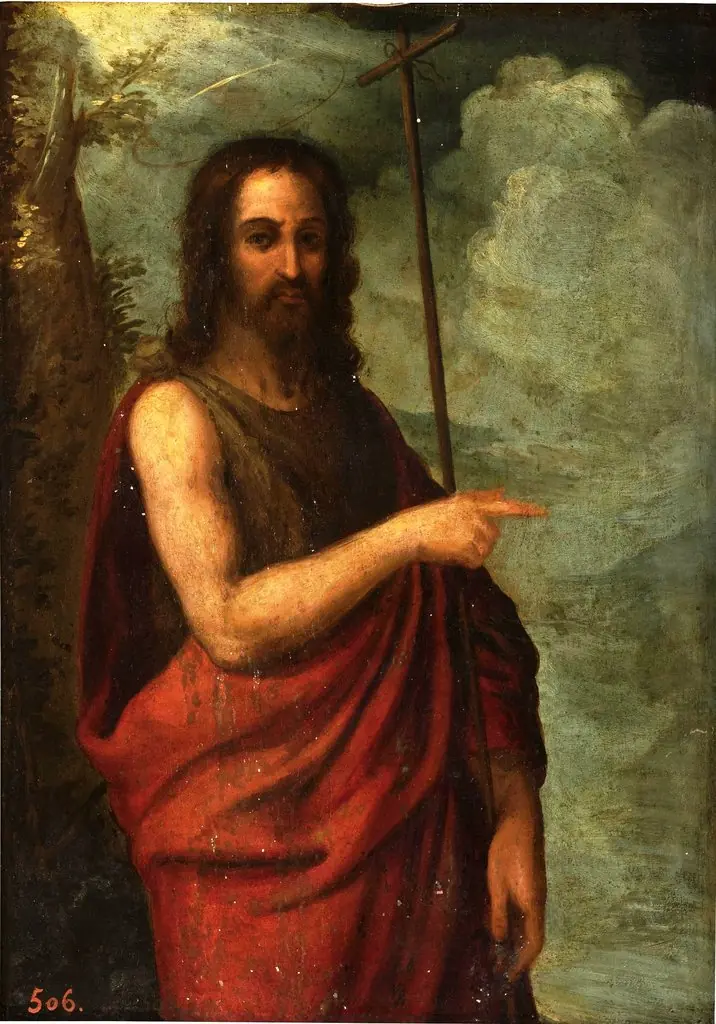
The figure depicts John the Baptist in a contemplative pose, gazing upward with a faint smile, one hand raised in blessing and the other pointing toward heaven. His lean, androgynous form and enigmatic expression evoke spiritual ambiguity, aligning with Leonardo’s interest in inner psychological states. The lack of traditional iconographic elements shifts focus from narrative to mysticism, suggesting a meditation on divine revelation rather than biblical storytelling.
Technique & Style
Leonardo employed layered glazes to achieve subtle transitions between light and shadow, softening contours and creating an atmospheric depth. The use of sfumato blurs edges, particularly around the face and hands, enhancing the figure’s ethereal presence. The walnut panel’s smooth surface allowed for precise control, enabling the delicate modulation of tones that define his late style—minimalist in detail, rich in emotional resonance.
History & Provenance
The painting entered the French royal collection during Leonardo’s lifetime, likely brought to France when he moved there in 1516. It remained in royal possession through the Ancien Régime and was later transferred to the Louvre after the Revolution. Its continuous presence in French state collections confirms its early recognition as a work of exceptional value, though its exact ownership history before 1516 remains undocumented.
Context
Created during Leonardo’s final years in France under the patronage of Francis I, the work reflects his shift from scientific inquiry toward spiritual abstraction. Unlike earlier depictions of John the Baptist, which emphasized his role as a preacher or martyr, this version isolates the figure in a dark, undefined space, aligning with Renaissance Neoplatonic ideas that favored inner illumination over external doctrine.
Legacy
As Leonardo’s final painting, Saint John the Baptist represents the culmination of his lifelong exploration of human expression and light. Its quiet intensity influenced later Mannerist and Baroque artists drawn to psychological ambiguity and atmospheric modeling. Though not widely reproduced in his time, its presence in the Louvre ensured its role as a touchstone for studies of late Renaissance technique and mysticism.
Own this work as a print
Artist & collection

Museum
Department of Paintings of the Louvre
Continue through works from the same source collection.
![Ginevra de' Benci [obverse], by Leonardo da Vinci](https://artifactworldgallery.com/img/leonardo-da-vinci--ginevra-de-benci-obverse--afb6ec3a3e65f392-w320.webp)
![Wreath of Laurel, Palm, and Juniper with a Scroll inscribed Virtutem Forma Decorat [reverse], by Leonardo da Vinci](https://artifactworldgallery.com/img/leonardo-da-vinci--wreath-of-laurel-palm-and-juniper-with-a-scroll-inscribed-vi--4cdfe8467ad2438a-w320.webp)