Artwork
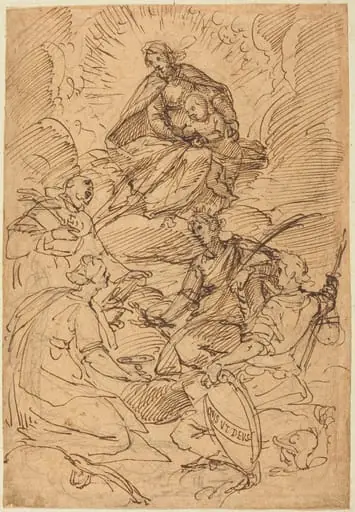
Madonna and Child in Glory above Three Saints
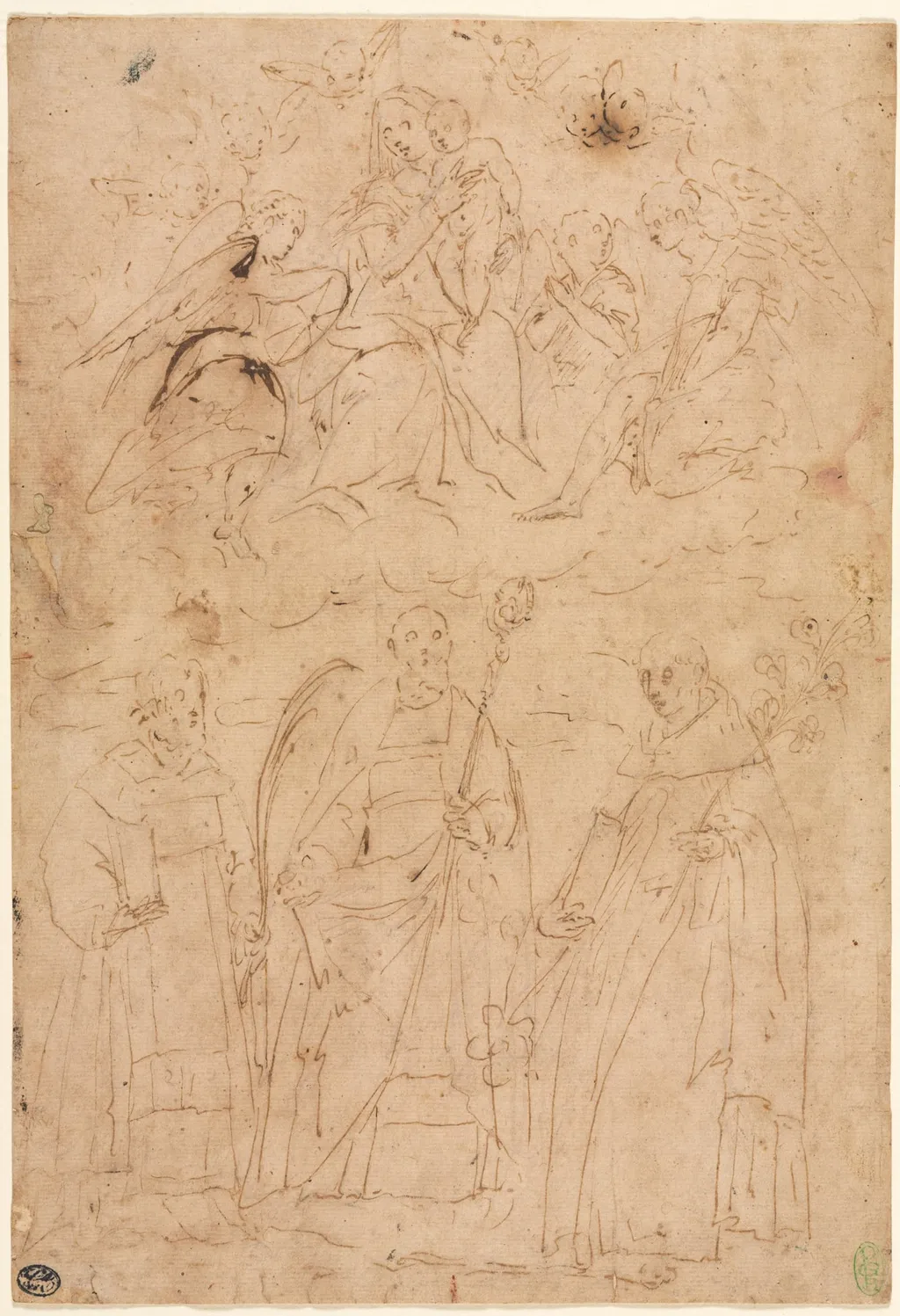
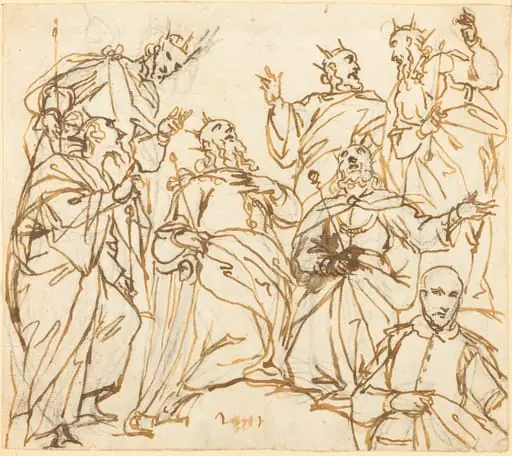
Madonna and Child in Glory above Three Saints is a drawing by the Renaissance artist Giovanni Battista Paggi. It dates from 1570 and is held in the collection of the Cleveland Museum of Art.
About this work
Overview
Madonna and Child in Glory above Three Saints is a religious painting created by Italian artist Giovanni Battista Paggi around 1570. It is currently part of The Cleveland Museum of Art's collection.
Subject & Meaning
The painting depicts a serene religious scene with the Madonna and Child centrally positioned within a halo of light. Below them are three saints, each distinguished by unique facial expressions and attire, conveying individuality amidst the devotional composition.
Technique & Style
Paggi employed a realistic style, emphasizing detailed rendering of clothing and accessories. The strategic use of light and shadow generates a sense of depth and dimensionality, characteristic of Late-Renaissance artistic practices.
History & Provenance
Created circa 1570 by Giovanni Battista Paggi, the painting's history prior to its acquisition by The Cleveland Museum of Art is not detailed here.
Context
This work exemplifies the artistic values of the Late-Renaissance period, with its blend of realism, devotional theme, and compositional harmony.
Legacy
While not individually renowned, the painting contributes to the broader understanding and appreciation of Renaissance art, particularly in showcasing Paggi's contribution to the era's religious imagery.
Artist & collection
Artist
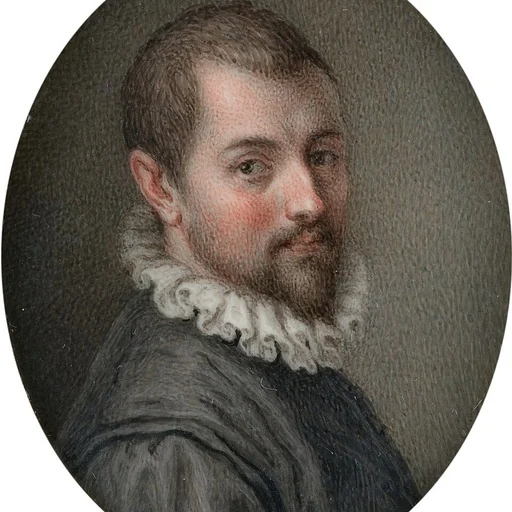
Giovanni Battista Paggi (25 or 27 February 1554 – 12 March 1627) was an Italian painter, sculptor, and writer. His style spans the Late-Renaissance and early-Baroque.

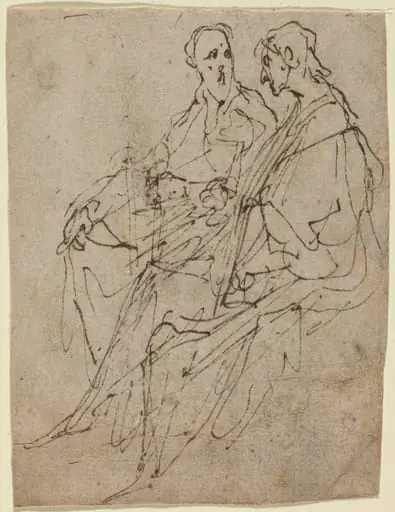 Two Seated Male Figures
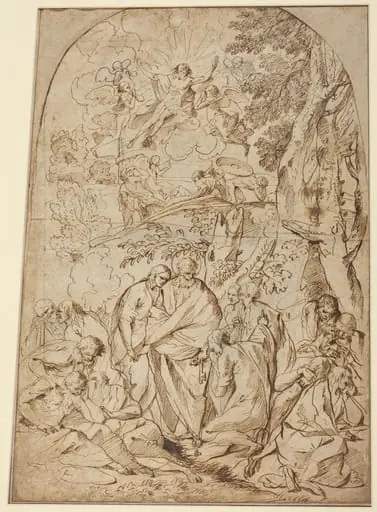 The Resurrection
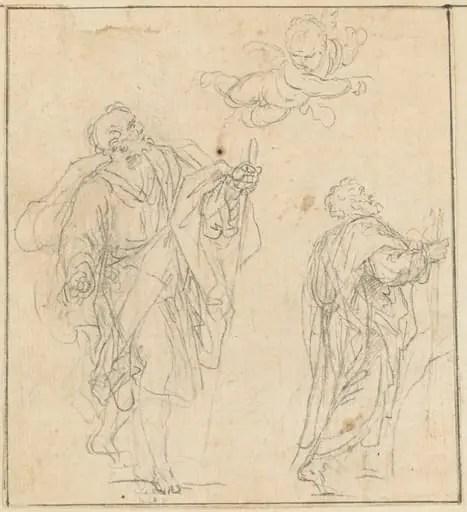 An Apostle Guided by an Angel
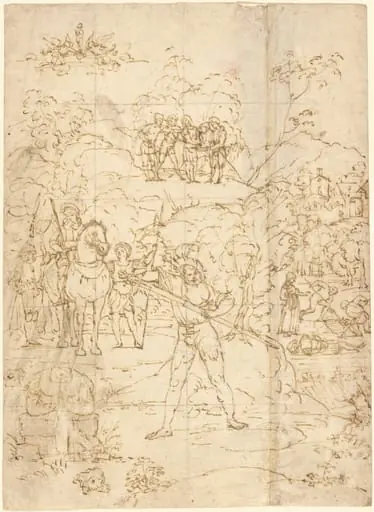 The Martyrdom of Saint Alexander of Bergamo
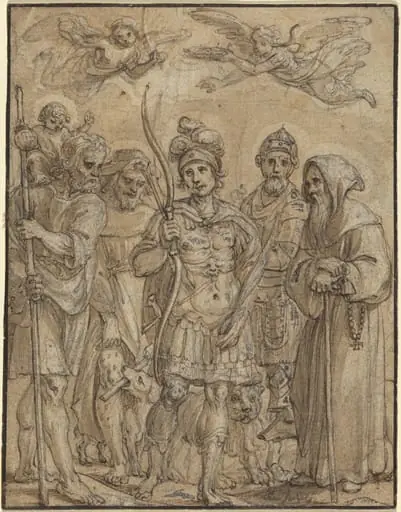 Five Saints
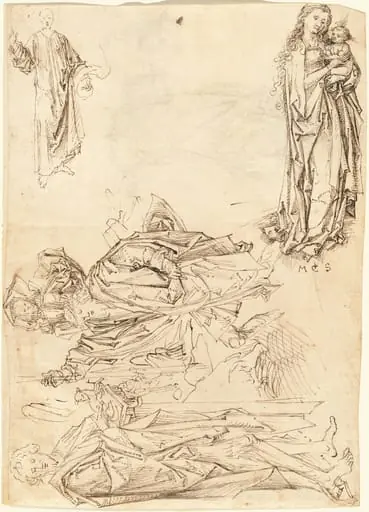 Saint Christopher, Saint John the Baptist, the Virgin and Child, and Christ Blessing (recto)
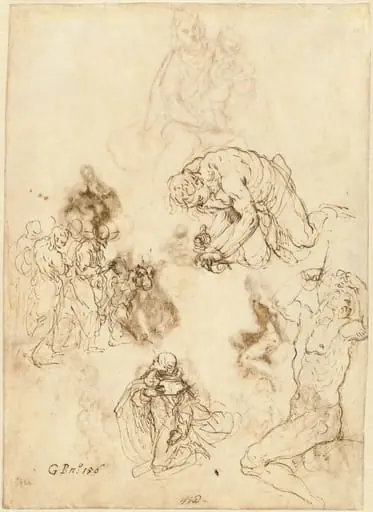 Studies of Christ Healing the Blind Man, Saint Philip Benizzi, and Saint Sebastian
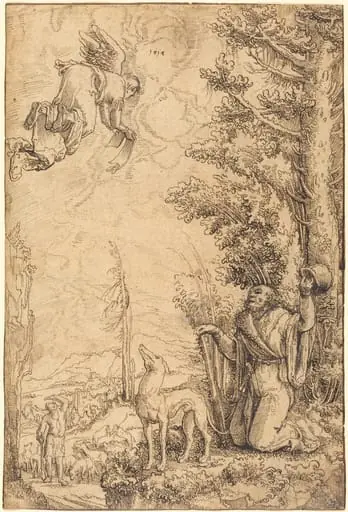 The Annunciation to Joachim
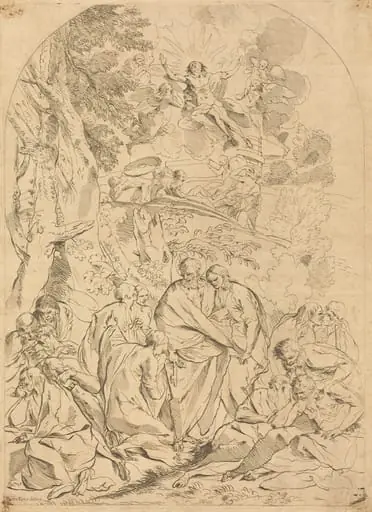 The Resurrection
 David and the Patriarchs with a Donor