Artwork
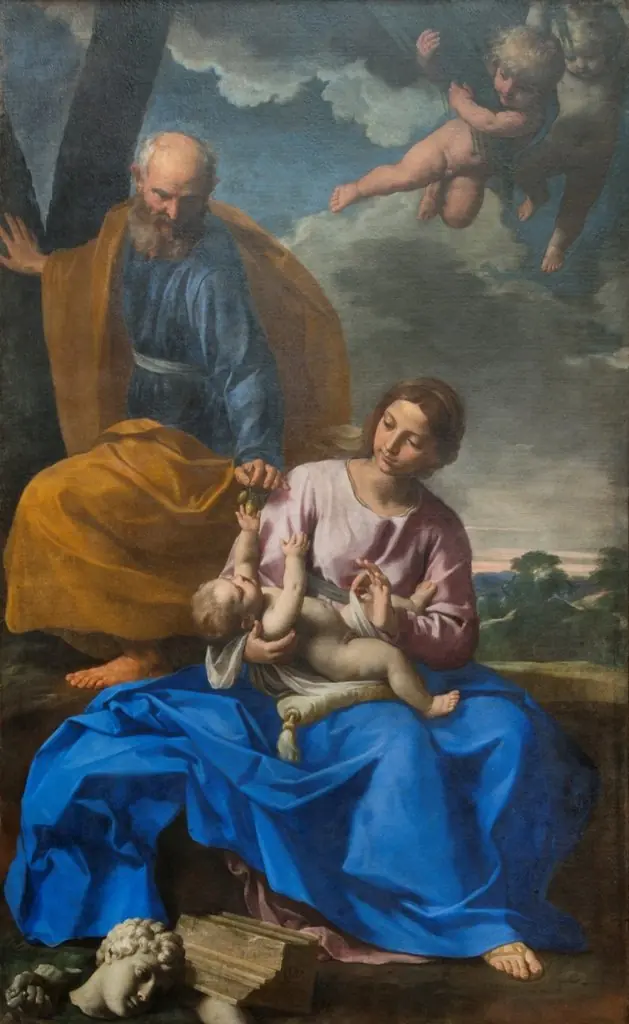
The Rest on the Flight into Egypt
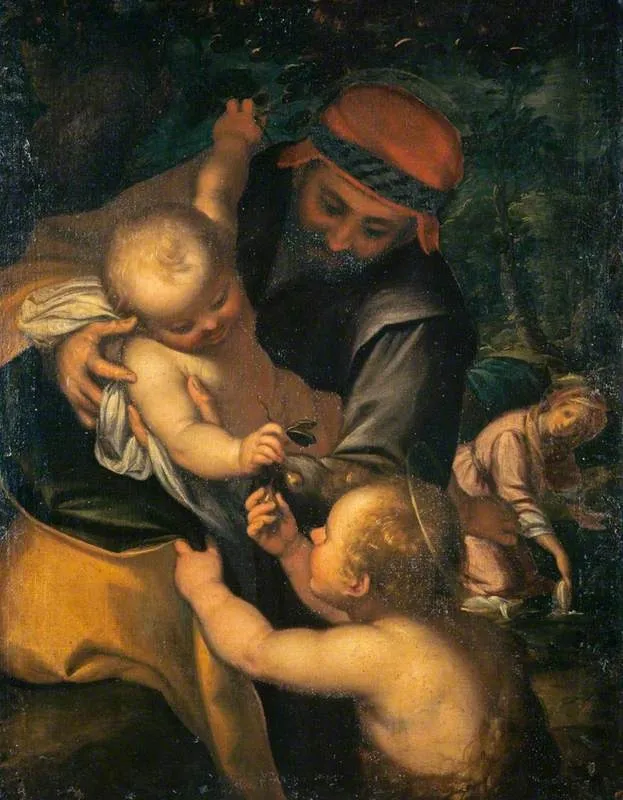
The Rest on the Flight into Egypt is an oil painting by the Early Baroque Italian artist Giovanni Battista Paggi. It dates from 1600 and is held in the collection of the National Galleries Scotland.
About this work
Overview
It is part of the Scottish National Gallery’s collection, where it remains a subtle example of early 17th-century religious narrative painting.
Painted in 1600 by Giovanni Battista Paggi, this oil-on-canvas work depicts a quiet moment from the biblical Flight into Egypt. Executed during a period of stylistic transition in Italy, the painting bridges Late Renaissance composition with emerging Baroque naturalism. It is part of the Scottish National Gallery’s collection, where it remains a subtle example of early 17th-century religious narrative painting.
Subject & Meaning
The scene captures the Holy Family during a pause in their journey to safety. Joseph, marked by a red headband, cradles the infant Jesus, while an older child reaches toward him in a gesture of quiet connection. A woman in the background, engaged in domestic labor, suggests the ordinary rhythms of life unfolding amid sacred events. The moment emphasizes tenderness and humility rather than divine spectacle.
Technique & Style
Paggi employs warm, muted tones and diffused light to create a serene atmosphere. Figures are arranged in a soft, curved composition that guides the eye gently across the scene. Brushwork is restrained, favoring smooth transitions over dramatic contrasts. The lighting and spatial depth reflect early Baroque interests in naturalism, while the overall calmness retains echoes of Mannerist restraint.
History & Provenance
The painting was completed in 1600, during Paggi’s active years in Liguria. Its early provenance is not fully documented, but it entered the Scottish National Gallery’s collection in the 19th century. Unlike more widely known works of the period, it has remained relatively obscure, preserved as a quiet example of regional Italian painting rather than a major center of artistic innovation.
Context
In early 17th-century Italy, religious subjects remained central to painting, but artists increasingly favored intimate, humanized portrayals over grand ceremonial scenes. Paggi’s work aligns with this trend, reflecting the Counter-Reformation emphasis on accessible piety. His style, shaped by regional traditions and exposure to broader Italian currents, offers a modest yet refined contribution to the period’s visual culture.
Legacy
Though not widely reproduced or studied, the painting endures as a thoughtful representation of domestic devotion in Baroque religious art. It illustrates how lesser-known artists adapted prevailing styles to convey spiritual themes through everyday gestures. Its preservation in a national collection ensures continued access for those interested in the quieter currents of early modern Italian painting.
Artist & collection
Artist
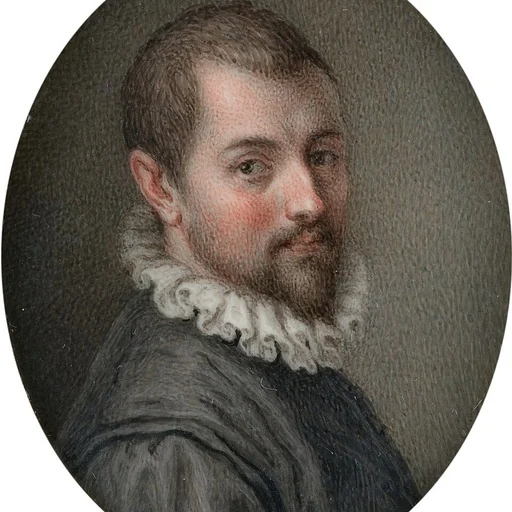
Giovanni Battista Paggi (25 or 27 February 1554 – 12 March 1627) was an Italian painter, sculptor, and writer. His style spans the Late-Renaissance and early-Baroque.

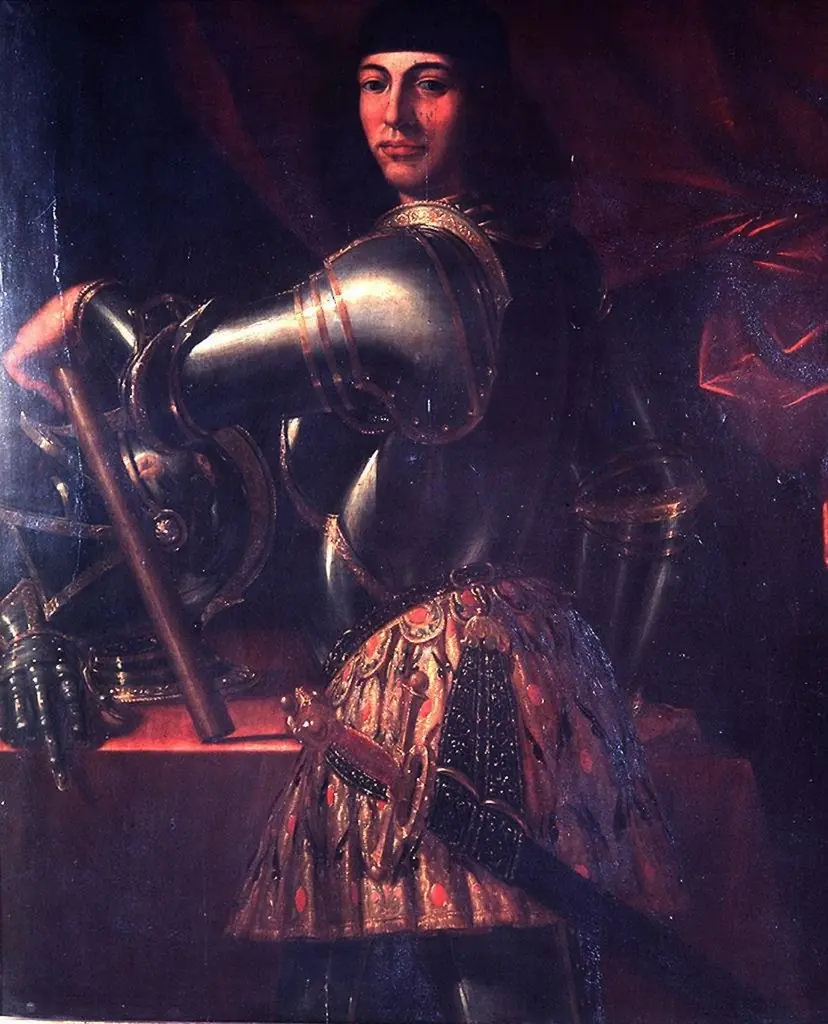
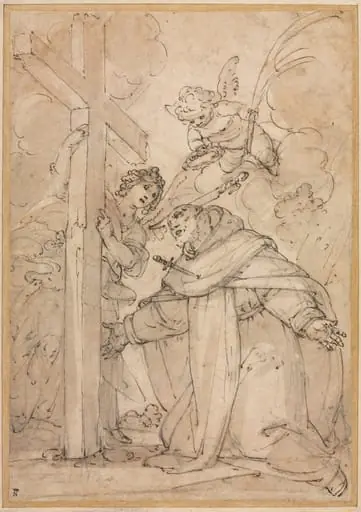
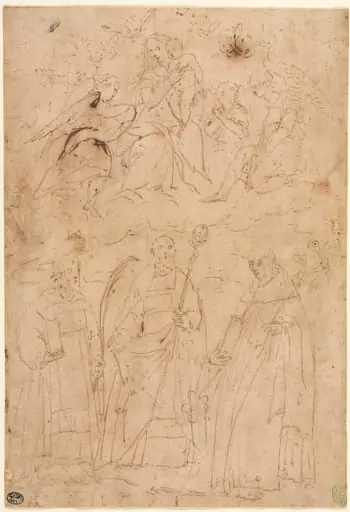
 The Rest on The Flight into Egypt
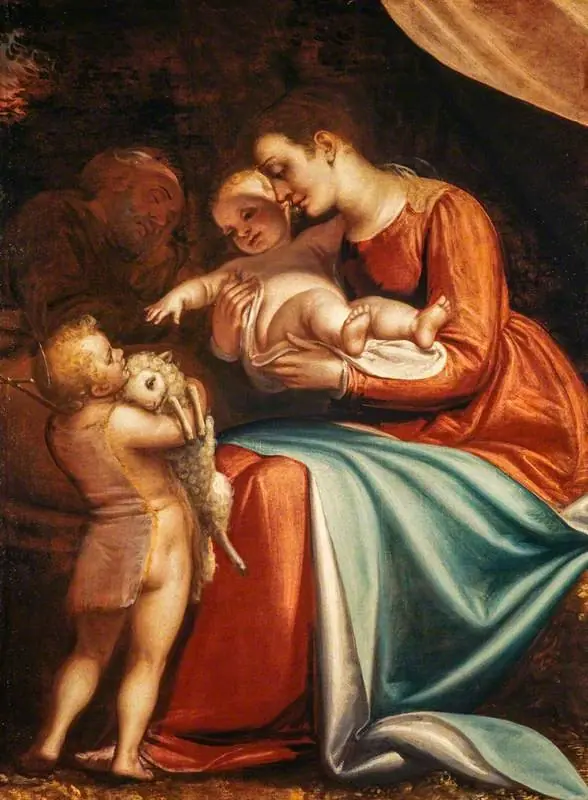 The Holy Family with the Infant Saint John the Baptist
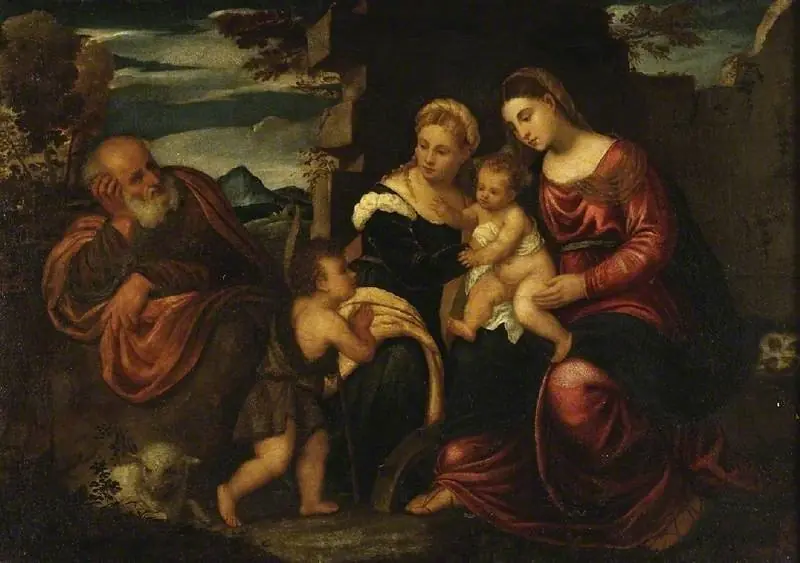 Holy Family with the infant St John Baptist and St Catherine
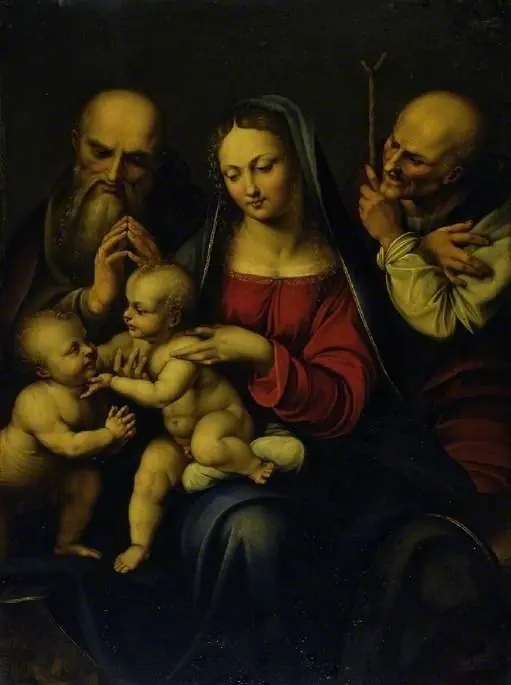 Holy Family with the infant St. John the Baptist
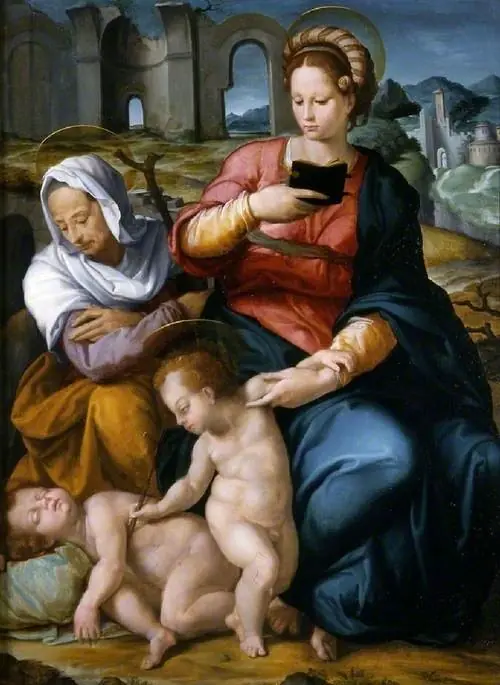 The Virgin and Child with St Elizabeth and the infant Baptist
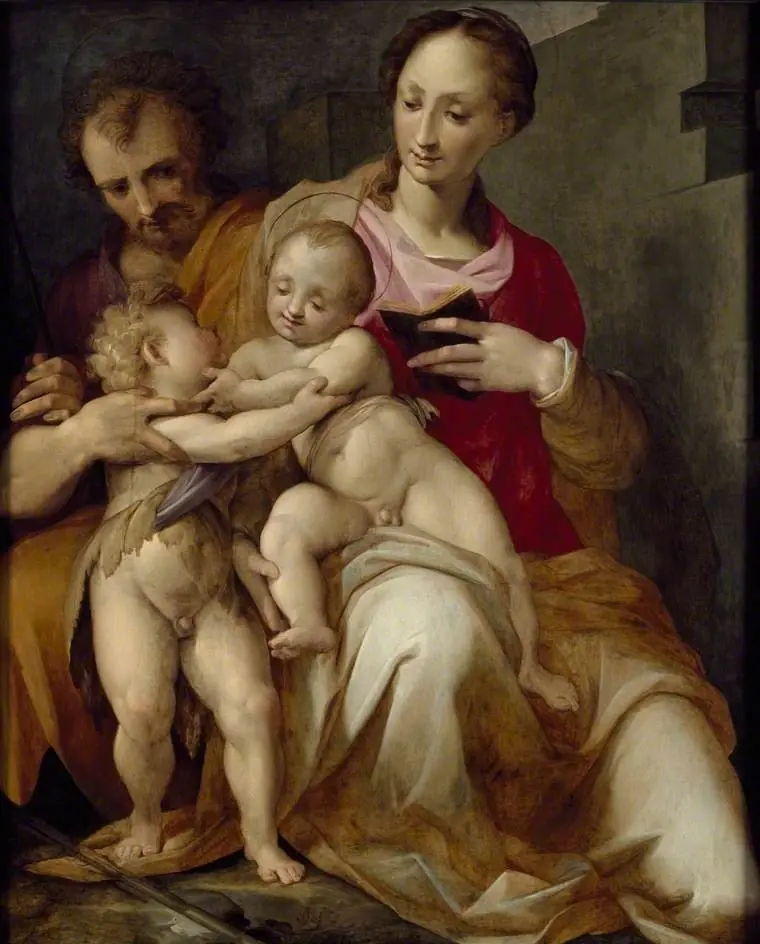 The Holy Family with St John the Baptist
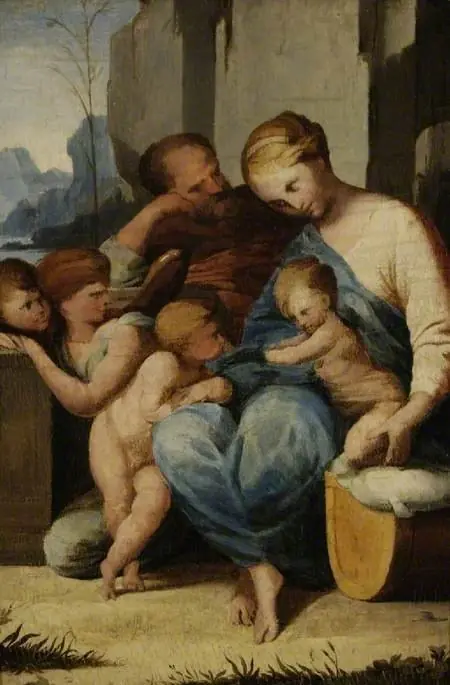 The Holy Family with the infant St John the Baptist and angels
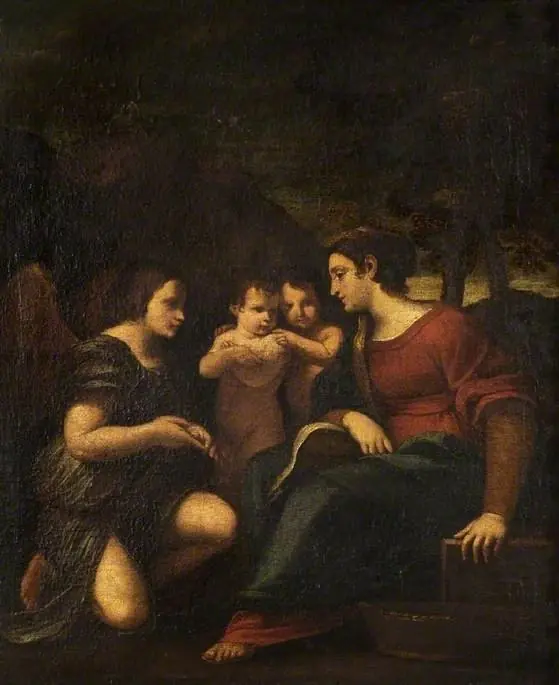 The Virgin with an Angel, the child Christ and St John the Baptist
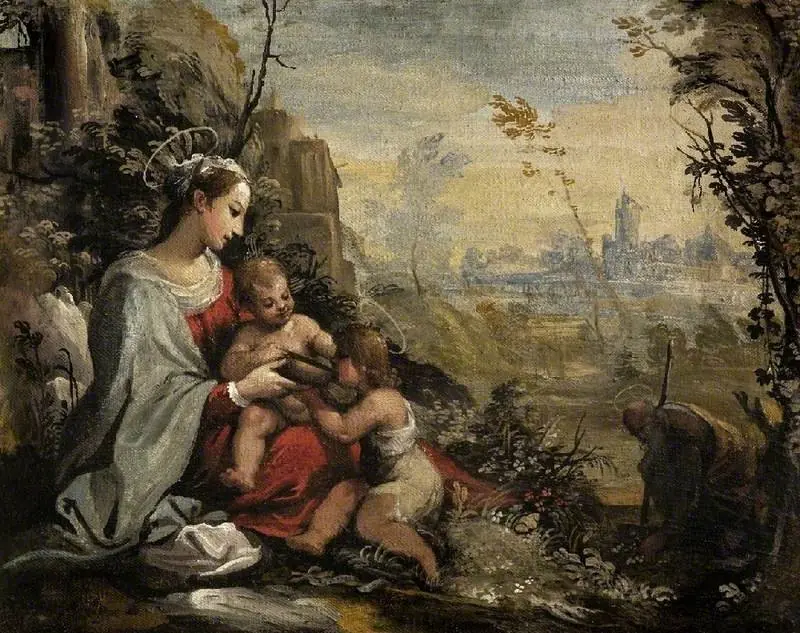 The Holy Family on the Flight meets the infant St John
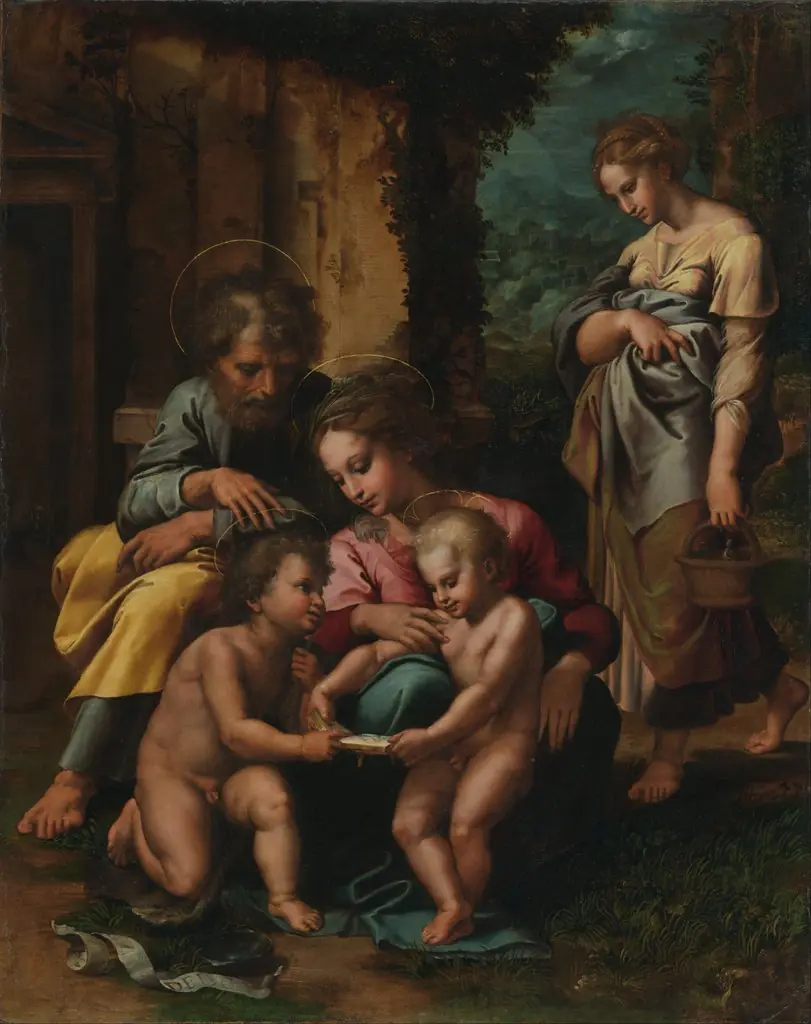 The Holy Family
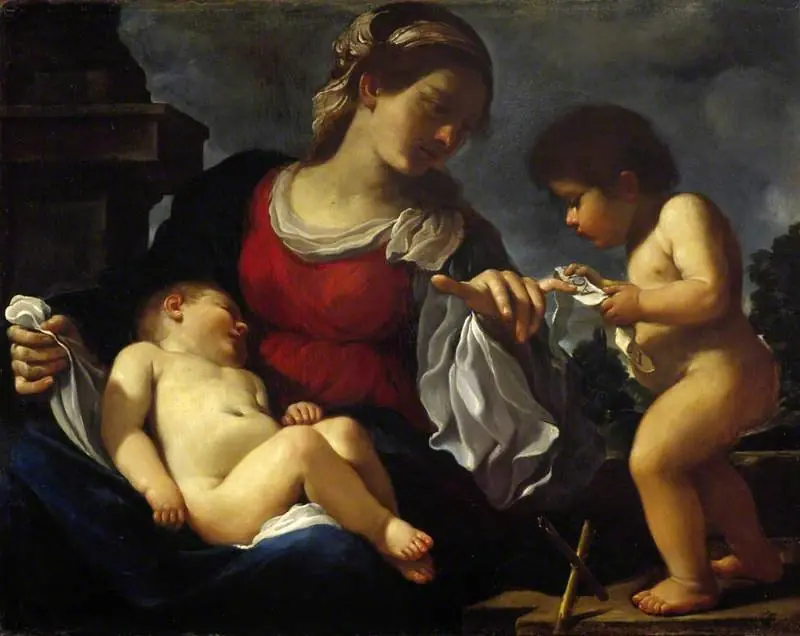 The Virgin and Child with the Infant Saint John the Baptist
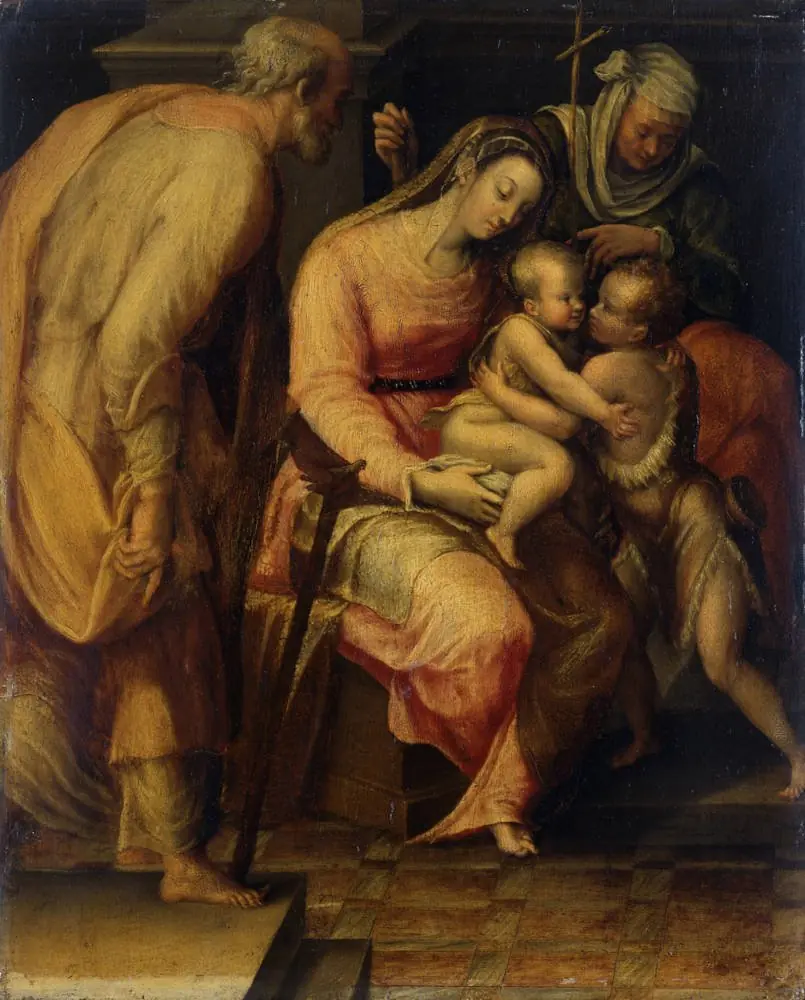 The Holy Family