Artwork
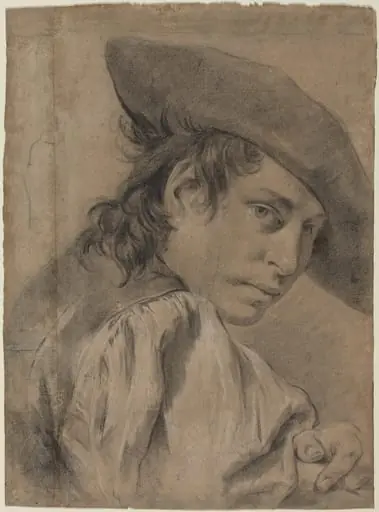
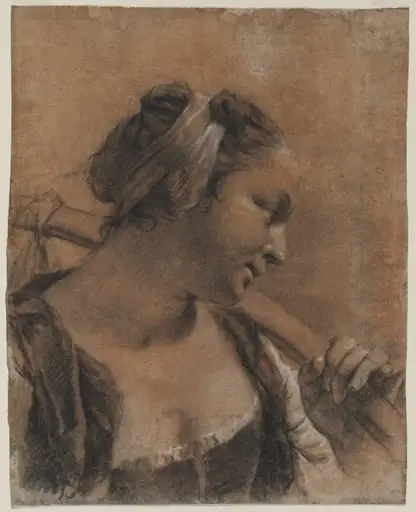
Head of a Young Man in Profile with a Gun over His Shoulder
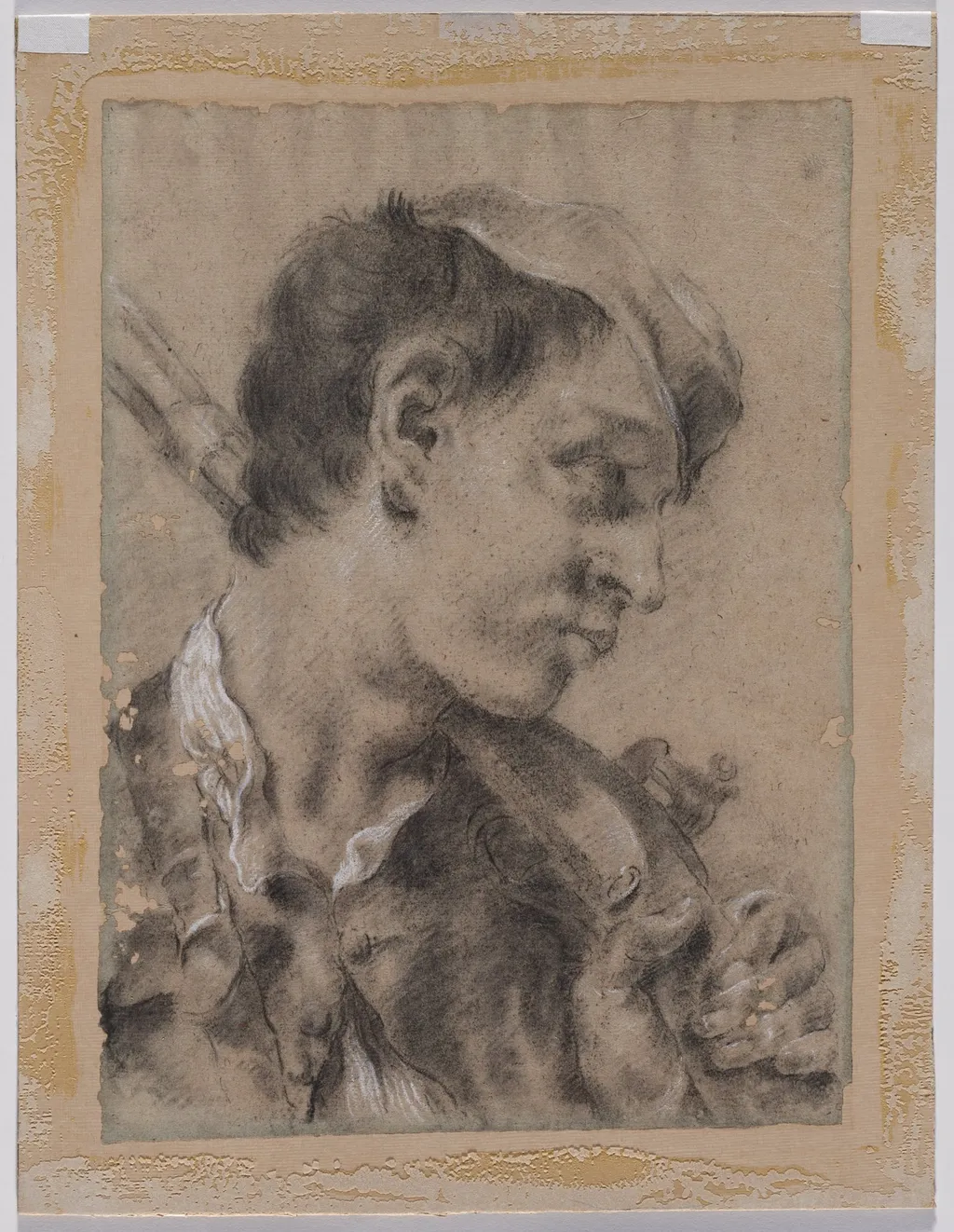
Head of a Young Man in Profile with a Gun over His Shoulder is a drawing by the Baroque artist Giovanni Battista Piazzetta. It dates from 1740 and is held in the collection of the Cleveland Museum of Art.
About this work
Overview
This drawing by Giovanni Battista Piazzetta, dated around 1740, presents a profile study of a young man holding a firearm over his shoulder.
This drawing by Giovanni Battista Piazzetta, dated around 1740, presents a profile study of a young man holding a firearm over his shoulder. Executed in chalk or similar medium, it belongs to a series of character studies Piazzetta produced during his later years. The work is part of the collection at The Cleveland Museum of Art, where it is valued for its psychological nuance and technical precision.
Subject & Meaning
The subject is a young man with a composed, inward gaze, suggesting introspection rather than aggression. His neat hairstyle and clean collar imply a degree of social refinement, while the presence of the gun introduces an element of practicality or profession. The contrast between his delicate features and the weapon hints at a duality—civilian poise paired with readiness for action, possibly reflecting the ambiguous roles of individuals in 18th-century society.
Technique & Style
Piazzetta employs subtle gradations of tone to model the face and clothing, using controlled hatching and smudging to achieve volume. The white collar stands out against darker washes, enhancing the three-dimensionality of the figure. The gun is rendered with minimal detail, yet its placement anchors the composition. The drawing’s economy of line and emphasis on texture reflect Piazzetta’s mastery of chiaroscuro and his interest in capturing transient expressions.
History & Provenance
The drawing entered The Cleveland Museum of Art’s collection in the 20th century, though its earlier ownership history remains largely undocumented. It is one of several portrait studies attributed to Piazzetta from the 1730s–1740s, likely made as preparatory works or independent exercises in character observation. Its survival in good condition suggests it was preserved by collectors who appreciated its artistic merit over its narrative function.
Context
Piazzetta worked in Venice during the late Baroque period, a time when artists increasingly turned to intimate, expressive studies of individuals rather than grand historical scenes. This drawing aligns with a broader trend of character studies that explored psychological depth and social identity. While not commissioned, such works served as demonstrations of skill and insight, often circulated among artists and patrons interested in human expression.
Legacy
Though not widely exhibited, this drawing exemplifies Piazzetta’s contribution to the tradition of Venetian draftsmanship. His ability to convey quiet emotion through minimal means influenced later generations of artists focused on psychological realism. The work remains a quiet testament to the value placed on individual presence in 18th-century art, beyond the demands of patronage or public spectacle.
Artist & collection

Artist
Giovanni Battista Piazzetta (also called Giambattista Piazzetta or Giambattista Valentino Piazzetta) (February 13, 1682 or 1683 – April 28, 1754) was an Italian Rococo painter of religious subjects and genre scenes.