Artwork
Prisoners on a Projecting Platform, Plate 10
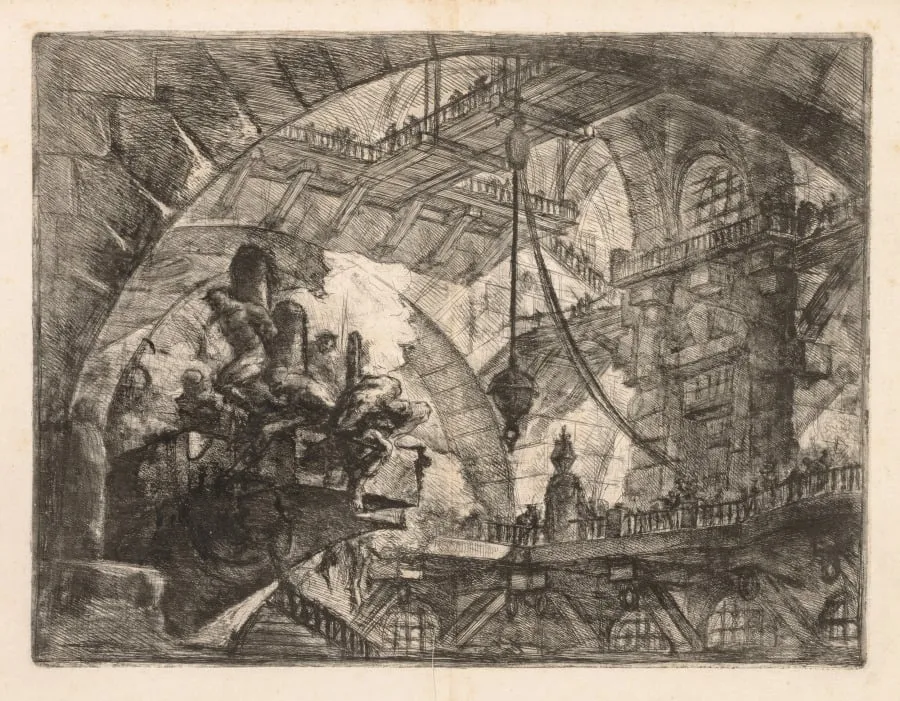
Prisoners on a Projecting Platform, Plate 10 is a print by the Baroque artist Giovanni Battista Piranesi. It dates from 1750 and is held in the collection of the Cleveland Museum of Art.
About this work
Overview
These works stem from Piranesi’s background in theatrical design, not from real incarceration spaces.
Prisoners on a Projecting Platform is the tenth plate in Giovanni Battista Piranesi’s series of imaginary prison scenes, created through etching rather than direct observation. These works stem from Piranesi’s background in theatrical design, not from real incarceration spaces. The image presents a vast, labyrinthine interior where architecture dominates and human figures appear insignificant, evoking a sense of psychological entrapment rather than physical confinement.
Subject & Meaning
The scene depicts anonymous, small-scale figures bound to staircases and walls, their forms blurred and overlapping, suggesting exhaustion and dehumanization. The absence of identifiable features or narrative context shifts focus from individual suffering to the systemic nature of oppression. The smoke drifting through the space adds an element of ambiguity, obscuring boundaries and reinforcing the idea that escape is not merely difficult but conceptually impossible.
Technique & Style
Piranesi employed deep, dense etching to create intense contrasts between shadow and light, enhancing the monumentality of the architecture. A low vantage point exaggerates the height of vaulted ceilings and the depth of staircases, distorting conventional perspective. The use of chiaroscuro and intricate linework generates visual tension, while the white smoke disrupts spatial clarity, making the environment feel both tangible and unreal.
History & Provenance
Created in the 1740s–1760s, this print was part of Piranesi’s series known as Carceri d’Invenzione, published in two editions. The plates were not based on actual prisons but on Piranesi’s imagination, influenced by Roman ruins and stage design. They circulated among European intellectuals and artists, gaining recognition for their psychological depth rather than documentary accuracy.
Context
Piranesi’s work emerged during a period of growing interest in the sublime and the irrational in art. His imaginary prisons reflect Enlightenment-era anxieties about power, control, and the limits of reason. Unlike contemporaries who documented real spaces, Piranesi constructed psychological landscapes, using architecture as a metaphor for the mind’s confinement and the futility of resistance.
Legacy
The Carceri series influenced later movements including Romanticism and Surrealism, inspiring artists such as Goya and Magritte. The prints became touchstones for exploring the emotional weight of space and the alienation of the individual within institutional structures. Their enduring resonance lies in their ability to evoke unease without relying on literal representation.
Artist & collection
Artist
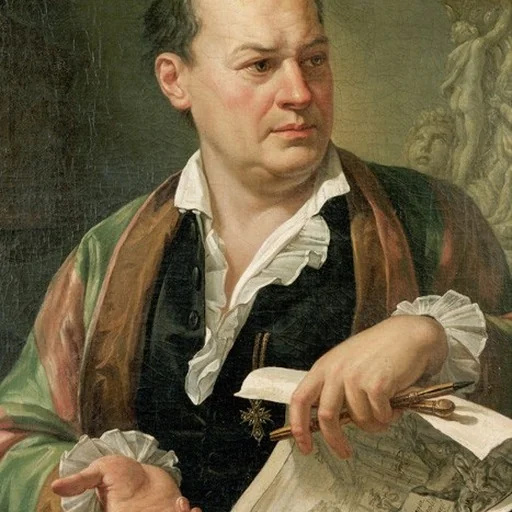
Giovanni Battista (or Giambattista) Piranesi (Italian pronunciation: ; also known as simply Piranesi; 4 October 1720 – 9 November 1778) was an Italian classical archaeologist, architect, and artist, famous for his…

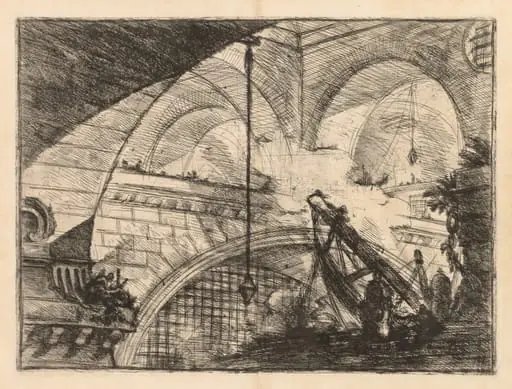 The Prisons: A Series of Galleries with Crane-Like Erection of Beams
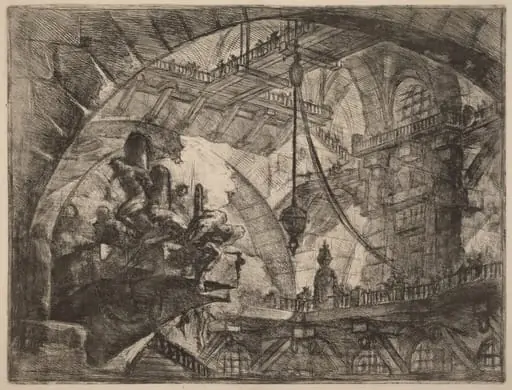 Prisoners on a Projecting Platform
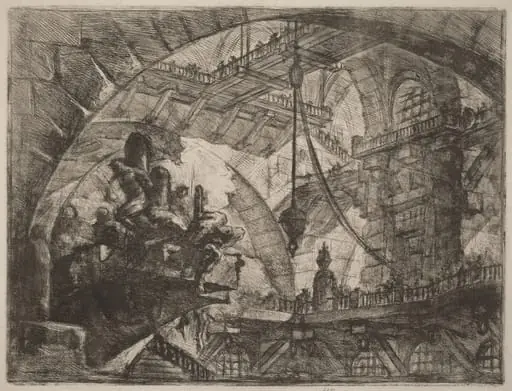 Prisoners on a Projecting Platform
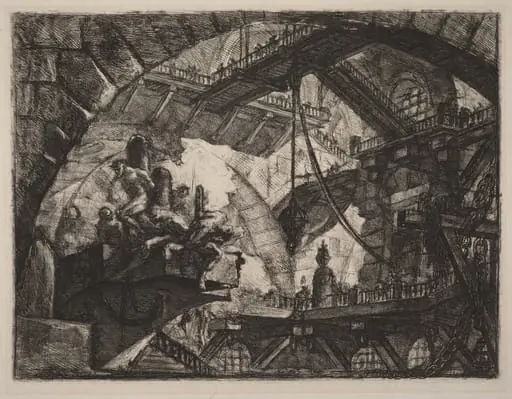 Prisoners on a Projecting Platform
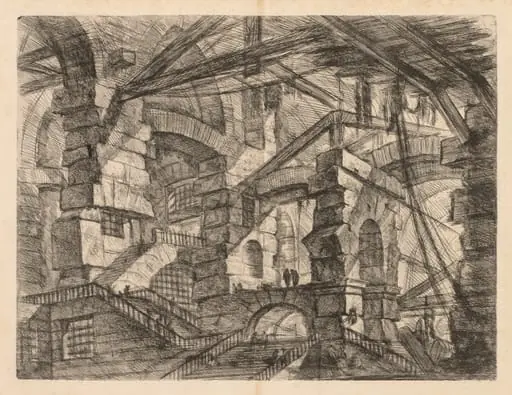 The Prisons: A Perspective of Colonnades with Zig-Zag Staircase
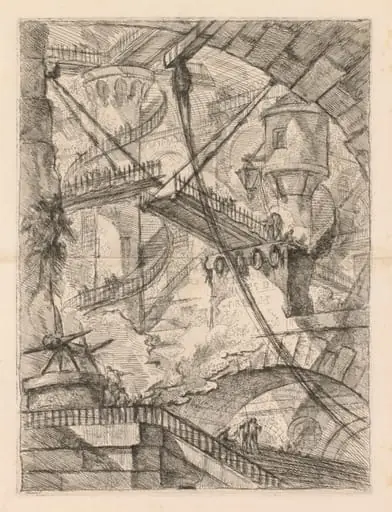 The Prisons: An Immense Interior with a Drawbridge
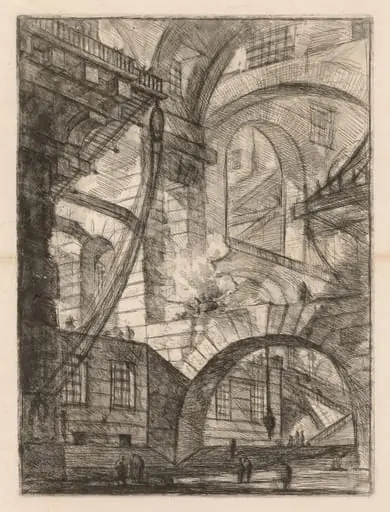 The Prisons: A Perspective of Arches with a Smoking Fire
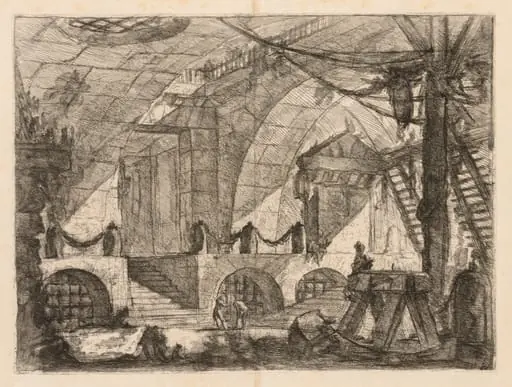 The Prisons: An Arched Chamber with Posts and Chains
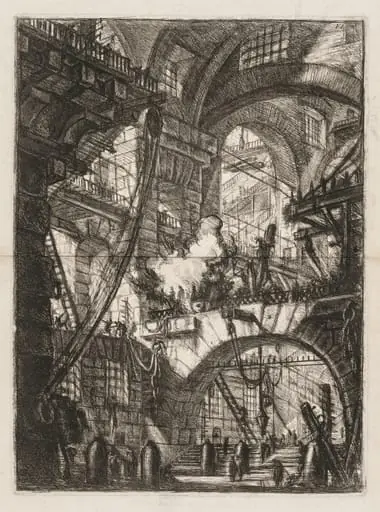 The Prisons: A Perspective of Arches with a Smoking Fire in the Center
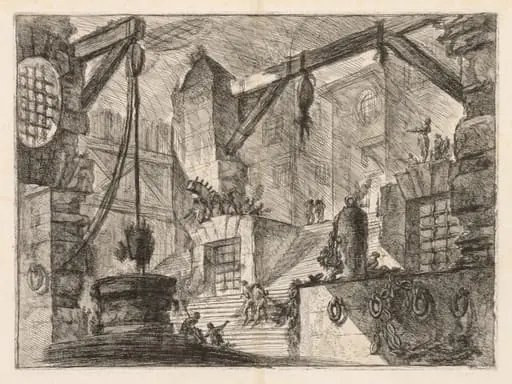 The Prisons: Colonnaded Interior with a Broad Stair