Artwork
The Tomb of Nero
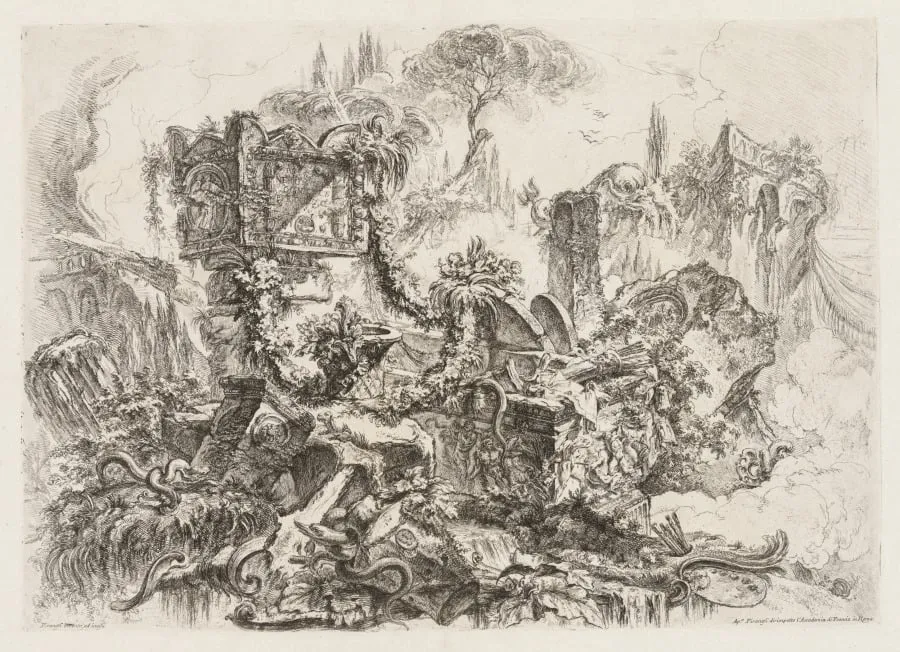
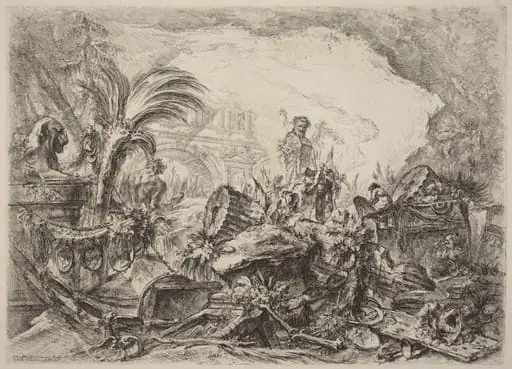
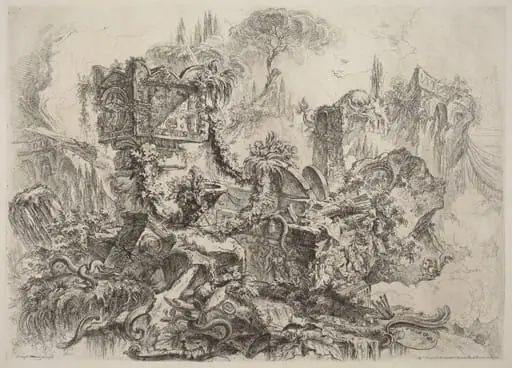
The Tomb of Nero is a print by the Baroque artist Giovanni Battista Piranesi. It dates from 1748 and is held in the collection of the Cleveland Museum of Art.
About this work
Overview
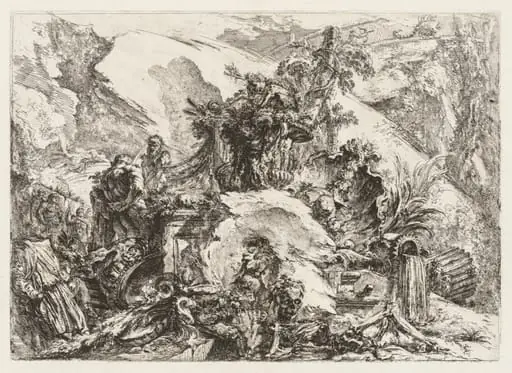
This print by Giovanni Battista Piranesi depicts a decaying funerary structure enveloped by wild vegetation and serpents.
This print by Giovanni Battista Piranesi depicts a decaying funerary structure enveloped by wild vegetation and serpents. Though it appears fantastical, the composition stems from a real ruin near Rome that Piranesi studied firsthand. His use of dense, incised lines contrasts with a faint, atmospheric background, creating a sense of gradual dissolution—suggesting the slow erasure of history by time and nature.
Subject & Meaning
The tomb, though rooted in a physical monument, is transformed into a symbolic space where nature reclaims human architecture. Snakes and tangled flora imply decay and the inevitability of oblivion. Piranesi does not aim for topographical accuracy but instead conveys the emotional weight of ruin—how memory lingers in fragments, and how the past resists complete disappearance.
Technique & Style
Piranesi employed etching to build layers of dark, textured lines that dominate the foreground, while the background is rendered with sparse, delicate strokes. This contrast creates depth and a sense of recession, as if the scene is dissolving into mist. The scratchy, energetic marks convey both the physical erosion of stone and the psychological unease of confronting forgotten monuments.
History & Provenance
The structure depicted was based on an actual ancient tomb Piranesi sketched during his travels near Rome. Rather than documenting it faithfully, he reimagined it through memory and emotion, aligning with his broader interest in how ruins evoke more than mere architecture. The print was produced as part of his series exploring Roman antiquity, blending observation with imaginative reconstruction.
Context
In the 18th century, antiquarian fascination with Rome’s ruins was widespread, but Piranesi stood apart by emphasizing mood over documentation. His work responded to Enlightenment ideals of reason by asserting the power of emotion and imagination in understanding the past. This print reflects a shift toward romantic sensibilities, where ruins became vessels for contemplation rather than mere relics.
Legacy
Piranesi’s approach influenced later artists and architects who sought to convey the psychological resonance of decay. His fusion of precise observation with expressive distortion became a model for depicting historical memory. The print’s atmospheric tension and layered technique continue to inform how ruin is visually interpreted in art and design.
Artist & collection

Artist
Giovanni Battista (or Giambattista) Piranesi (Italian pronunciation: ; also known as simply Piranesi; 4 October 1720 – 9 November 1778) was an Italian classical archaeologist, architect, and artist, famous for his…

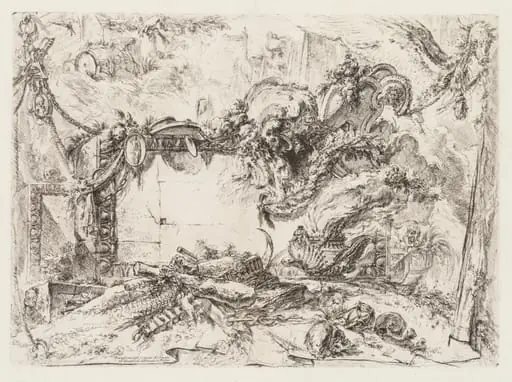 The Monumental Tablet
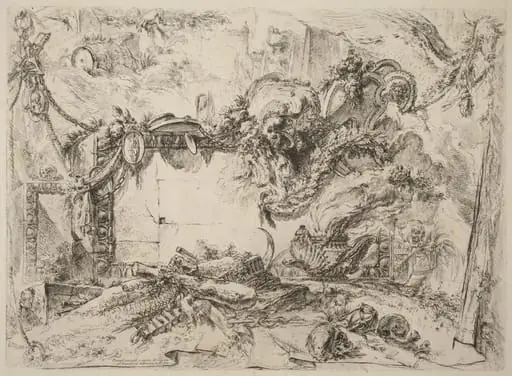 The Monumental Tablet
 The Skeletons
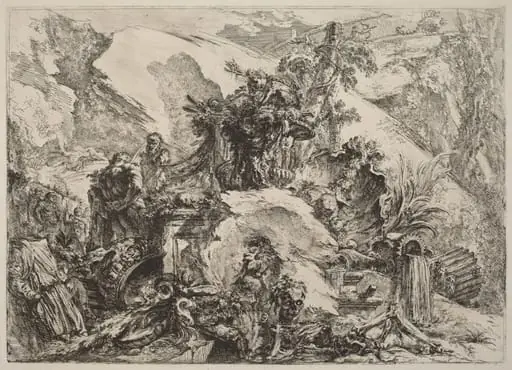 The Skeletons
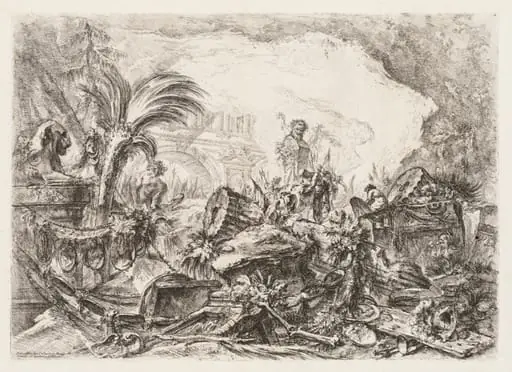 The Triumphal Arch
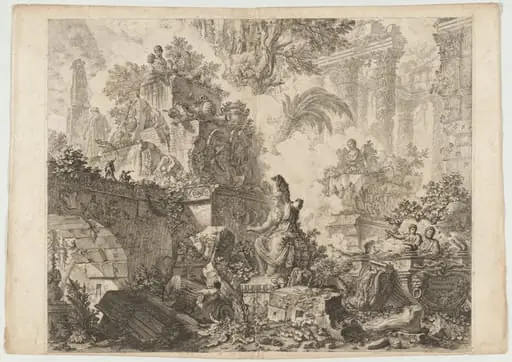 Frontispiece, with Statue of Minerva
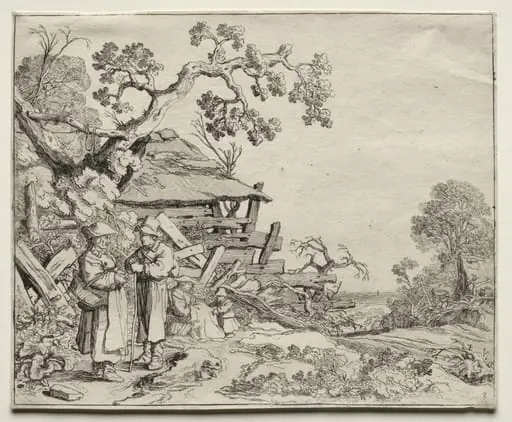 Landscape with Two Peasants Conversing
 The Triumphal Arch
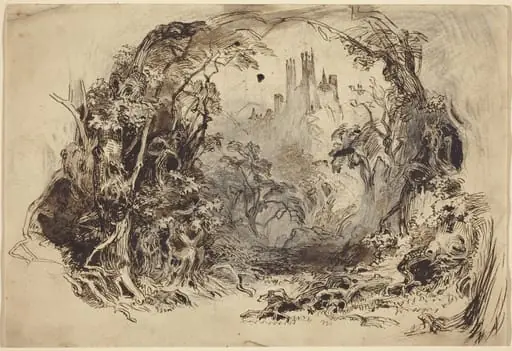 Castle On A Hill (Set for "Sleeping Beauty and the Beast"?)
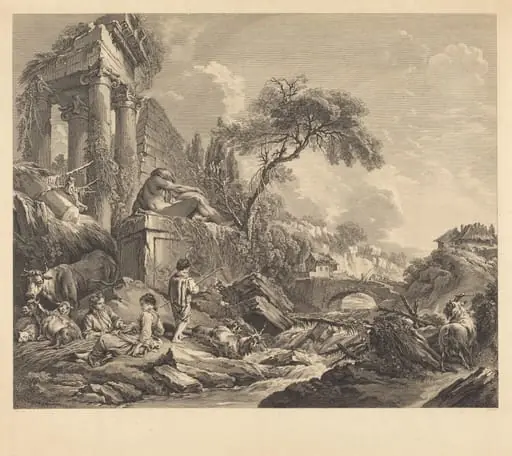 Le moineau de lesbie
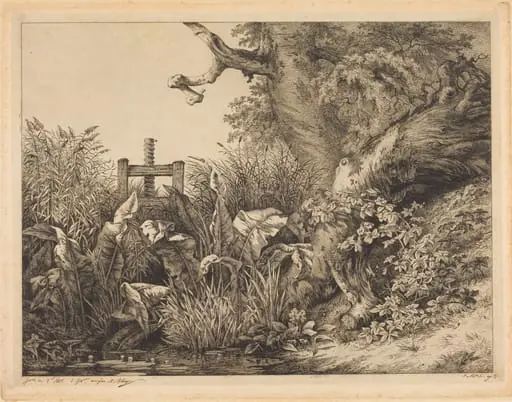 Water Dock and Brambles at a Sluice
 The Tomb of Nero