Artwork
Le moineau de lesbie
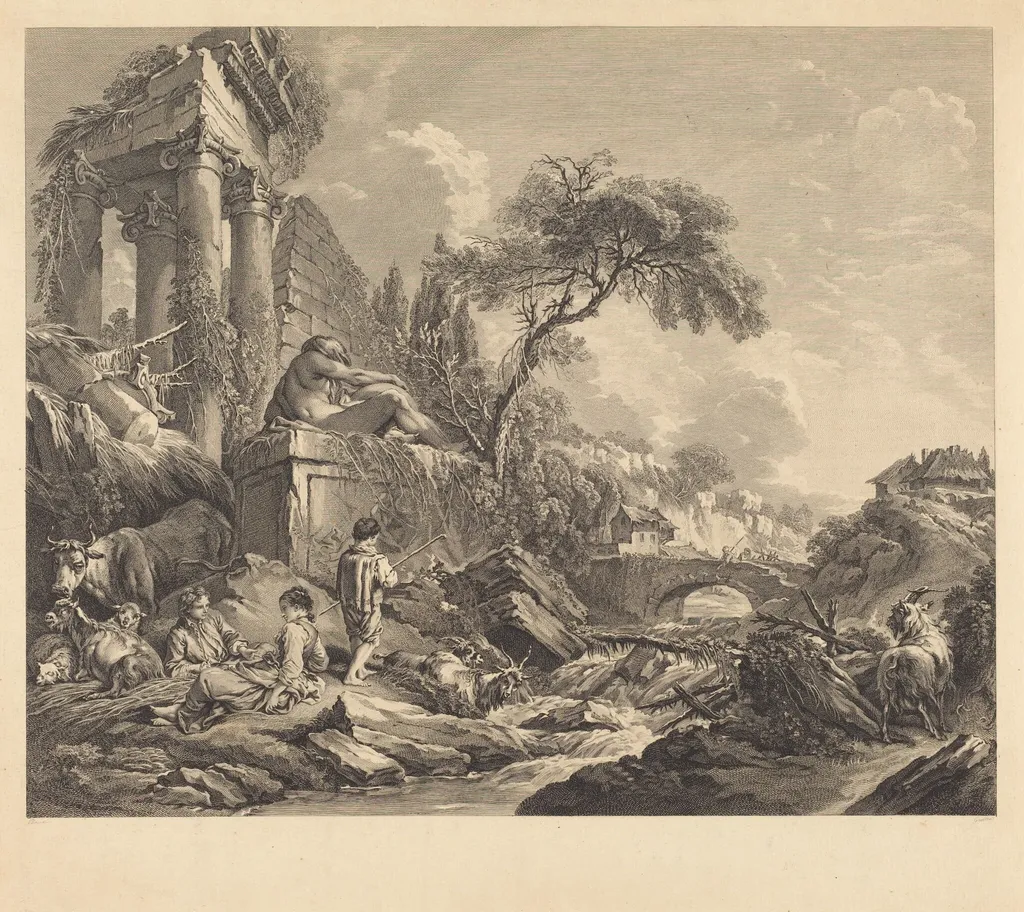
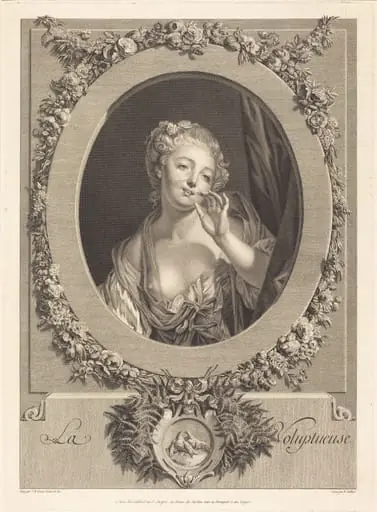
Le moineau de lesbie is an ink print by the Baroque artist René Gaillard. It dates from 1754 and is held in the collection of the National Gallery of Art.
About this work
Overview
René Gaillard’s 1754 print, titled Le moineau de lesbie, combines engraving and etching techniques to depict a tranquil rural tableau. The work presents a landscape populated by a solitary figure on a stone wall, shepherds attending to their flock, and a modest village beyond rolling hills, all rendered in a balanced composition.
Subject & Meaning
The scene juxtaposes moments of contemplation and routine activity: a lone man appears lost in thought while nearby figures tend sheep or pause beside water. This contrast suggests a quiet observation of everyday countryside life, emphasizing both solitude and communal labor.
Technique & Style
Gaillard employed fine engraving lines for structural elements and used etching to achieve subtle tonal variations. The interplay of hatching and cross‑hatching creates depth, rendering the figures, foliage, and distant architecture with a realistic sense of space.
History & Provenance
Created in the mid‑18th century, the print reflects the period’s interest in pastoral subjects. While specific ownership records are limited, the work is catalogued among Gaillard’s known prints and has been referenced in collections of French engraving from the Enlightenment era.
Context
During the 1750s, French artists often turned to bucolic themes to illustrate idealized rural life, aligning with contemporary literary and philosophical trends that valued nature and simplicity. Gaillard’s composition fits within this broader cultural movement, offering a visual counterpart to the era’s pastoral literature.
Artist & collection


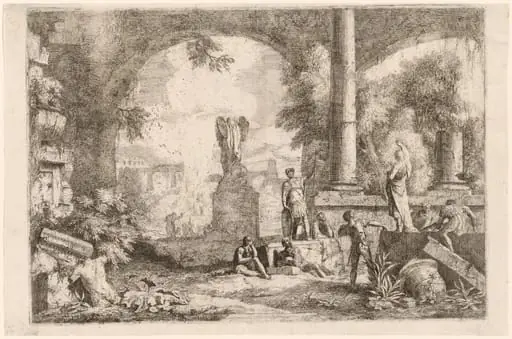 Capriccio of Antique Ruins with Men Gazing at a Classical Orator
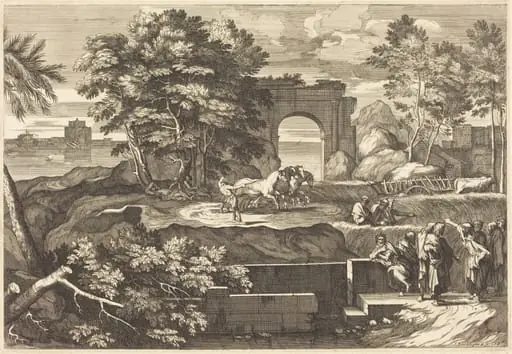 The Pharisees Complain to Our Lord
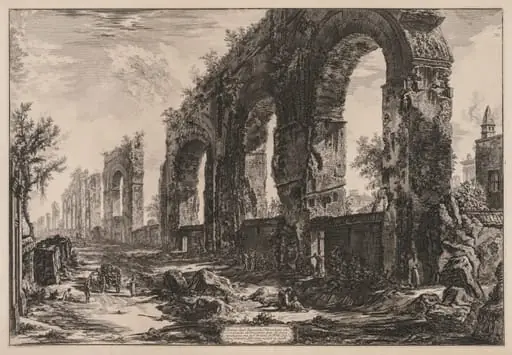 Views of Rome: The Aquaduct of Nero
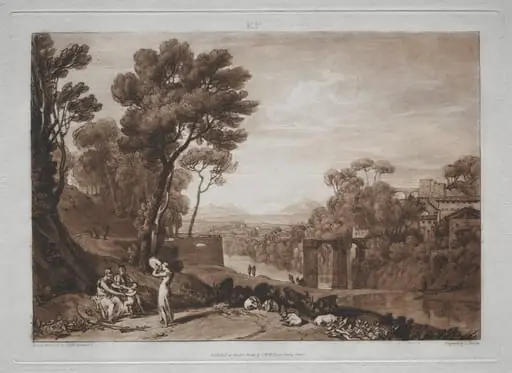 Liber Studiorum: The Woman and the Tambourine
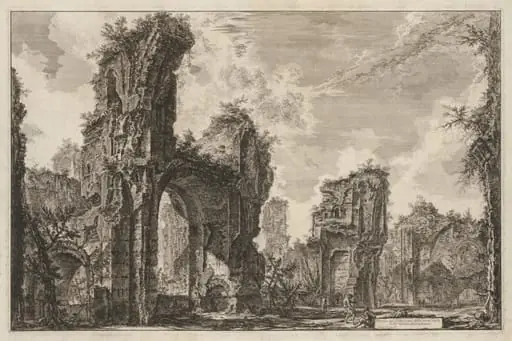 Views of Rome: Rovine del Sisto o sia della gran sala delle Terme Antoniniane
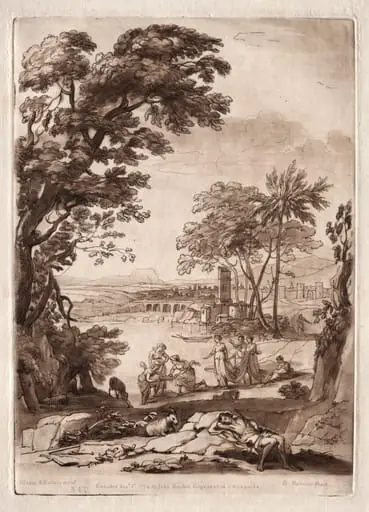 Liber Veritatis: No. 47, A River Scene with the Finding of Moses
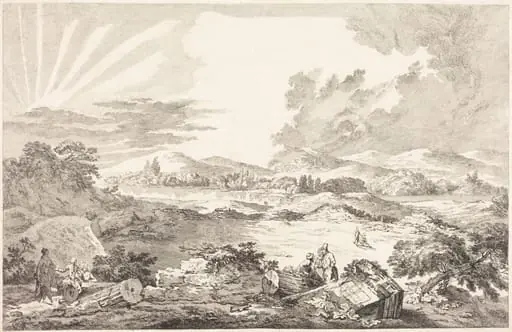 The Dromos, Athens
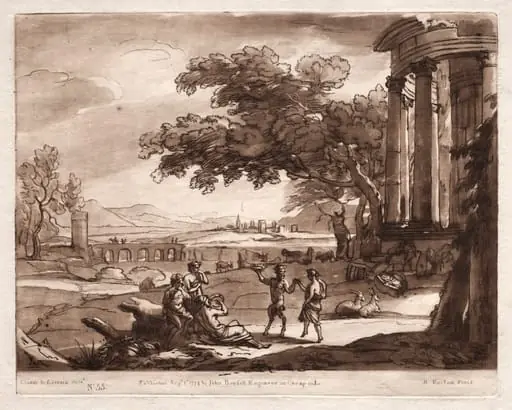 Liber Veritatis: No. 55, A Landscape with a Temple and a Nymph and Satyr Dancing
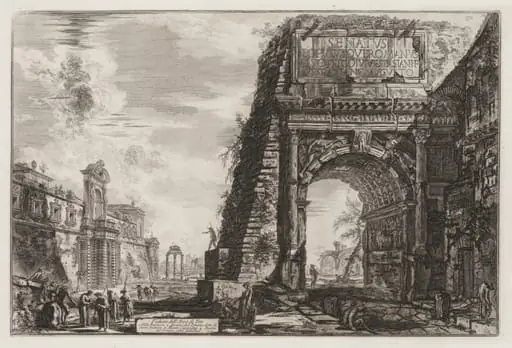 Views of Rome: The Arch or Titus
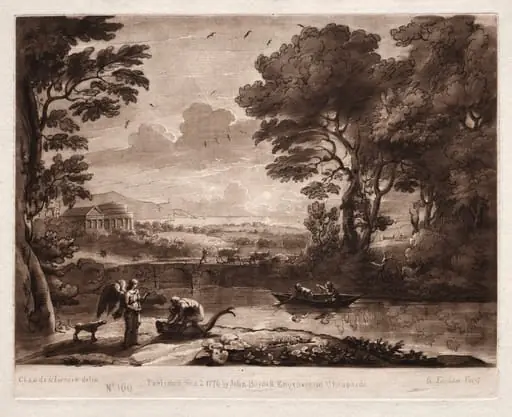 Liber Veritatis: No. 160, Tobias and the Angel
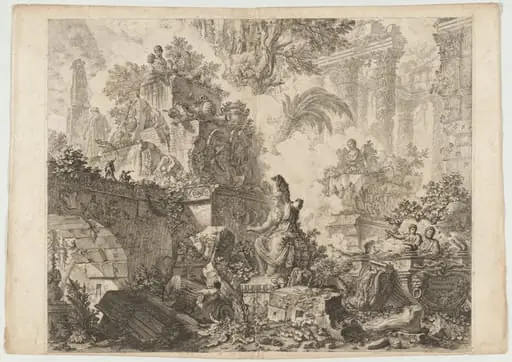 Frontispiece, with Statue of Minerva
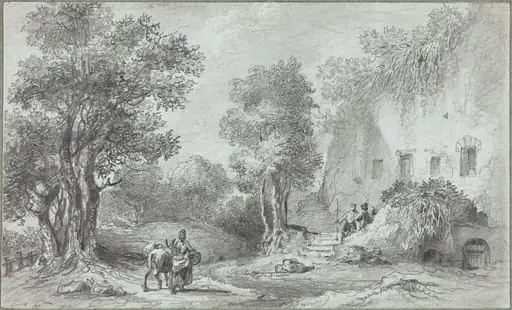 Landscape with Peasants before an Inn