Artwork
Veduta degli Avanzi, o sia del termine degli Archi che conducevano l'Acqua Giulia
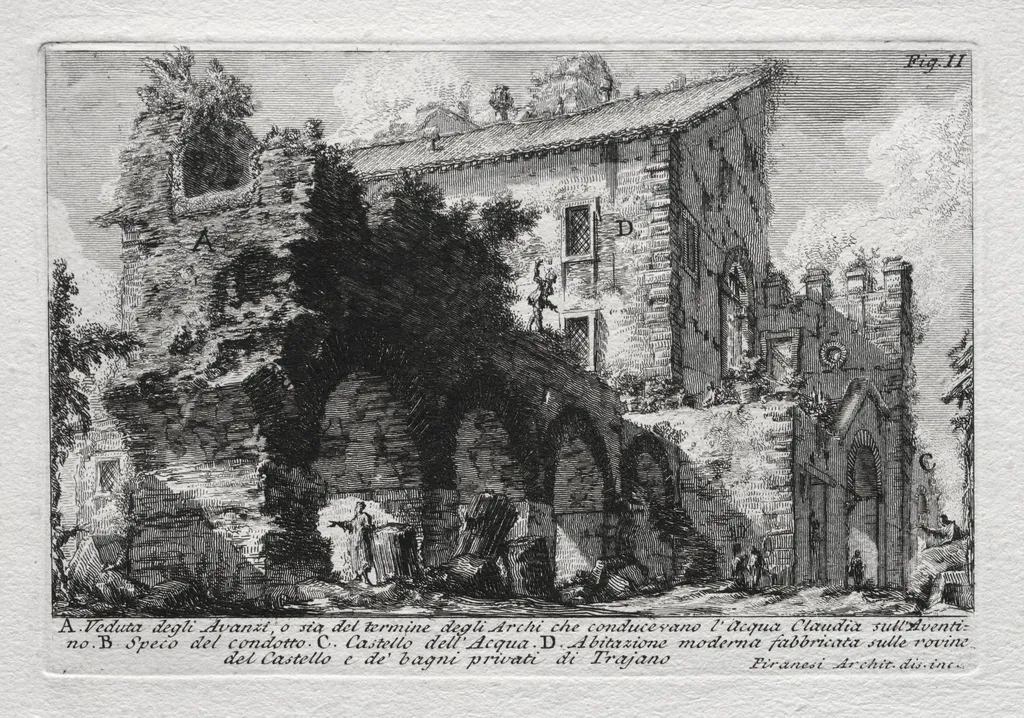
Veduta degli Avanzi, o sia del termine degli Archi che conducevano l'Acqua Giulia is a print by the Romanticist artist Giovanni Battista Piranesi. It dates from 1756 and is held in the collection of the Cleveland Museum of Art.
About this work
Overview
The work is part of Piranesi’s broader exploration of Rome’s architectural past and is held in the collection of The Cleveland Museum of Art.
Created in 1756, this etching by Giovanni Battista Piranesi depicts the remnants of the Aqua Julia, an ancient Roman aqueduct. The scene captures the decay of once-grand infrastructure, with broken arches and overgrown stonework. Small human figures scale the ruins, emphasizing scale and abandonment. The work is part of Piranesi’s broader exploration of Rome’s architectural past and is held in the collection of The Cleveland Museum of Art.
Subject & Meaning
The print focuses on the terminal structure of the Aqua Julia, highlighting its transformation from functional engineering to ruin. Labels such as 'Castello dell'Acqua' and 'bagni privati' suggest the site’s former civic importance. The juxtaposition of crumbling masonry with a modest modern building implies a quiet tension between antiquity and contemporary life, inviting reflection on time’s erosion of human achievement.
Technique & Style
Piranesi employed precise etching to render the aqueduct’s fractured stonework with sharp, angular lines. Deep shadows and dense cross-hatching amplify the weight and texture of the ruins, creating a sense of monumentality even in decay. The contrast between the dark, textured ruins and the lighter, simplified modern structure enhances the dramatic atmosphere, characteristic of Piranesi’s architectural fantasies.
History & Provenance
Produced during Piranesi’s early years in Rome, this print belongs to a series documenting the city’s ancient infrastructure. It was likely made for collectors and scholars interested in Roman antiquities. The work entered The Cleveland Museum of Art’s collection through documented acquisitions in the 20th century, preserving its role as a record of 18th-century antiquarian interest.
Context
In mid-18th-century Rome, interest in classical ruins surged among travelers and intellectuals. Piranesi’s prints responded to this fascination, blending topographical accuracy with imaginative reconstruction. This etching reflects the era’s scholarly pursuit of Rome’s engineering legacy, while also revealing a Romantic sensibility toward decay and the passage of time.
Legacy
Piranesi’s detailed renderings of Roman ruins influenced generations of architects and artists, shaping perceptions of antiquity through dramatic, atmospheric imagery. This print contributed to a visual language that equated ruin with historical depth. Its continued presence in museum collections underscores its enduring role in documenting how past civilizations are remembered and reinterpreted.
Artist & collection

Artist
Giovanni Battista (or Giambattista) Piranesi (Italian pronunciation: ; also known as simply Piranesi; 4 October 1720 – 9 November 1778) was an Italian classical archaeologist, architect, and artist, famous for his…

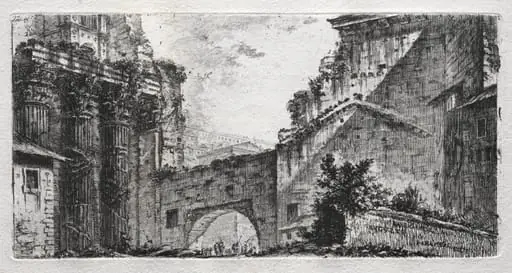 Foro di Augusto
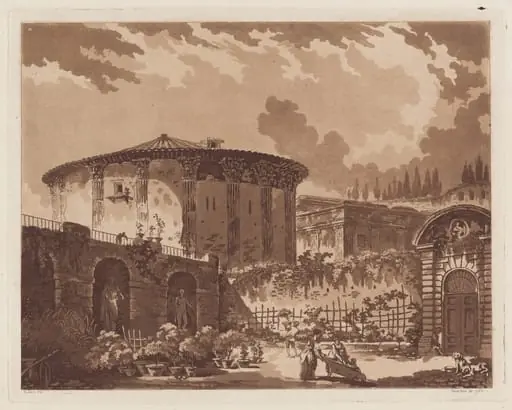 View in the Garden of a Roman Villa, with the Temple of Hercules Victor and the Temple of Portunus
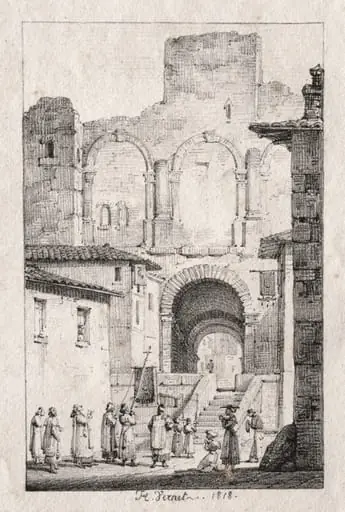 Procession at Arles
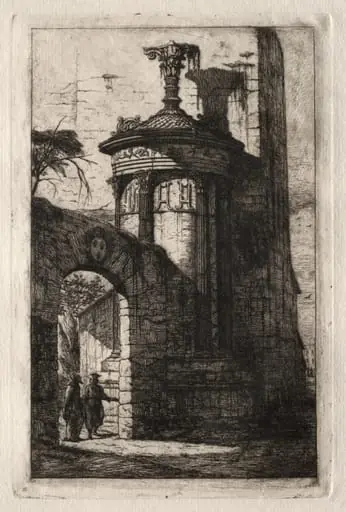 Entrance to the French Capuchin Convent at Athens
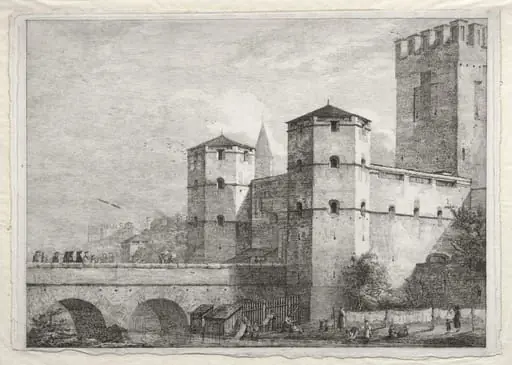 Munich-Hohenschwangau, Bavaria
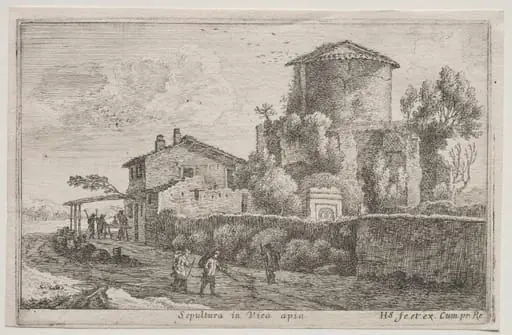 Diverse Views in and around Rome: Tomb along the Appian Way
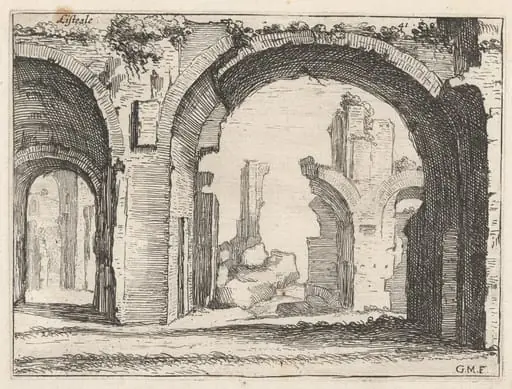 Antonine Baths, or Baths of Caracalla