Artwork
Antonine Baths, or Baths of Caracalla
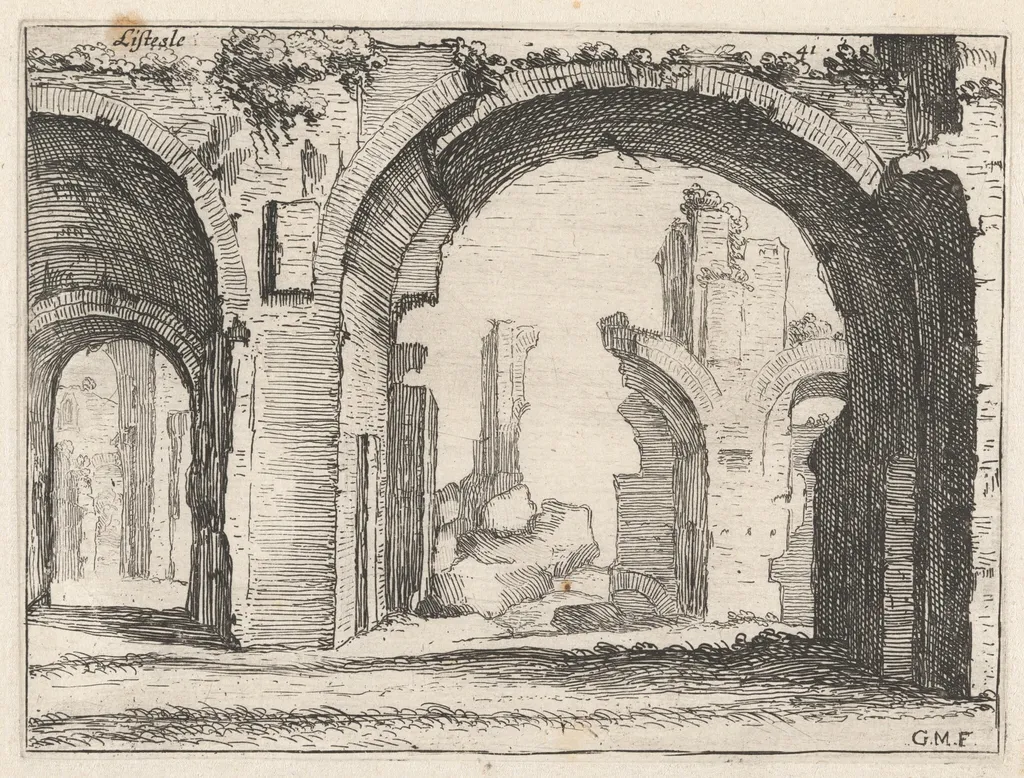
Antonine Baths, or Baths of Caracalla is an ink print by the Baroque artist Giovanni Battista Mercati. It dates from 1629 and is held in the collection of the National Gallery of Art.
About this work
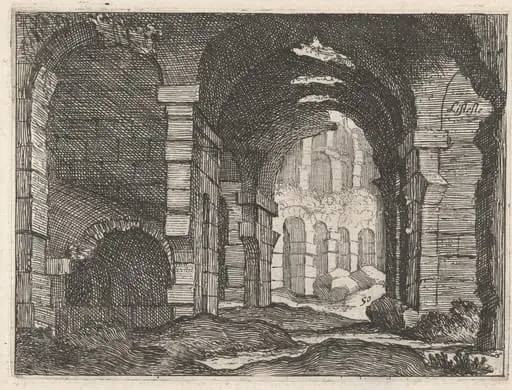
This black-and-white drawing shows old stone ruins with tall arches and broken columns.
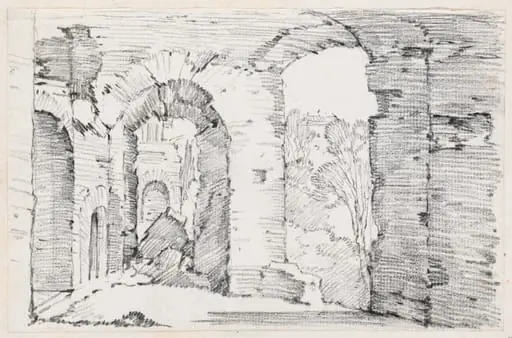
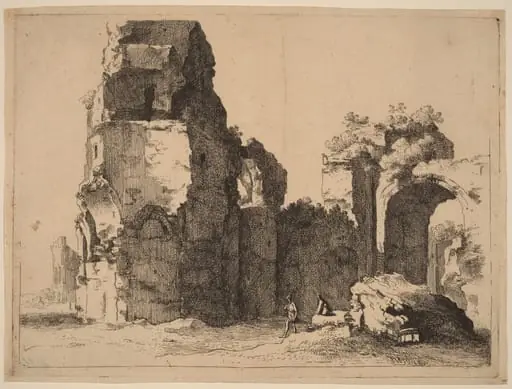
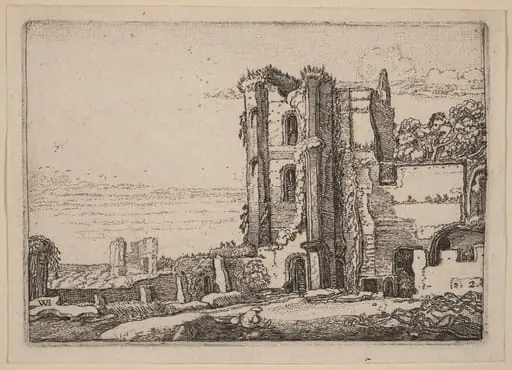
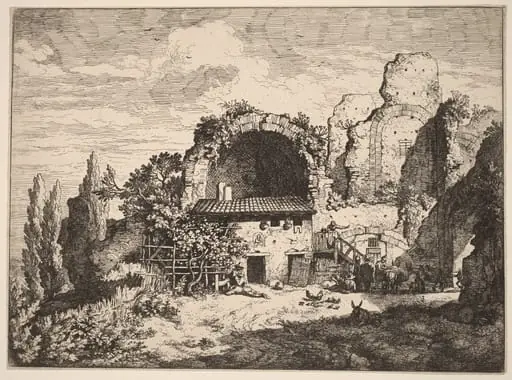
This black-and-white drawing shows old stone ruins with tall arches and broken columns. In the center, a crumbling statue lies on the ground, while others stand half-buried. A small figure kneels nearby, and a tree grows from the ruins. The edges have a wavy border, and the word "Lysie" appears at the top.
The artist used shading to show depth, making the stones look rough and worn. This print was made in 1629, capturing ancient Roman baths.
Next, look up etching to see how artists like Mercati created detailed prints.
Overview
Giovanni Battista Mercati’s 1629 etching, titled Antonine Baths or Baths of Caracalla, presents a monochrome view of the ruined Roman complex. Executed on laid paper, the print resides in the collection of the National Gallery of Art in Washington, D.C. Its composition centers on decayed arches, fragmented columns, and a toppled statue, evoking the passage of time on a once‑grand public space.
Subject & Meaning
The image captures the skeletal remains of the ancient baths, emphasizing the contrast between monumental architecture and nature’s reclamation. A solitary kneeling figure, dwarfed by the surrounding arches, suggests contemplation or reverence amid decay, while a lone tree sprouts from the stone, underscoring the interplay of human achievement and natural renewal.
Technique & Style
Mercati employed the etching process, incising lines into a copper plate before transferring the inked design onto laid paper. Through careful hatching and cross‑hatching, he rendered the texture of weathered stone and the subtle gradations of shadow, creating a sense of depth that guides the eye through the crumbling space.
History & Provenance
Created in 1629, the print reflects early‑seventeenth‑century interest in antiquity and the Grand Tour. It entered the National Gallery of Art’s holdings through acquisition in the twentieth century, where it remains a documented example of Mercati’s work and of the period’s fascination with Roman ruins.
Context
During Mercati’s lifetime, the ruins of the Baths of Caracalla were a popular subject for artists and scholars documenting Rome’s ancient heritage. The etching aligns with contemporary efforts to record and idealize classical architecture, serving both as a visual record and as a study of decay that informed later neoclassical aesthetics.
Own this work as a print
Artist & collection