Artwork
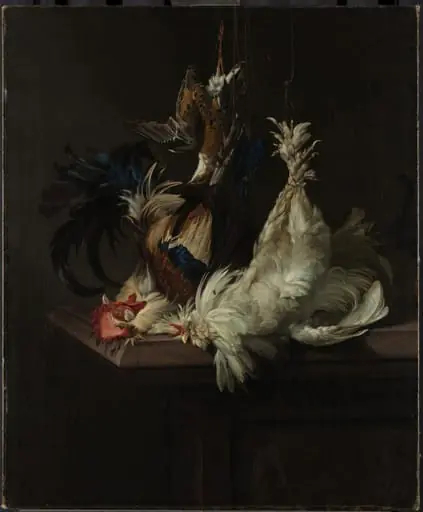
Still Life with Chickens and Eggs
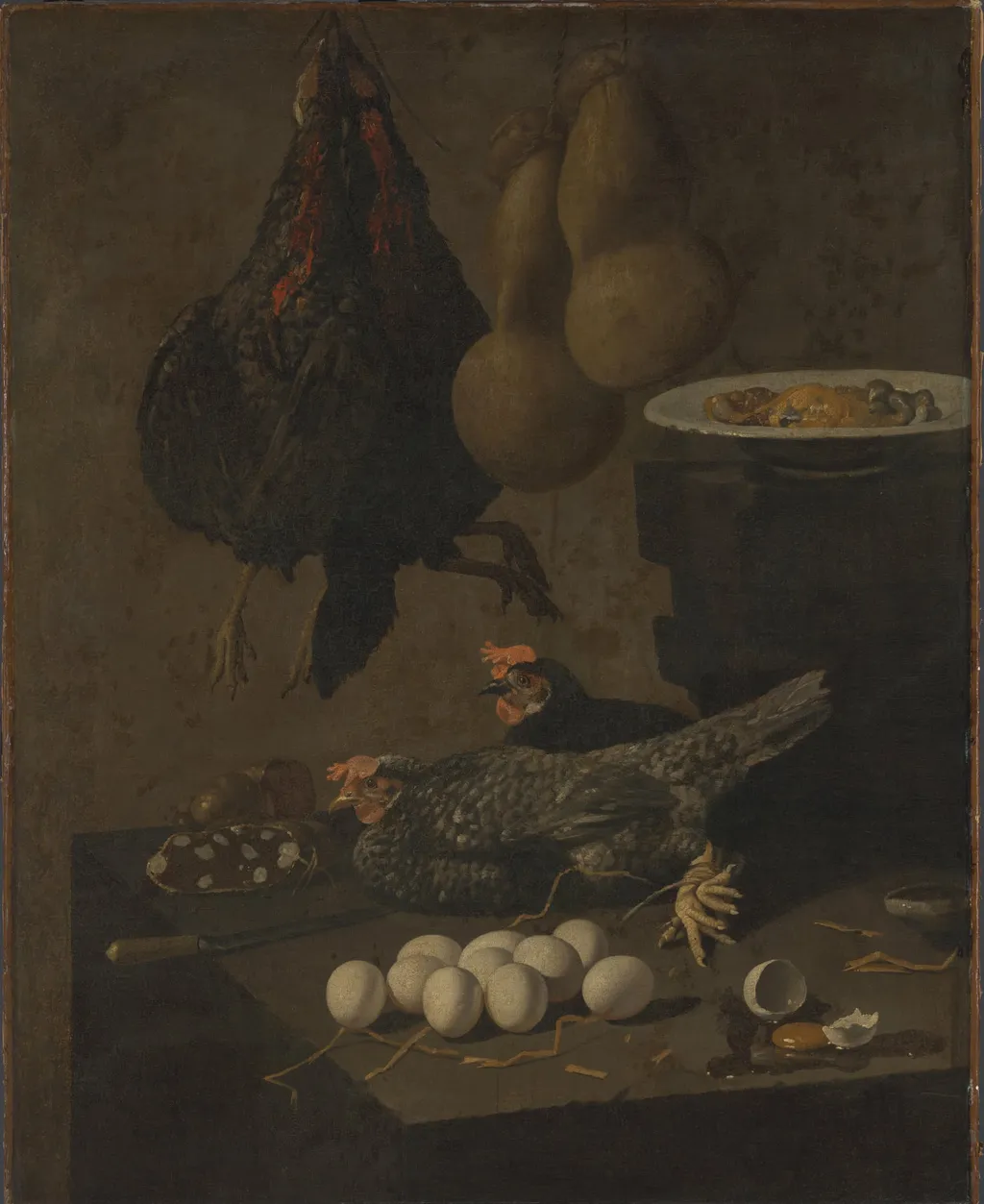
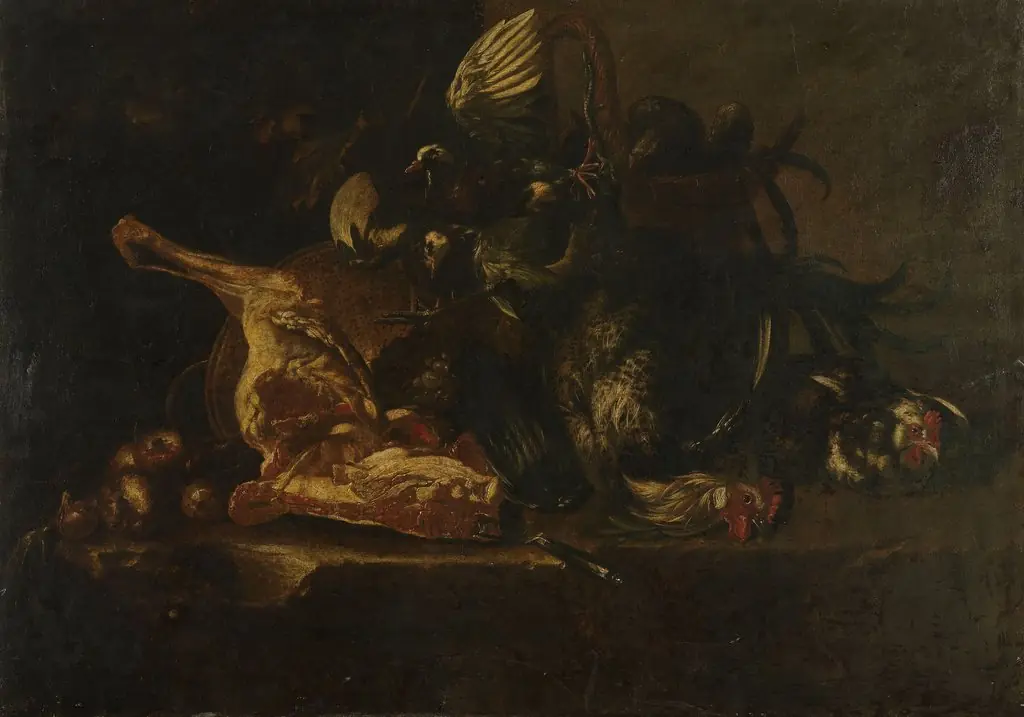
Still Life with Chickens and Eggs is an unspecified painting by the Early Baroque Italian artist Giovanni Battista Recco. It dates from 1650 and is held in the collection of the Rijksmuseum. The work presents a still‑life composition arranged on a stone slab or table.
About this work
Overview
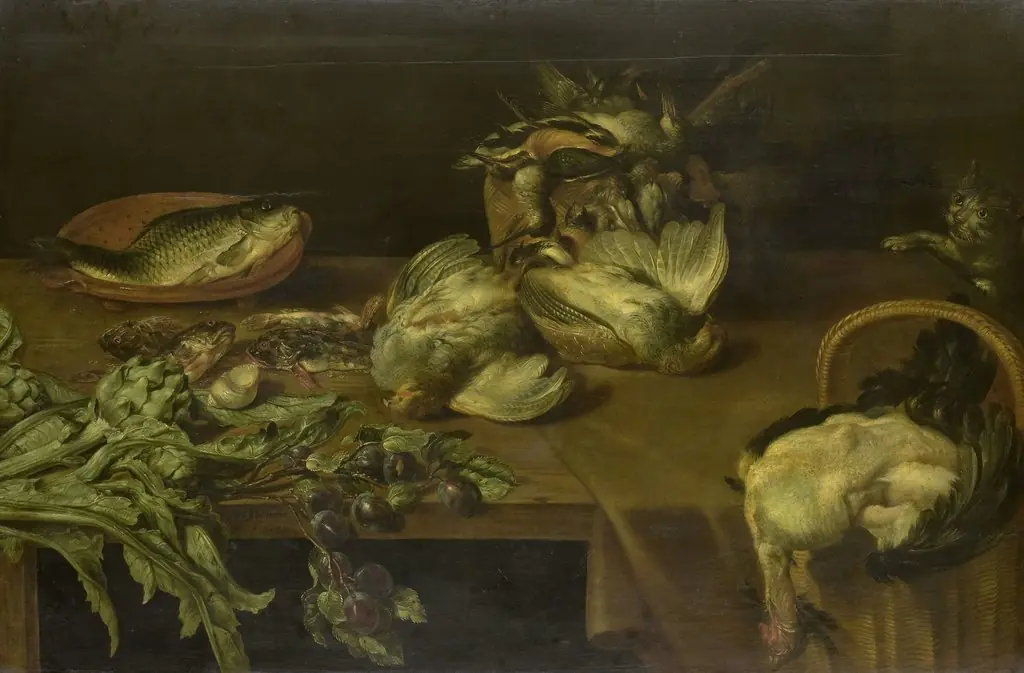
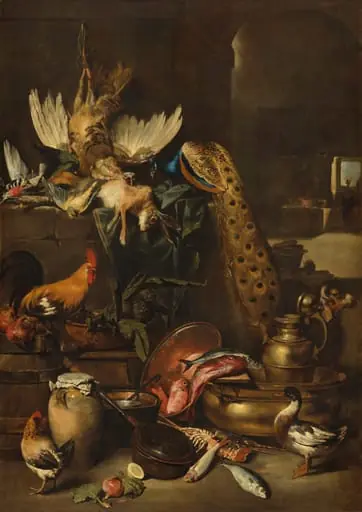
The work presents a still‑life composition arranged on a stone slab or table. Two chickens, bound at the feet, lie beside a cluster of eggs and a length of sausage. Above the surface hang two small birds and a pair of leather wine flasks, completing the tableau.
Subject & Meaning
The painting records a moment of preparation for a meal, capturing the quiet anticipation before consumption. By juxtaposing the bound poultry with the suspended birds and the utilitarian wine containers, the image suggests themes of abundance, domestic routine, and the transitory nature of food.
Technique & Style
The artist renders the chickens with meticulous attention to the texture of feathers and the pinkish hue of skin visible beneath. Light is rendered delicately on each egg, emphasizing their smooth surfaces, while the stone slab is depicted with subtle tonal variations that convey its weight and solidity.
History & Provenance
The piece is catalogued under the Dutch title “Stilleven met kippen en eieren” and is part of the collection of the Rijksmuseum, which holds it among its holdings of 17th‑century Dutch still‑life paintings.
Context
Typical of Dutch Golden Age still lifes, the composition combines everyday foodstuffs with carefully rendered objects to display the painter’s skill in rendering texture, light, and materiality. The inclusion of wine flasks reflects the importance of wine in domestic settings of the period.
Own this work as a print
Artist & collection