Artwork
Recto: Three monks; verso: Slight sketch of a woman reclining, above: The lower portion of another figure
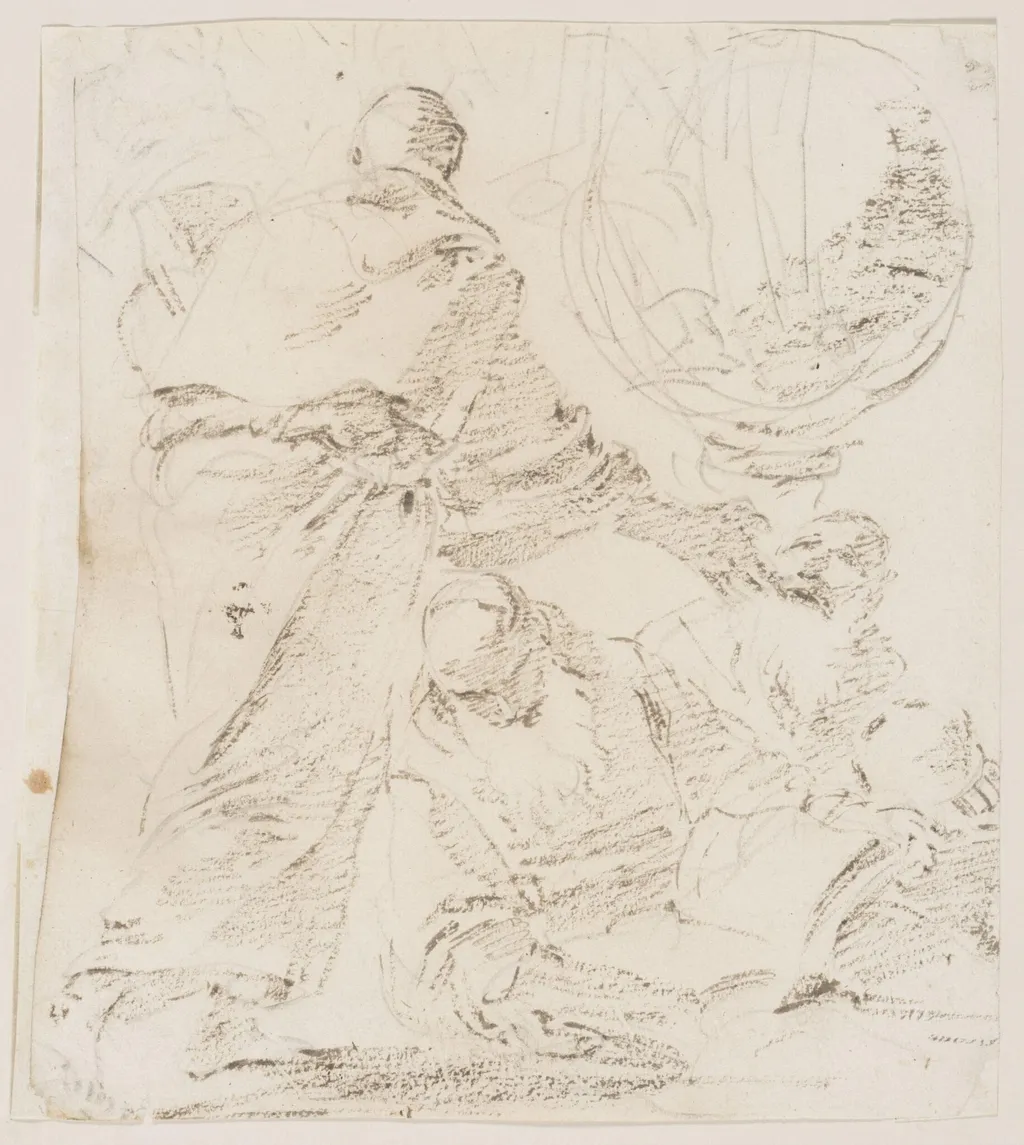
Recto: Three monks; verso: Slight sketch of a woman reclining, above: The lower portion of another figure is a drawing by the Rococo painting artist Giovanni Battista Tiepolo. It dates from 1750 and is held in the collection of the Victoria and Albert Museum. This double-sided drawing contains two distinct compositions on a single sheet of paper.
About this work
Overview
The paper shows signs of age—smudges, wear, and faint underlying marks—suggesting it was handled and reused during the artist’s process.
This double-sided drawing contains two distinct compositions on a single sheet of paper. The recto depicts three monks in a row, their postures subdued and robes loosely rendered with hesitant, scratchy lines. The verso holds a faint, unfinished sketch of a reclining female figure, accompanied by the lower segment of a second form. The paper shows signs of age—smudges, wear, and faint underlying marks—suggesting it was handled and reused during the artist’s process.
Subject & Meaning
The monks appear in quiet contemplation, their bowed heads and folded hands suggesting prayer or meditation. The sketch on the reverse, though incomplete, introduces a contrasting theme of repose and the human form. The juxtaposition may reflect the artist’s exploration of spiritual and secular subjects in tandem, or simply the practical reuse of available paper for experimental studies during moments of transition or reflection.
Technique & Style
The monks are rendered with rapid, uneven strokes that emphasize texture over definition, using minimal lines to suggest volume and fabric. The verso’s reclining figure is executed with lighter, more tentative marks, indicating a preliminary stage. The absence of heavy shading or refined contours points to a working drawing rather than a finished piece, likely intended for internal study rather than display.
History & Provenance
The drawing was included in the album *Vari Studi e Pensieri*, a collection of the artist’s sketches. It passed through the collections of Edward Cheney and Colonel Alfred Capel Cure before being sold at Sotheby’s in 1885. It entered the Victoria and Albert Museum’s holdings shortly thereafter, preserved as part of a broader archive of preparatory works rather than as an independent artwork.
Context
During the period this drawing was made, artists often compiled studies in bound volumes for personal reference. The presence of multiple figures on both sides of a single sheet reflects common practice: conserving materials while capturing fleeting ideas. The sketch of the reclining woman may have been a compositional experiment, possibly related to larger projects, though no direct link to a known painting or fresco has been established.
Legacy
This drawing survives not as a celebrated work, but as a quiet testament to the artist’s daily practice. Its value lies in its immediacy—the unpolished traces of thought and gesture that reveal how ideas took shape. It contributes to understanding the rhythm of studio life, where sacred and secular forms coexisted on the same page, unmediated by finality.
Artist & collection

Artist
Giovanni Battista Tiepolo, also known as Giambattista Tiepolo, was an Italian painter and printmaker from the Republic of Venice who painted in the Rococo style, considered an important member of the 18th-century Venetian school.

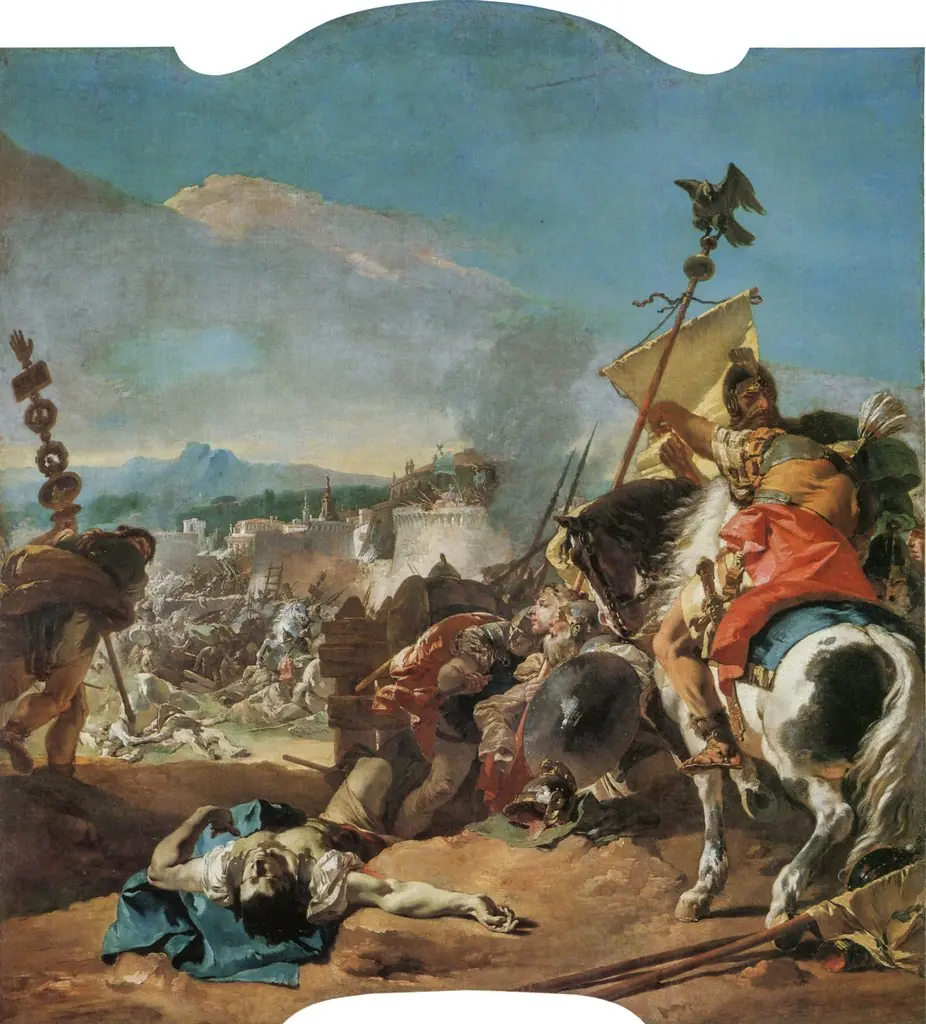
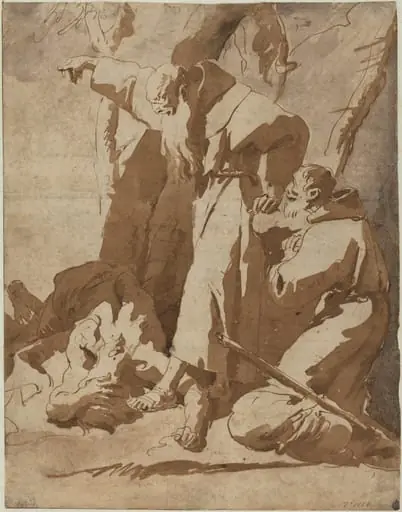 Two Monks with a Prostrate Man
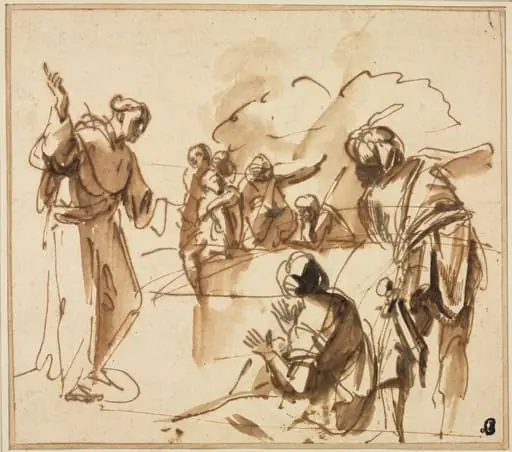 A Monk Preaching
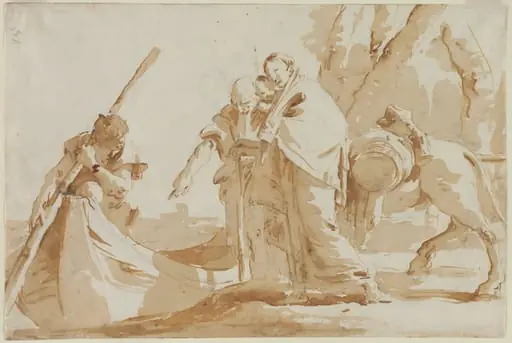 Flight into Egypt: The Embarkment of the Holy Family
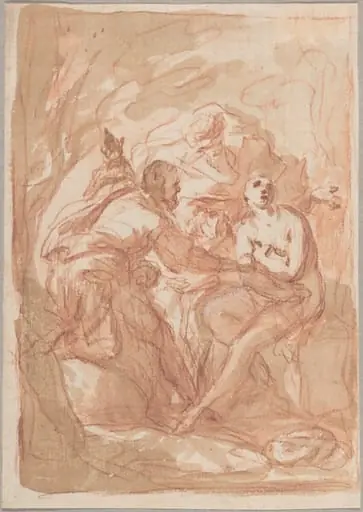 Susanna and the Elders
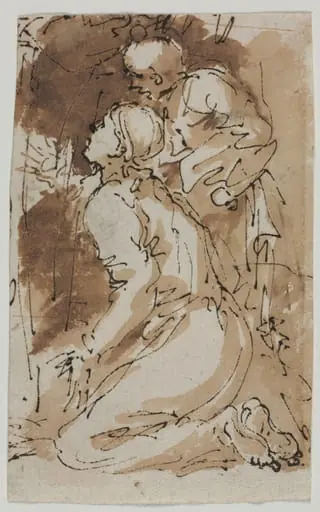 Figure Studies
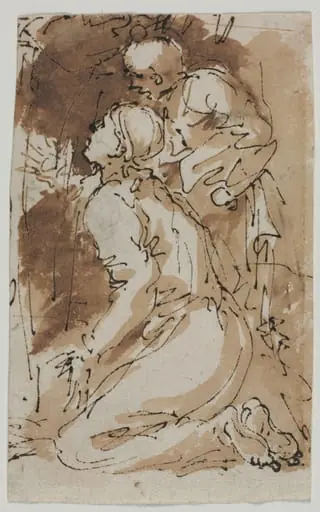 Figure Studies (recto)
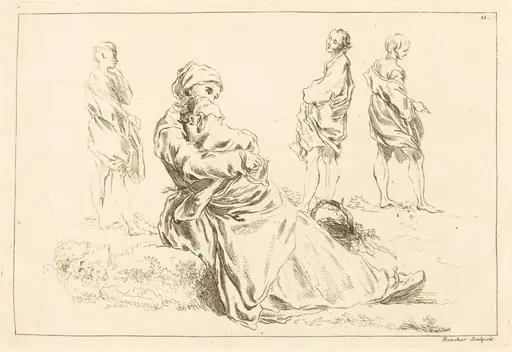 Figure Studies including Seated Mother and Child
![Figures Deciphering an Inscription, with Two Women Seated [Study for Oeuvres de Bossuet, IV], by Giovanni Battista Piazzetta](https://artifactworldgallery.com/img/giovanni-battista-piazzetta--figures-deciphering-an-inscription-with-two-women-seated-stu--24638de2183fad9c-w320.webp) Figures Deciphering an Inscription, with Two Women Seated [Study for Oeuvres de Bossuet, IV]
Figures Deciphering an Inscription, with Two Women Seated [Study for Oeuvres de Bossuet, IV] The Madonna and Child in Glory with Saint Theodore and a Monastic Saint
 The Holy Family
 Christ Carrying the Cross
 Crucifixion of Saint Peter