Artwork
A Monk Preaching
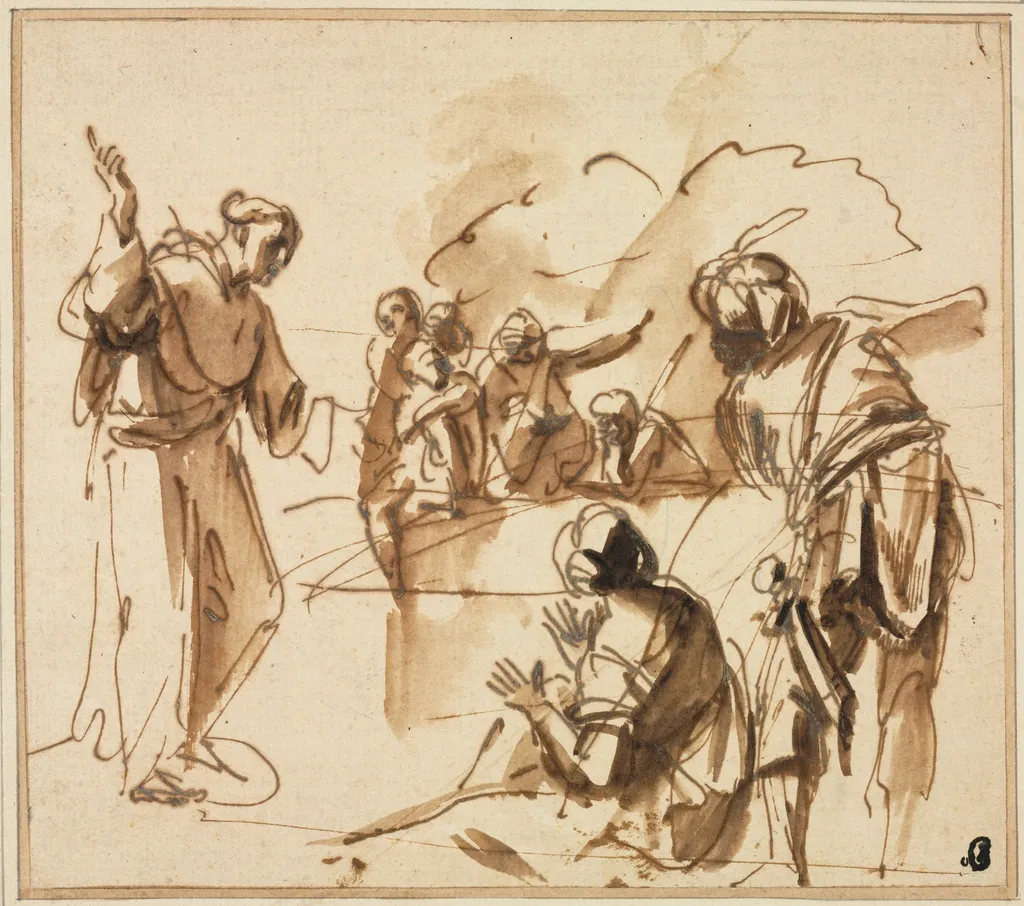
A Monk Preaching is a drawing by the Baroque artist Pier Francesco Mola. It dates from 1648 and is held in the collection of the Cleveland Museum of Art.
About this work
Overview
Created in 1648 by Pier Francesco Mola, this drawing is a spontaneous study executed in brown ink on paper. It captures a moment of religious fervor with minimal refinement, suggesting it was made as a preparatory sketch rather than a polished composition. The work resides in the collection of The Cleveland Museum of Art, where it is valued for its immediacy and expressive energy.
Subject & Meaning
The scene depicts a monk delivering a sermon to a group of laypeople, their postures conveying agitation and attention.
The scene depicts a monk delivering a sermon to a group of laypeople, their postures conveying agitation and attention. Raised arms, crouched figures, and outstretched hands imply emotional engagement with the message. The monk, centered and kneeling, becomes the focal point of spiritual intensity, though the narrative remains ambiguous—perhaps illustrating a moment of conversion or communal unrest.
Technique & Style
Mola employed swift, unblended strokes of brown ink to define forms, avoiding detailed shading or modeling. The lines are fluid and economical, emphasizing motion over precision. The lack of chiaroscuro or texture creates a sense of urgency, as if the artist recorded the scene in real time. The light paper serves as negative space, heightening the dynamism of the figures.
History & Provenance
The drawing entered the Cleveland Museum of Art’s collection through documented acquisitions in the 20th century. Its origins prior to that are not fully traced, though its style aligns with Mola’s known practice of producing rapid studies for larger religious compositions. No early ownership records or inscriptions are known to accompany the sheet.
Context
In mid-17th-century Rome, artists like Mola frequently sketched religious scenes to explore gesture and composition before executing paintings. This drawing reflects the Counter-Reformation’s emphasis on emotional, accessible faith. The informal style suggests the artist was working outside formal commissions, possibly capturing live observations or internalizing devotional themes.
Legacy
Though not widely exhibited, the drawing is recognized in scholarly circles as an example of Mola’s skill in conveying narrative through gesture and economy of line. It contributes to understanding how Baroque artists used preparatory sketches to translate spiritual intensity into visual form, influencing later studies of movement and expression in religious art.
Artist & collection

Artist
Pier Francesco Mola, called Il Ticinese was an Italian painter of the High Baroque, mainly active around Rome.

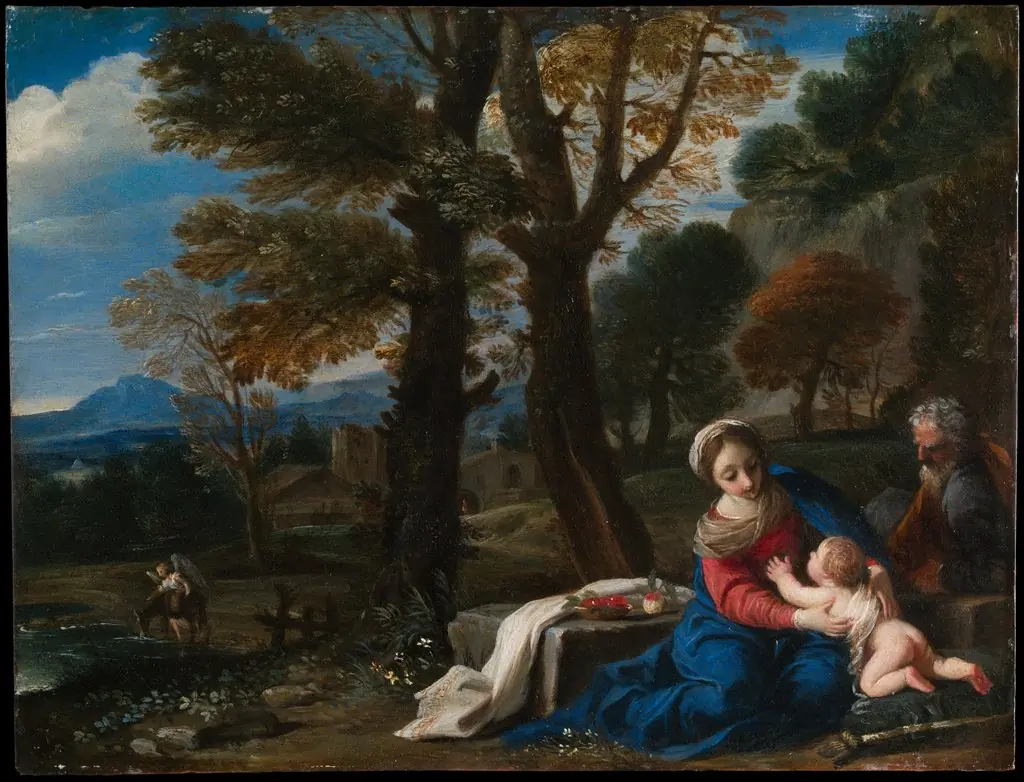
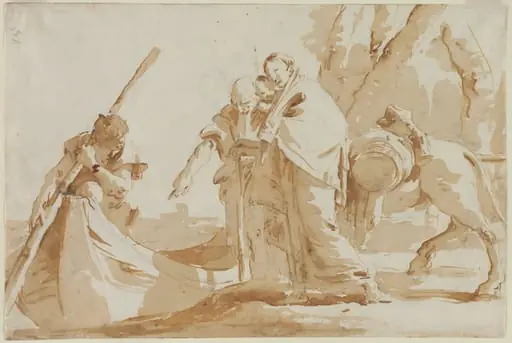 Flight into Egypt: The Embarkment of the Holy Family
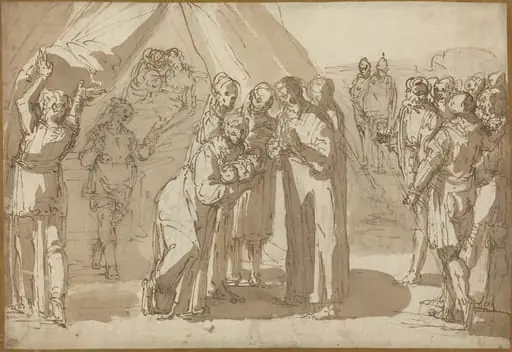 Birth Scene
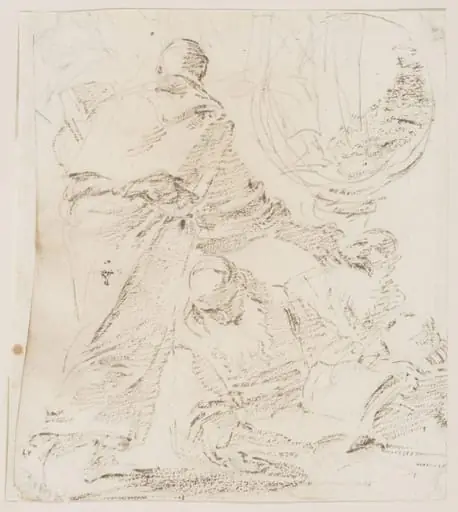 Recto: Three monks; verso: Slight sketch of a woman reclining, above: The lower portion of another figure
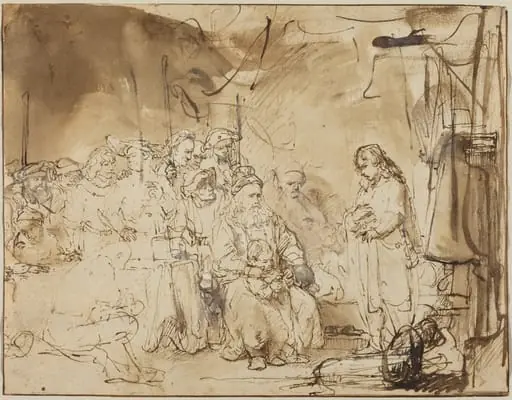 Joseph Recounting His Dreams
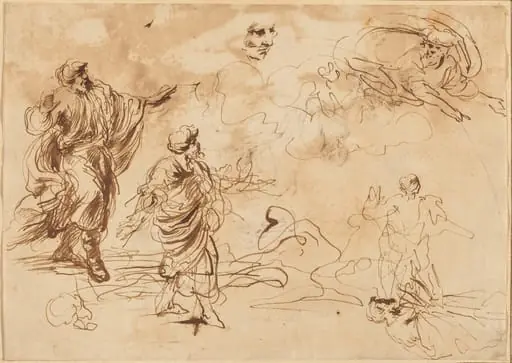 Studies for a Biblical Scene with God the Father Appearing to a Bearded Male Figure
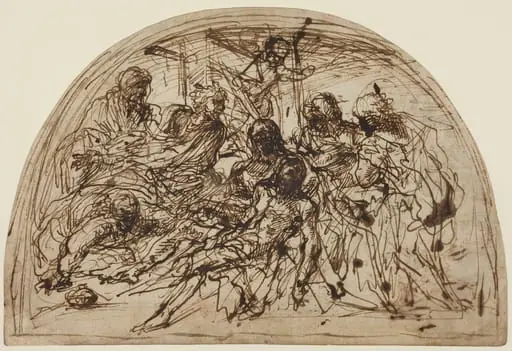 The Lamentation with Saints
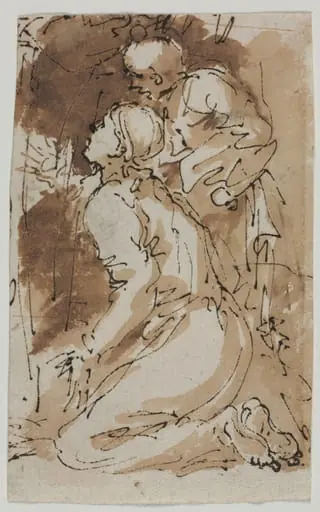 Figure Studies
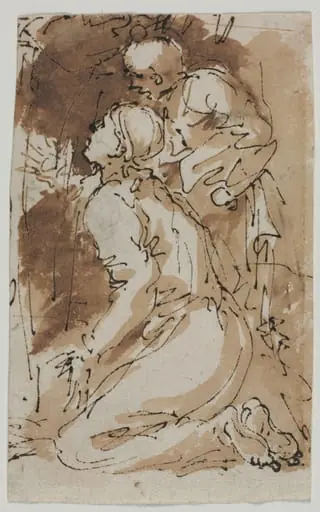 Figure Studies (recto)
![The Adoration of the Magi [recto], by Donato Creti](https://artifactworldgallery.com/img/donato-creti--the-adoration-of-the-magi-recto--2cfd5d76b55e821e-w320.webp) The Adoration of the Magi [recto]
The Adoration of the Magi [recto]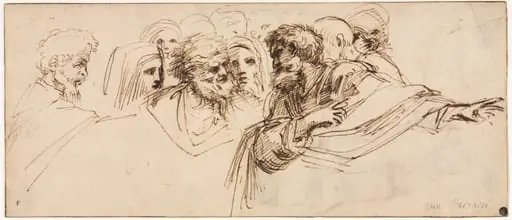 Study of Heads (recto)
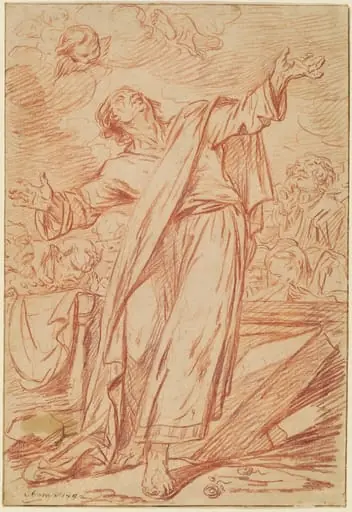 The Assumption of the Virgin
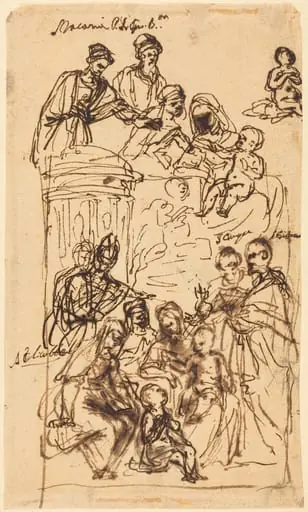 The Madonna and Child with Saints