Artwork
Studies for a Biblical Scene with God the Father Appearing to a Bearded Male Figure
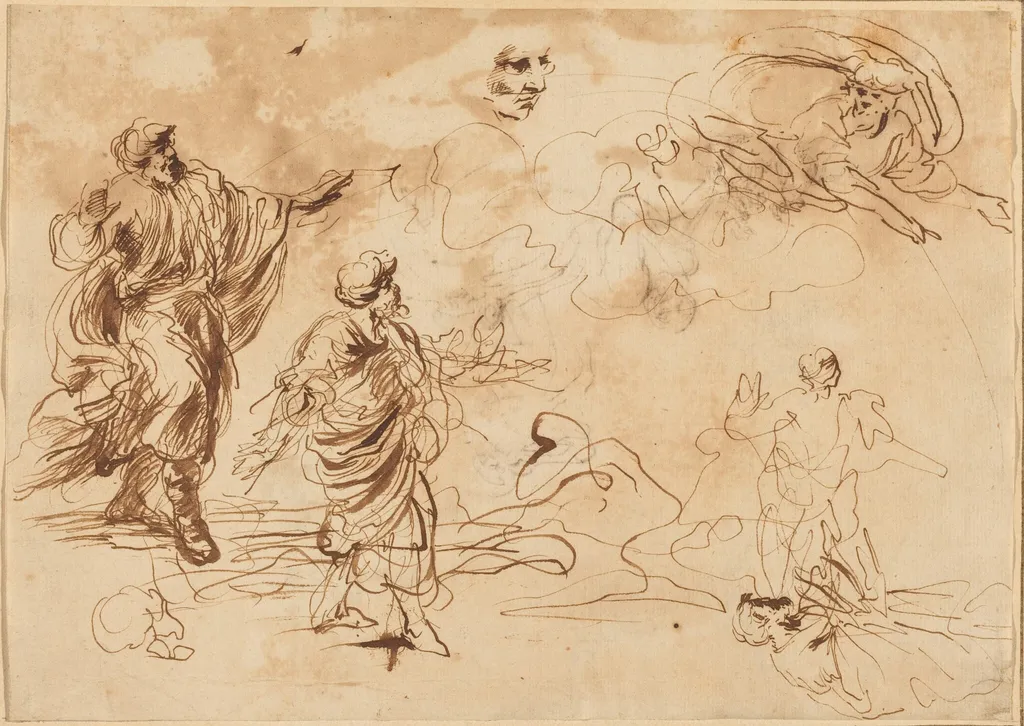
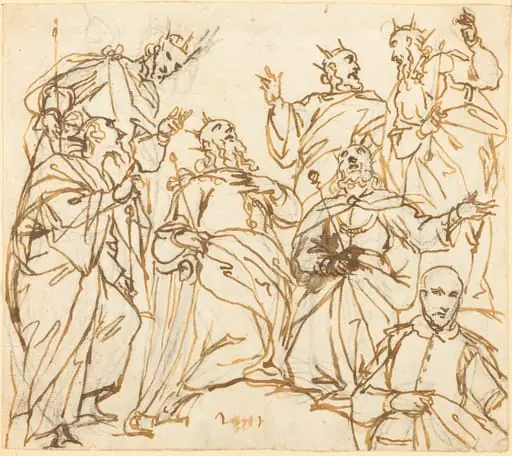
Studies for a Biblical Scene with God the Father Appearing to a Bearded Male Figure is an ink drawing by the Baroque artist Roman 17th Century. It dates from 1601 and is held in the collection of the National Gallery of Art. The work is a pen-and-brown‑ink drawing on laid paper, executed as a preparatory study for a larger biblical composition.
About this work
Overview
The work is a pen-and-brown‑ink drawing on laid paper, executed as a preparatory study for a larger biblical composition. It presents a dynamic grouping of figures rendered with swift, gestural lines that convey movement and tentative posing. The sketch’s loose quality and uneven ink application indicate an exploratory stage rather than a finished illustration.
Subject & Meaning
The composition suggests a narrative in which God the Father appears to a bearded male figure, likely a prophet or patriarch.
The composition suggests a narrative in which God the Father appears to a bearded male figure, likely a prophet or patriarch. A standing man with outstretched arms seems to reach toward the divine presence, while a smaller, bent figure clutching a staff may represent a subordinate witness. The ethereal background figures, rendered in swirling strokes, reinforce the supernatural atmosphere of revelation.
Technique & Style
The artist employs rapid, freehand strokes and cross‑hatching to suggest volume and shadow, allowing the ink’s density to vary across the paper’s textured surface. The use of laid paper enhances the tactile quality, while the uneven ink flow creates a sense of immediacy, characteristic of studies intended to capture pose and gesture before committing to a final composition.
History & Provenance
Created as a preparatory drawing for an unidentified biblical scene, the piece remains in a collection of studies, likely associated with a larger painted or printed work. Its provenance traces through the artist’s studio materials, but specific ownership details are not recorded, reflecting its status as a working sketch rather than a marketable artwork.
Context
Such studies were common in the workshop practice of the 16th–19th centuries, where artists would experiment with figure placement, narrative interaction, and lighting before producing a finished piece. The subject matter aligns with the tradition of depicting divine encounters, a theme recurrent in religious art across European history.
Artist & collection

Artist
A 17th-century Roman sculptor left behind just three known pieces, all tied to 1612.

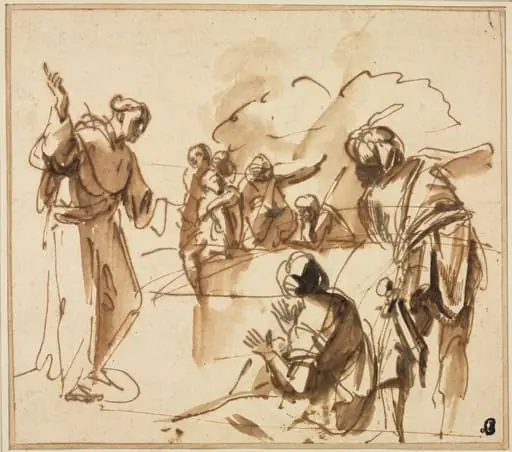 A Monk Preaching
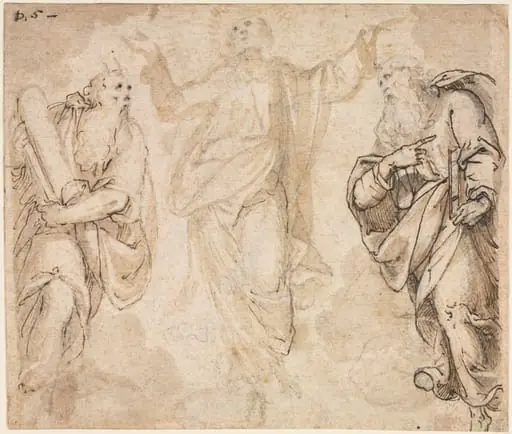 The Transfiguration (recto)
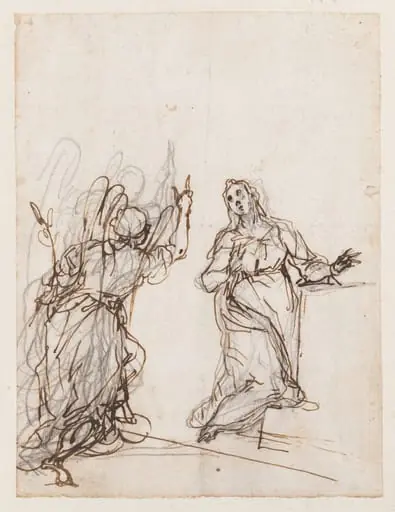 The Annunciation
![The Ecstasy of Saint Francis [recto], by Sebastiano Ricci](https://artifactworldgallery.com/img/sebastiano-ricci--the-ecstasy-of-saint-francis-recto--5f53f9b59775e5dd-w320.webp) The Ecstasy of Saint Francis [recto]
The Ecstasy of Saint Francis [recto]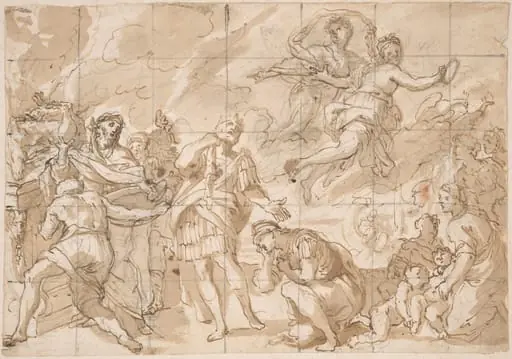 The Sacrifice of Iphigenia
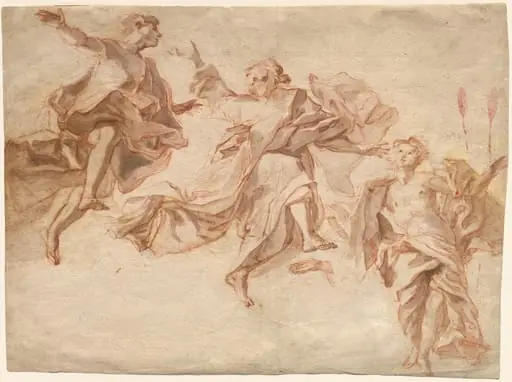 The Ascension of Christ
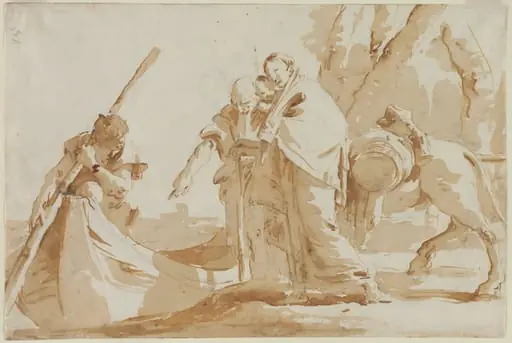 Flight into Egypt: The Embarkment of the Holy Family
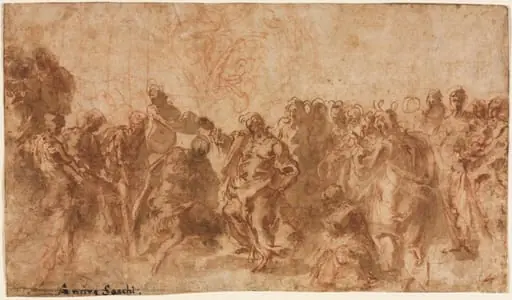 The Baptism of Christ
 David and the Patriarchs with a Donor
![Studies for an Annunciation [recto], by Jacopo Palma il Giovane](https://artifactworldgallery.com/img/jacopo-palma-il-giovane--studies-for-an-annunciation-recto--a15d0411b7678b1e-w320.webp) Studies for an Annunciation [recto]
Studies for an Annunciation [recto] The Lamentation with Saints
![Biblical Scene [verso], by Sebastiano Ricci](https://artifactworldgallery.com/img/sebastiano-ricci--biblical-scene-verso--d33f1e2abb3d29f7-w320.webp) Biblical Scene [verso]
Biblical Scene [verso]