Artwork
Scherzi di Fantasia: The Happy Satyr and his Family
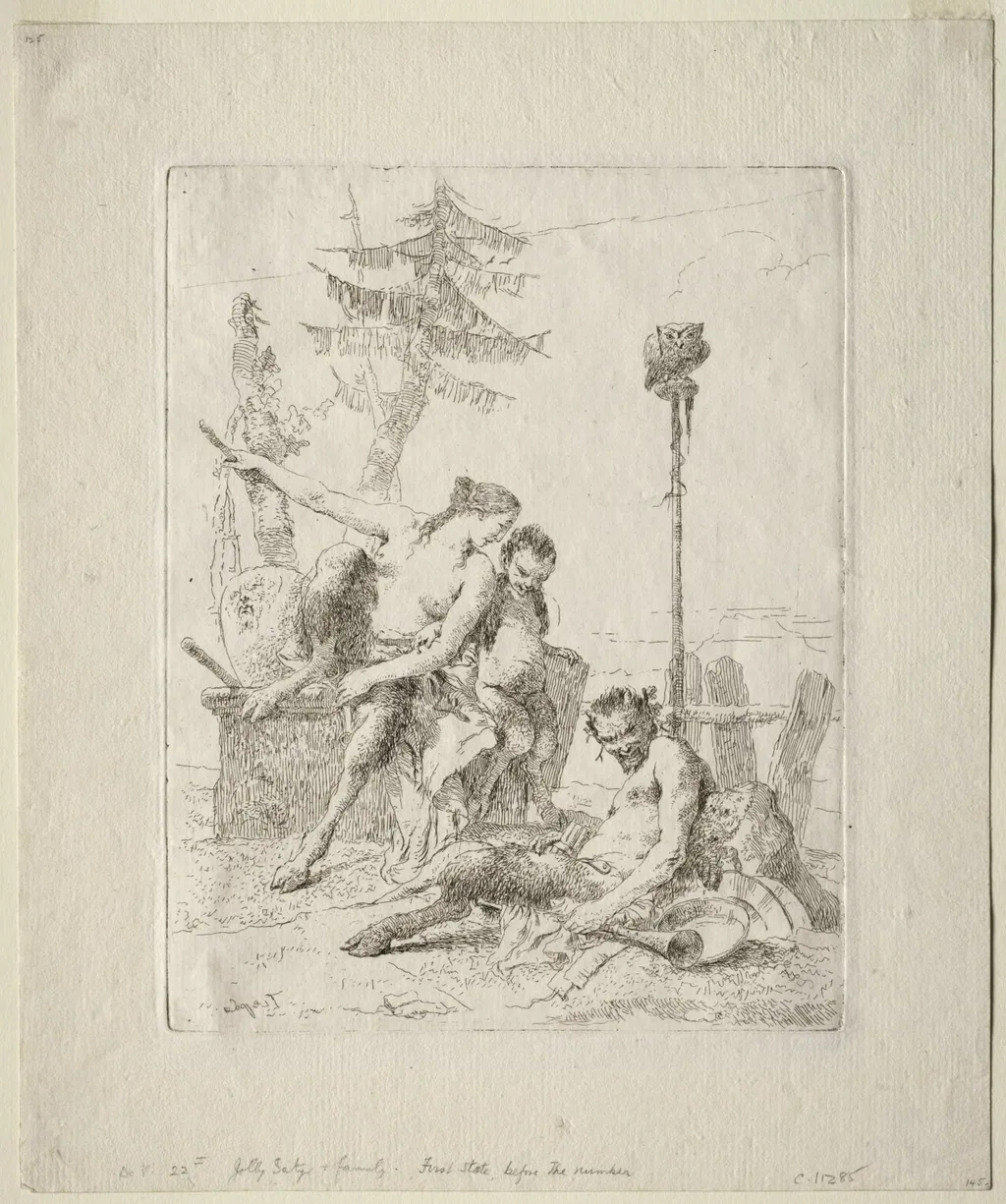
Scherzi di Fantasia: The Happy Satyr and his Family is a print by the Baroque artist Giovanni Battista Tiepolo. It dates from 1755 and is held in the collection of the Cleveland Museum of Art.
About this work
Overview
Giovanni Battista Tiepolo’s 1755 print, Scherzi di Fantasia: The Happy Satyr and his Family, is part of the Cleveland Museum of Art’s collection. The work presents a whimsical gathering of mythological figures rendered in a light, sketch‑like manner.
Subject & Meaning
The image depicts a satyr—a creature with goat‑like horns—accompanied by a female figure and a child, all seated beneath a tree. The satyr leans on a staff, the woman carries a basket, and the child interacts with a dog beside a broken pot, suggesting a scene of domestic leisure rather than a narrative from classical myth.
Technique & Style
Executed in quick, gestural lines, the print emphasizes spontaneity over detailed finish. The composition relies on minimal shading and a loose handling of forms, characteristic of a sketch or study rather than a polished, finished work.
Context
Created during the late Baroque period, the piece reflects the era’s fascination with mythological subjects and theatricality, yet its playful tone and informal execution set it apart from the more dramatic, highly finished works typical of the time.
History & Provenance
Since its creation, the print has entered the holdings of the Cleveland Museum of Art, where it is displayed as an example of Tiepolo’s exploratory drawing practice.
Artist & collection

Artist
Giovanni Battista Tiepolo, also known as Giambattista Tiepolo, was an Italian painter and printmaker from the Republic of Venice who painted in the Rococo style, considered an important member of the 18th-century Venetian school.

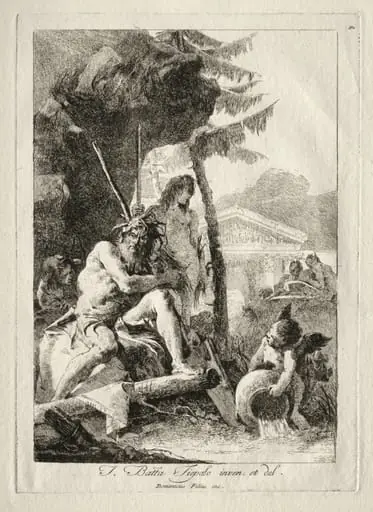 Figures Fluviales
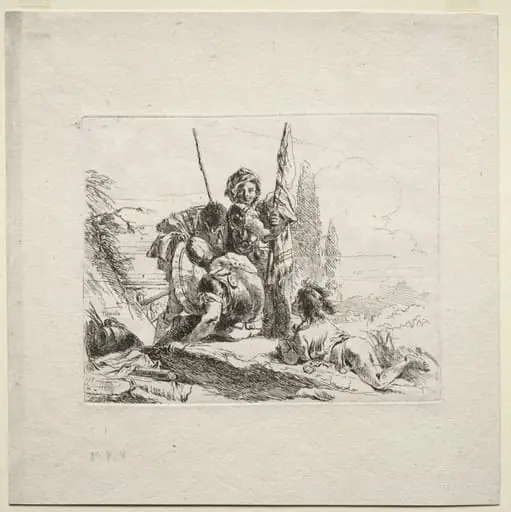 Various Caprices: The Three Soldiers and the Boy
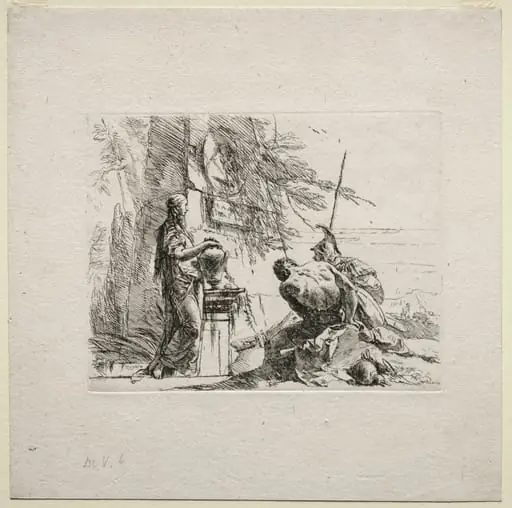 Various Caprices: The Woman Standing with Hands on a Vase
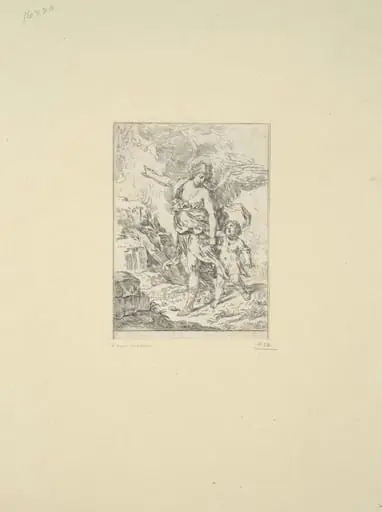 Guardian Angel
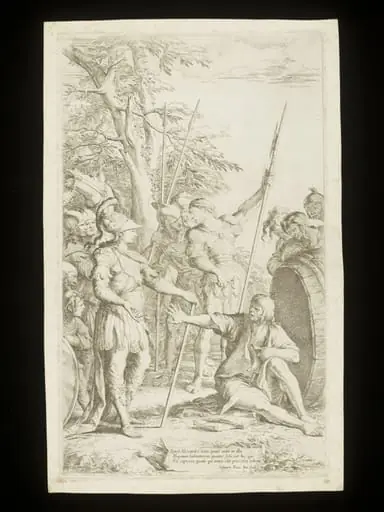 Diogenes and Alexander
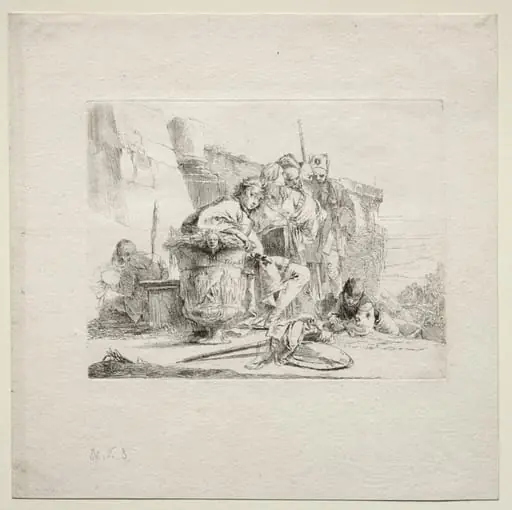 Various Caprices: The Young Man Seated, Leaning Against an Urn
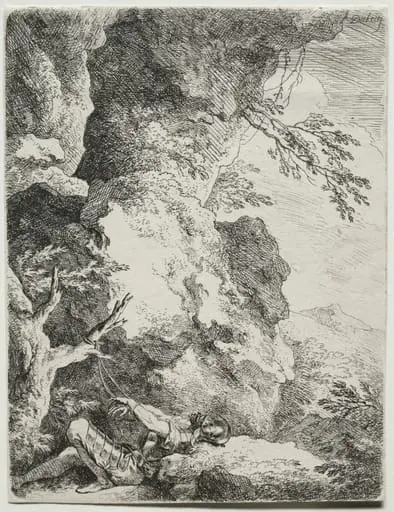 St. William, The Hermit Saint
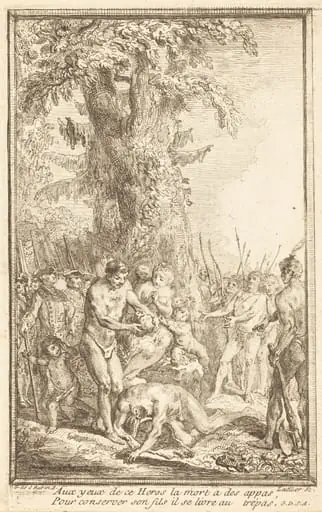 Heroic Act of a Father Who Sacrifices for His Son (Trait heroique d'un pere qui se sacrifie pour son fils)
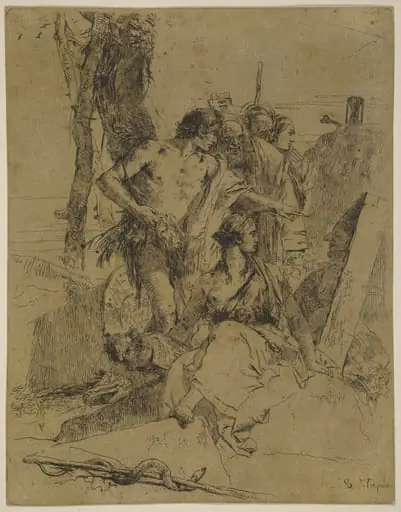 The Discovery of the Tomb of Punchinello
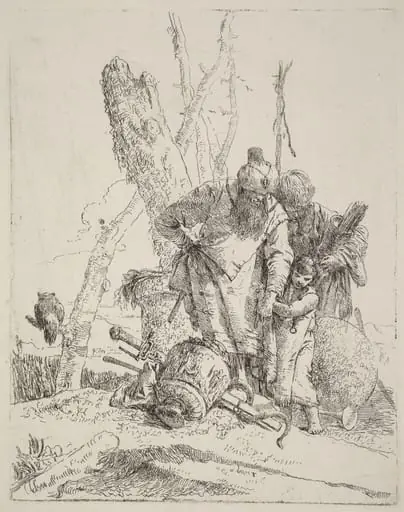 Two Turbaned Magicians and a Boy