Artwork
Two Turbaned Magicians and a Boy
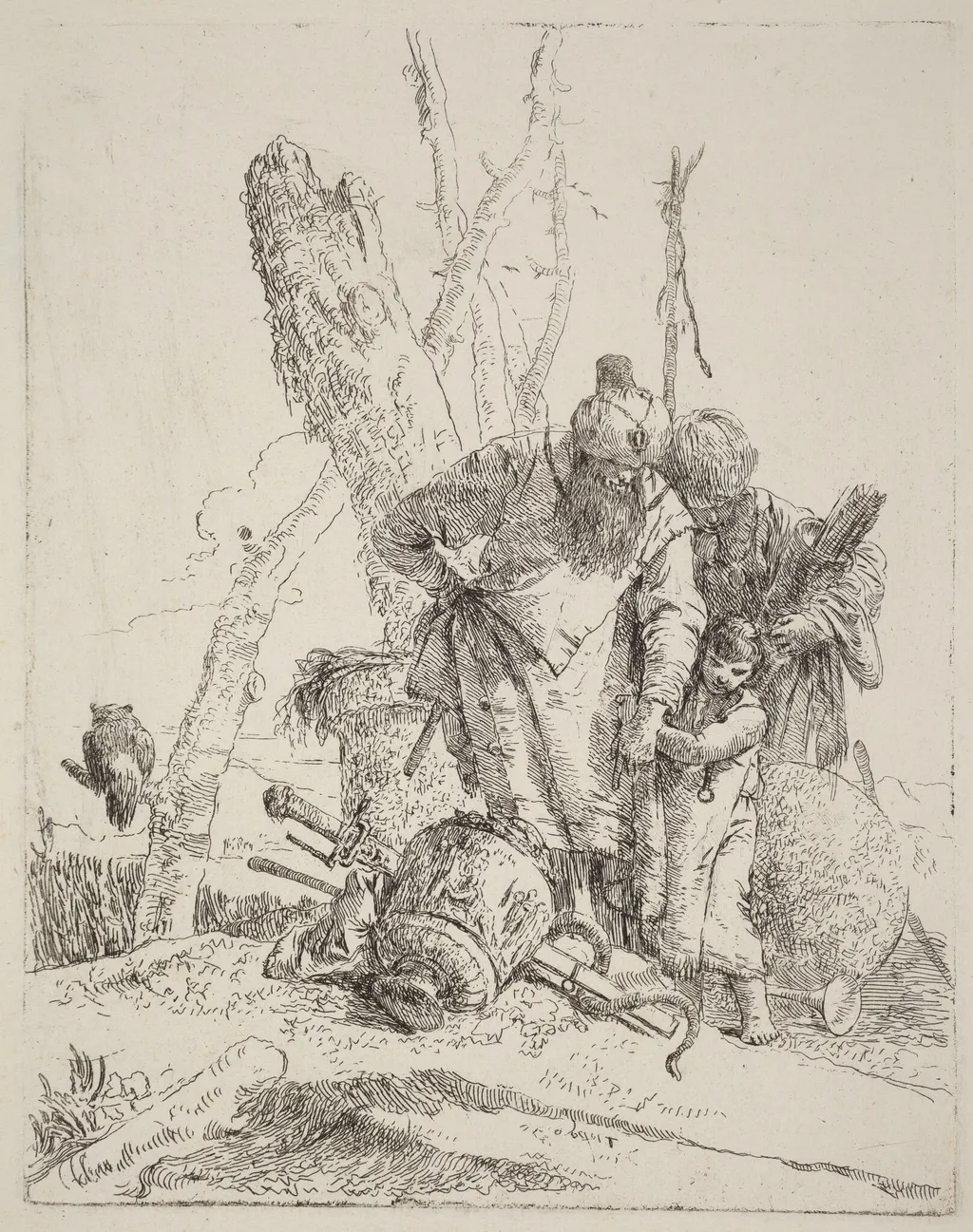
Two Turbaned Magicians and a Boy is an ink print by the Baroque artist Giovanni Battista Tiepolo. It dates from 1733 and is held in the collection of the National Gallery of Art.
About this work
Overview
This 1733 etching by Giovanni Battista Tiepolo presents a scene of mystical performance, featuring two robed figures in turbans and a young boy as witness.
This 1733 etching by Giovanni Battista Tiepolo presents a scene of mystical performance, featuring two robed figures in turbans and a young boy as witness. Executed in fine line work, the print belongs to Tiepolo’s early graphic output, showcasing his skill in narrative compression and atmospheric detail. Though often associated with Rococo elegance, this piece leans into dramatic tension through its lighting and composition, bridging Baroque intensity with emerging 18th-century theatricality.
Subject & Meaning
The figures appear as itinerant magicians, their turbans suggesting exoticism common in European depictions of the Orient. One holds a staff, a symbol of authority or ritual power, while the boy gazes upward in quiet awe. The scene evokes wonder without clear religious or allegorical intent, instead focusing on the moment of spectacle—highlighting Tiepolo’s fascination with performance, illusion, and the vulnerability of the observer.
Technique & Style
Tiepolo employs etching with precise, fluid lines to render fabric folds, facial expressions, and the textured ground. Chiaroscuro is achieved through controlled hatching and cross-hatching, giving volume to the figures against a sparse landscape. The background, minimally suggested with a few trees and a distant hill, directs focus to the central trio. The technique balances detail with restraint, avoiding ornamental excess while maintaining visual richness.
History & Provenance
Created during Tiepolo’s formative years in Venice, this print predates his large-scale frescoes in Germany and Spain. It likely circulated among collectors and fellow artists as a study in composition and expression. While no early ownership records are widely documented, its survival in major print collections attests to its enduring appeal within 18th-century artistic circles.
Context
In early 18th-century Venice, printmaking flourished as a medium for artistic experimentation. Tiepolo’s etchings responded to public interest in theatrical and fantastical subjects, often drawing from opera, travel literature, and Orientalist tropes. This work reflects broader European fascination with the mysterious East, filtered through local Venetian sensibilities that valued narrative clarity and visual immediacy.
Legacy
Though less celebrated than Tiepolo’s frescoes, this etching exemplifies his mastery of graphic art and influence on later printmakers. Its blend of realism and theatricality informed generations of artists exploring narrative in small-scale formats. The work remains a key reference for understanding how Venetian artists translated grand themes into intimate, finely wrought prints.
Artist & collection

Artist
Giovanni Battista Tiepolo, also known as Giambattista Tiepolo, was an Italian painter and printmaker from the Republic of Venice who painted in the Rococo style, considered an important member of the 18th-century Venetian school.

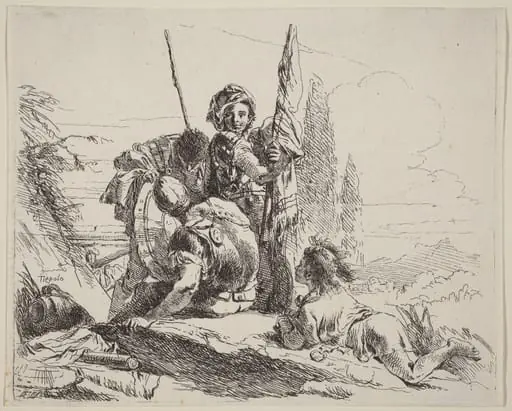 Three Soldiers and a Youth
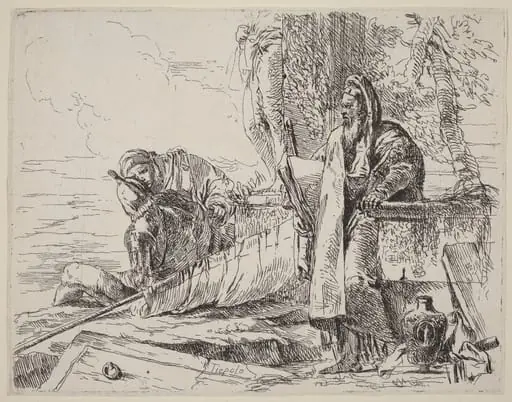 Standing Philosopher and Two Other Figures
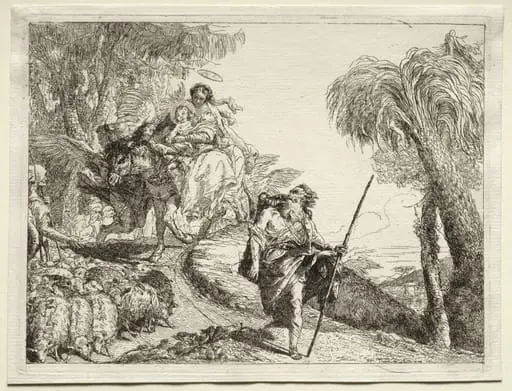 Flight into Egypt: The Holy Family and the Flock of Sheep
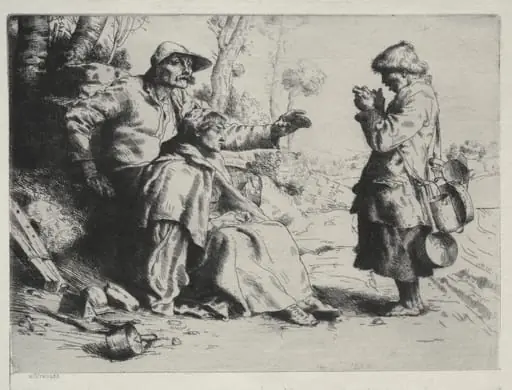 Tinkers
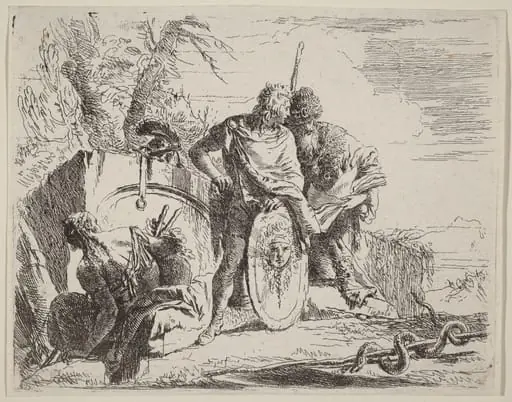 Young Soldier with Philosopher and Seated Woman
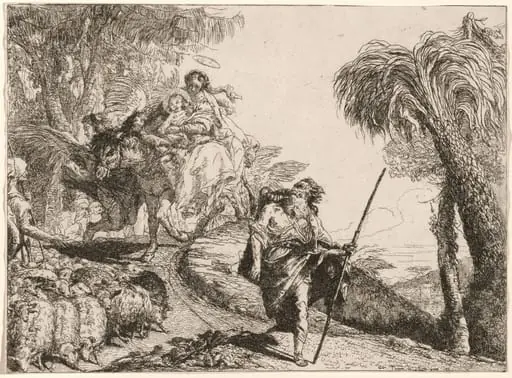 The Holy Family Descending a Path near Shepherds
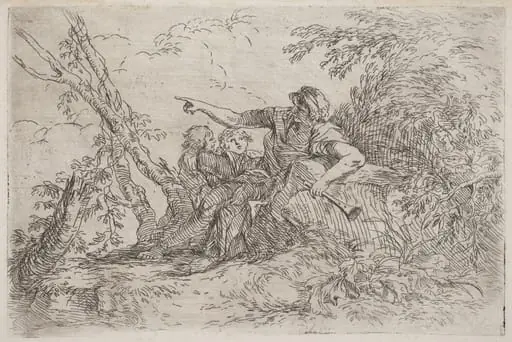 Shepherd in a Landscape
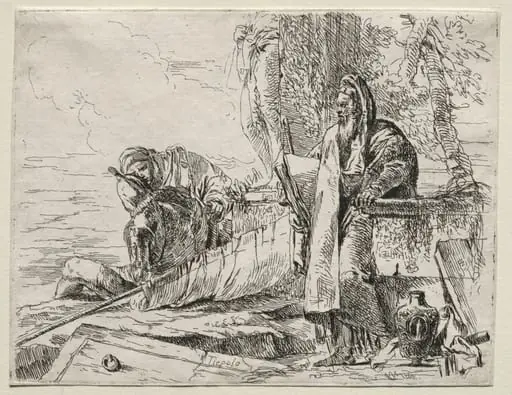 Various Caprices: The Philosopher Holding a Book
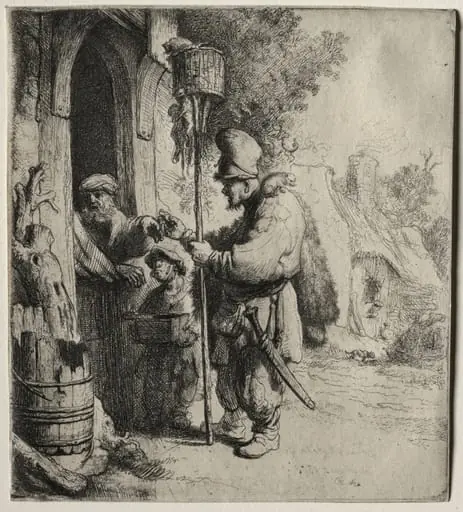 The Rat Catcher