Artwork
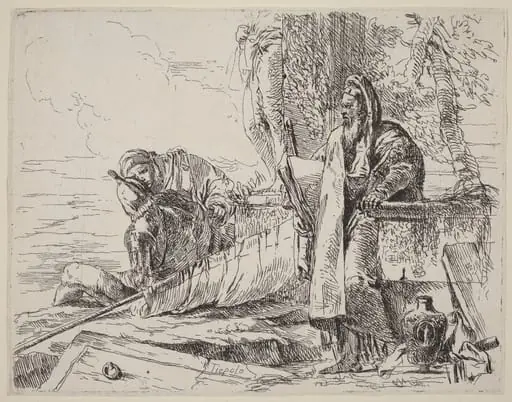
Young Soldier with Philosopher and Seated Woman
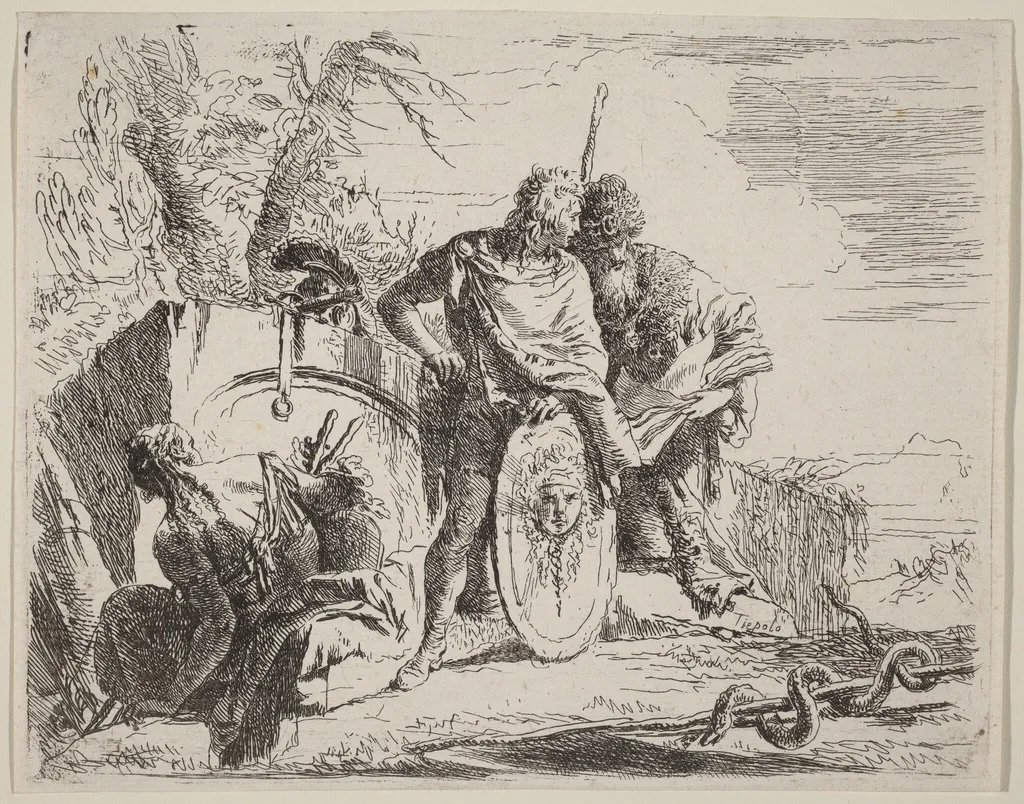
Young Soldier with Philosopher and Seated Woman is an ink print by the Rococo painting artist Giovanni Battista Tiepolo. It is held in the collection of the National Gallery of Art.
About this work
Overview
Young Soldier with Philosopher and Seated Woman is an etching created by Giovanni Battista Tiepolo in 1785. Characteristic of the Venetian school and Rococo style, this print showcases Tiepolo's proficiency in narrative-driven art.
Subject & Meaning
The etching depicts three central figures: a young soldier, a philosopher, and a seated woman with a child. While the exact narrative is ambiguous, the interaction suggests themes of guidance, protection, or intellectual exchange, inviting interpretation.
Technique & Style
Executed with loose, energetic lines, the etching conveys a sense of movement and emotional depth. Tiepolo's use of quick, sketchy strokes in the background contrasts with the more defined figures, emphasizing dynamism and expressive storytelling.
History & Provenance
Created in 1785 by Giovanni Battista Tiepolo, a renowned Venetian painter and printmaker, the etching reflects his prolific career across Italy, Germany, and Spain. Specific provenance details are not provided.
Context
This work exemplifies Tiepolo's contribution to 18th-century European art, particularly within the Rococo style and the Venetian school. It highlights his ability to adapt narrative techniques to the print medium.
Legacy
While specific legacy details of *Young Soldier with Philosopher and Seated Woman* are not provided, the piece contributes to Tiepolo's broader influence on European printmaking and narrative art of his time.
Artist & collection

Artist
Giovanni Battista Tiepolo, also known as Giambattista Tiepolo, was an Italian painter and printmaker from the Republic of Venice who painted in the Rococo style, considered an important member of the 18th-century Venetian school.

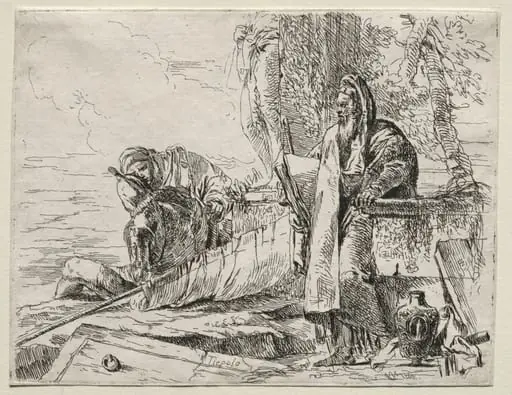 Various Caprices: The Philosopher Holding a Book
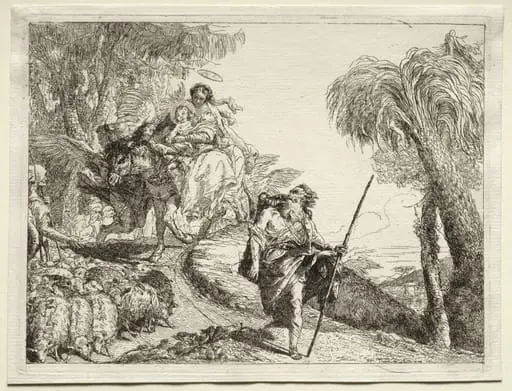 Flight into Egypt: The Holy Family and the Flock of Sheep
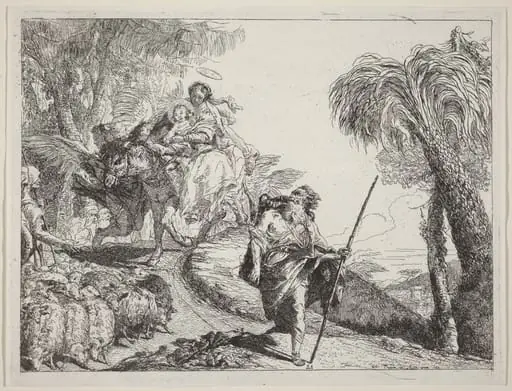 The Flight with Joseph in the Foreground
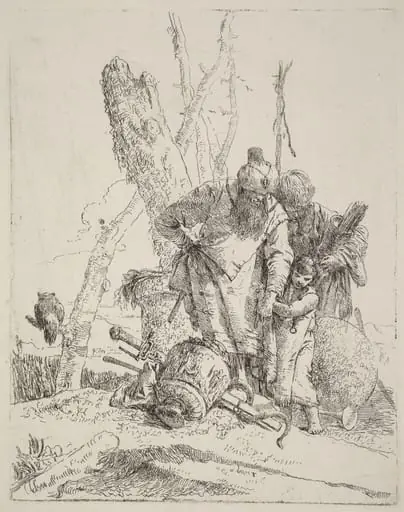 Two Turbaned Magicians and a Boy
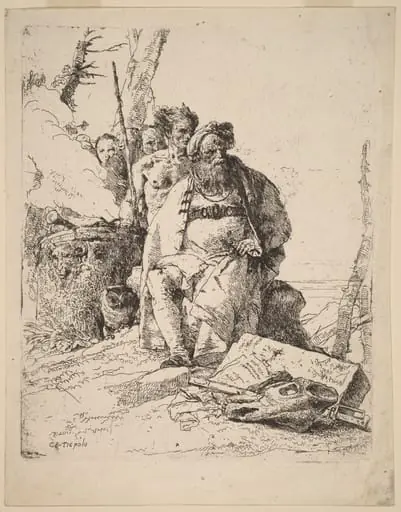 Seated Magician with Other Figures beside an Altar
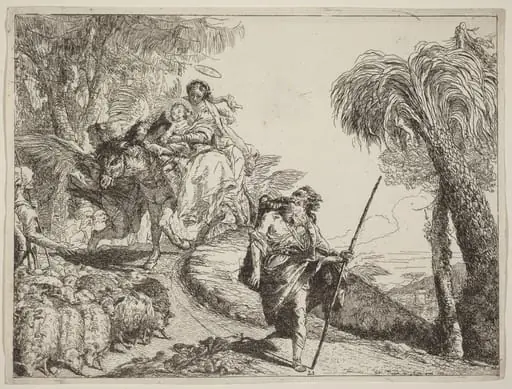 The Flight with Joseph in the Foreground
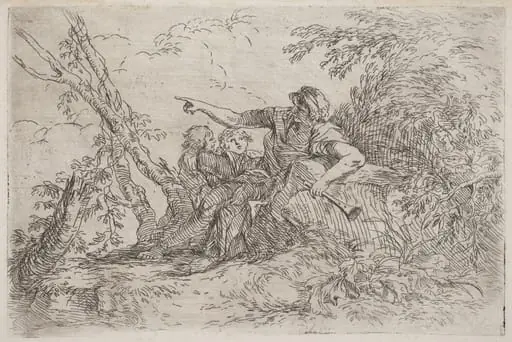 Shepherd in a Landscape
 Standing Philosopher and Two Other Figures