Artwork
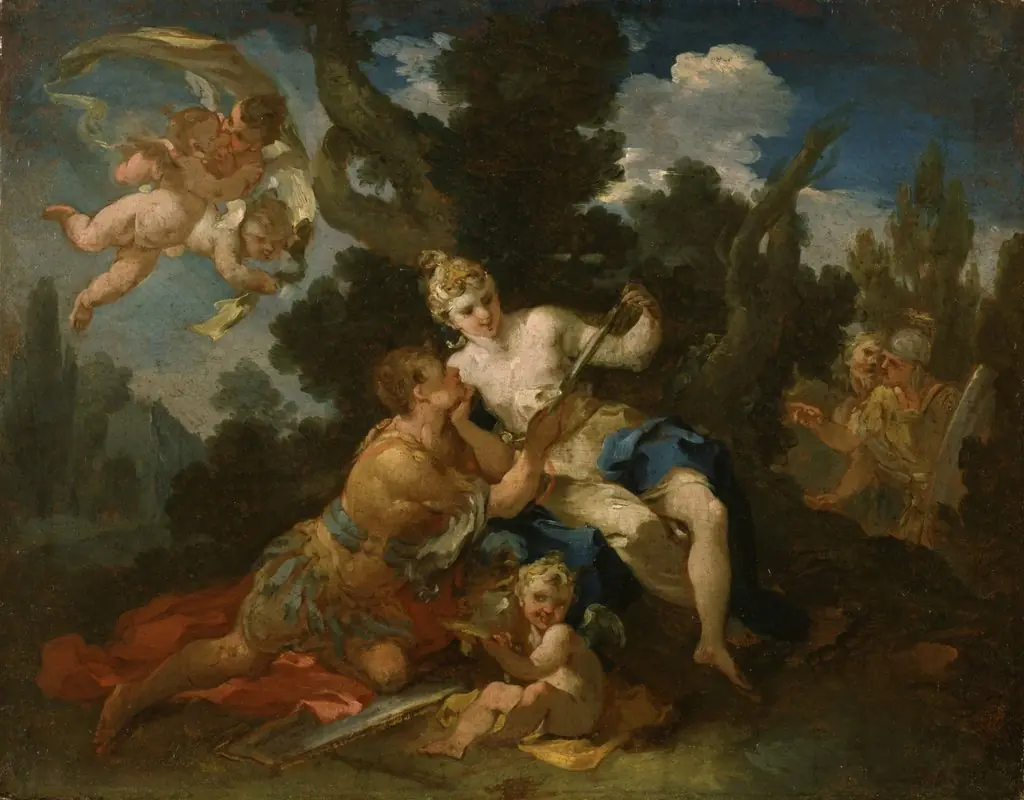
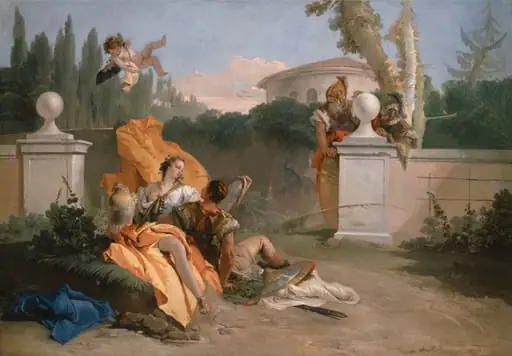
Rinaldo and Armida in Her Garden
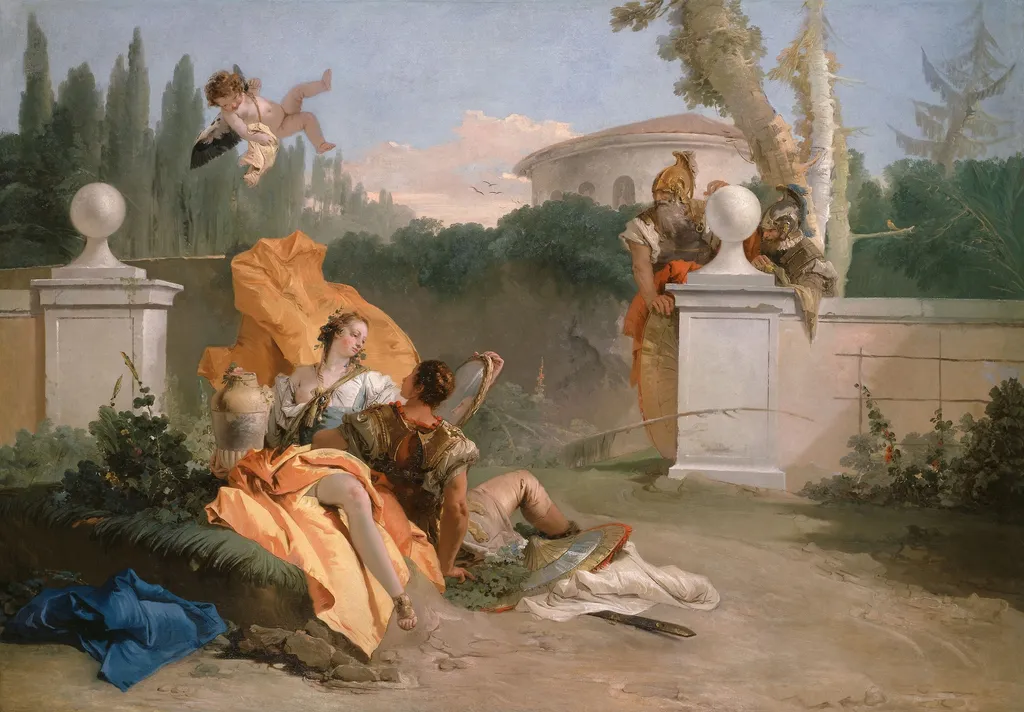
Rinaldo and Armida in Her Garden is an oil painting by the Rococo painting artist Giovanni Battista Tiepolo. It dates from 1755 and is held in the collection of the Art Institute of Chicago.
About this work
Overview
Giovanni Battista Tiepolo’s oil on canvas, dated 1755, portrays a moment from the medieval romance of Armida and Rinaldo. Executed in the light, decorative manner typical of the Rococo, the work now belongs to the collection of the Art Institute of Chicago.
Subject & Meaning
The composition captures the enchantress Armida, rendered in vivid orange, as she presents a mirror to the kneeling knight Rinaldo. Their interaction alludes to the episode in Torquato Tasso’s epic where the sorceress attempts to seduce the heroic crusader, blending themes of love, illusion and the tension between duty and desire.
Technique & Style
Tiepolo employs a luminous palette and fluid brushwork, allowing the bright orange garment to dominate a softer, pastel landscape. The airy treatment of sky, foliage and architectural elements, together with the delicate rendering of a floating cherub, exemplifies the graceful, ornamental qualities of Rococo painting.
History & Provenance
Created in the mid‑18th century, the canvas entered the Art Institute of Chicago’s holdings in the 20th century, where it has been displayed as part of the museum’s European painting collection. Its acquisition reflects the institution’s focus on acquiring representative works of Italian Rococo.
Context
Armida and Rinaldo were popular subjects for visual artists in the 1700s, drawn from Tasso’s 1575 poem "Gerusalemme Liberata." Tiepolo’s interpretation follows a tradition of theatrical, narrative scenes that catered to aristocratic patrons fascinated by literary romance and mythic spectacle.
Own this work as a print
Artist & collection

Artist
Giovanni Battista Tiepolo, also known as Giambattista Tiepolo, was an Italian painter and printmaker from the Republic of Venice who painted in the Rococo style, considered an important member of the 18th-century Venetian school.