Artwork
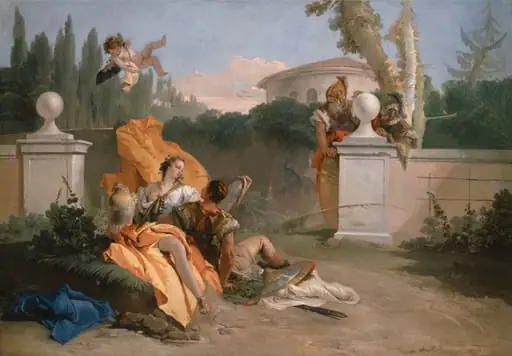
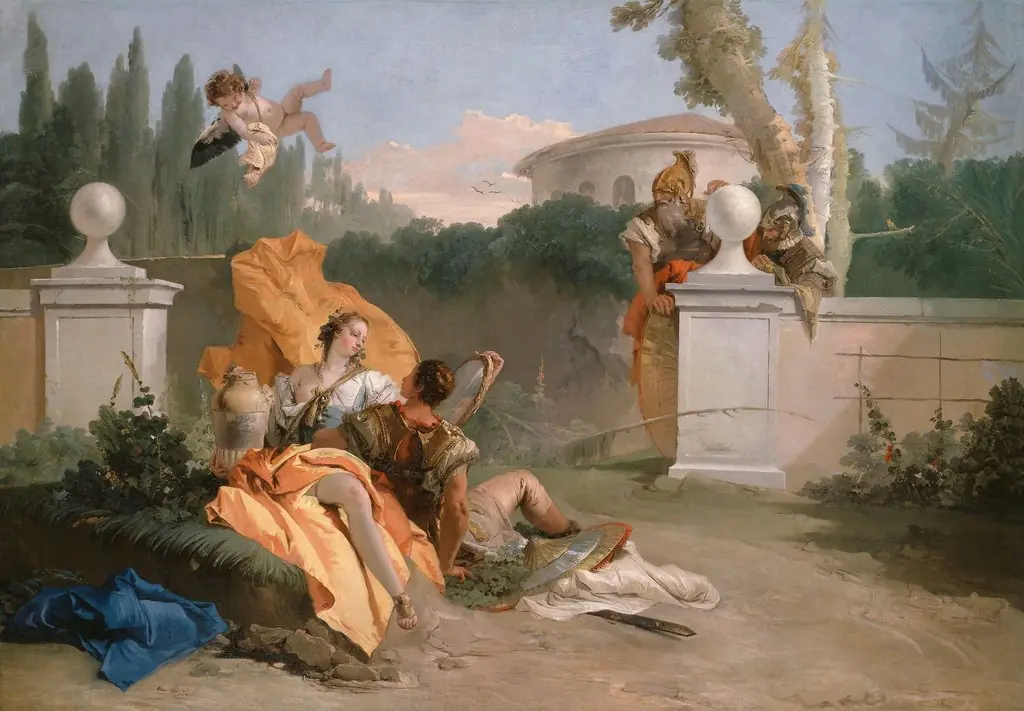
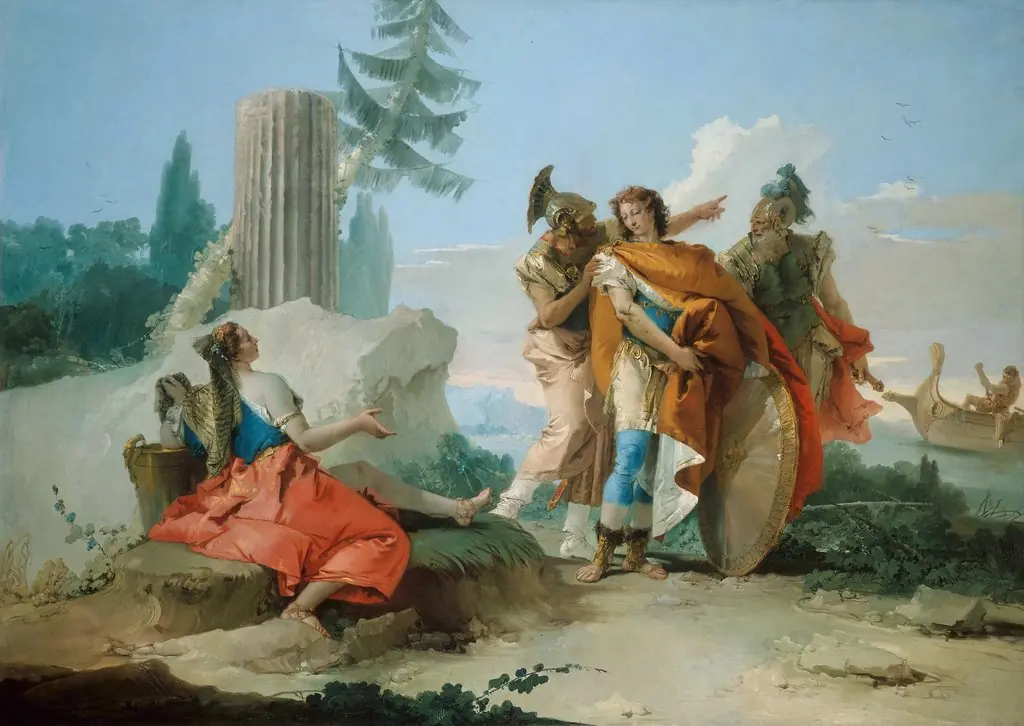
Rinaldo and Armida in Armida's magic garden, eavesdropped by Carlo and Ubaldo
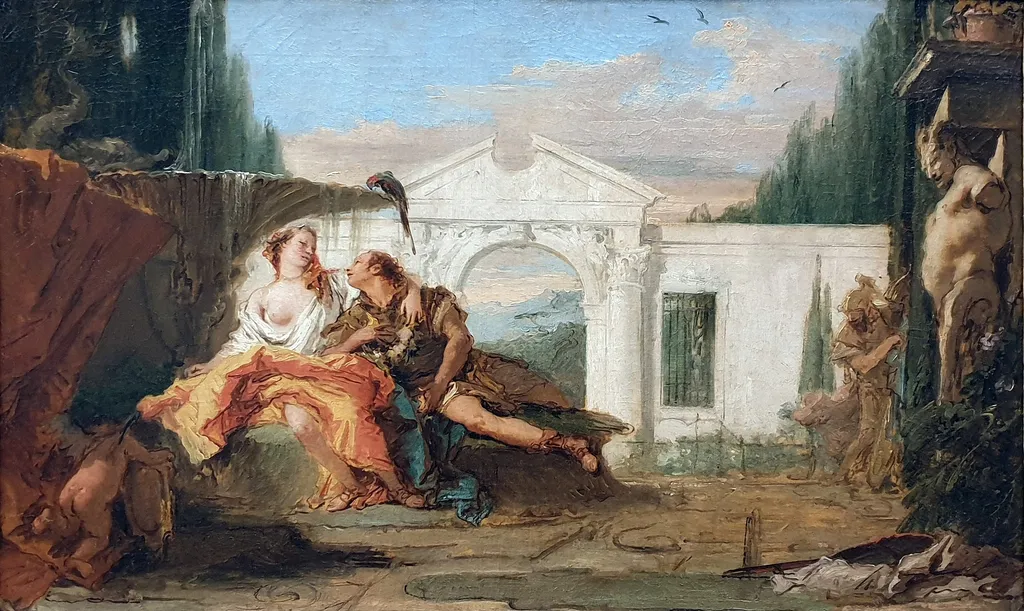
Rinaldo and Armida in Armida's magic garden, eavesdropped by Carlo and Ubaldo is an oil painting by the Rococo painting artist Giovanni Battista Tiepolo. It dates from 1751 and is held in the collection of the Gemäldegalerie Berlin.
About this work
Overview
Painted in 1751 by Giovanni Battista Tiepolo, this oil work illustrates a moment from Torquato Tasso’s epic poem 'Gerusalemme Liberata.
Painted in 1751 by Giovanni Battista Tiepolo, this oil work illustrates a moment from Torquato Tasso’s epic poem 'Gerusalemme Liberata.' The scene unfolds in a verdant, dreamlike garden, where two pairs of figures interact in silent tension. The composition balances naturalistic detail with theatrical staging, characteristic of Tiepolo’s late style. It resides today in the Gemäldegalerie, Berlin, among other works from the 18th-century Venetian tradition.
Subject & Meaning
The painting captures Rinaldo, a Christian knight, ensnared by Armida, a sorceress who lures him with enchantment. Behind a stone wall, his comrades Carlo and Ubaldo observe, ready to rescue him. The moment reflects the struggle between earthly desire and duty, a central theme in Tasso’s narrative. The garden, lush yet artificial, symbolizes temptation’s seductive illusion, while the hidden watchers suggest impending intervention.
Technique & Style
Tiepolo employs delicate brushwork to render fabric, foliage, and stone with luminous precision. Soft chiaroscuro models forms without harsh contrasts, enhancing the ethereal atmosphere. The palette favors pastel tones—pale blues, creams, and muted greens—contrasting with the deeper shadows of the hiding figures. Spatial depth is achieved through layered architecture and receding trees, guiding the viewer’s gaze toward the central couple.
History & Provenance
Commissioned for a private collection, the painting entered the Berlin museum’s holdings in the 19th century, likely through the acquisition of German noble collections. Its attribution to Tiepolo has remained consistent since its documentation in the 1700s. No major alterations or restorations are recorded, preserving its original tonal harmony and compositional balance as intended by the artist.
Context
Tiepolo painted this during a period when Venetian artists frequently drew from literary sources to satisfy aristocratic patrons. The popularity of Tasso’s epic among European elites made such scenes fashionable. Unlike earlier Baroque treatments, Tiepolo’s version avoids overt drama, favoring poetic subtlety and atmospheric grace, aligning with Enlightenment tastes for refined narrative over bombast.
Legacy
The painting exemplifies Tiepolo’s ability to merge mythic narrative with visual poetry, influencing later 18th-century decorative cycles. While not widely reproduced, it remains a key example of how Venetian painters reinterpreted classical literature through light, color, and spatial ambiguity. Its quiet tension and psychological nuance continue to inform scholarly readings of Rococo narrative painting.
Own this work as a print
Artist & collection

Artist
Giovanni Battista Tiepolo, also known as Giambattista Tiepolo, was an Italian painter and printmaker from the Republic of Venice who painted in the Rococo style, considered an important member of the 18th-century Venetian school.


 Rinaldo and Armida in Her Garden
 Rinaldo and Armida in Her Garden
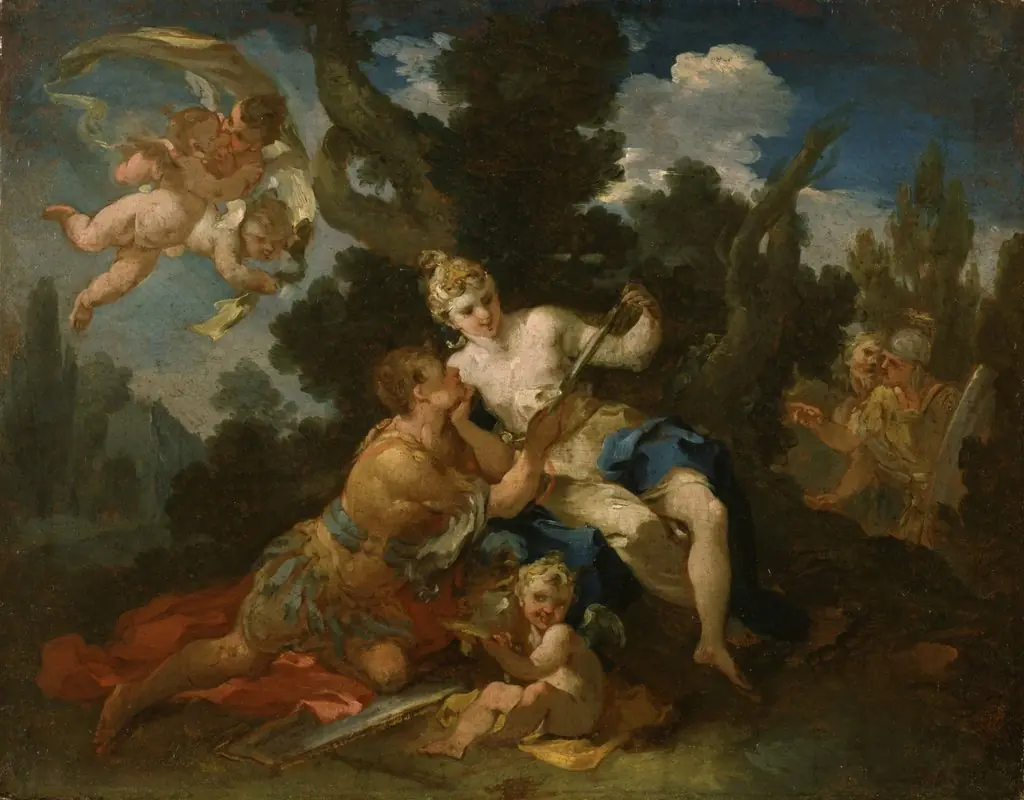 Rinaldo and Armida
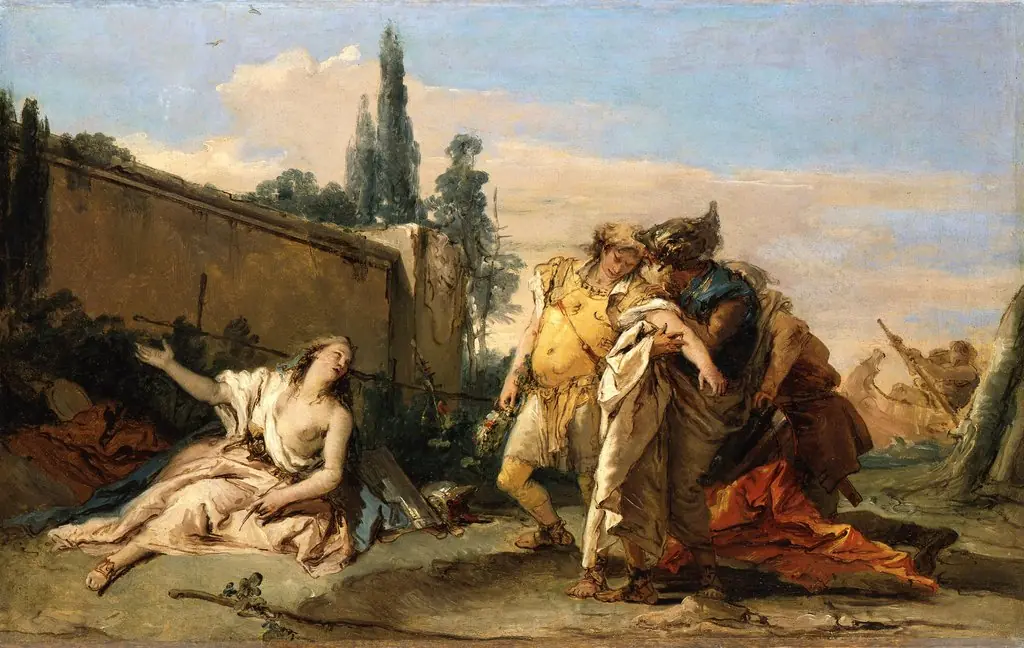 Rinaldos farewell from Armida
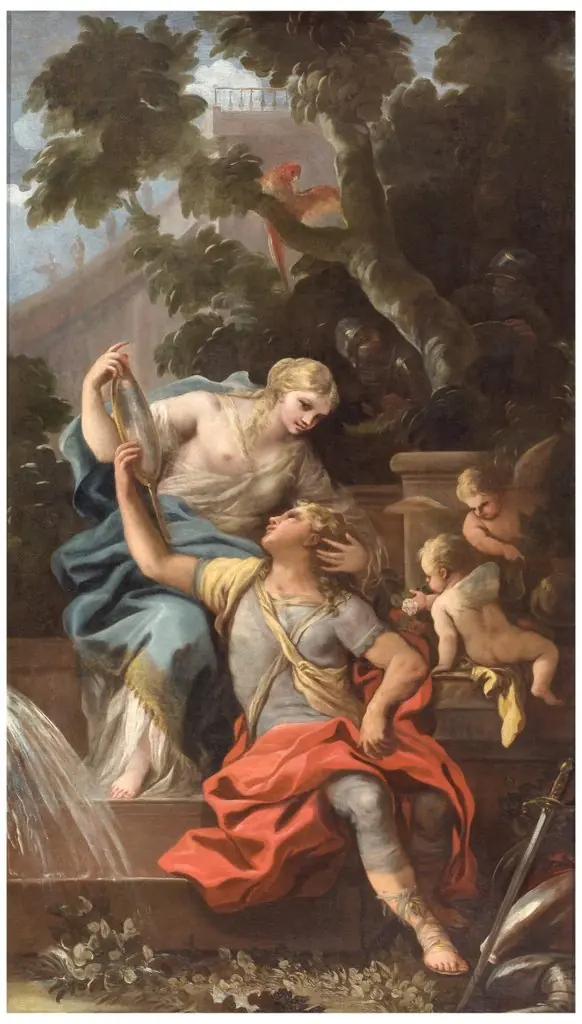 Armida and Rinaldo
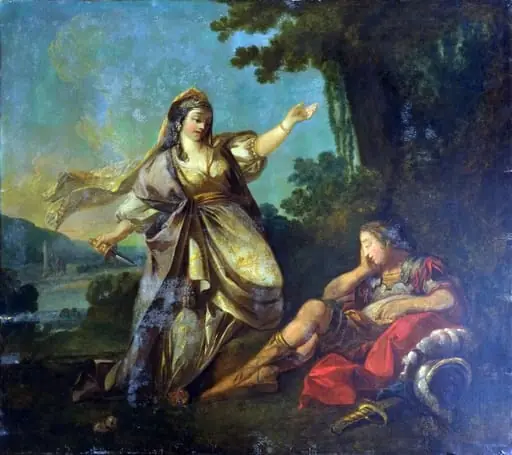 Rinaldo și Armida
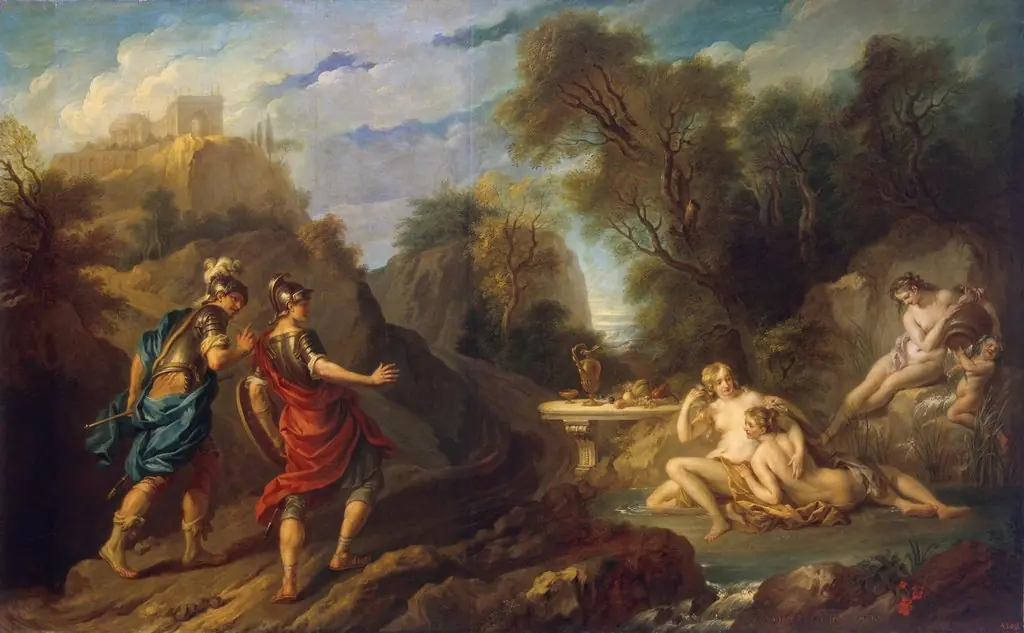 Messengers of Godfrey of Bouillon in Gardens of Armida
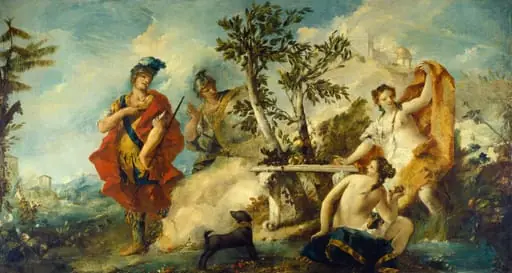 Carlo and Ubaldo Resisting the Enchantments of Armida's Nymphs
 Armida Abandoned by Rinaldo
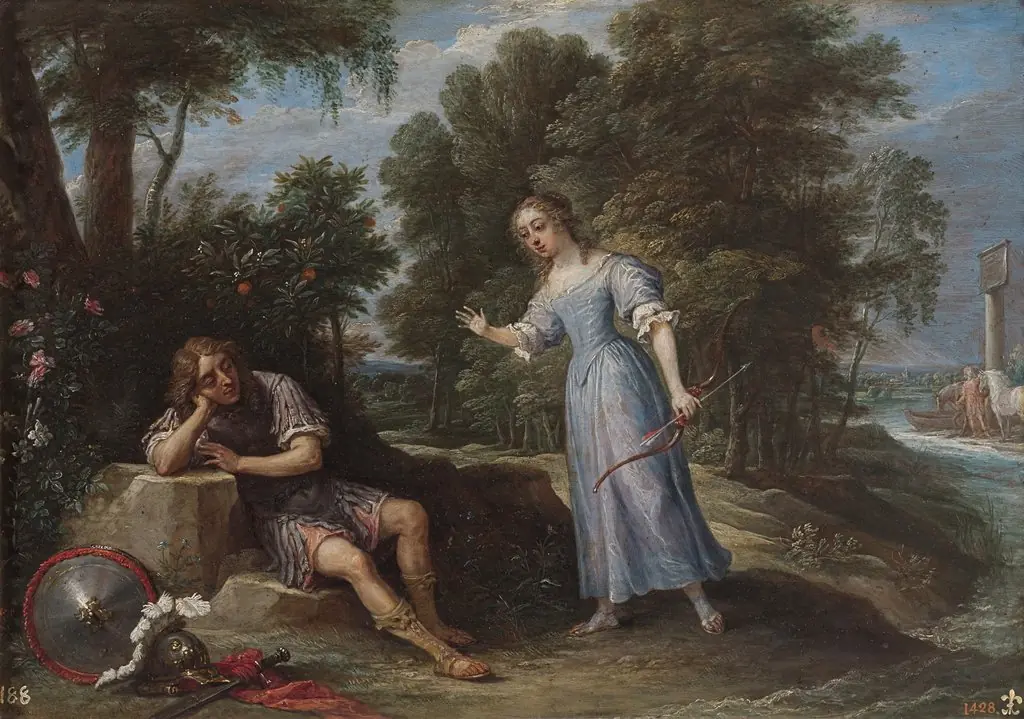 Rinaldo in love with Armida
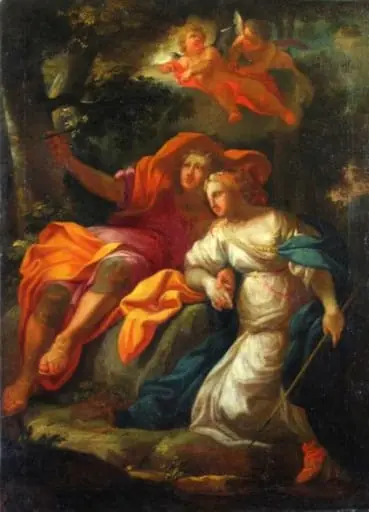 Medoro și Angelica. Pandant: Rinaldo și Armida
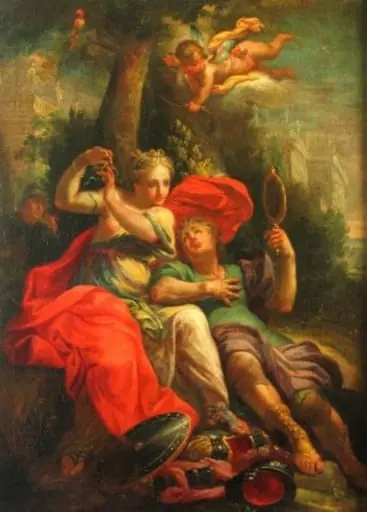 Rinaldo și Armida. Pandant: Medoro și Angelica