Artwork
Rinaldos farewell from Armida
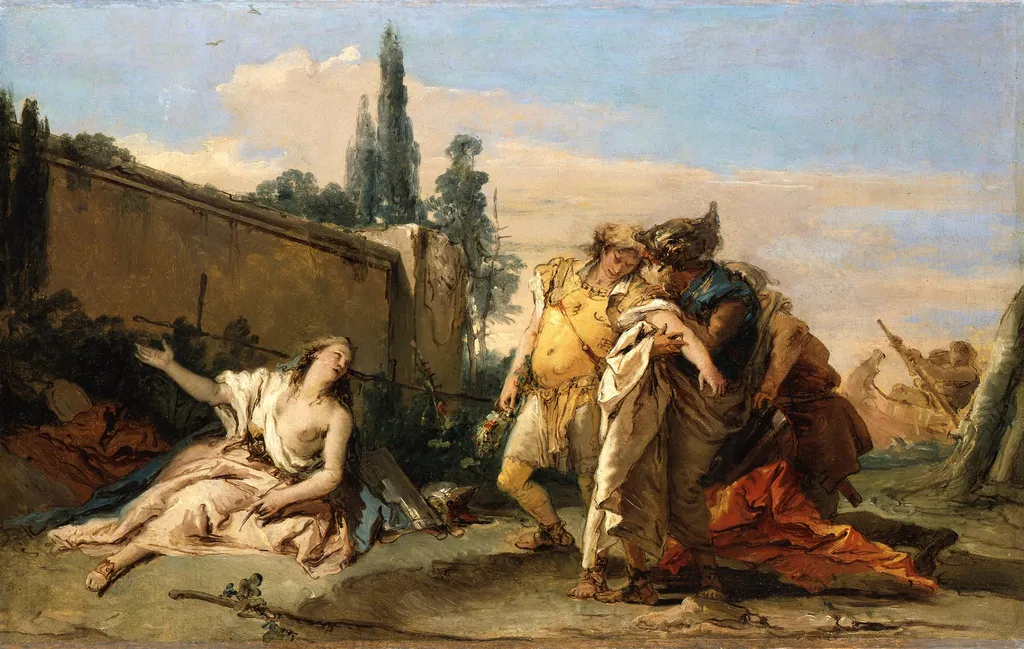
Rinaldos farewell from Armida is an oil painting by the Rococo painting artist Giovanni Battista Tiepolo. It dates from 1751 and is held in the collection of the Gemäldegalerie Berlin.
About this work
Overview
The composition centers on a poignant farewell between two figures, surrounded by supporting characters, rendered with a restrained yet expressive palette.
Painted in 1751 by Giovanni Battista Tiepolo, this oil work depicts a moment of emotional separation from the epic poem 'Jerusalem Delivered.' It resides in the Gemäldegalerie, Berlin, as part of a series illustrating scenes from Torquato Tasso’s narrative. The composition centers on a poignant farewell between two figures, surrounded by supporting characters, rendered with a restrained yet expressive palette.
Subject & Meaning
The scene captures Rinaldo, a Christian knight, bidding farewell to Armida, a sorceress who has ensnared him with magic. Her collapse suggests emotional collapse or enchantment’s unraveling, while the other figures—another woman and a seated man—serve as witnesses to the turning point. The moment reflects the tension between duty and desire, a recurring theme in Tasso’s epic, where love and honor collide.
Technique & Style
Tiepolo employs visible brushwork to convey texture and movement, avoiding smooth finish in favor of tactile immediacy. Chiaroscuro sharpens the emotional weight of the embrace, with light falling sharply on the central figures against darker, muted surroundings. The palette—dominated by earthy browns, soft blues, and muted yellows—enhances the somber tone without sacrificing spatial clarity or figure definition.
History & Provenance
Commissioned as part of a decorative cycle for a private collection, the painting entered the Gemäldegalerie Berlin’s holdings in the 19th century. Its origin traces to Tiepolo’s late period, when he increasingly focused on literary subjects with psychological nuance. The work remained in private hands until institutional acquisition, preserving its condition and original framing.
Context
Tiepolo painted this during a phase when Venetian artists turned to literary and mythological themes with renewed interest. The popularity of Tasso’s 'Jerusalem Delivered' in 18th-century Europe provided rich material for visual storytelling. Unlike grand historical canvases, this work emphasizes intimate drama, reflecting a broader shift toward emotional realism in decorative painting.
Legacy
Though not among Tiepolo’s most widely reproduced works, this painting exemplifies his ability to convey complex narrative through subtle gesture and atmospheric lighting. It influenced later artists exploring psychological depth in mythological scenes, particularly in 19th-century academic circles that valued literary painting as a serious genre.
Own this work as a print
Artist & collection

Artist
Giovanni Battista Tiepolo, also known as Giambattista Tiepolo, was an Italian painter and printmaker from the Republic of Venice who painted in the Rococo style, considered an important member of the 18th-century Venetian school.


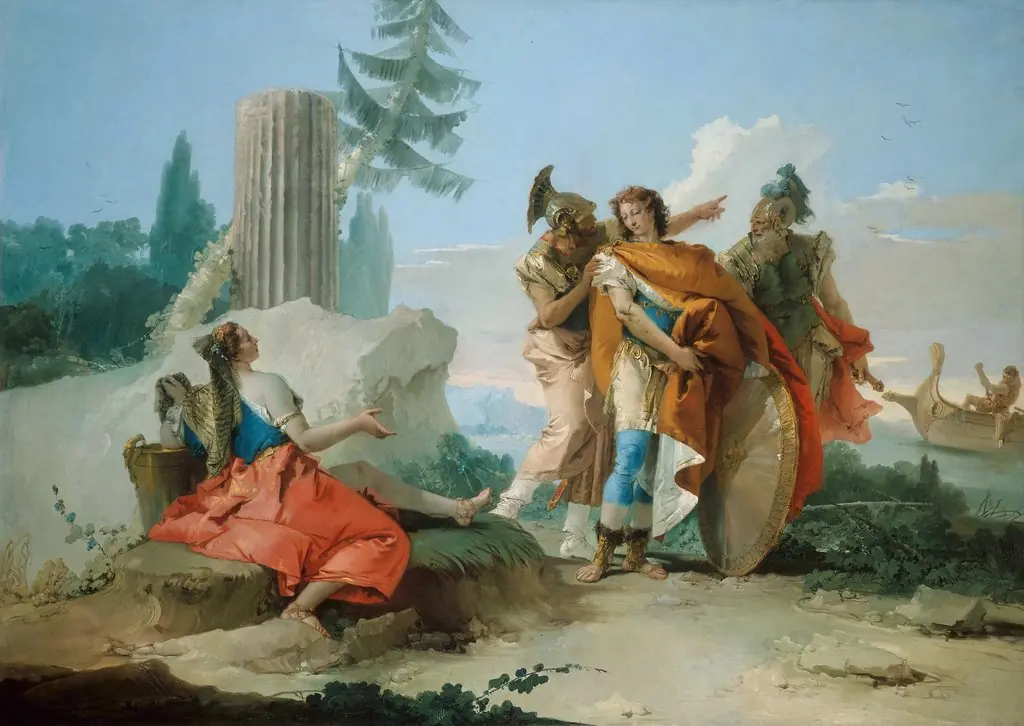 Armida Abandoned by Rinaldo
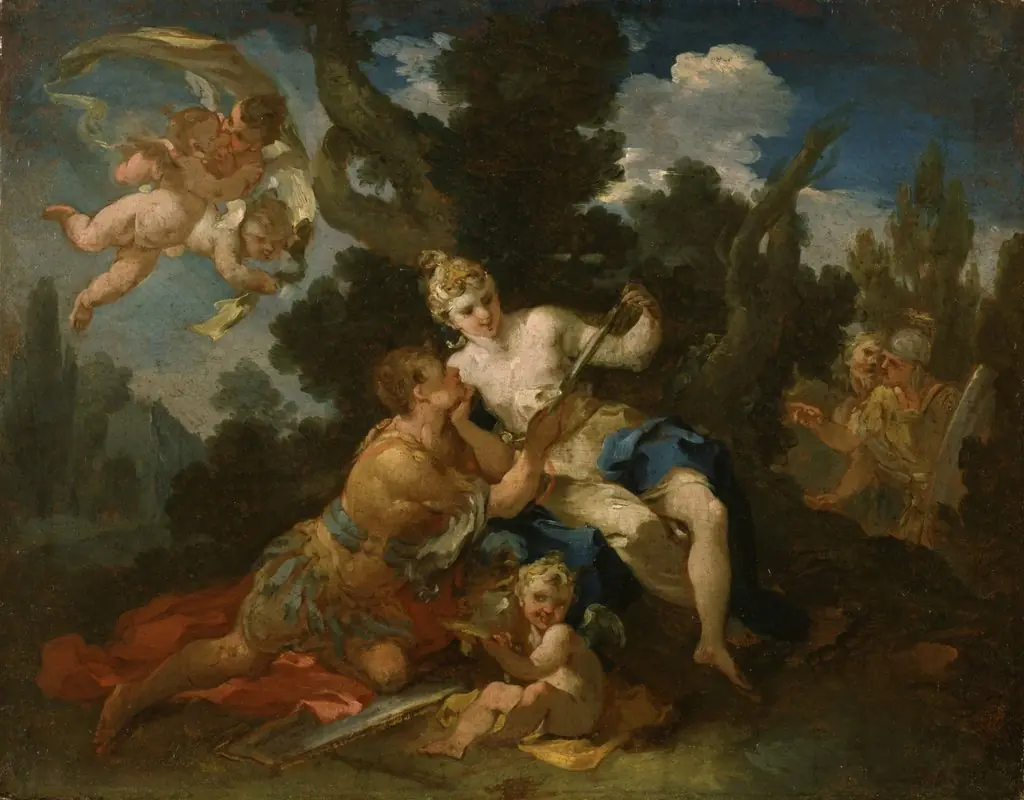 Rinaldo and Armida
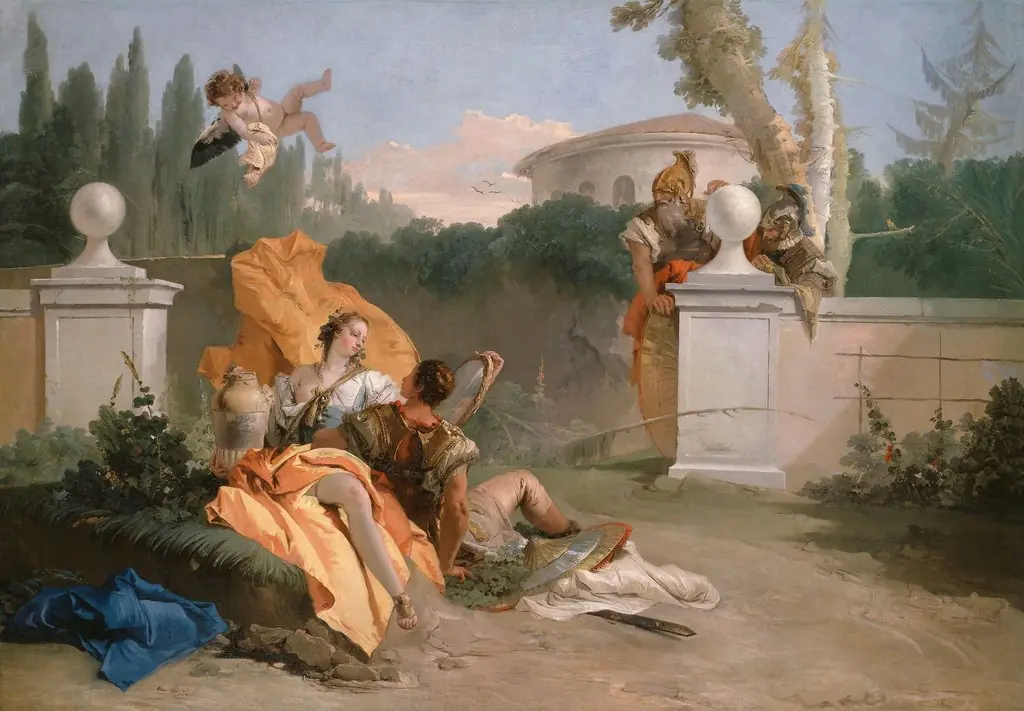 Rinaldo and Armida in Her Garden
 Rinaldo and Armida in Her Garden
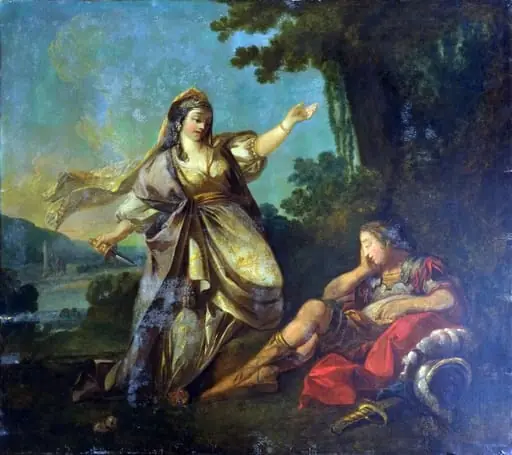 Rinaldo și Armida
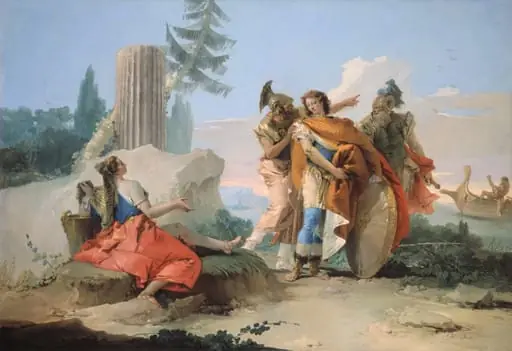 Armida Abandoned by Rinaldo
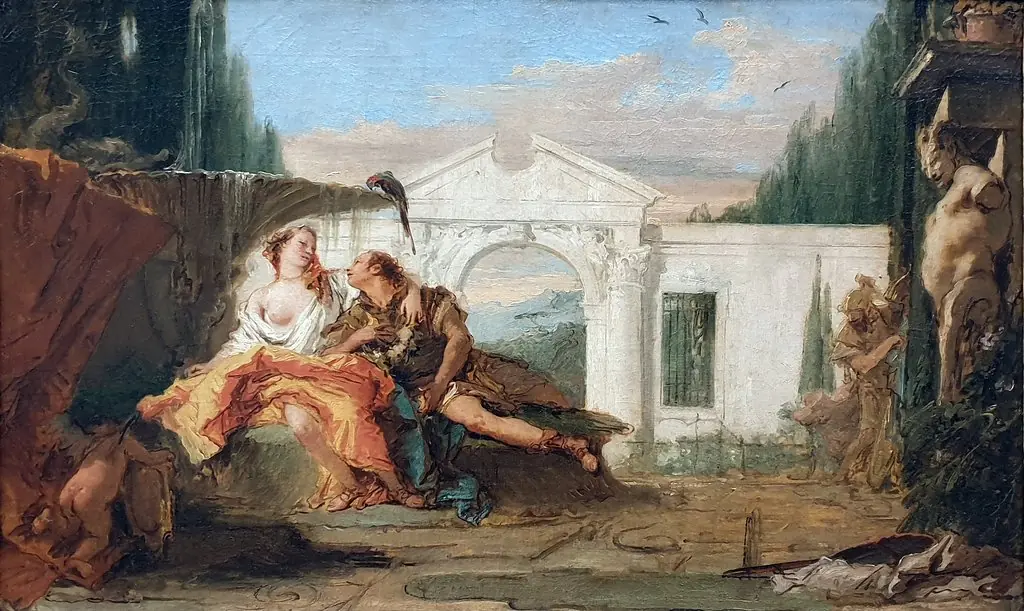 Rinaldo and Armida in Armida's magic garden, eavesdropped by Carlo and Ubaldo
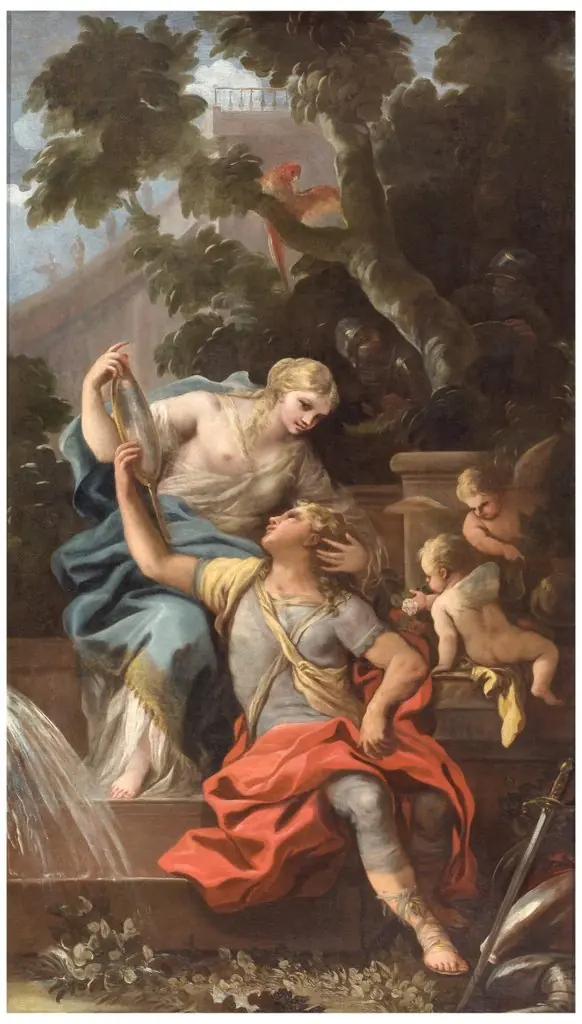 Armida and Rinaldo
 Rinaldo and the Magus of Ascalon
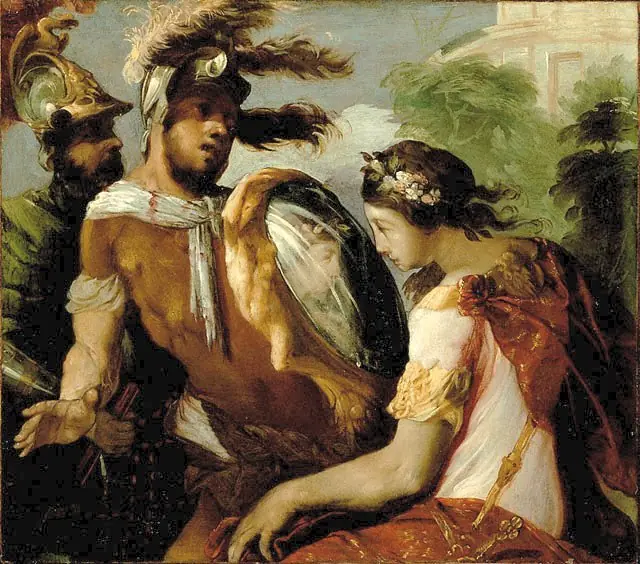 Rinaldo and the Mirror-Shield
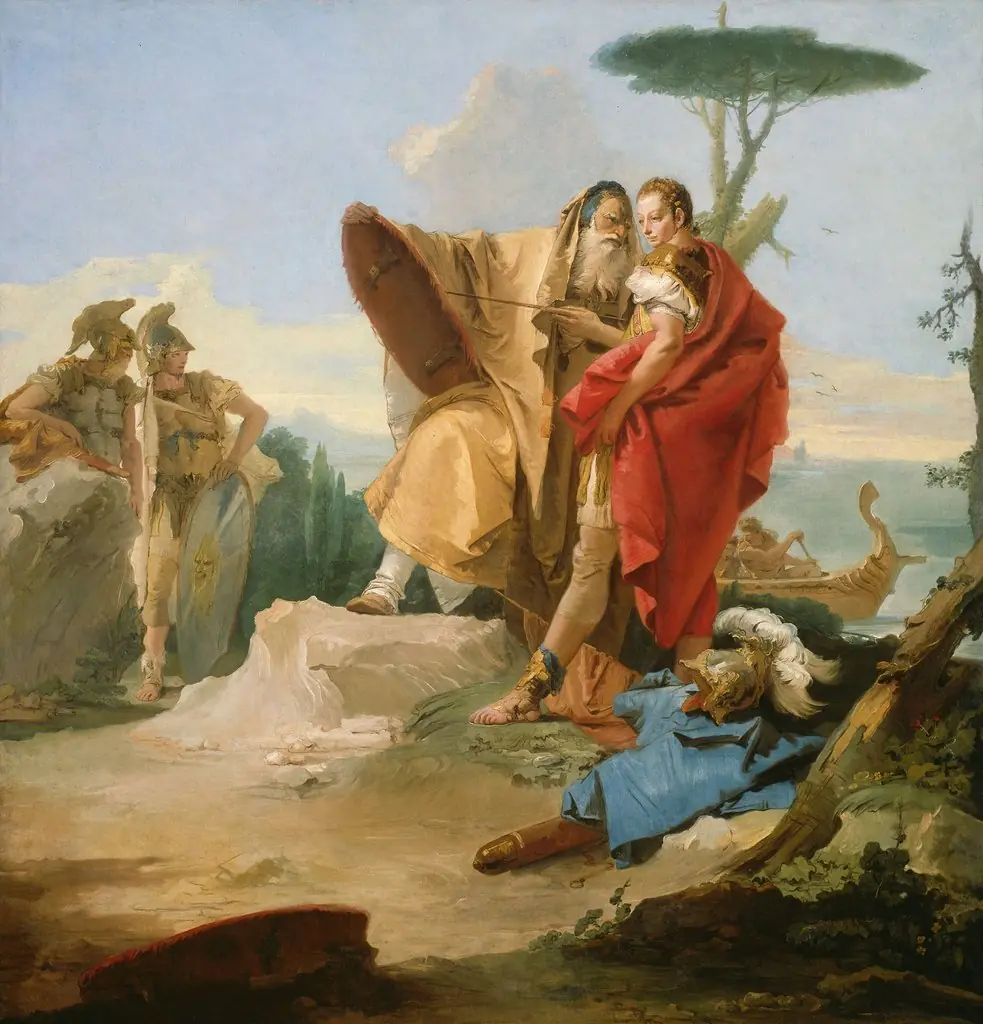 Rinaldo and the Magus of Ascalon