Artwork
Rinaldo and Armida in Her Garden
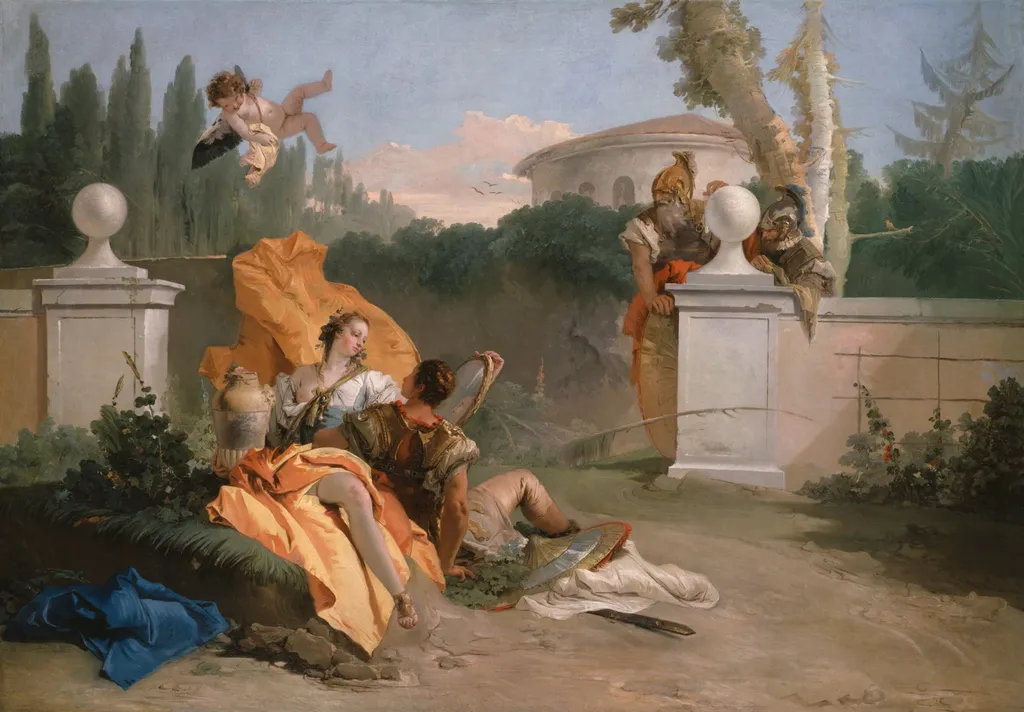
Rinaldo and Armida in Her Garden is an oil painting by the Baroque artist Giovanni Battista Tiepolo. It dates from 1744 and is held in the collection of the Art Institute of Chicago.
About this work
Overview
Giovanni Battista Tiepolo’s oil on canvas portrays a moment from the epic tale of the crusader Rinaldo and the enchantress Armida. In the composition, Rinaldo sits entranced in a luxuriant garden while Armida, holding a small mirror, gazes at him. At the garden’s entrance, two of Rinaldo’s companions, Carlo and Ubaldo, appear, urging him to resume his mission.
Subject & Meaning
The work captures the pivotal episode in which Armida’s sorcery detains the knight from his holy quest. Rinaldo’s abandoned sword and shield symbolize his surrender to enchantment, while the mirror reflects the illusory allure of the garden, underscoring themes of temptation and the conflict between duty and desire.
Technique & Style
Tiepolo employs a luminous palette and fluid brushwork to animate the scene, creating a sense of movement and atmospheric light. The contrast between the bright, almost ethereal garden and the darker figures at the gate demonstrates his skillful use of chiaroscuro to emphasize the magical versus the martial elements.
History & Provenance
This canvas is the second of a quartet commissioned to illustrate the narrative of Rinaldo and Armida. The series was intended for a decorative program, likely in a noble residence, and has remained documented as a cohesive group depicting successive episodes of the legend.
Context
The subject derives from Torquato Tasso’s epic poem "Jerusalem Delivered," a popular source for 18th‑century visual artists. Tiepolo’s treatment reflects the period’s fascination with theatrical storytelling and the Rococo’s penchant for idyllic, fantastical settings.
Own this work as a print
Artist & collection

Artist
Giovanni Battista Tiepolo, also known as Giambattista Tiepolo, was an Italian painter and printmaker from the Republic of Venice who painted in the Rococo style, considered an important member of the 18th-century Venetian school.


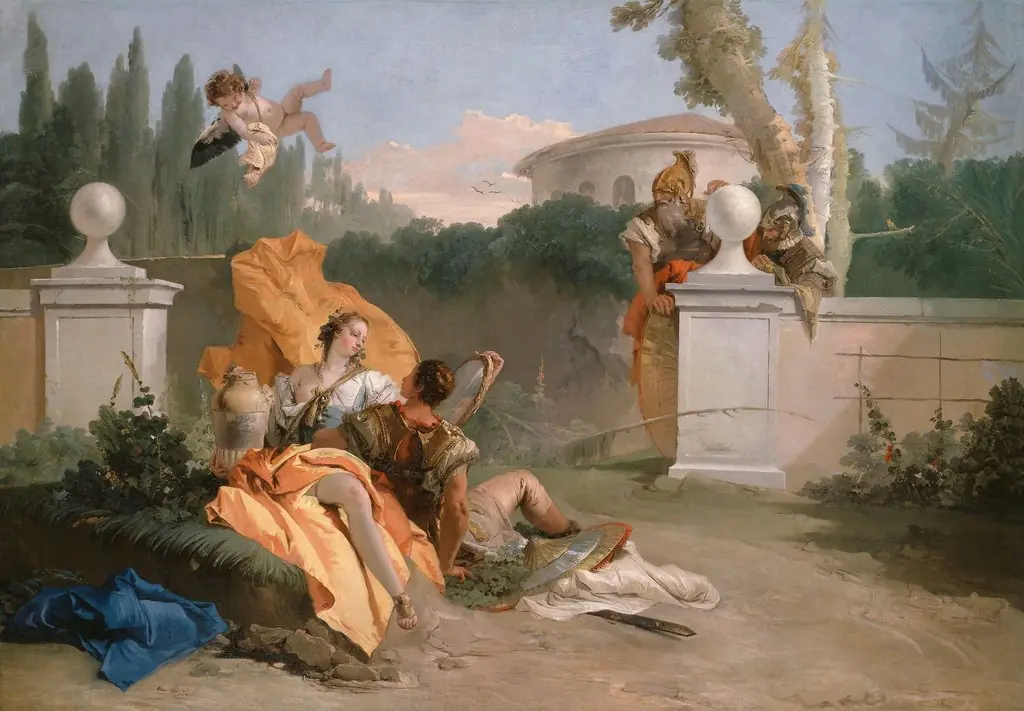 Rinaldo and Armida in Her Garden
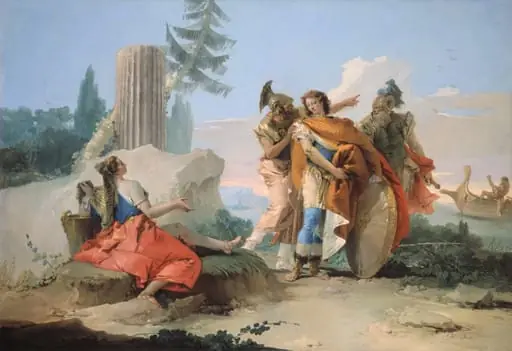 Armida Abandoned by Rinaldo
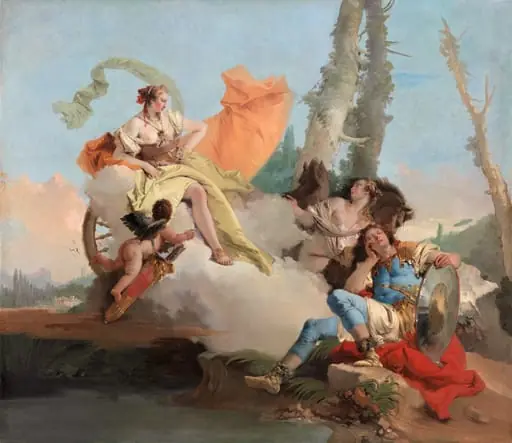 Armida Encounters the Sleeping Rinaldo
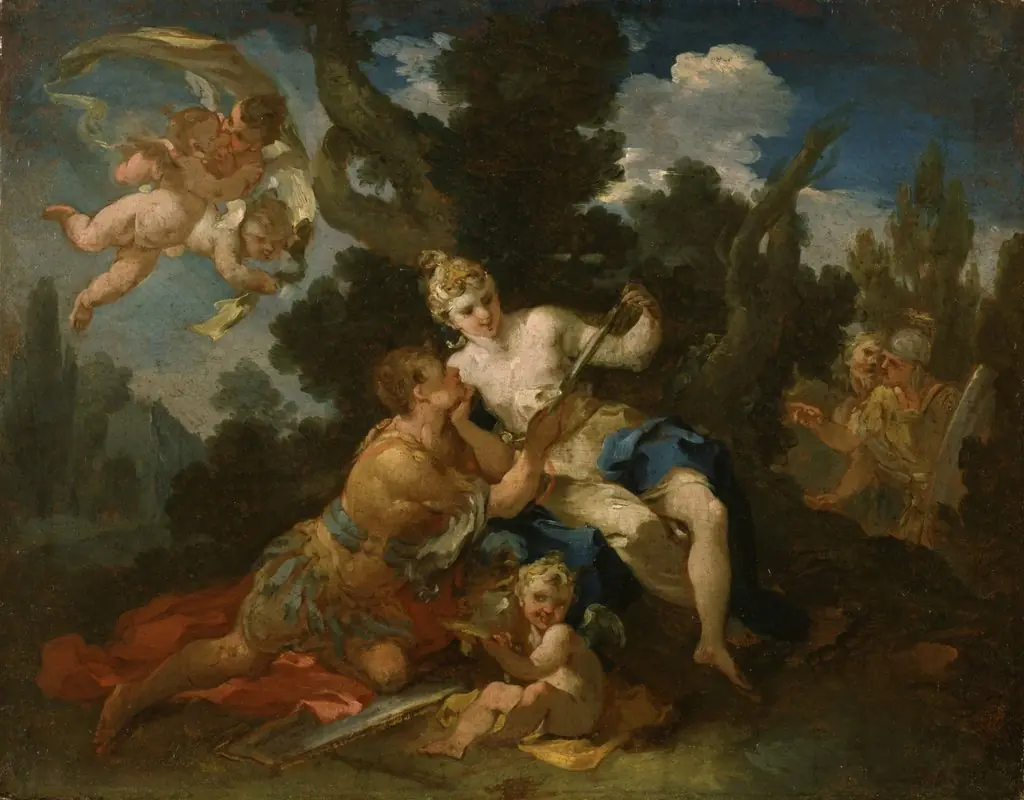 Rinaldo and Armida
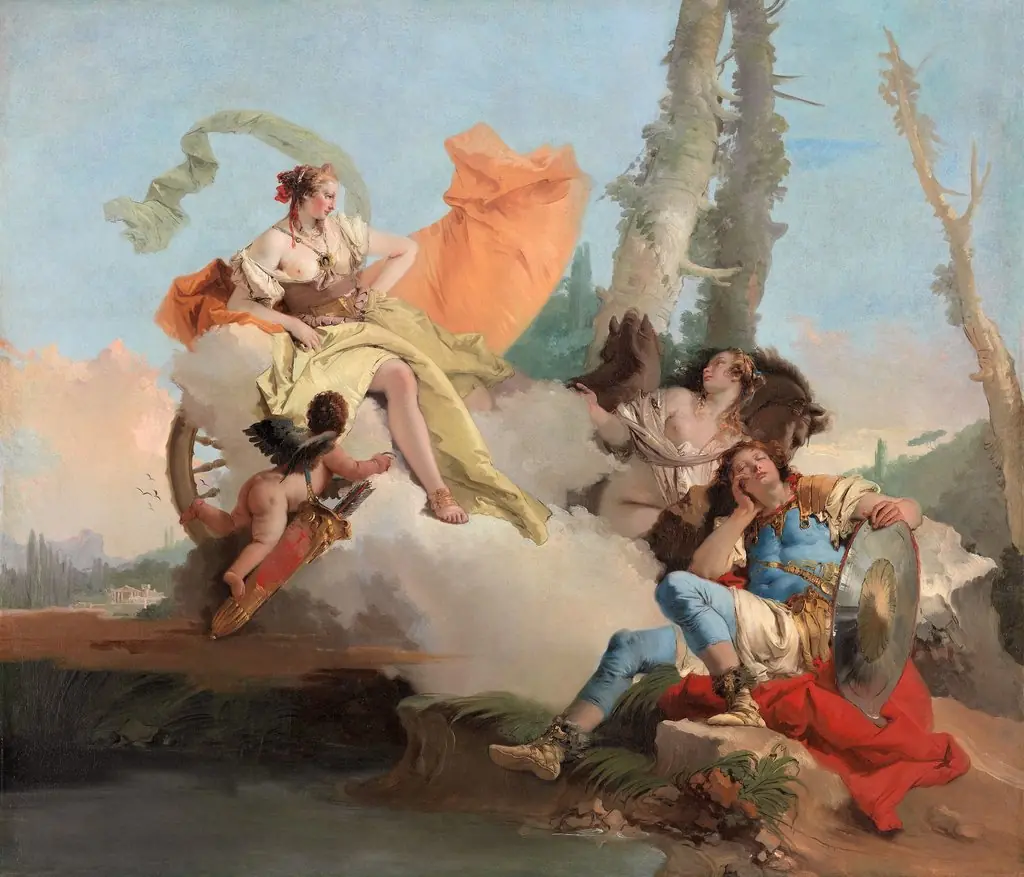 Armida Encounters the Sleeping Rinaldo
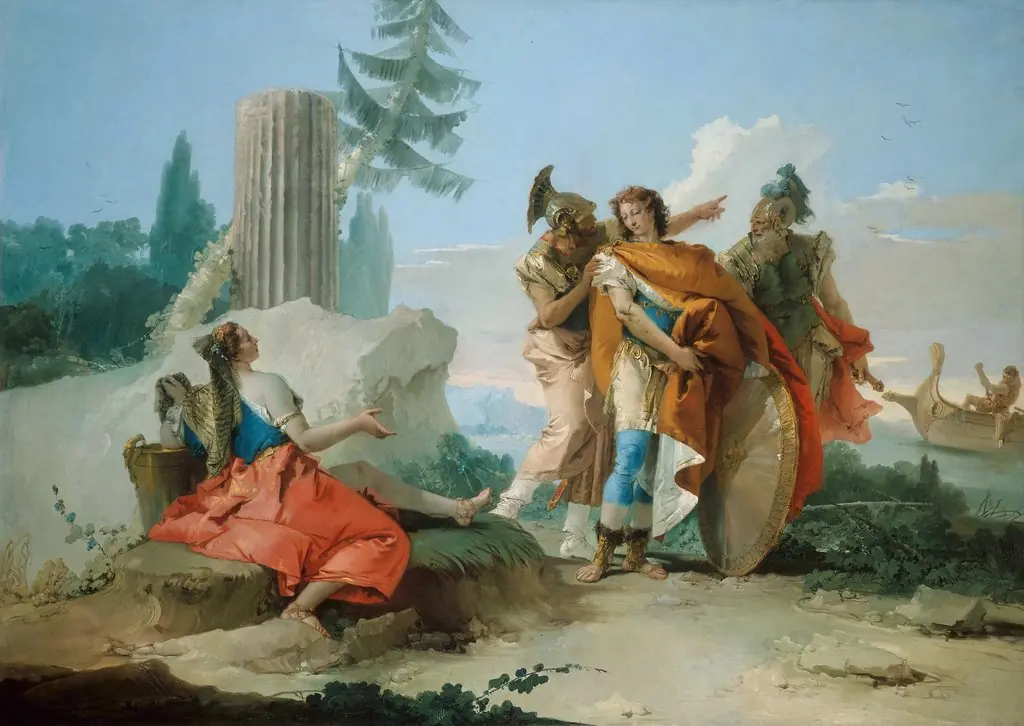 Armida Abandoned by Rinaldo
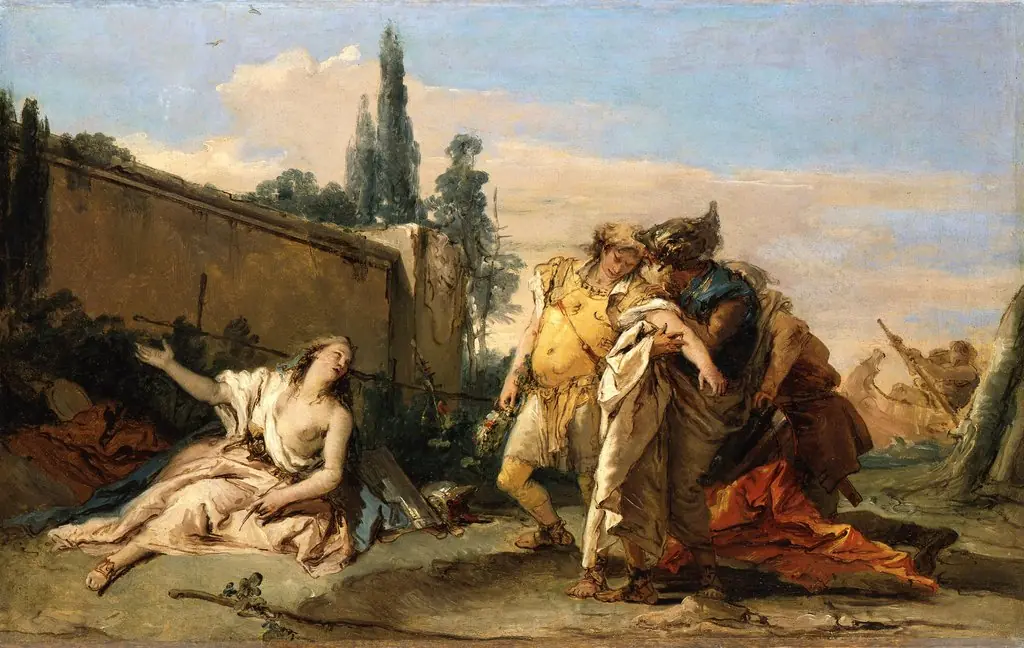 Rinaldos farewell from Armida
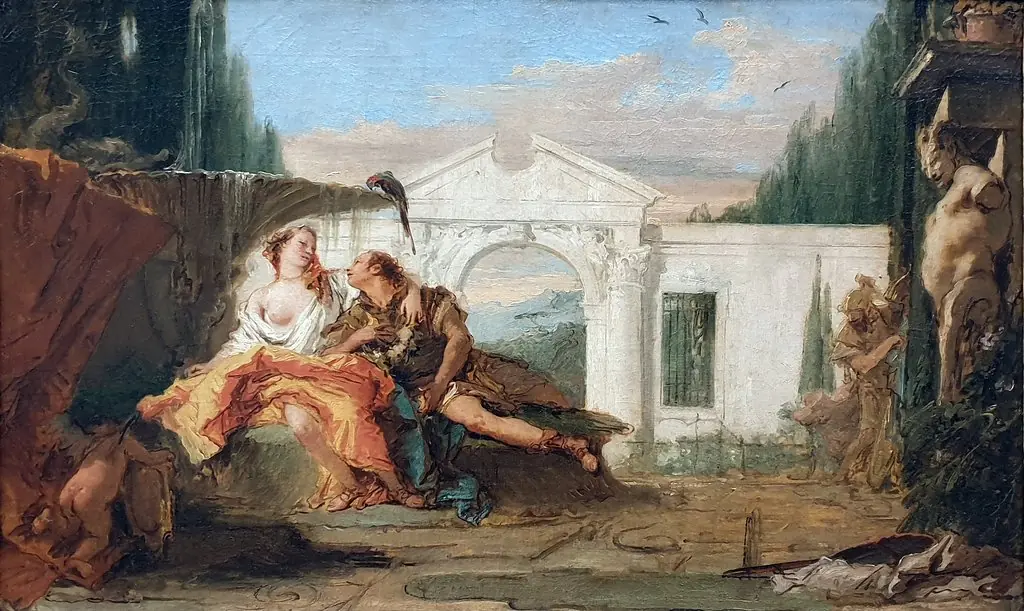 Rinaldo and Armida in Armida's magic garden, eavesdropped by Carlo and Ubaldo
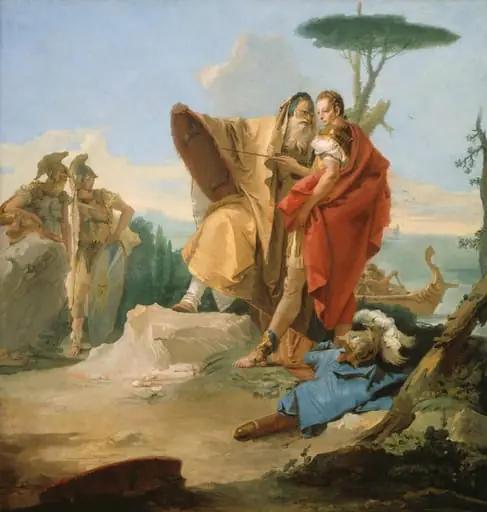 Rinaldo and the Magus of Ascalon
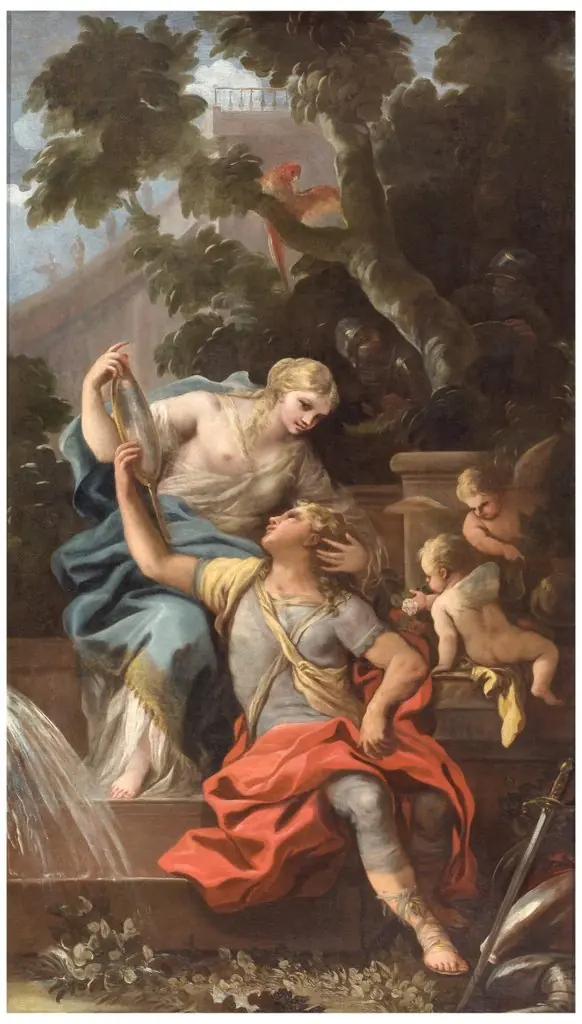 Armida and Rinaldo
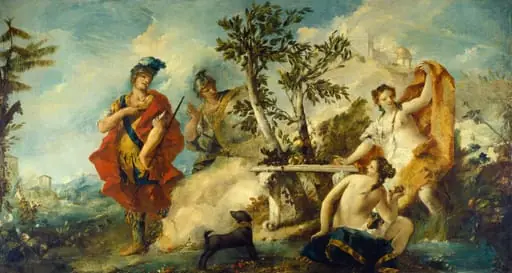 Carlo and Ubaldo Resisting the Enchantments of Armida's Nymphs
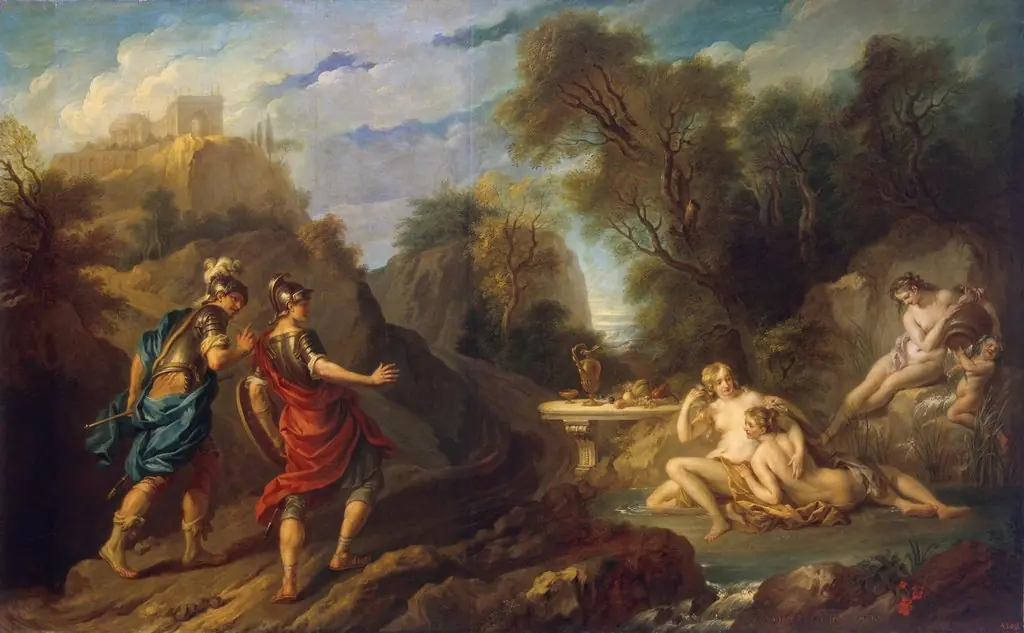 Messengers of Godfrey of Bouillon in Gardens of Armida