Artwork
Tobit Burying the Dead
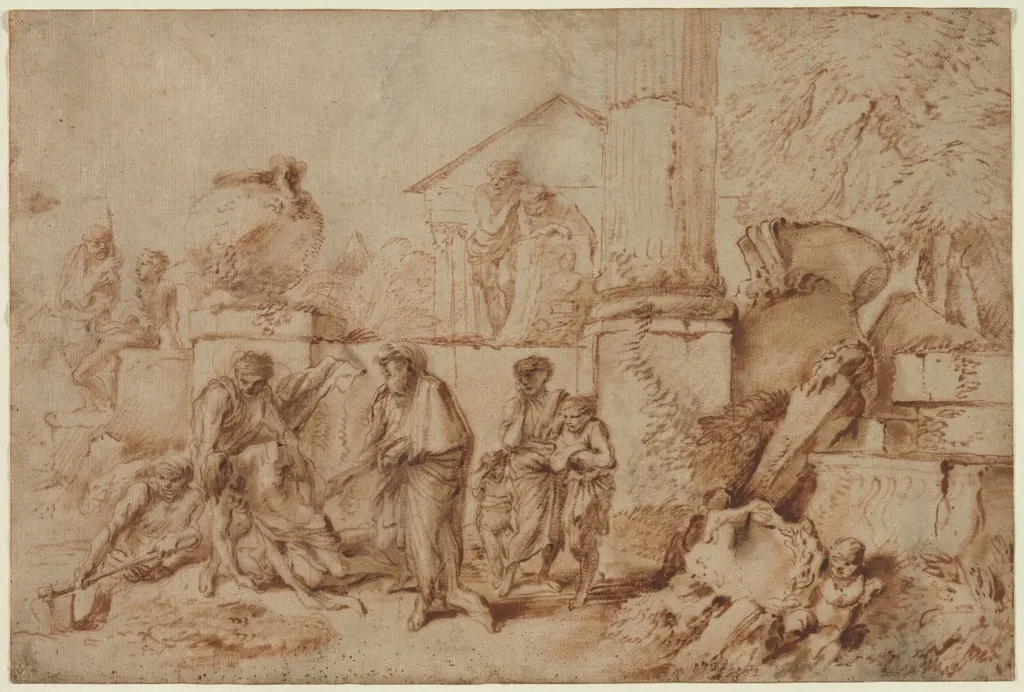
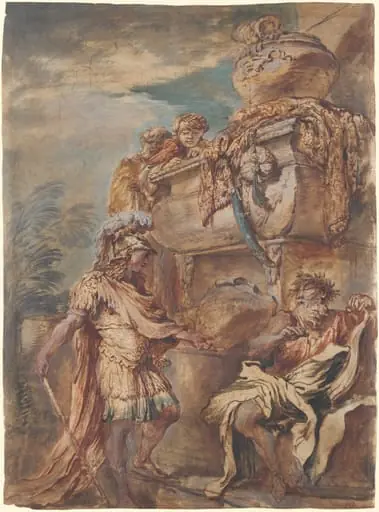
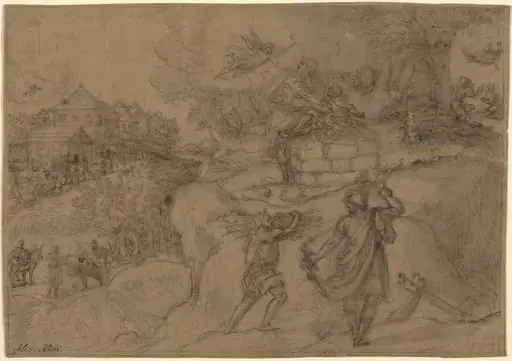
Tobit Burying the Dead is a drawing by the Baroque artist Giovanni Benedetto Castiglione. It dates from 1644 and is held in the collection of the Cleveland Museum of Art.
About this work
Overview
Created around 1644 by Giovanni Benedetto Castiglione, known as Il Grechetto, this drawing captures a moment from the Book of Tobit.
Created around 1644 by Giovanni Benedetto Castiglione, known as Il Grechetto, this drawing captures a moment from the Book of Tobit. Executed in ink and wash, it reflects his mastery of expressive line work and his interest in biblical narratives. Though primarily recognized for his etchings and monotypes, Castiglione also produced drawings that conveyed emotional depth through minimal means, balancing spontaneity with compositional clarity.
Subject & Meaning
The scene illustrates Tobit’s act of burying the dead, a pious deed from the Apocrypha that underscores themes of compassion and religious duty. Figures gather around a body on a stretcher, their postures conveying solemnity and quiet grief. The inclusion of onlookers on a rocky slope suggests a community bound by ritual, reinforcing the moral weight of the act within its cultural and spiritual context.
Technique & Style
Castiglione employed swift, fluid ink lines to suggest movement and texture, particularly in the folds of garments and the contours of bodies. Washes of gray tone define shadow and volume without heavy modeling, creating a sense of immediacy. The loose handling contrasts with the stillness of the scene, enhancing its emotional resonance through economy of means rather than detailed finish.
History & Provenance
The drawing originates from Castiglione’s active period in Genoa and possibly Rome, where he developed his distinctive graphic style. While its early ownership is undocumented, it entered public collections in the 19th century, recognized for its rarity as a preparatory work by an artist more famed for prints. Its survival offers insight into his process beyond etching and painting.
Context
In mid-17th-century Italy, religious subjects remained central to artistic production, especially among artists influenced by Counter-Reformation ideals. Castiglione’s focus on narrative biblical scenes aligned with broader trends, yet his loose, energetic draftsmanship distinguished him from more formal contemporaries. His drawings functioned as both studies and independent works, valued for their expressive immediacy.
Legacy
Castiglione’s drawings, including this one, contributed to the evolution of Baroque graphic art by emphasizing gesture and emotional tone over finish. His approach influenced later draftsmen who sought spontaneity in narrative scenes. Though less celebrated than his prints, these works remain important for understanding how Baroque artists translated religious themes into intimate, human moments.
Artist & collection
Artist
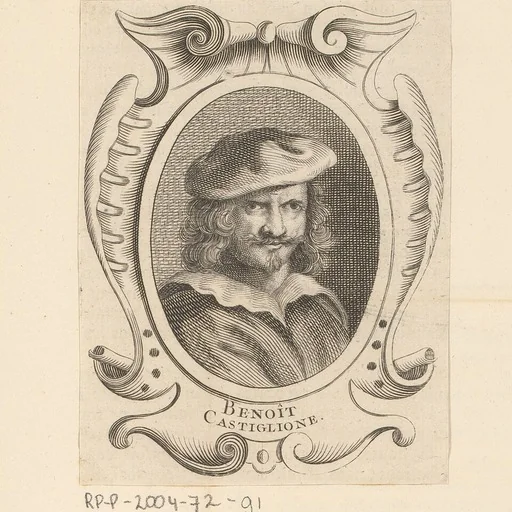
Giovanni Benedetto Castiglione
Giovanni Benedetto Castiglione (baptized 23 March 1609 – 5 May 1664) was an Italian Baroque painter, printmaker and draftsman, of the Genoese school.

 The Finding of Moses
![The Adoration of the Magi [recto], by Donato Creti](https://artifactworldgallery.com/img/donato-creti--the-adoration-of-the-magi-recto--2cfd5d76b55e821e-w320.webp) The Adoration of the Magi [recto]
The Adoration of the Magi [recto] Clap of Thunder
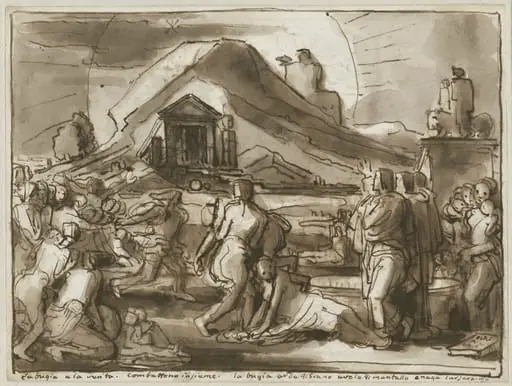 An Allegory of Truth and Falsehood (verso)
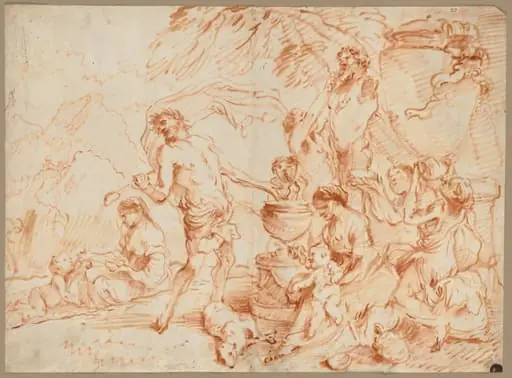 Bacchanal Before a Herm
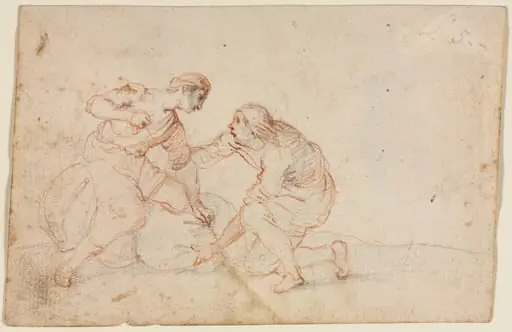 Two Men Tying a Bundle (recto)
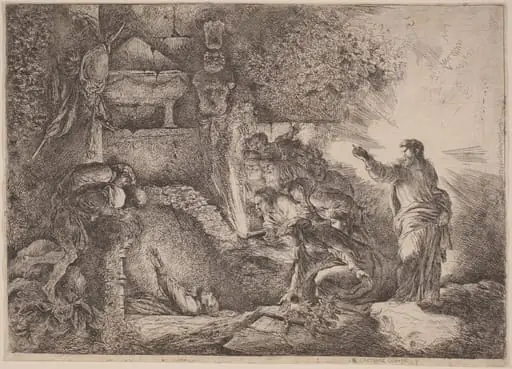 The Resurrection of Lazarus
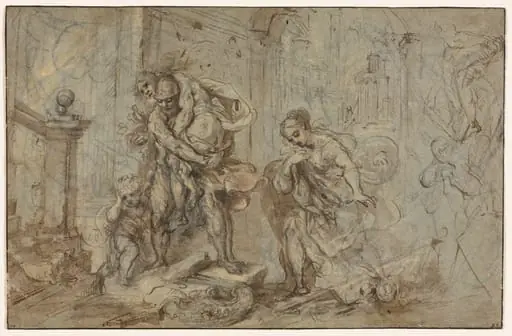 Aeneas Saving Anchises at the Fall of Troy
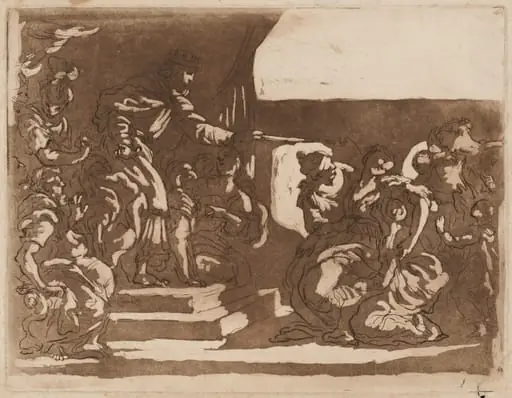 Esther before Ahasuerus
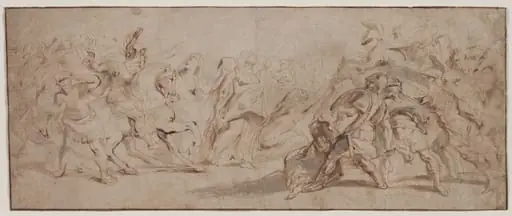 Reconciliation of the Romans and the Sabines (recto)
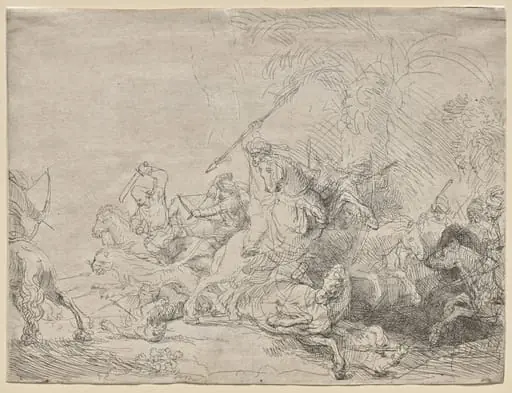 The Large Lion Hunt
 Sacrifice of Abraham