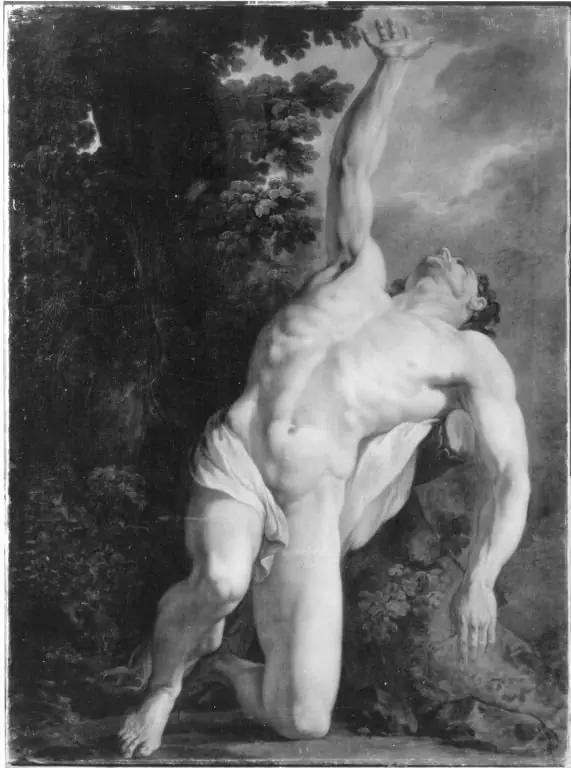
Artwork
Saint Sebastian
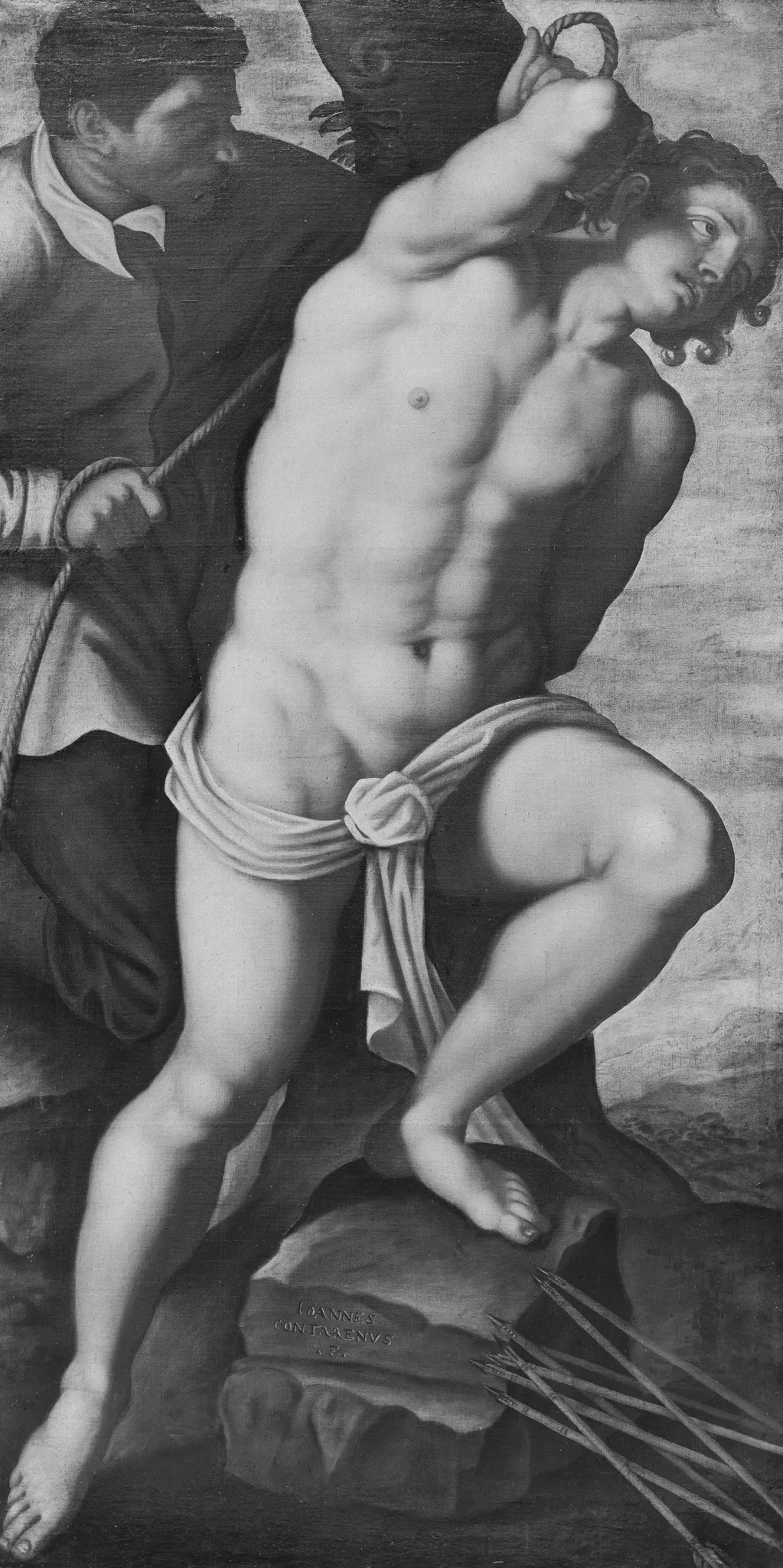
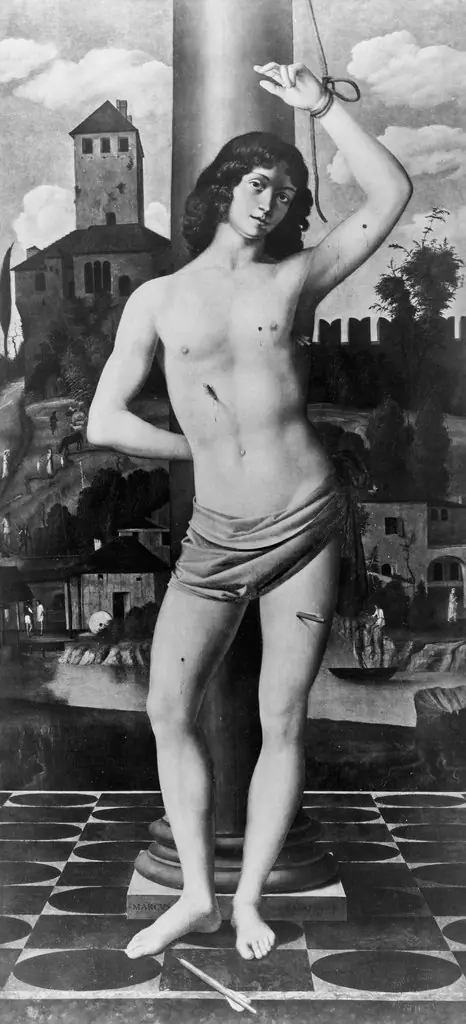
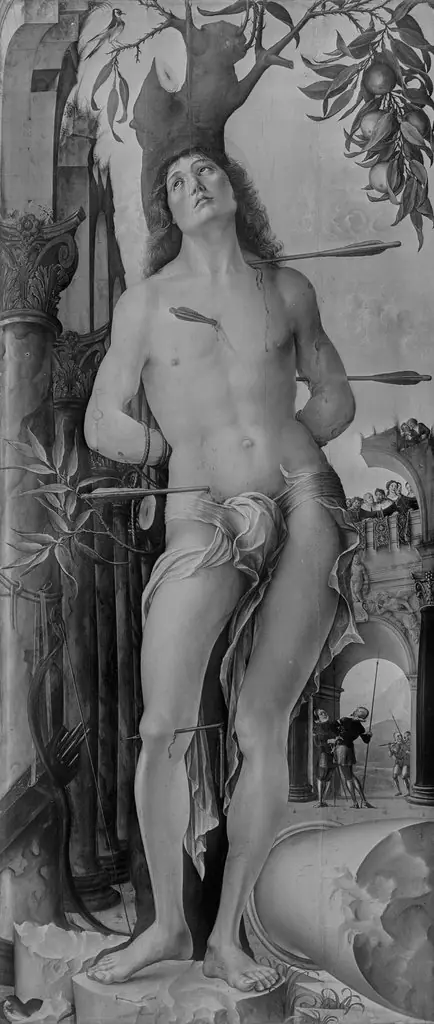
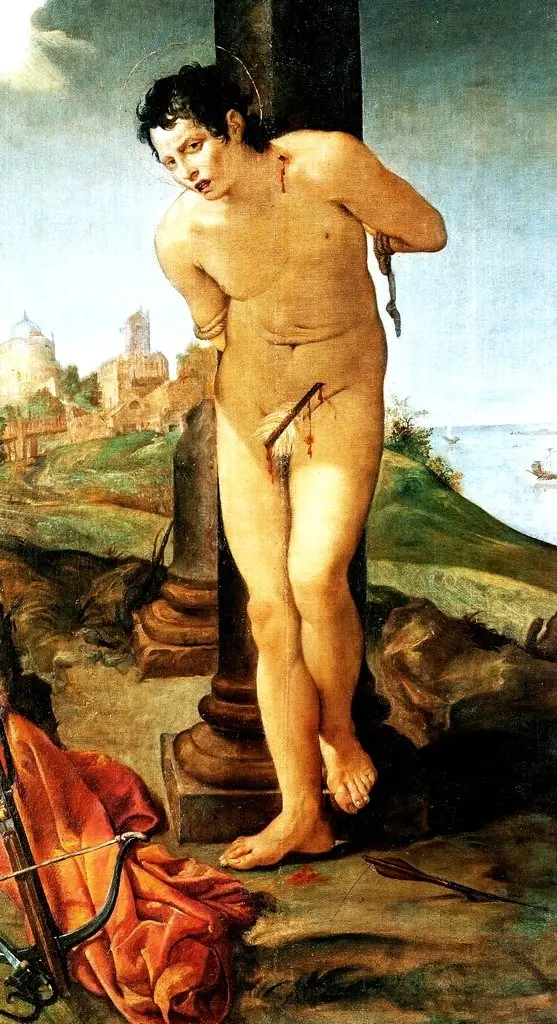
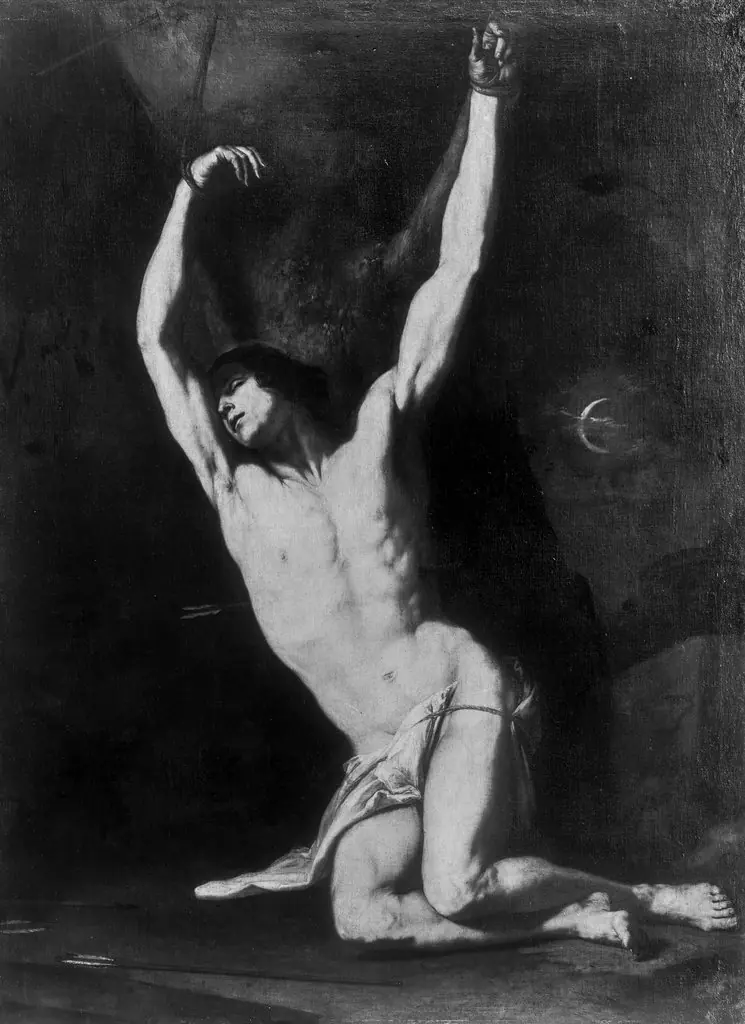
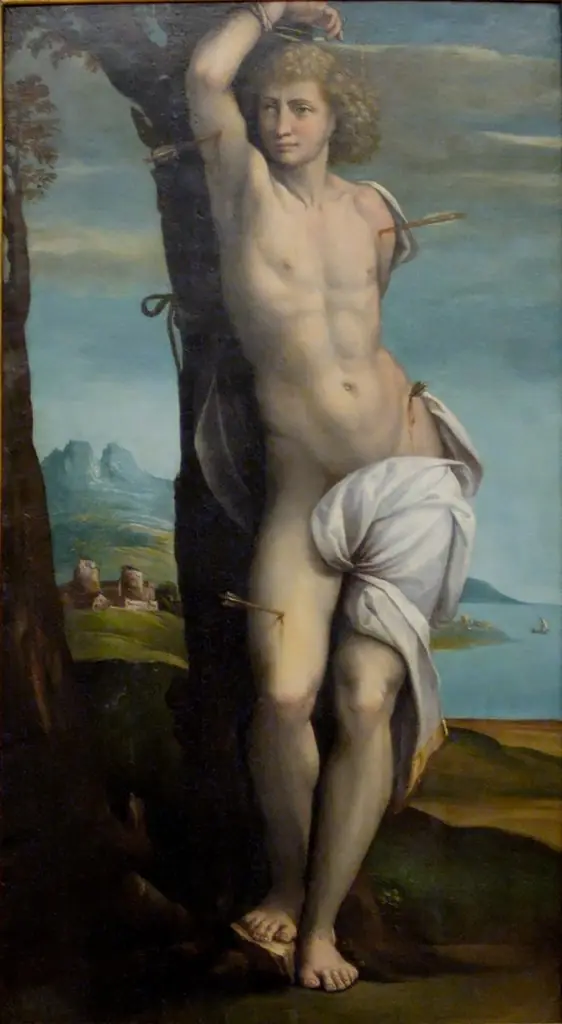
Saint Sebastian is a paint painting by Giovanni Contarini. It dates from 1587 and is held in the collection of the Gemäldegalerie Berlin.
About this work
Overview
The scene is rendered with careful attention to anatomical form and spatial depth, reflecting late Renaissance devotional conventions.
Painted around 1587 by Giovanni Contarini, this work portrays Saint Sebastian, a Christian martyr, bound to a tree. Executed in oil on panel, the painting is part of the Gemäldegalerie Berlin’s collection. Its composition centers on the figure’s vertical posture, framed by a rugged natural setting. The scene is rendered with careful attention to anatomical form and spatial depth, reflecting late Renaissance devotional conventions.
Subject & Meaning
Saint Sebastian, traditionally depicted as a martyr tied to a stake and pierced by arrows, is shown here before his execution. The absence of arrows shifts focus to his passive endurance and spiritual resolve. The figure’s bound arms and exposed torso evoke vulnerability, while the distant figure holding the rope suggests complicity and isolation. The image serves as a meditation on suffering and faith, common in Counter-Reformation iconography.
Technique & Style
Contarini employs chiaroscuro to model the figure’s form, using sharp contrasts between light and shadow to enhance volume and emotional intensity. The lighting falls diagonally across the body, isolating Sebastian from the darker background. Brushwork is controlled, with smooth transitions in skin tones and textured rendering of rock and foliage. The palette remains muted, emphasizing tonal harmony over coloristic drama.
History & Provenance
The painting entered the Gemäldegalerie Berlin’s holdings in the 19th century, likely acquired from a private collection in northern Italy. Its attribution to Giovanni Contarini, a lesser-known Venetian painter, was established through stylistic comparison and archival records. Little is documented about its early ownership, but its composition aligns with devotional works produced in Venice during the late 1580s.
Context
Created during the Counter-Reformation, the image reflects the Catholic Church’s emphasis on martyrdom as a model of piety. Venetian artists of the period often revisited classical forms to convey spiritual themes, blending humanist ideals with religious narrative. Sebastian’s depiction without arrows may indicate a preference for psychological tension over graphic violence, a trend seen in some late 16th-century sacred art.
Legacy
Though not widely reproduced or studied, the painting contributes to understanding regional variations in late Renaissance martyr imagery. Its restrained drama and focus on bodily presence distinguish it from more theatrical treatments by contemporaries. It remains a quiet example of how devotional subjects were adapted in smaller-scale Venetian workshops, preserving a nuanced approach to sacred narrative.
Artist & collection