Artwork
Saint Jerome
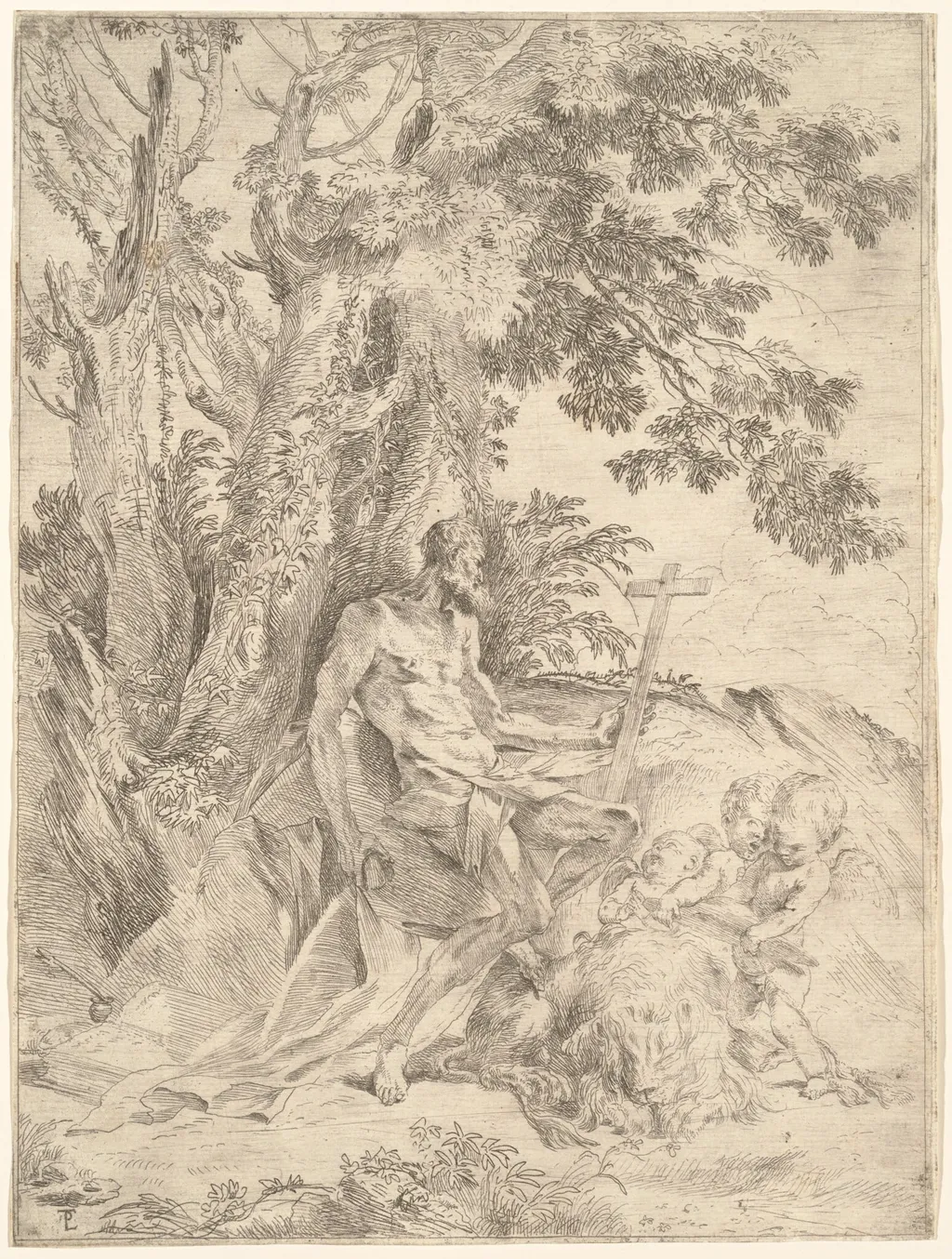
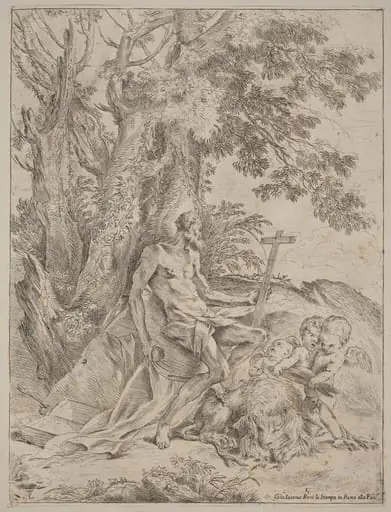
Saint Jerome is an ink print by the Baroque artist Pietro Testa. It dates from 1634 and is held in the collection of the National Gallery of Art.
About this work
Overview
Testa was closely associated with the circle of Cassiano dal Pozzo, a patron and scholar who promoted classical learning through visual art.
Pietro Testa, an Italian printmaker active in mid-17th century Rome, produced this etching in 1634. Executed on laid paper, the work reflects his focus on intricate line work and intellectual themes. Testa was closely associated with the circle of Cassiano dal Pozzo, a patron and scholar who promoted classical learning through visual art. The piece is now part of the National Gallery of Art’s collection in Washington, D.C.
Subject & Meaning
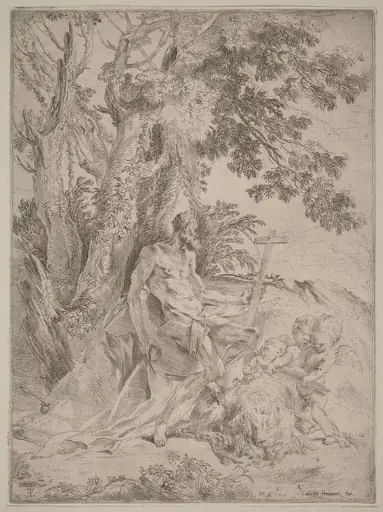
The figure depicts Saint Jerome, the 4th-century scholar and translator of the Bible into Latin, shown in a moment of weary contemplation. Seated beneath a dense tree in a rugged landscape, he rests his head on his hand, suggesting the mental strain of his scholarly labor. A cross propped against a rock alludes to his spiritual devotion. The setting evokes solitude and introspection, aligning with traditional portrayals of Jerome in his hermitage.
Technique & Style
Testa employed etching to render fine, deliberate lines that capture texture and detail. The foliage is composed of densely packed strokes, each leaf individually suggested; folds in Jerome’s robe are articulated with subtle, directional marks. The technique allowed for both precision and expressive variation, characteristic of Testa’s draftsmanship. The composition avoids dramatic lighting, favoring quiet, linear clarity over theatrical effect.
History & Provenance
Created in Rome during Testa’s most productive period, the etching was likely made for a private collector within dal Pozzo’s intellectual circle. Its survival in good condition reflects careful handling over centuries. It entered the National Gallery of Art’s collection in the 20th century, where it remains as part of a broader group of Italian prints from the Baroque era.
Context
In 1630s Rome, artists like Testa responded to the Counter-Reformation’s emphasis on piety and learning. Religious subjects were often rendered with scholarly rigor, blending humanist ideals with devotional themes. Testa’s focus on Jerome, a model of intellectual sanctity, aligned with contemporary tastes among patrons who valued erudition as much as faith.
Legacy
Though less widely known than his contemporaries, Testa’s etchings influenced later generations of printmakers through their technical finesse and psychological depth. His ability to convey inner states through line alone set a standard for narrative intimacy in printmaking. This work exemplifies how religious imagery could be rendered with quiet, contemplative precision rather than overt spectacle.
Artist & collection
Artist
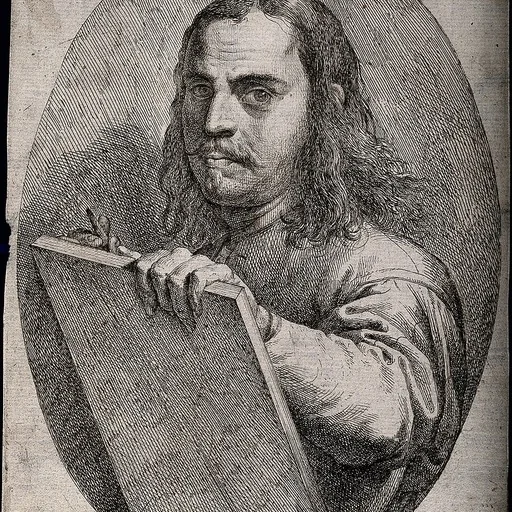
Pietro Testa (1612 – 1 March 1650) was an Italian High Baroque artist active in Rome.

 Saint Jerome
 Saint Jerome
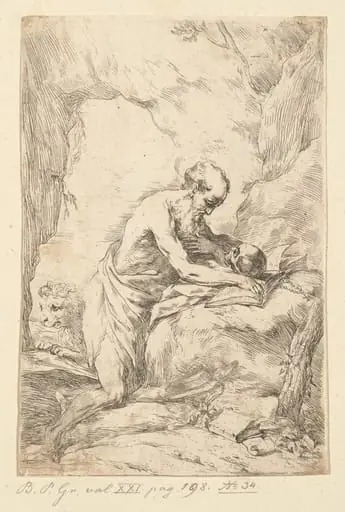 Saint Jerome
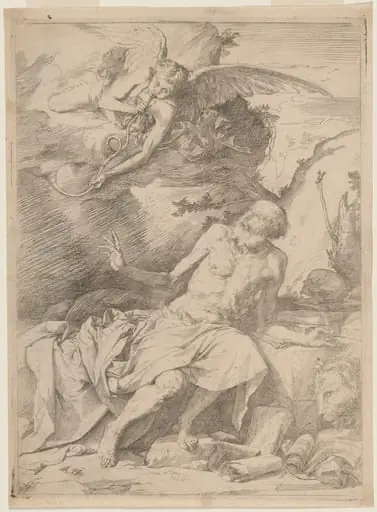 Saint Jerome Hearing the Trumpet of the Last Judgement
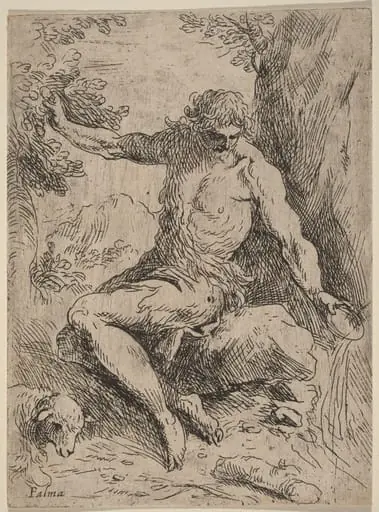 Saint John the Baptist
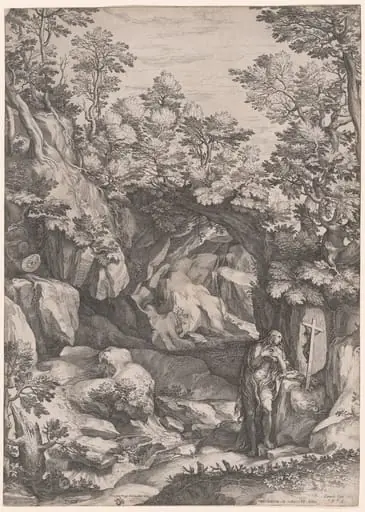 Landscape with a Penitent Magdalene
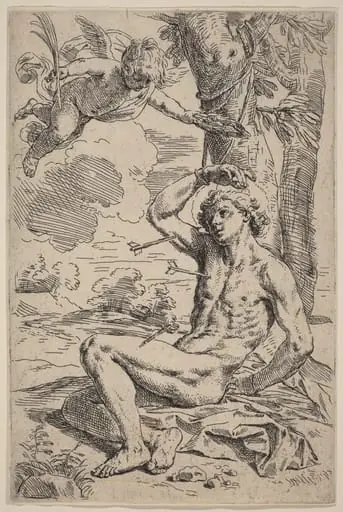 Saint Sebastian
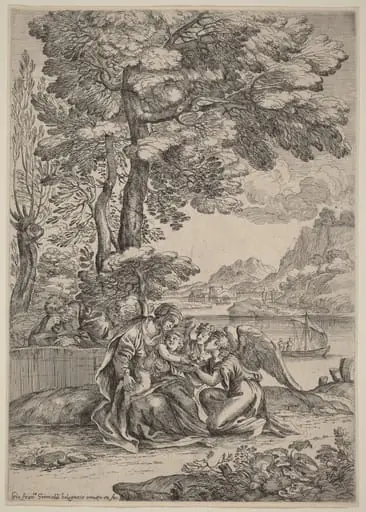 The Rest on the Flight into Egypt
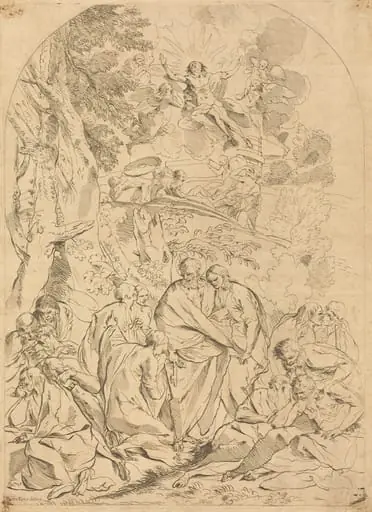 The Resurrection
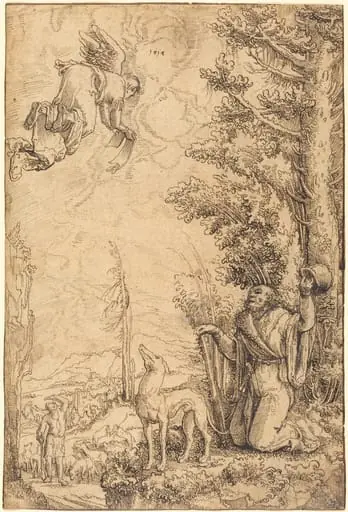 The Annunciation to Joachim
 Mary Magdalene Praying in the Wilderness
 The Boy and Two Old Men