Artwork
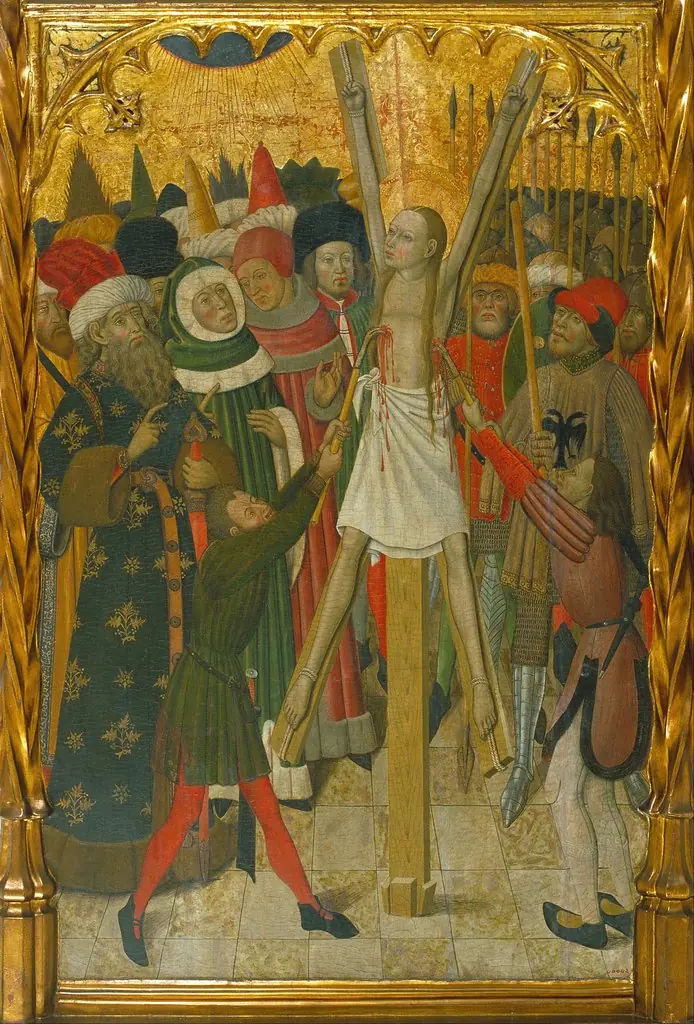
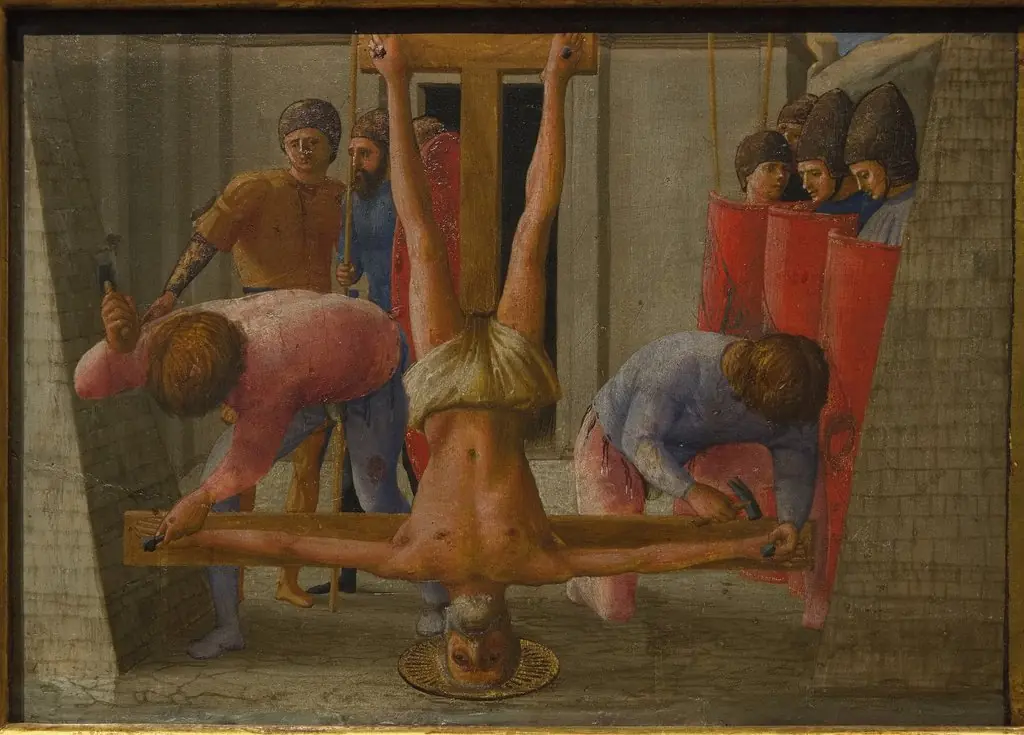
Martyrium of saint Andrew
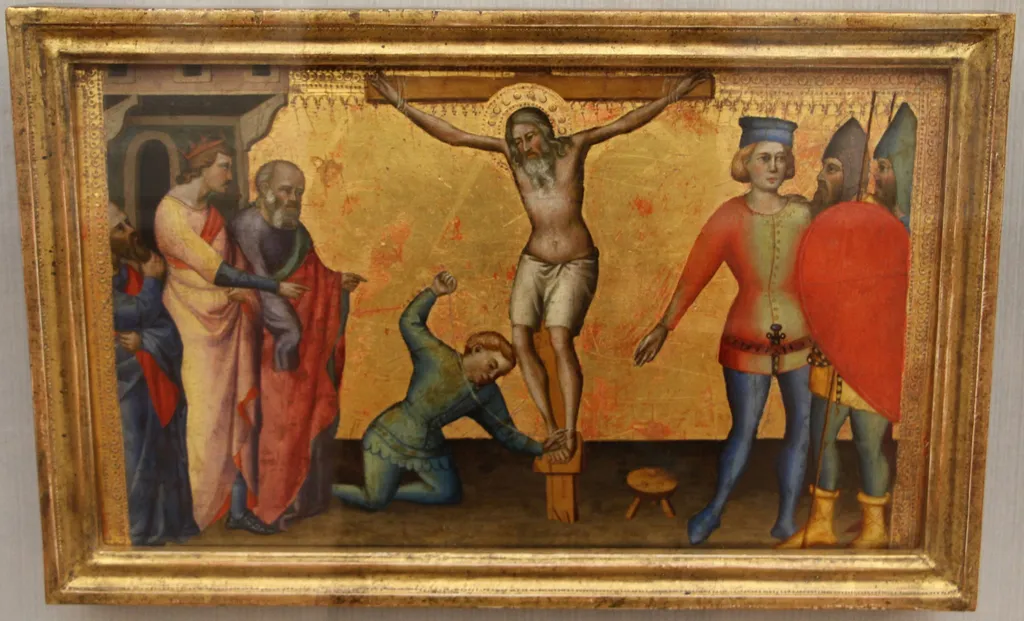
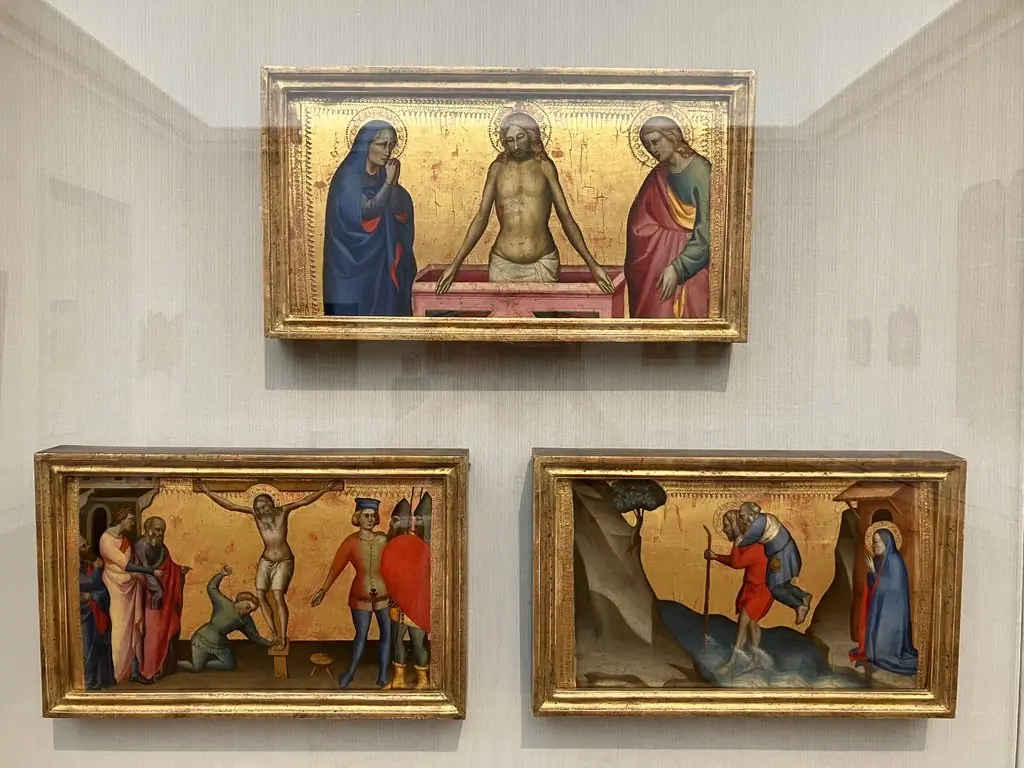
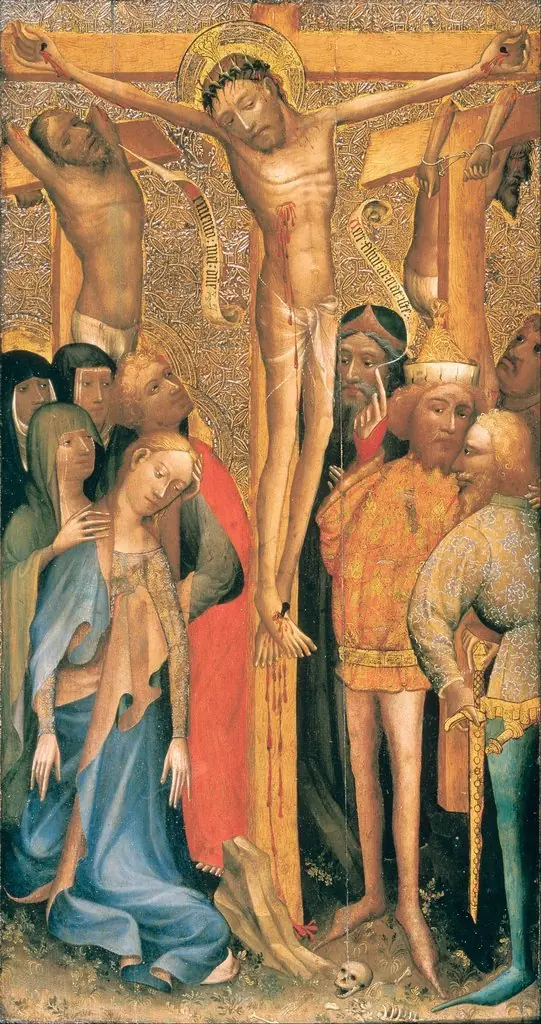
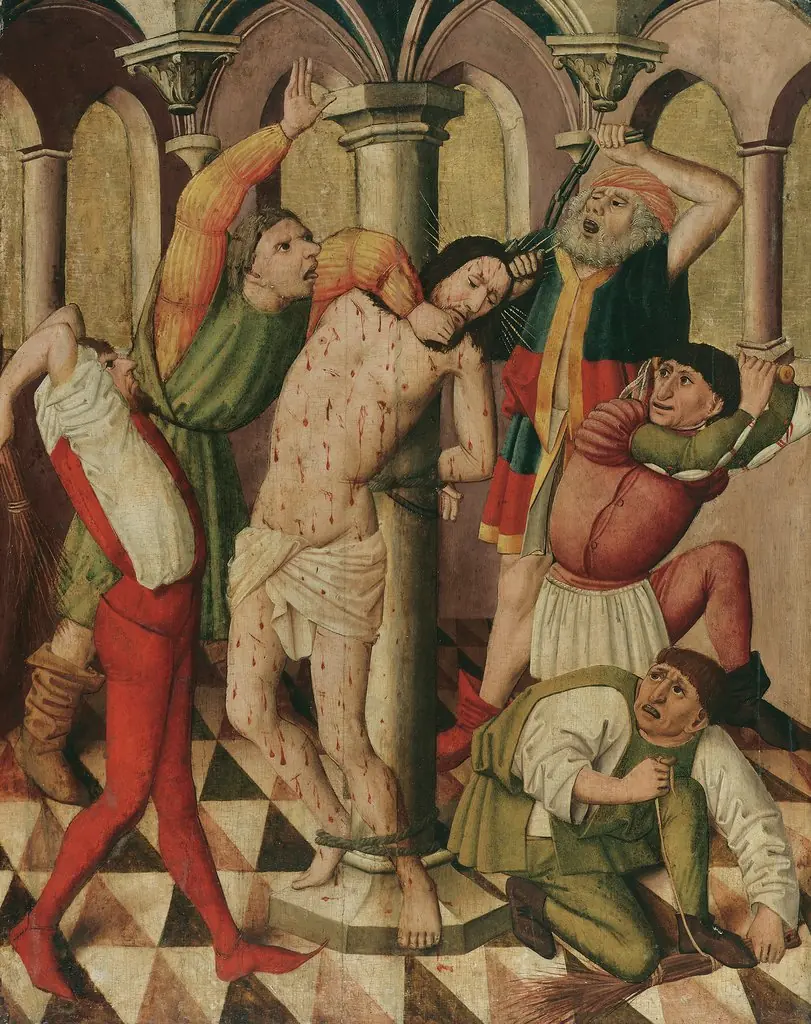
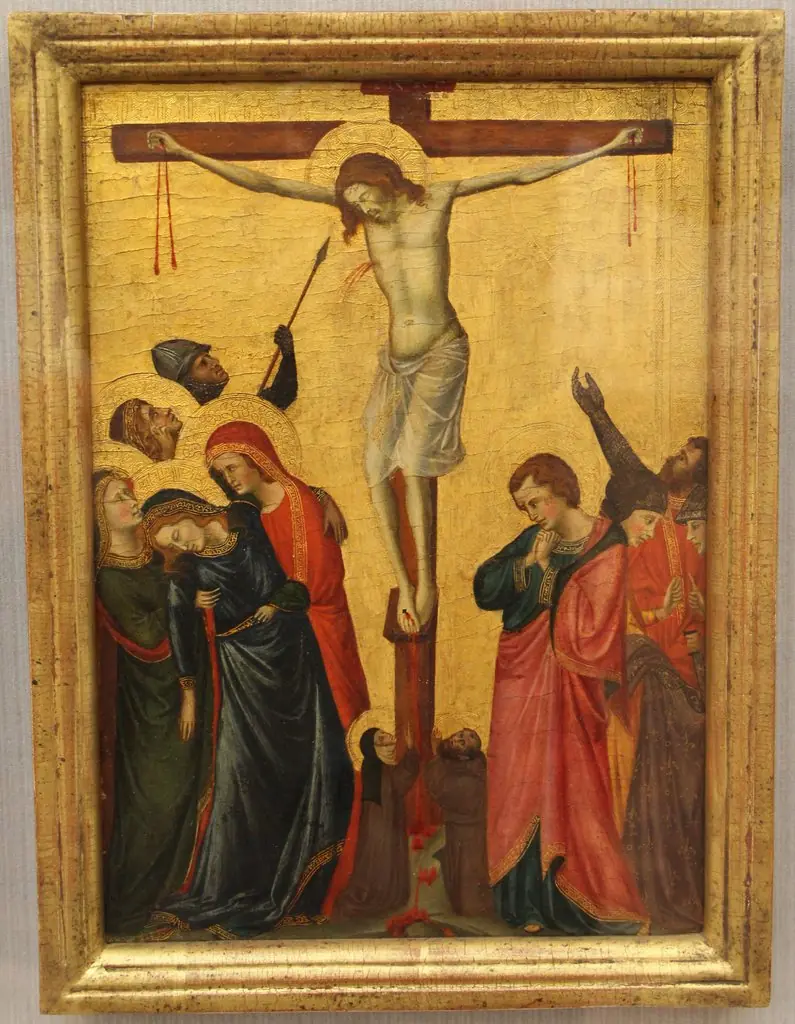
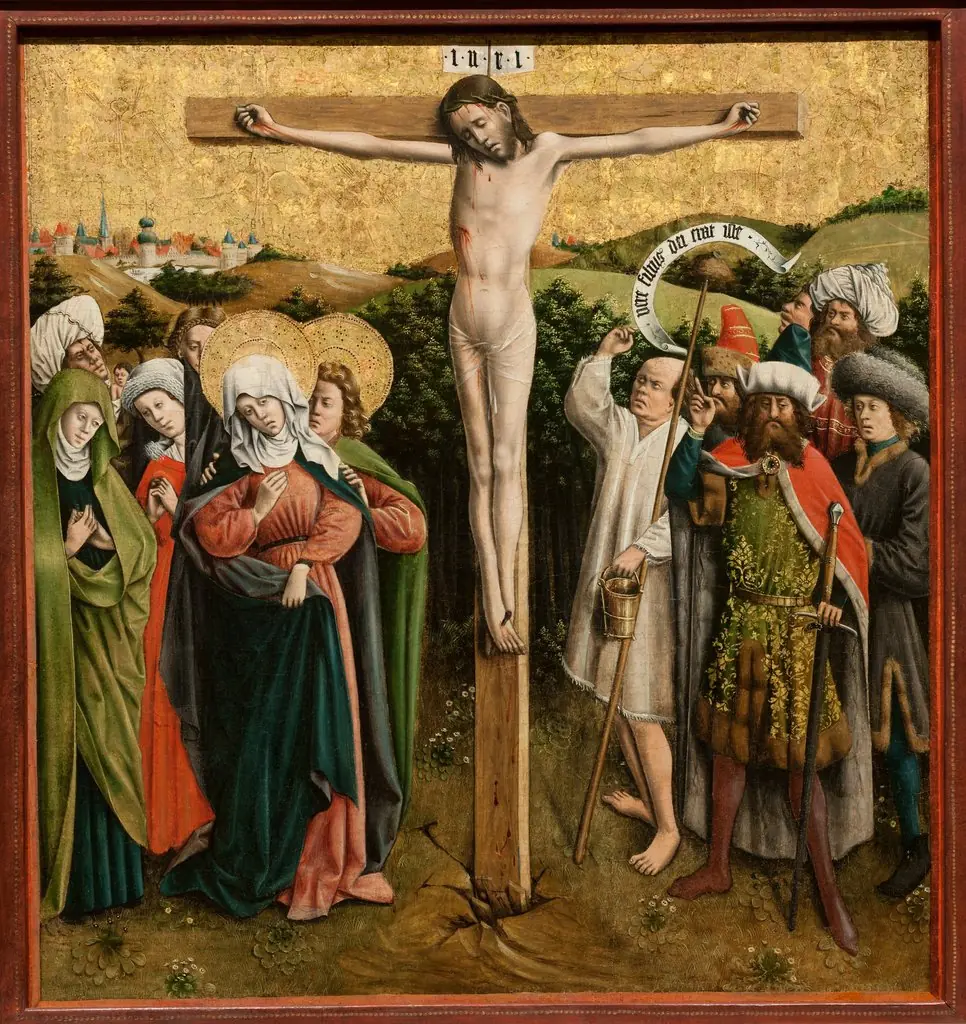
Martyrium of saint Andrew is an unspecified painting by Giovanni del Biondo. It dates from 1387 and is held in the collection of the Gemäldegalerie Berlin.
About this work
Overview
Painted around 1387 by Giovanni del Biondo, the *Martyrium of Saint Andrew* is a tempera on panel work from late 14th-century Tuscany.
Painted around 1387 by Giovanni del Biondo, the *Martyrium of Saint Andrew* is a tempera on panel work from late 14th-century Tuscany. Del Biondo, active between 1356 and 1399, operated at the intersection of Gothic tradition and emerging Renaissance sensibilities. The painting was likely intended for private devotion, reflecting the period’s emphasis on saintly sacrifice. It now resides in the Gemäldegalerie, Berlin, among other works from the same artistic milieu.
Subject & Meaning
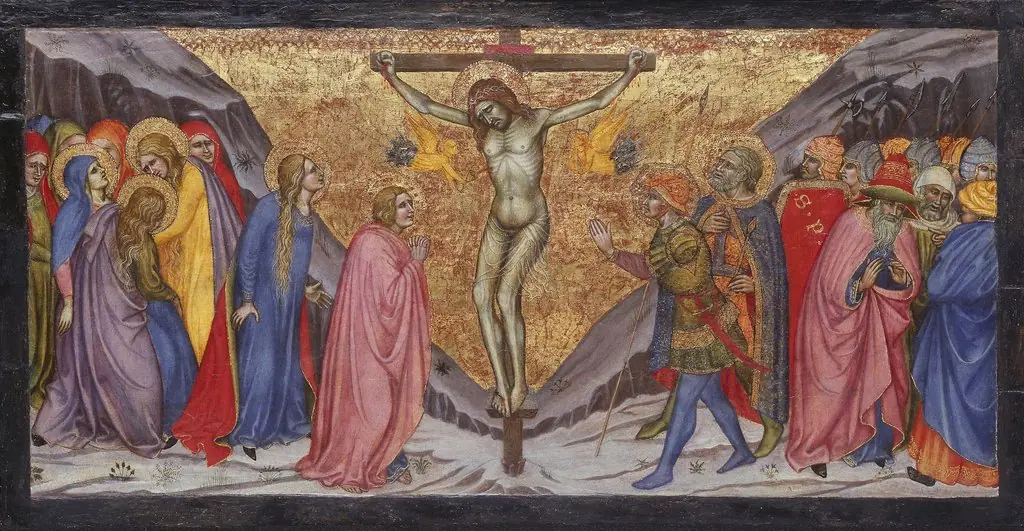
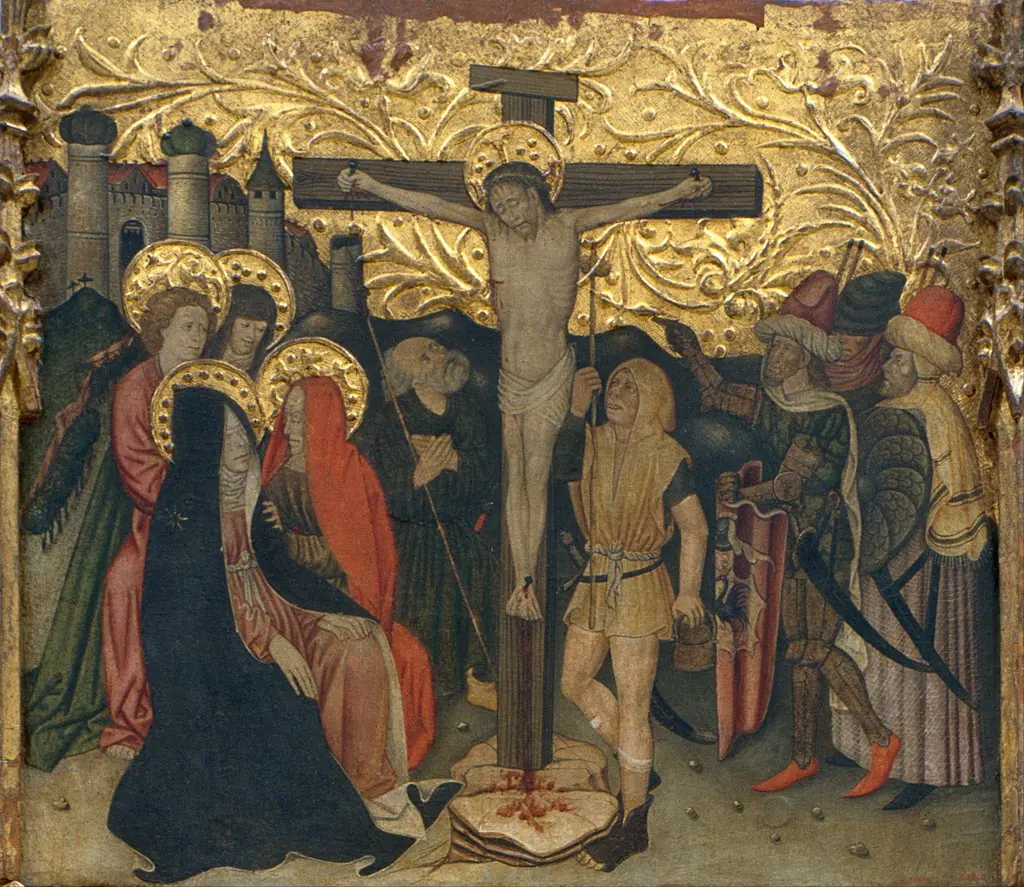
The scene portrays the crucifixion of Saint Andrew on an X-shaped cross, a traditional symbol of his martyrdom. He is depicted with arms outstretched and legs crossed, his gaze directed upward, suggesting spiritual transcendence. Figures surrounding him—some in clerical robes, others in armor—embody witnesses to his death, reinforcing the narrative of faith under persecution. The kneeling figure in the foreground embodies personal reverence, inviting the viewer into a contemplative role.
Technique & Style
Executed in tempera on wood, the painting employs flat, decorative forms typical of late Gothic conventions, yet shows subtle attempts at spatial depth and naturalistic gesture. The golden background, common in devotional panels, enhances the sacred atmosphere without suggesting a physical setting. Figures are arranged in a shallow plane, with careful attention to drapery and facial expression, reflecting the artist’s training in the Sienese tradition.
History & Provenance
The painting’s early ownership is undocumented, but it entered the collection of the Gemäldegalerie Berlin in the 19th century, likely through acquisitions of Italian medieval art. Its survival through centuries of religious upheaval suggests it was valued for its devotional function rather than its artistic novelty. No significant alterations or restorations are recorded, preserving its original composition and surface.
Context
In late 14th-century Italy, depictions of martyrdom served both theological instruction and personal piety. Saint Andrew, as one of the first apostles, was a popular subject in regions with strong Byzantine influences. Del Biondo’s work aligns with regional workshops producing altarpieces and private devotional panels, often commissioned by lay patrons seeking spiritual intercession through the saints’ suffering.
Legacy
Though not widely known today, del Biondo’s work represents a transitional phase in Italian painting, bridging the stylized forms of the Gothic with the human-centered narratives of the Renaissance. The *Martyrium of Saint Andrew* remains a quiet example of how religious imagery functioned in daily spiritual life, preserving the visual language of devotion before the full emergence of perspective and anatomical realism.
Artist & collection
Artist
Giovanni del Biondo was a 14th-century Italian painter of the Gothic and early-Renaissance period.