Artwork
Martyrdom of Saint Eulalia
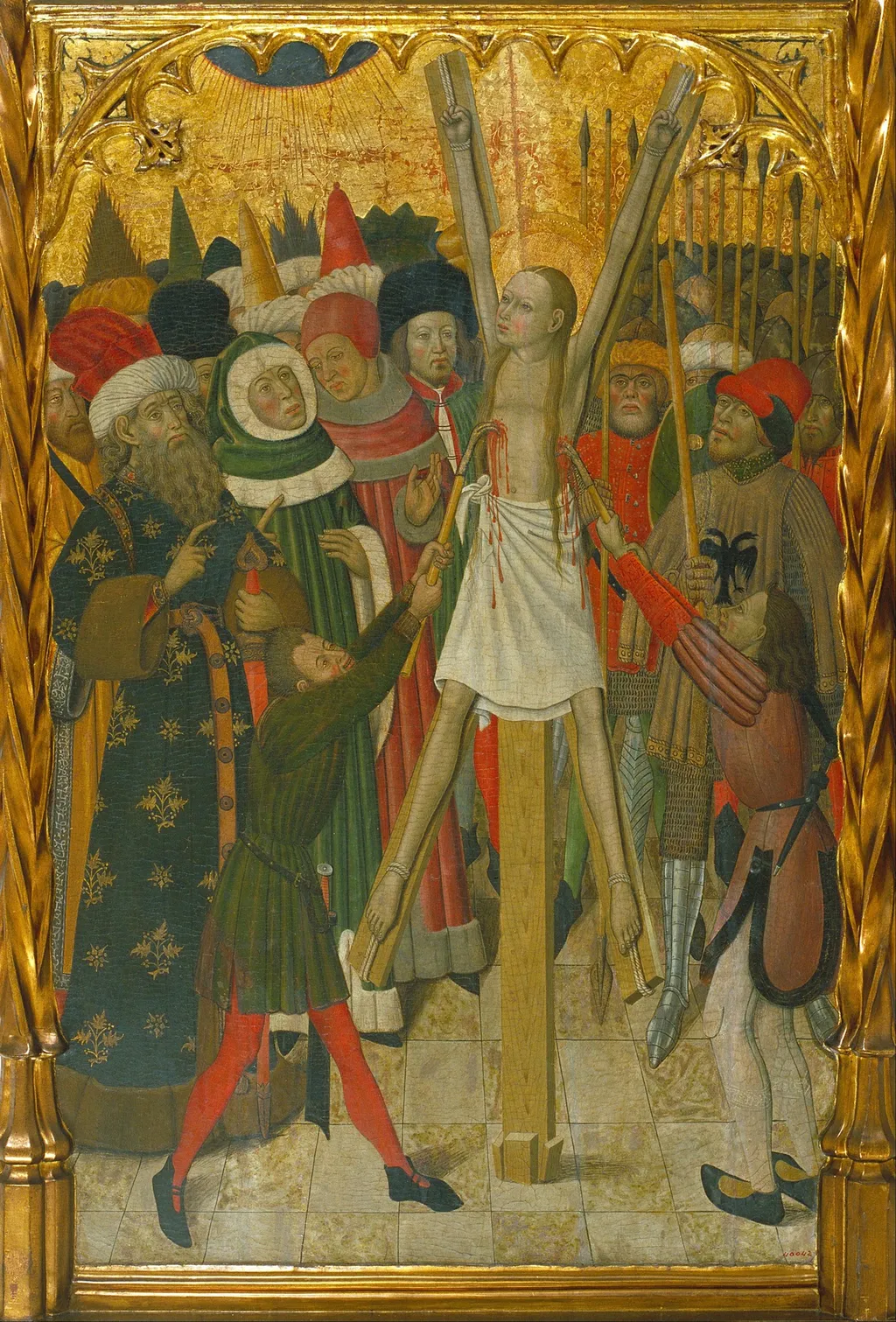
Martyrdom of Saint Eulalia is an unspecified painting by the Early Renaissance artist Bernat Martorell. It dates from 1442 and is held in the collection of the Museu Nacional d'Art de Catalunya.
About this work
Overview
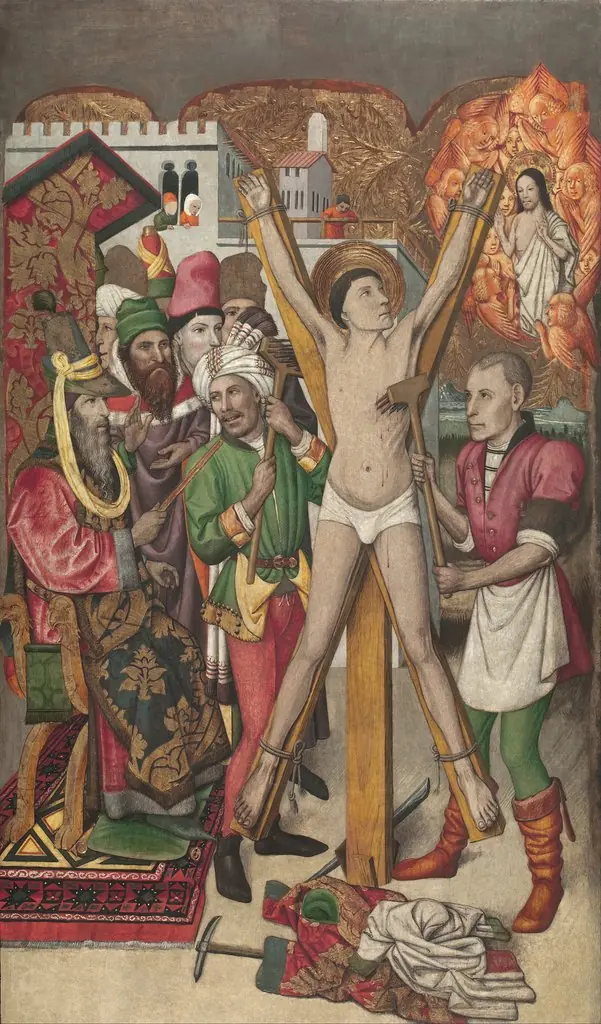
Painted in 1442 by Bernat Martorell, this work illustrates the execution of Saint Eulalia, a young Christian martyr.
Painted in 1442 by Bernat Martorell, this work illustrates the execution of Saint Eulalia, a young Christian martyr. Commissioned for a church in Barcelona, it was later transferred to the Museu Nacional d'Art de Catalunya. The painting is a large-scale panel, typical of late medieval Catalan altarpieces, and reflects the devotional priorities of its time through its focused narrative and emotional restraint.
Subject & Meaning
Saint Eulalia, a girl of twelve, was executed for refusing to renounce her faith during Roman persecution. Martorell depicts her at the moment of death, bound to a post with arms raised, her expression calm amid violence. The surrounding crowd—soldiers, onlookers, and clergy—emphasizes her isolation and moral conviction. Her serenity contrasts with the brutality, reinforcing the medieval ideal of holy endurance as spiritual triumph.
Technique & Style
Martorell employs tempera and gold leaf on wood, with meticulous detail in fabric, armor, and facial expressions. The white robe of Eulalia stands out against muted, earth-toned figures, creating visual emphasis. Light falls subtly on her face and limbs, enhancing three-dimensionality without dramatic chiaroscuro. The composition is frontal and hierarchical, typical of Gothic devotional art, prioritizing symbolic clarity over naturalistic space.
History & Provenance
The painting originally adorned the altarpiece of the Church of Santa Maria del Mar in Barcelona. It remained in situ until the 19th century, when ecclesiastical reforms led to its relocation. Acquired by the Museu Nacional d'Art de Catalunya in the early 20th century, it became a key example of Catalan Gothic painting. Its preservation reflects regional efforts to safeguard religious art during secularization.
Context
Created during a period of renewed devotion to local saints in Catalonia, the painting responds to civic and ecclesiastical interest in Eulalia as a patroness of Barcelona. Its production coincided with the rise of wealthy urban patrons who commissioned religious art to affirm communal identity. Martorell’s style blends international Gothic conventions with regional iconographic traditions, reflecting the cultural synthesis of 15th-century Catalonia.
Legacy
The painting remains a defining work of Catalan Gothic painting, studied for its narrative discipline and emotional subtlety. It influenced later devotional imagery in the region and helped establish Martorell as a central figure in medieval Catalan art. While no longer used liturgically, it continues to serve as a historical document of religious belief, artistic practice, and civic devotion in late medieval Spain.
Artist & collection

Artist
Bernat Martorell was the leading painter of Barcelona, in modern-day Spain. He is considered to be the most important artist of the International Gothic style in Catalonia. Martorell painted retable panels and…

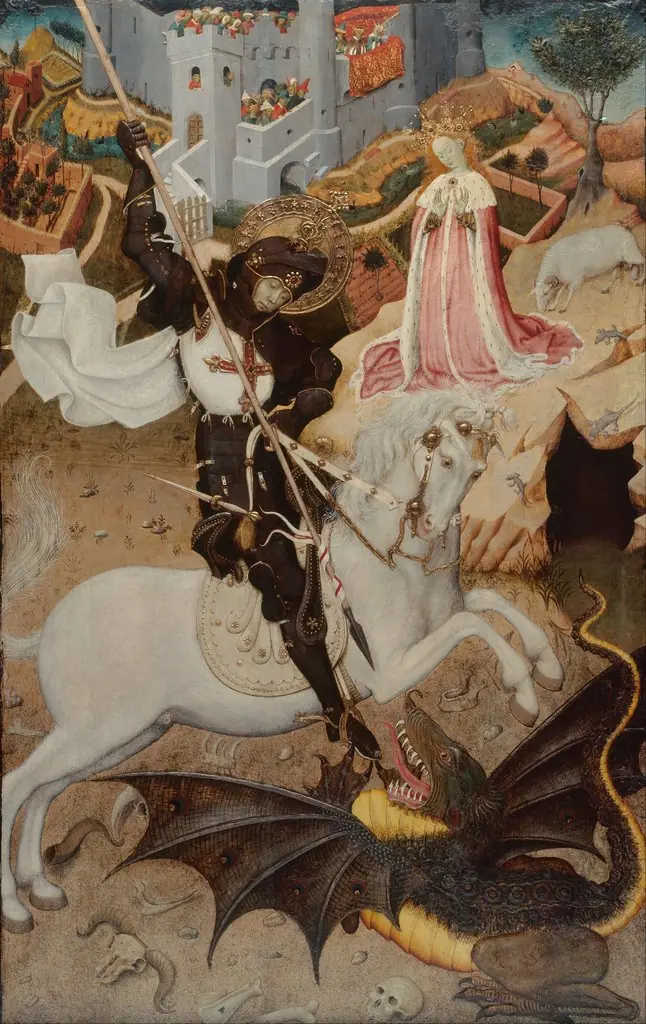 Saint George and the Dragon
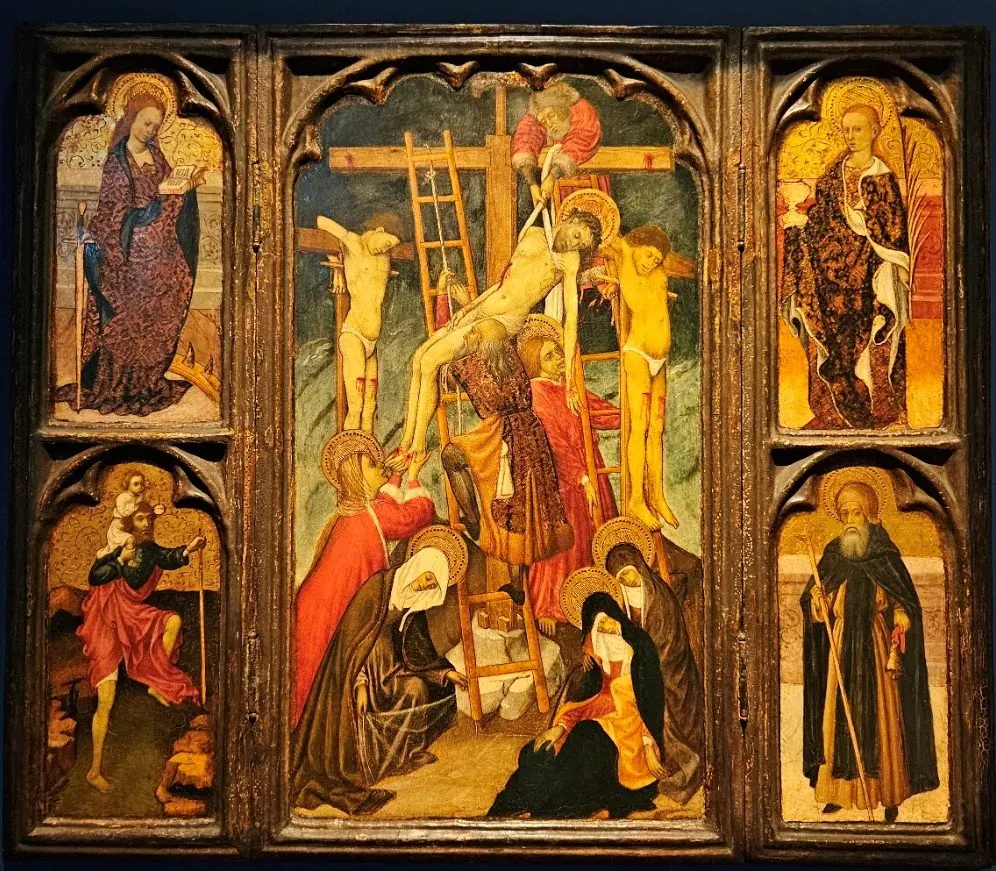 Triptych of the Descent from the Cross
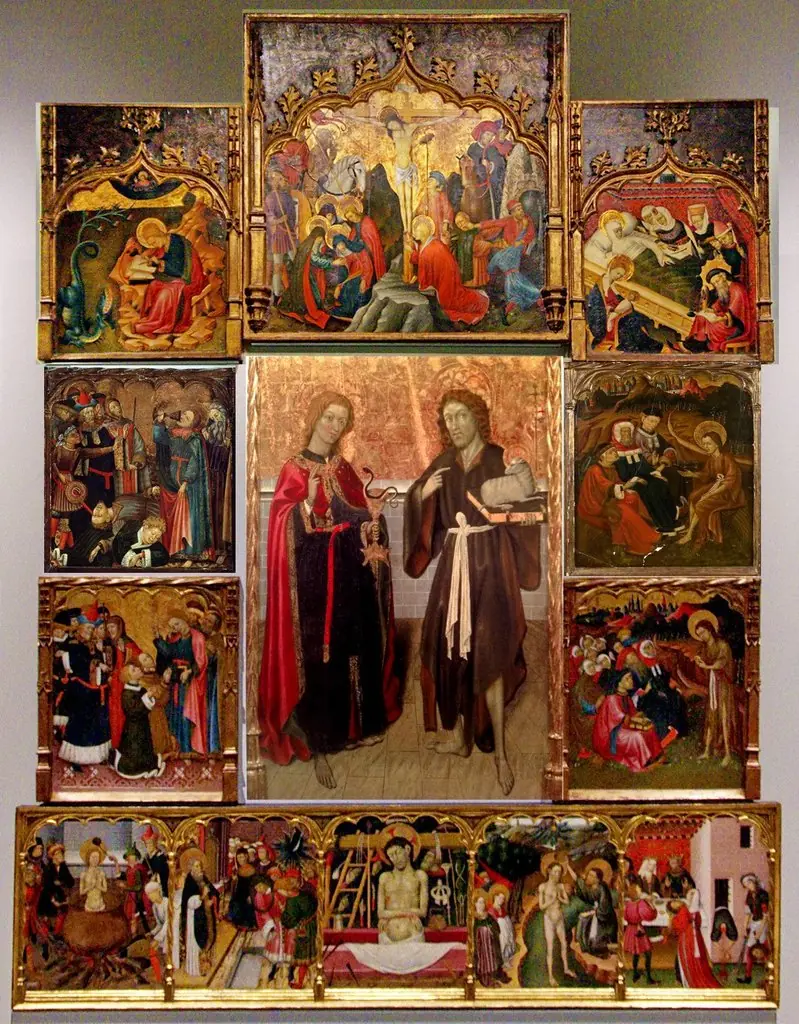 Altarpiece of the Saints John
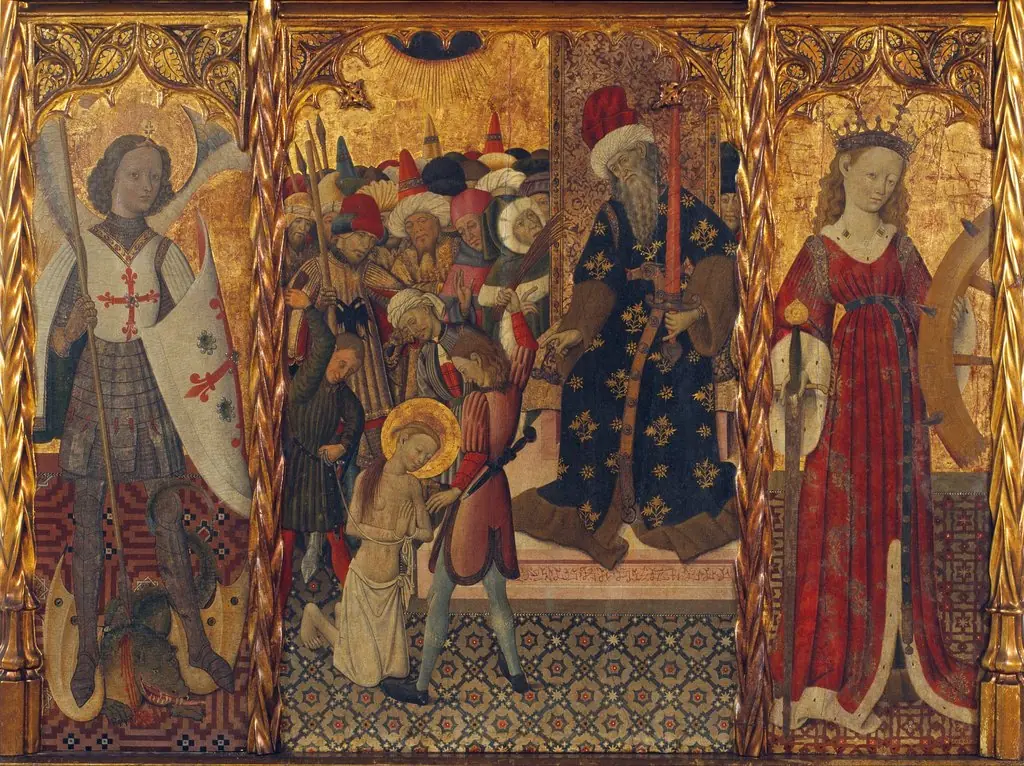 Saint Michael, Martyrdom of Saint Eulalia and Saint Catherine
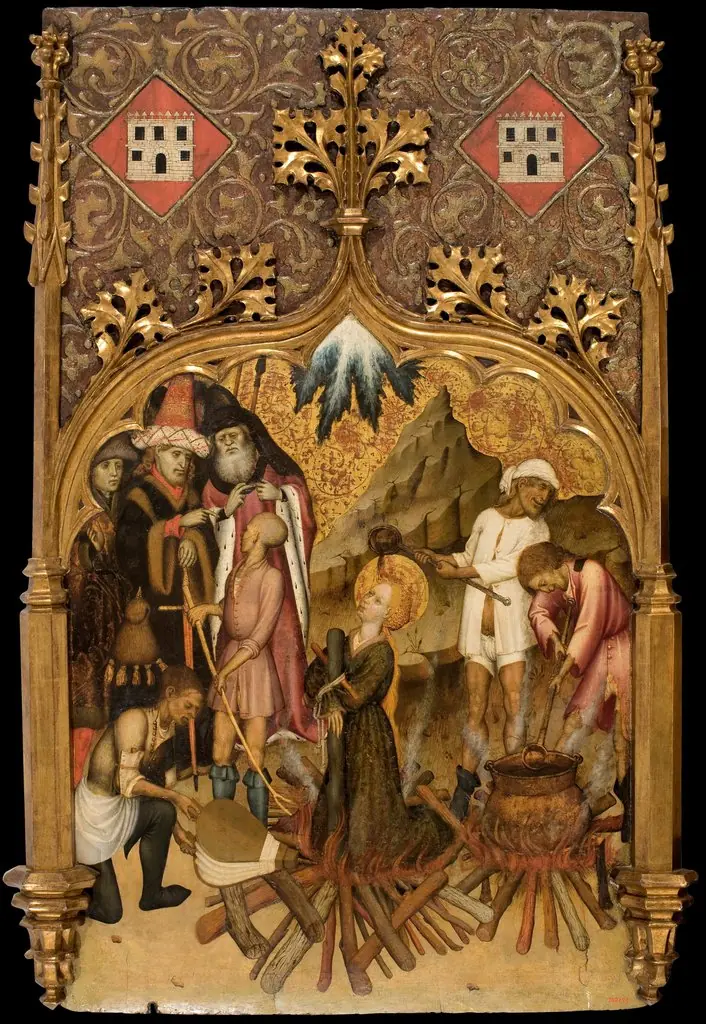 Martyrdom of Saint Lucy
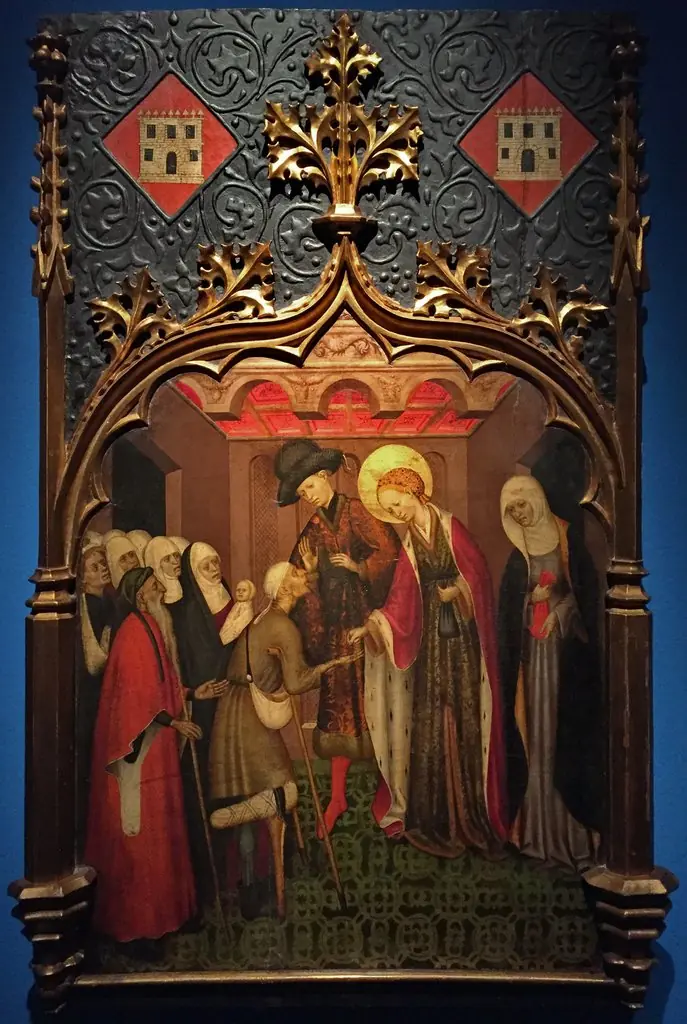 Santa Llúcia repartint almoines
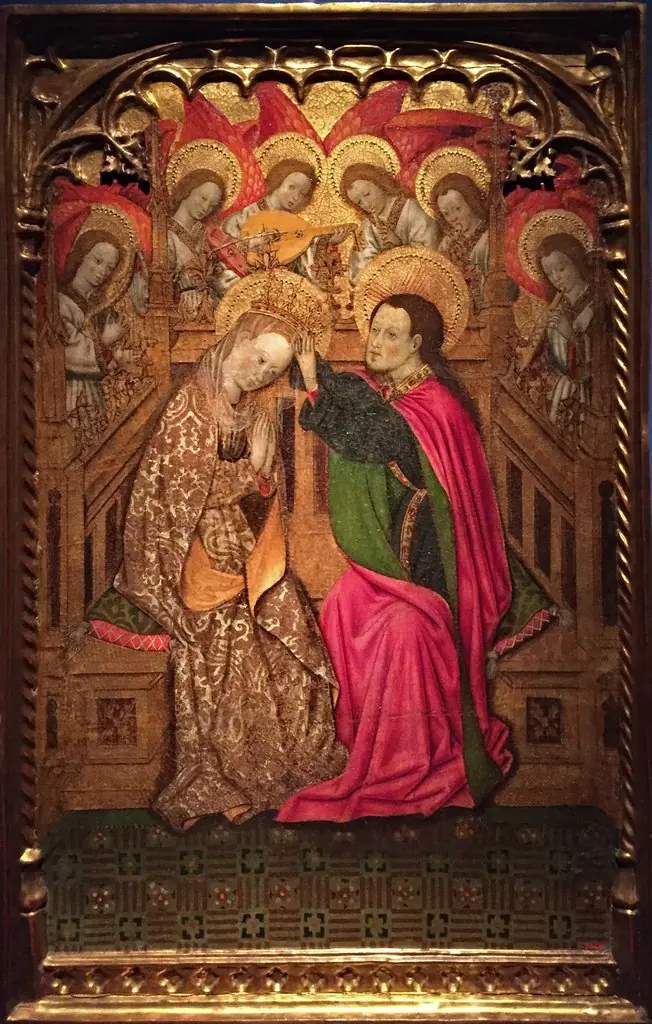 Coronació de la Mare de Déu amb àngels músics
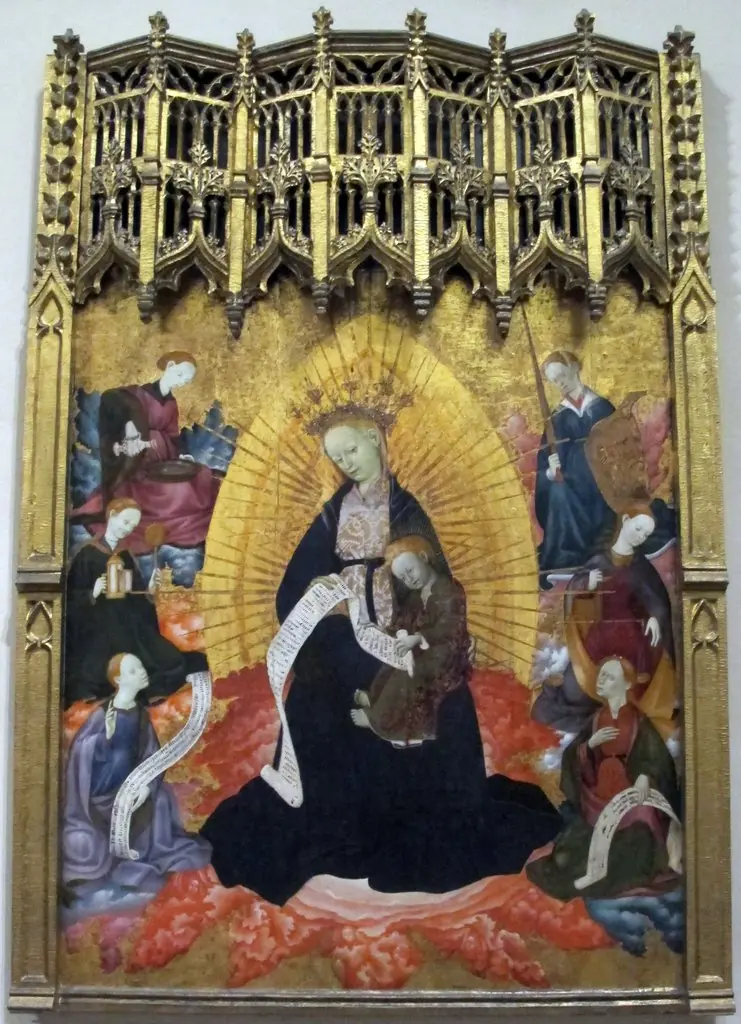 Enthroned Virgin and Child, with the Cardinal Virtues and Two Figures Holding Scrolls