Artwork
Virgin and Child
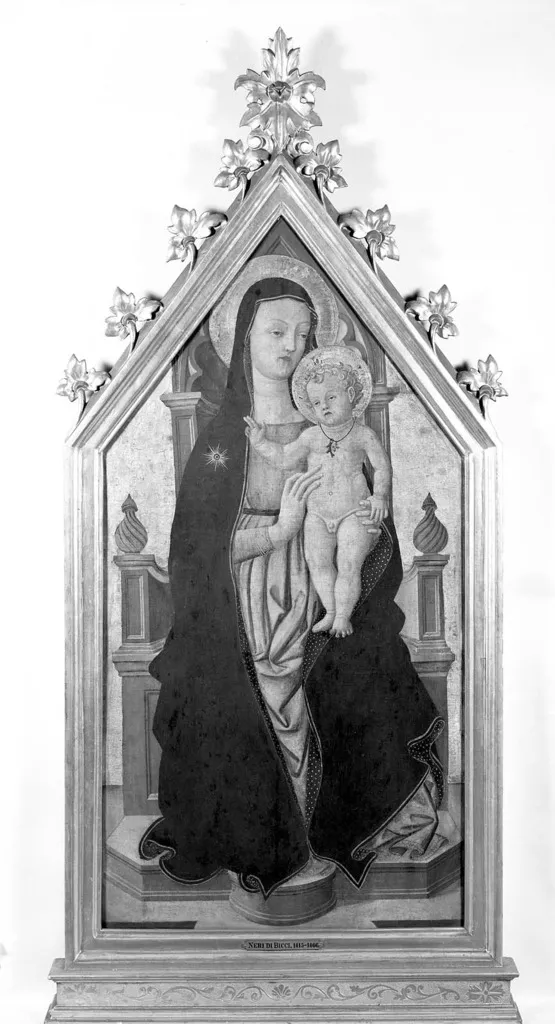
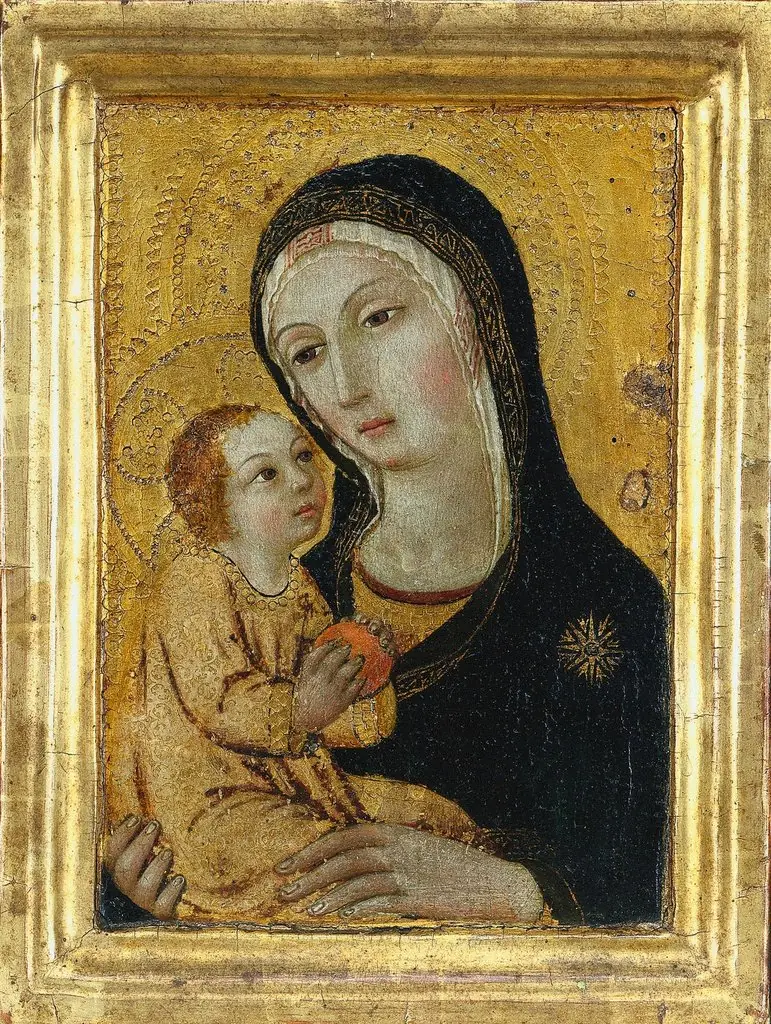
Virgin and Child is an unspecified painting by Giovanni di ser Giovanni Guidi. It dates from 1456 and is held in the collection of the Museum of Fine Arts Boston.
About this work
Overview
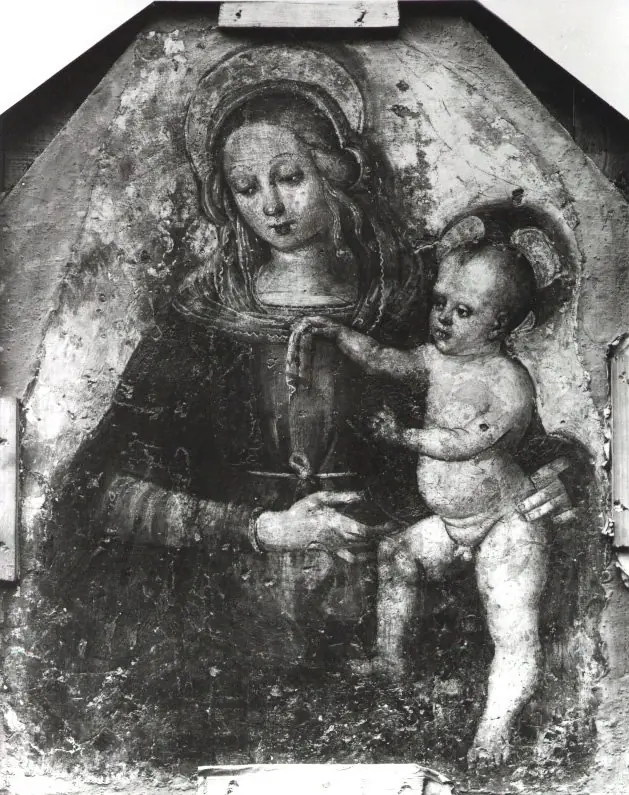
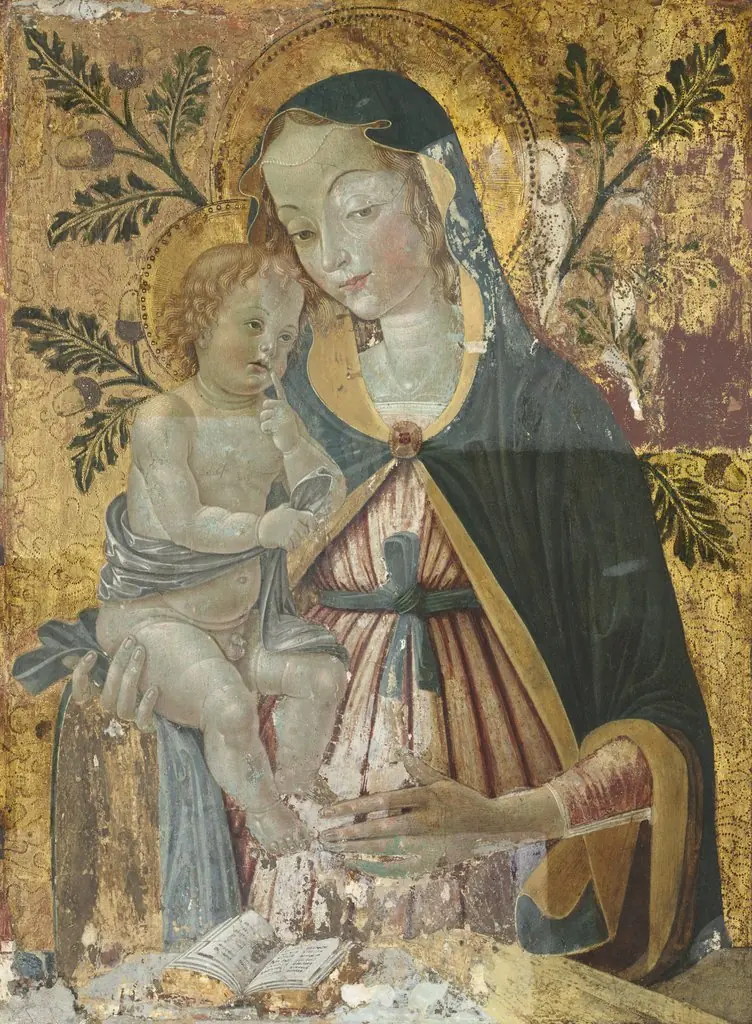
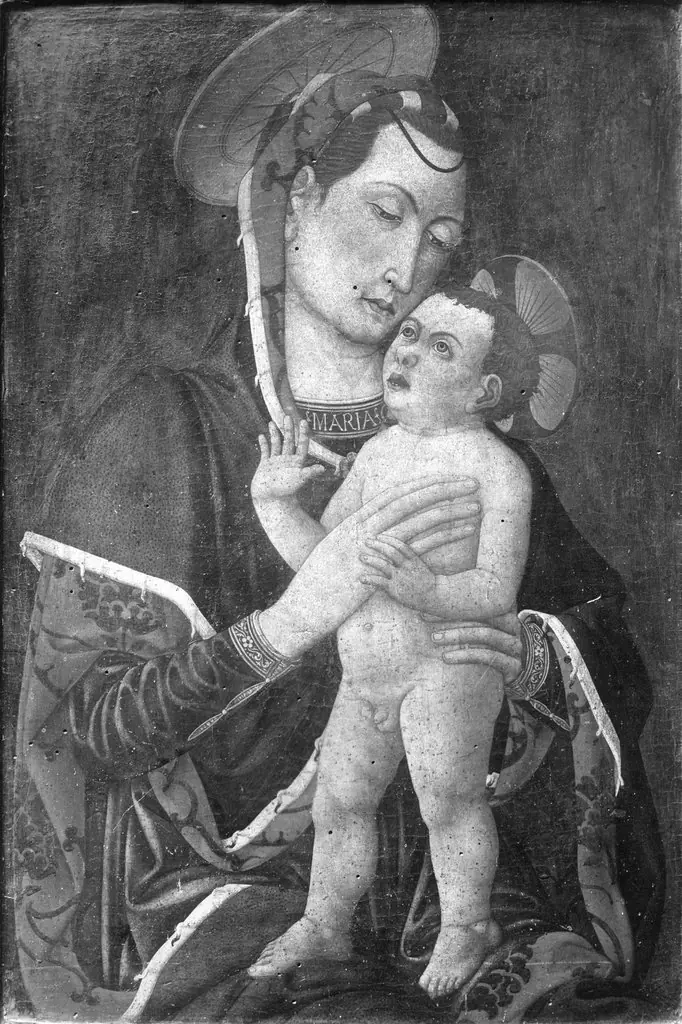
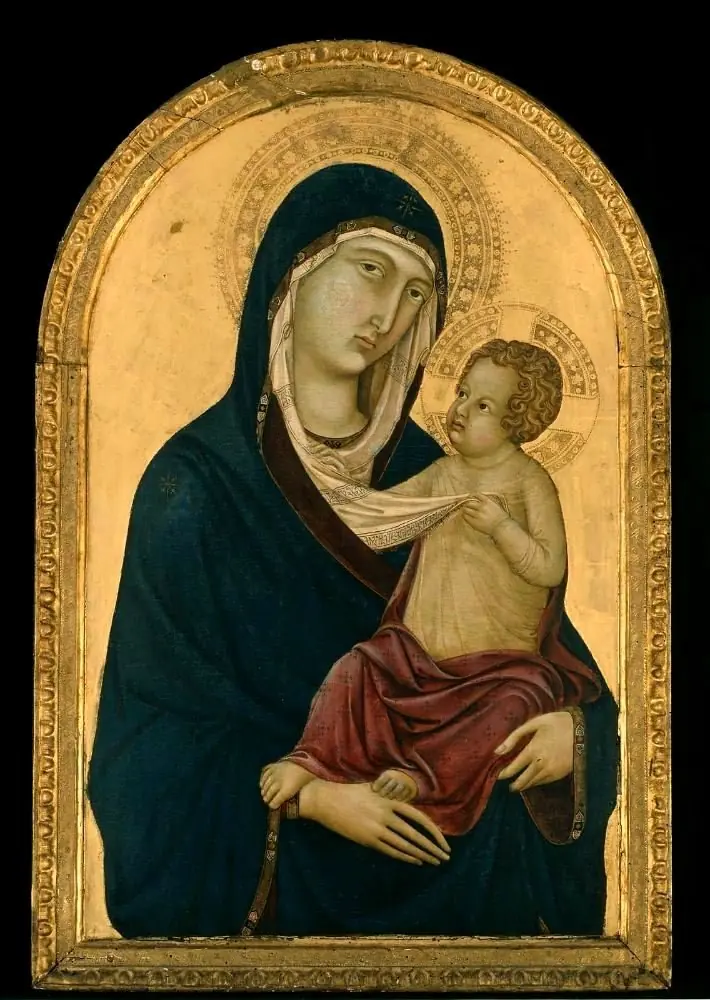
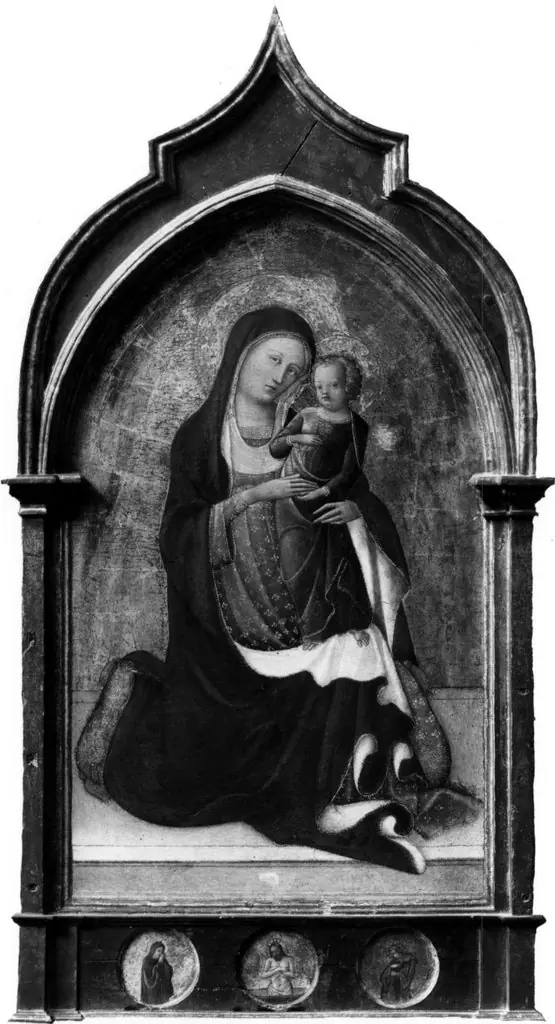
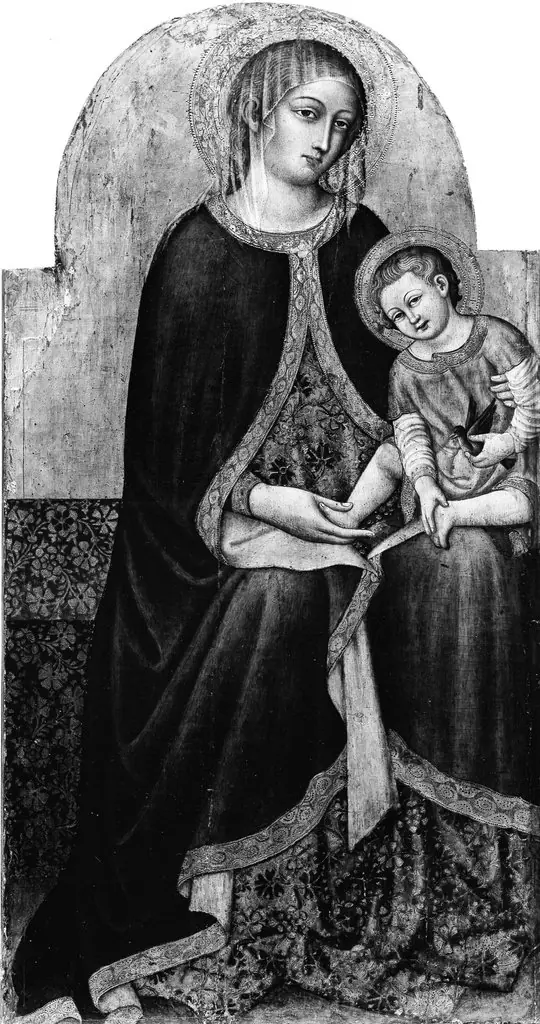
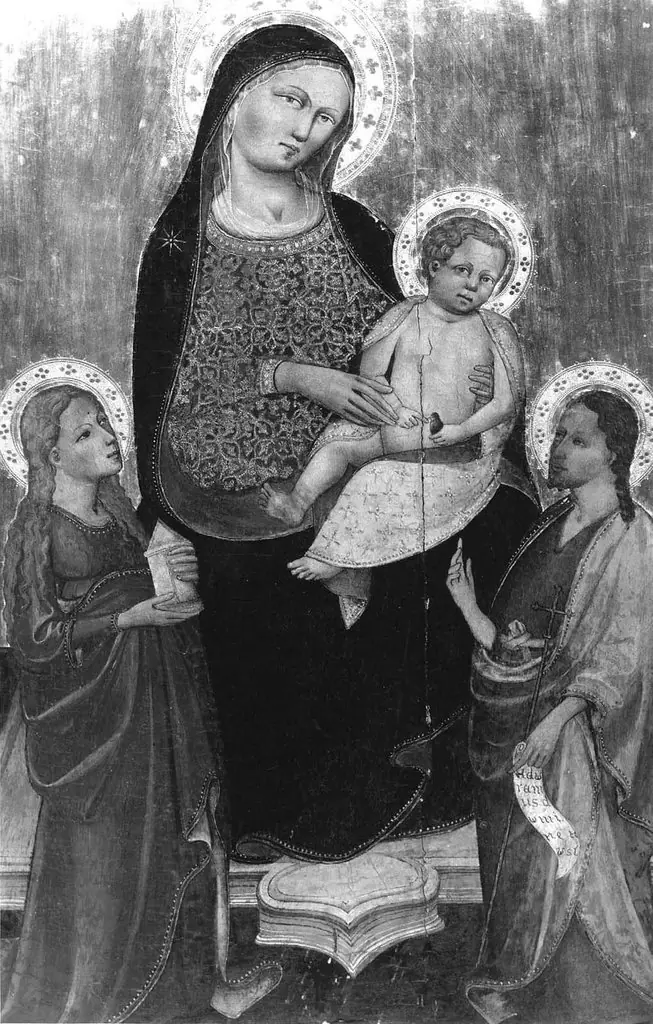
Created circa 1456, the *Virgin and Child* is an oil painting by Giovanni di ser Giovanni Guidi, known as Lo Scheggia. The Florentine artist, younger sibling of the celebrated Masaccio, worked primarily in the early Renaissance. The work portrays the Virgin Mary holding the infant Christ and is presently displayed in the Museum of Fine Arts, Boston.
Subject & Meaning
The composition presents a solemn Mary in a dark, floor‑length robe, her head veiled and crowned with a luminous halo, cradling a nude Christ child who also bears a halo. The intimate gesture emphasizes the theological bond between mother and son, while the decorative backdrop with stylised foliage and blossoms adds a modest ornamental context typical of devotional images.
Technique & Style
Lo Scheggia employs a restrained palette of muted earth tones, allowing the gold‑toned halos to draw the viewer’s eye to the holy figures. The rendering of the figures shows a nascent interest in volume and three‑dimensionality, echoing the early Renaissance shift toward naturalism, yet the overall design retains a decorative flatness reminiscent of contemporary panel work.
History & Provenance
The painting was produced during a prolific period when Giovanni Guidi supplied both religious commissions and decorative panels for private homes and civic buildings. After changing hands over the centuries, it entered the collection of the Museum of Fine Arts, Boston, where it has been conserved and exhibited as part of the museum’s Italian Renaissance holdings.
Artist & collection
Artist
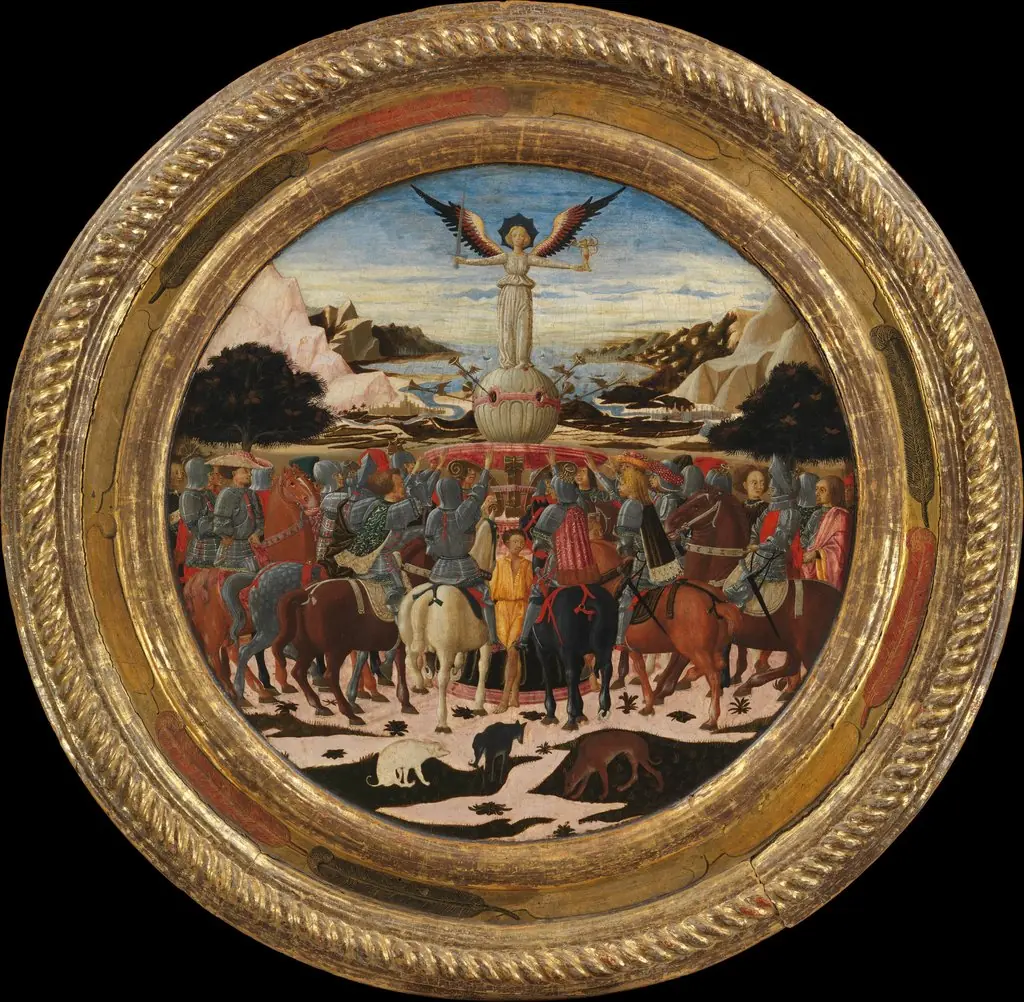
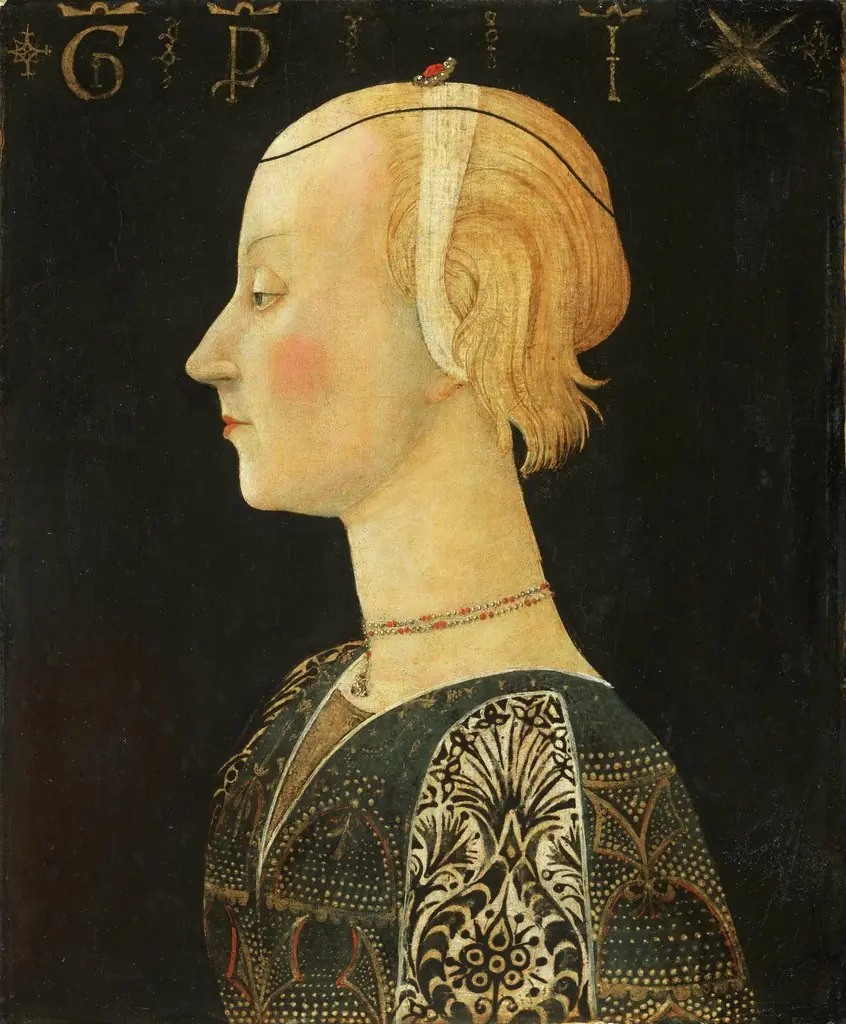
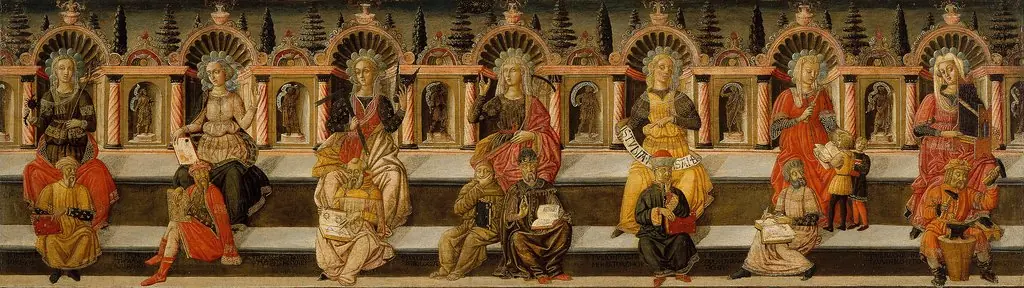
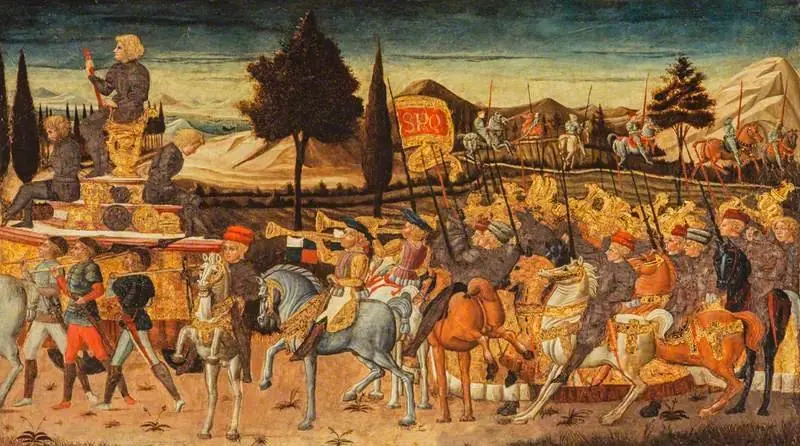
Giovanni di ser Giovanni Guidi
Giovanni di Ser Giovanni, (1406 – 1486) also known as Lo Scheggia, or "the Splinter" was an Italian Renaissance painter in Florence who was born in San Giovanni Valdarno and was the younger brother of the famous Masaccio.