Artwork
The Seven Liberal Arts
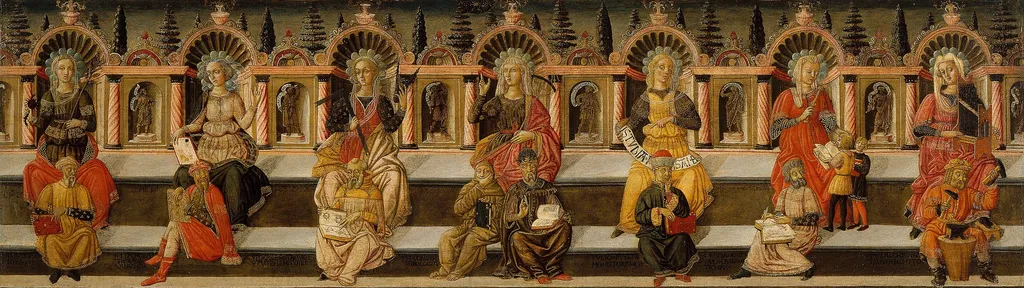
The Seven Liberal Arts is an unspecified painting by the Early Renaissance artist Giovanni di ser Giovanni Guidi. It dates from 1460 and is held in the collection of the Museu Nacional d'Art de Catalunya.
About this work
Overview
Each figure, male or female, holds an object that identifies a particular discipline, ranging from books and musical instruments to implements resembling tools.
Created around 1460 by Giovanni di ser Giovanni Guidi—known as Lo Scheggia—the panel presents a group of fourteen figures arranged on a stepped platform. Each figure, male or female, holds an object that identifies a particular discipline, ranging from books and musical instruments to implements resembling tools. The composition is rendered with vivid coloration and meticulous attention to the textures of clothing and objects, giving the scene a lifelike presence.
Subject & Meaning
The work visualizes the seven liberal arts—grammar, rhetoric, logic, arithmetic, geometry, music, and astronomy—by personifying each with a distinct individual. The pairing of men and women suggests a balanced representation of knowledge, while the varied gazes and postures imply contemplation and the intellectual pursuits associated with each art. By embodying these disciplines, the painting underscores the humanist belief in education as a foundation for personal and civic virtue.
Technique & Style
Lo Scheggia employs the early Renaissance language of clear spatial arrangement and naturalistic detail. The figures are modeled with subtle chiaroscuro, and the drapery is rendered in fine, layered brushwork that captures the sheen of fabrics. The palette combines bright primary hues with earth tones, enhancing the three‑dimensional effect of the stepped setting and the materiality of the objects each figure holds.
History & Provenance
The panel was produced in Florence, where Lo Scheggia was active alongside his more famous brother, Masaccio. After serving both secular and ecclesiastical patrons in the city, the painting entered various collections before being acquired by the Museu Nacional d'Art de Catalunya, where it remains on display as part of the museum’s early Renaissance holdings.
Context
Emerging during a period of renewed interest in classical learning, the painting reflects the Florentine civic emphasis on humanist education. By depicting the liberal arts as tangible, approachable figures, the work aligns with contemporary efforts to integrate scholarly ideals into visual culture, reinforcing the notion that knowledge should be both celebrated and accessible within society.
Artist & collection
Artist
Giovanni di ser Giovanni Guidi
Giovanni di Ser Giovanni, (1406 – 1486) also known as Lo Scheggia, or "the Splinter" was an Italian Renaissance painter in Florence who was born in San Giovanni Valdarno and was the younger brother of the famous Masaccio.

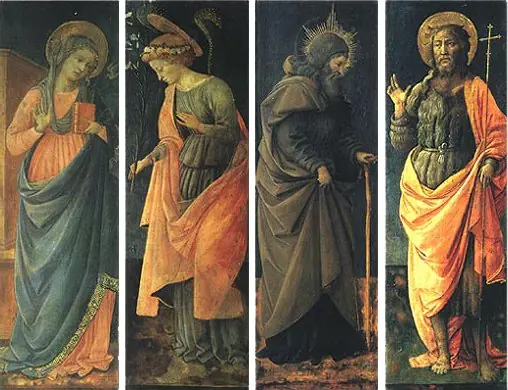 The Annunciation, Saints Anthony Abate, John the Baptist
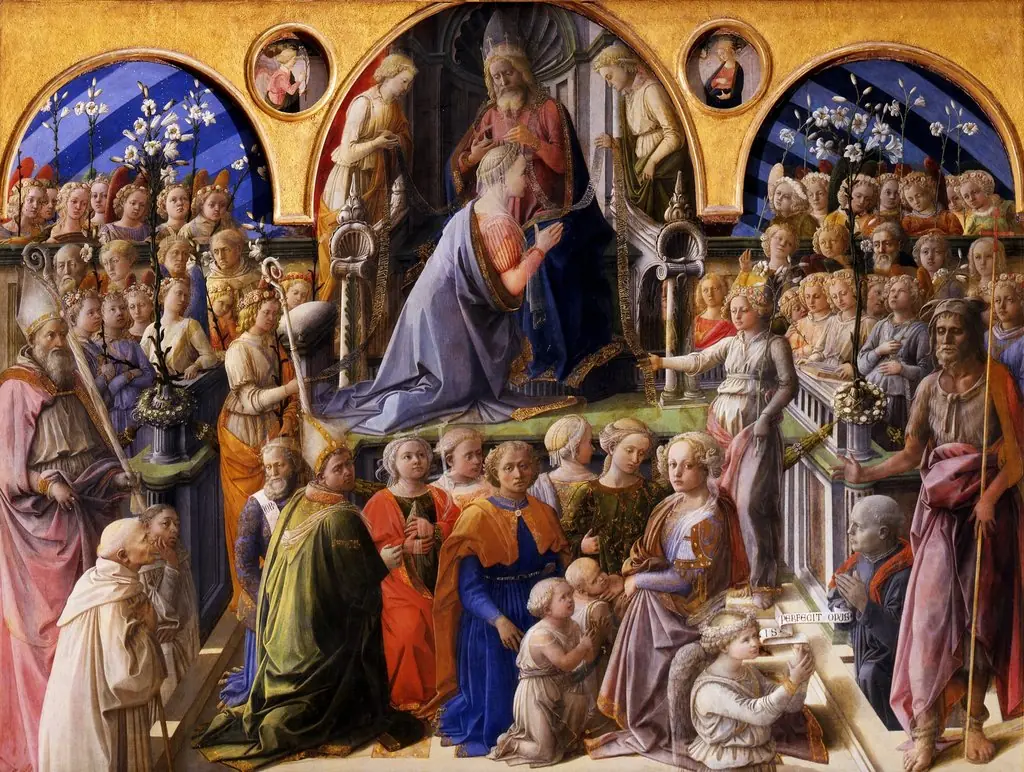 Coronation of the Virgin
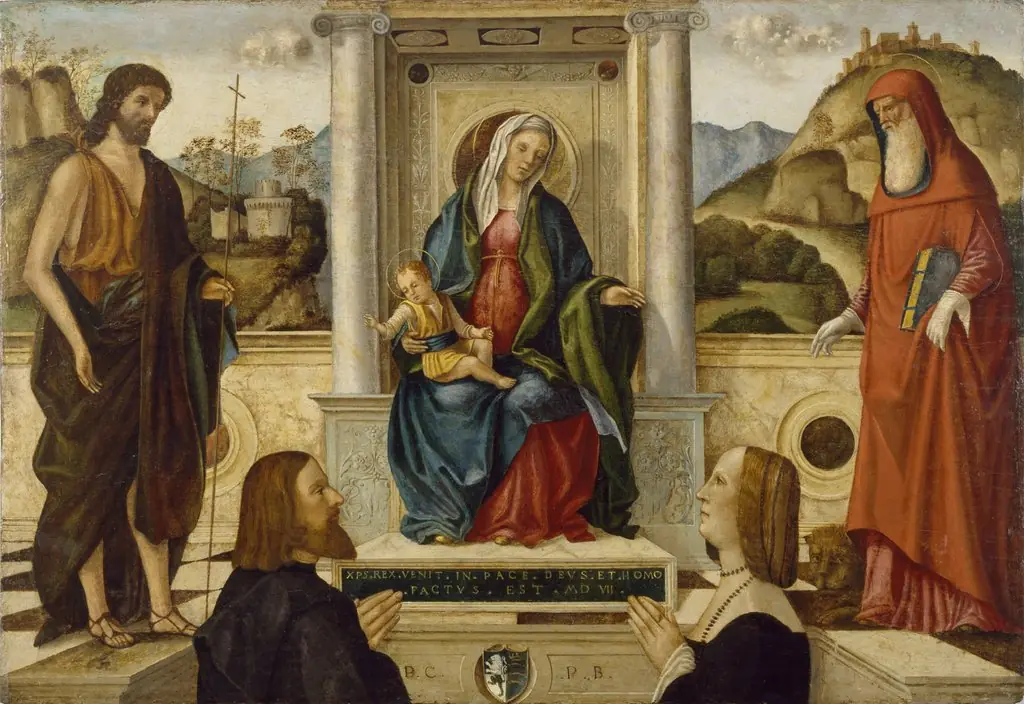 Madonna and Child Enthroned with Saints and Donor
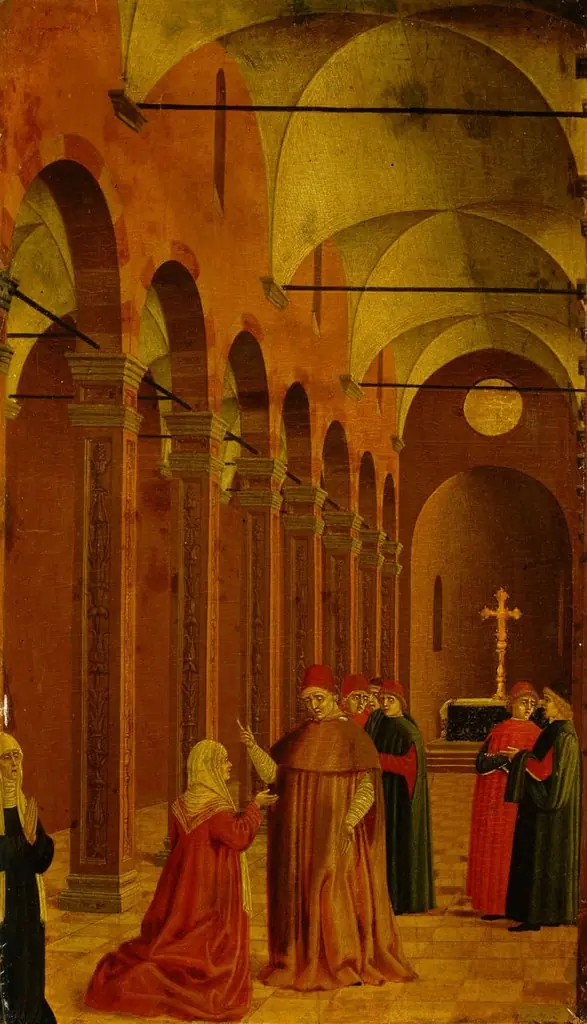 Szene aus dem Leben des Hl. Vinzenz Ferrer: Die Mutter des Heiligen fragt den Bischof von Valencia nach dem Sinn der wunderbaren Zeichen, die die Geburt ihres Kindes ankündigen
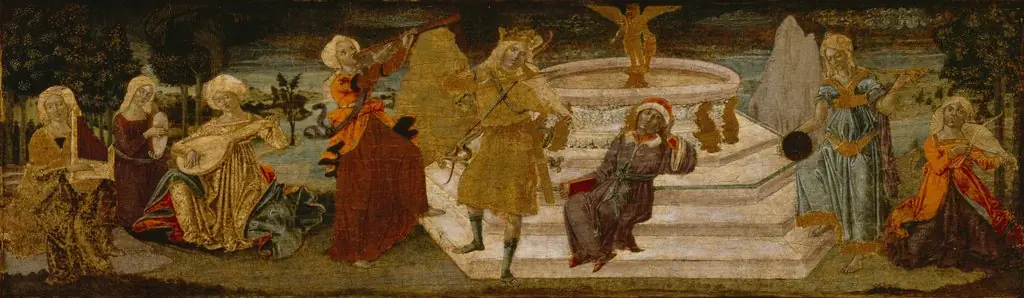 Apollo and the Muses
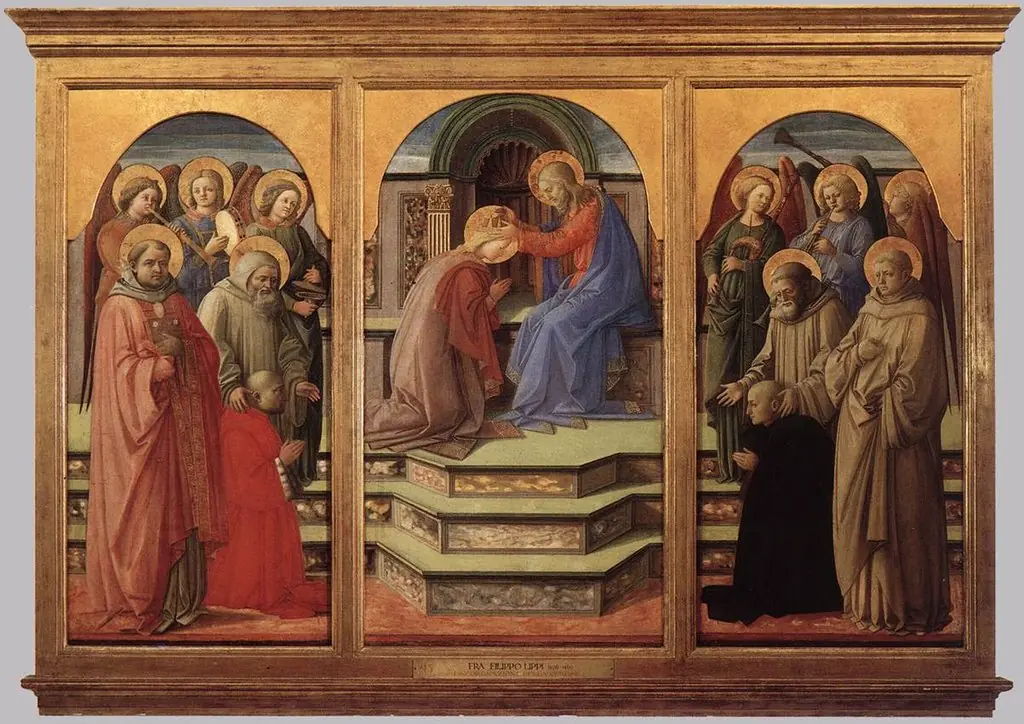 Marsuppini Coronation
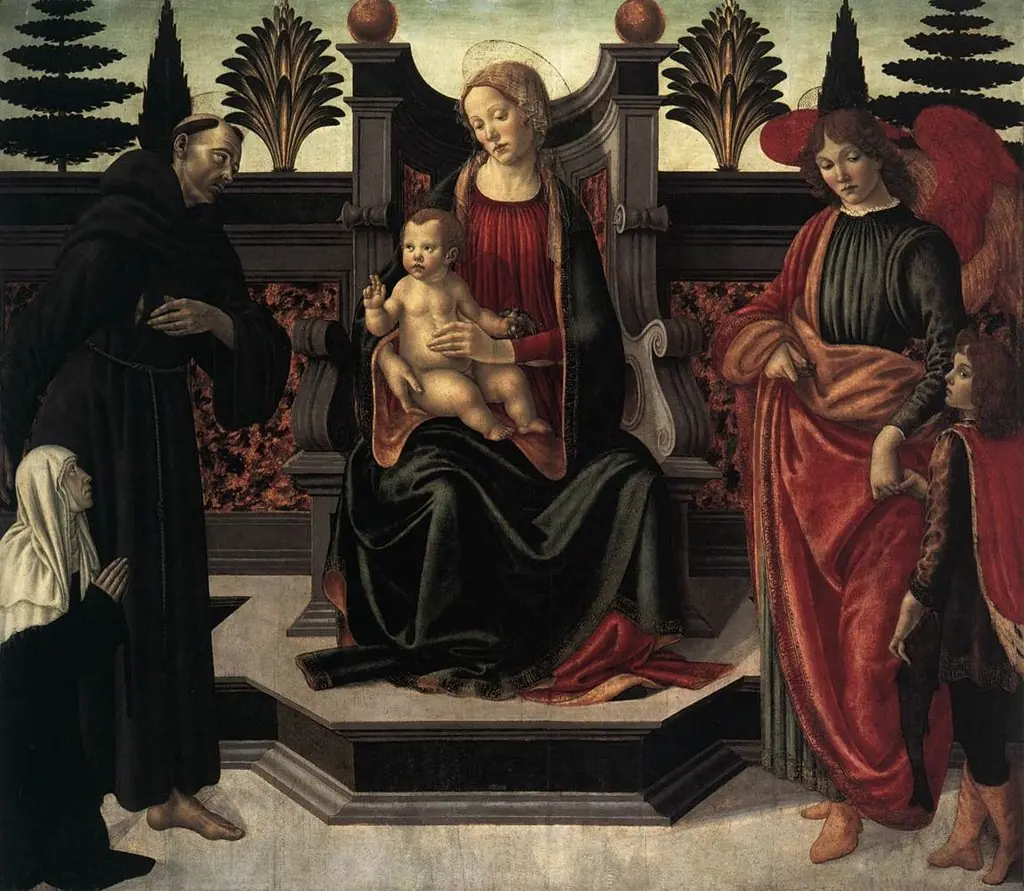 Madonna and Child Enthroned
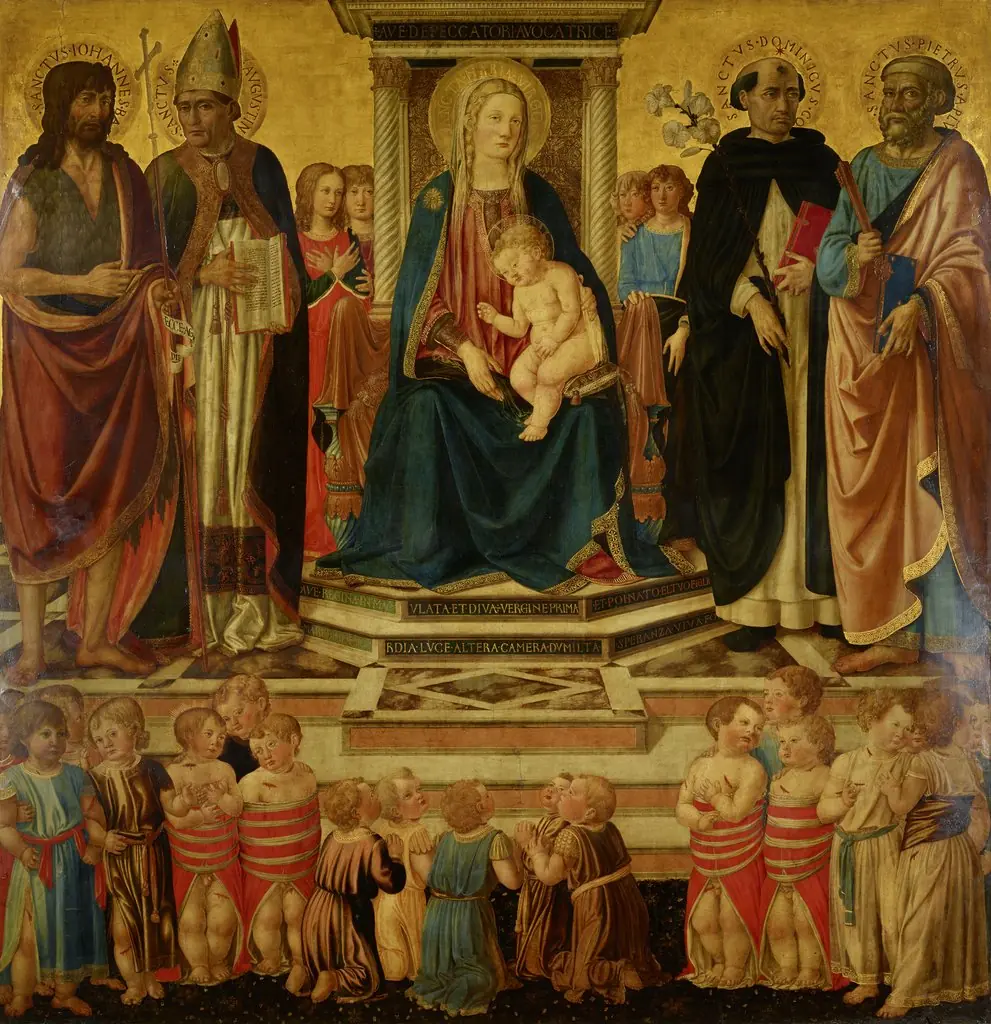 The Virgin and Blessing Child Enthroned with Sts. John, Augustine, Dominic, Peter and Victims of the bethemitic Child Murder
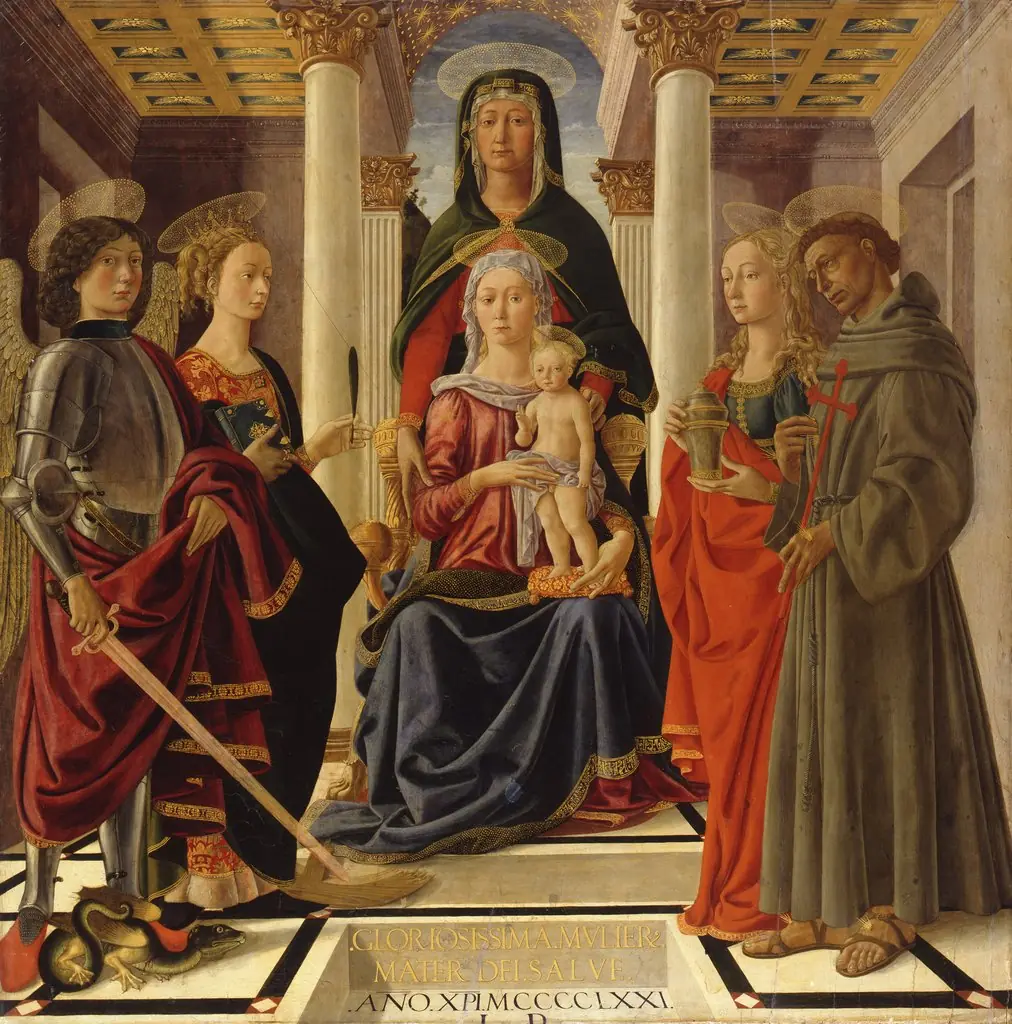 St. Anne Selbdritt with Archangel Michael and Saints
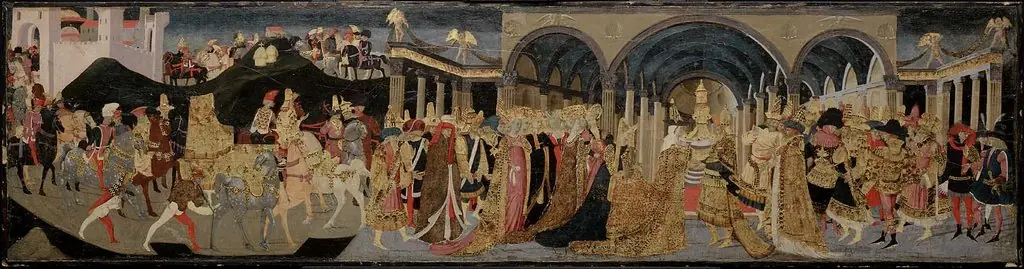 Meeting of Solomon and the Queen of Sheba
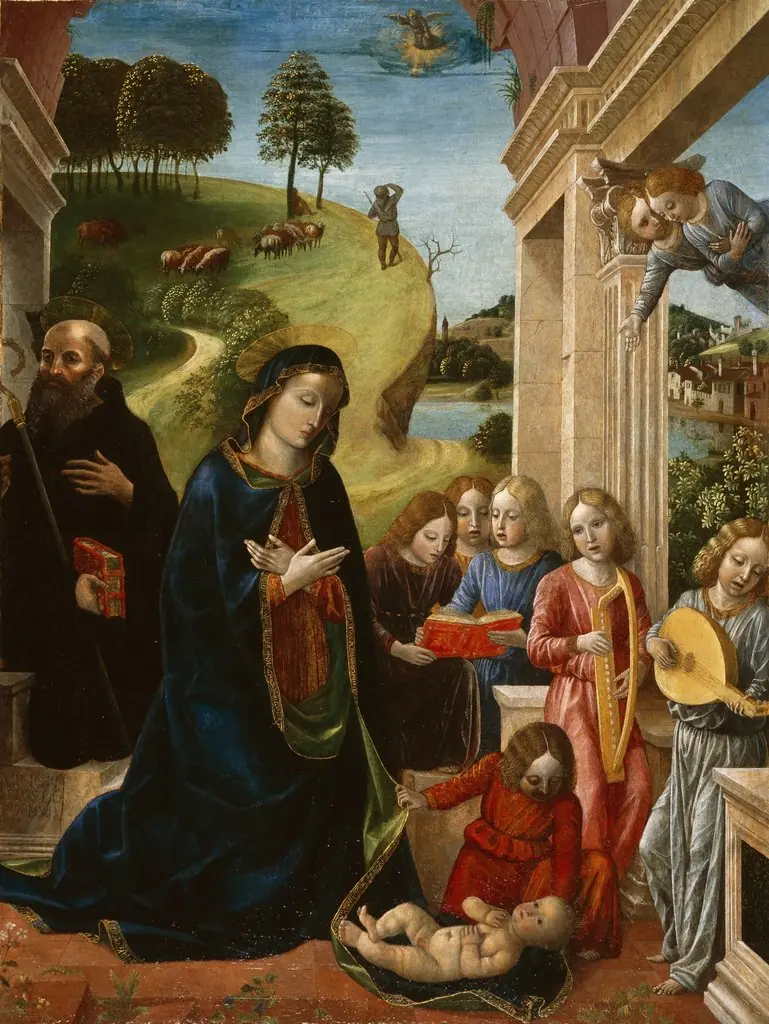 Adoration of the Child with St. Benedict and Angels
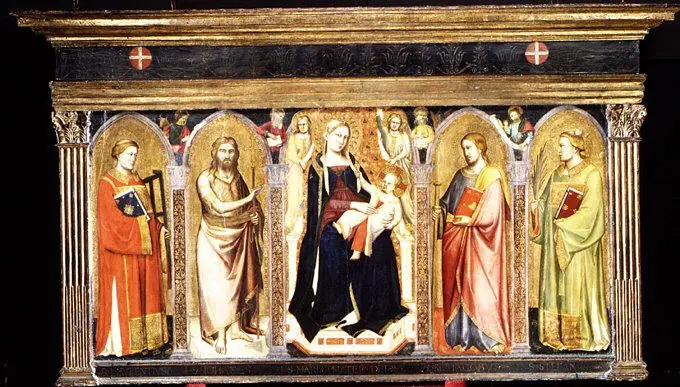 Madonna and Child Enthroned with Saints