Artwork
Madonna and Child
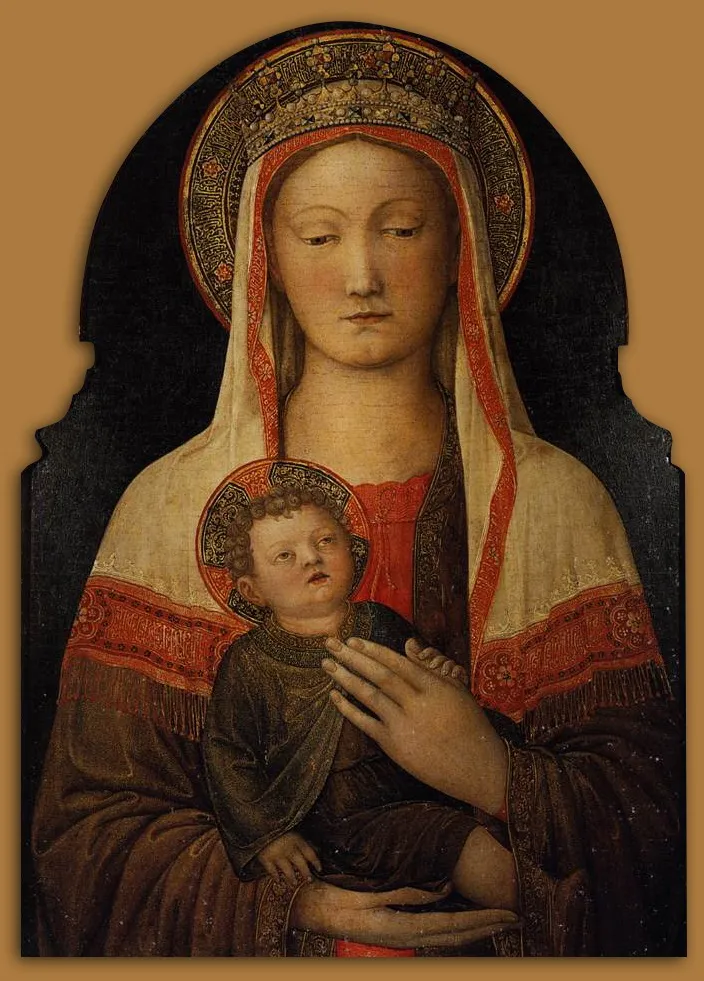
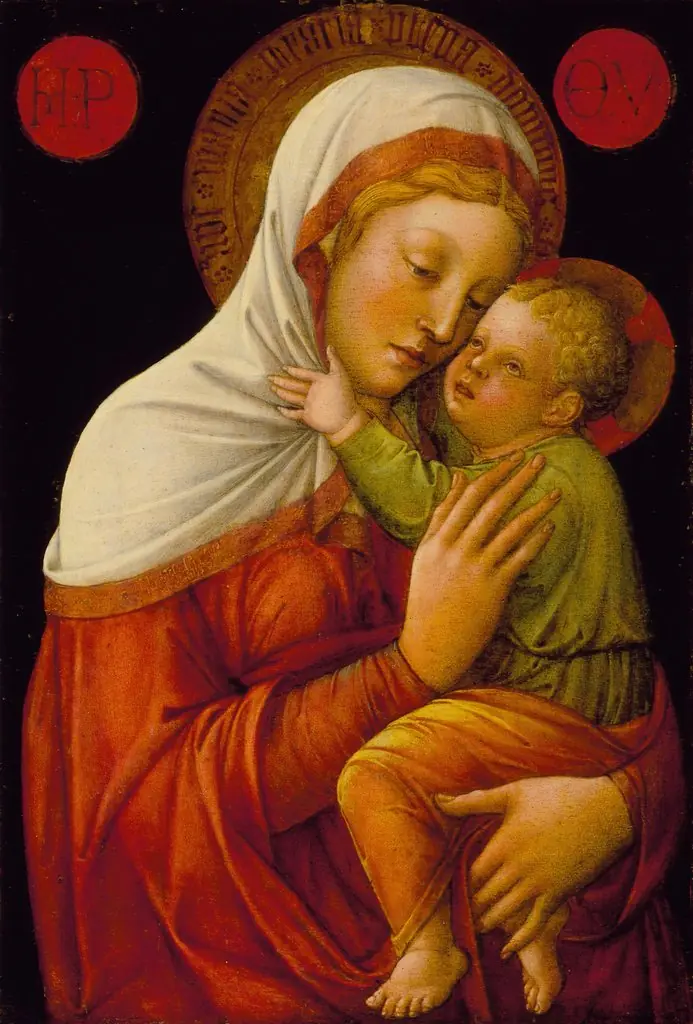
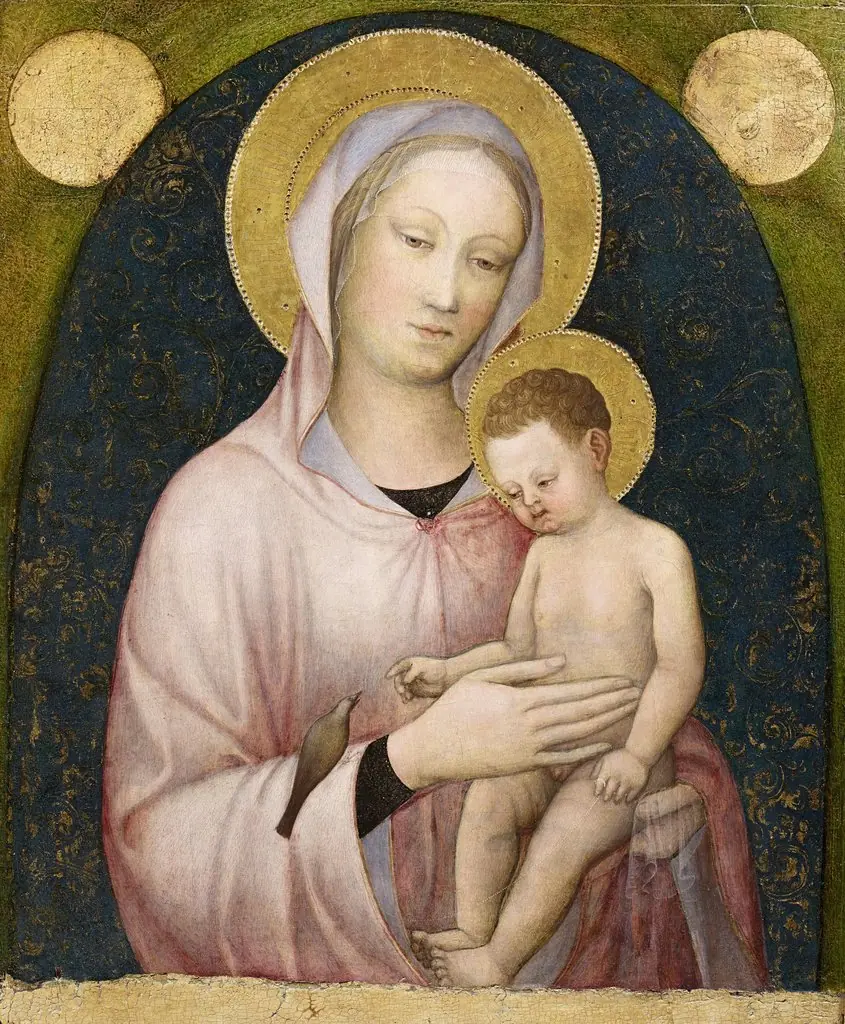
Madonna and Child is a tempera painting by the Early Renaissance artist Jacopo Bellini. It dates from 1450 and is held in the collection of the Uffizi Gallery.
About this work
Overview
Jacopo Bellini’s tempera panel entitled *Madonna and Child* dates to around 1450. Executed on wood, the work measures a modest size and is now displayed in the Uffizi Gallery, Florence. It entered the museum’s collection in 1906 after being acquired from a Lucca monastery, a purchase that generated considerable press debate at the time.
Subject & Meaning
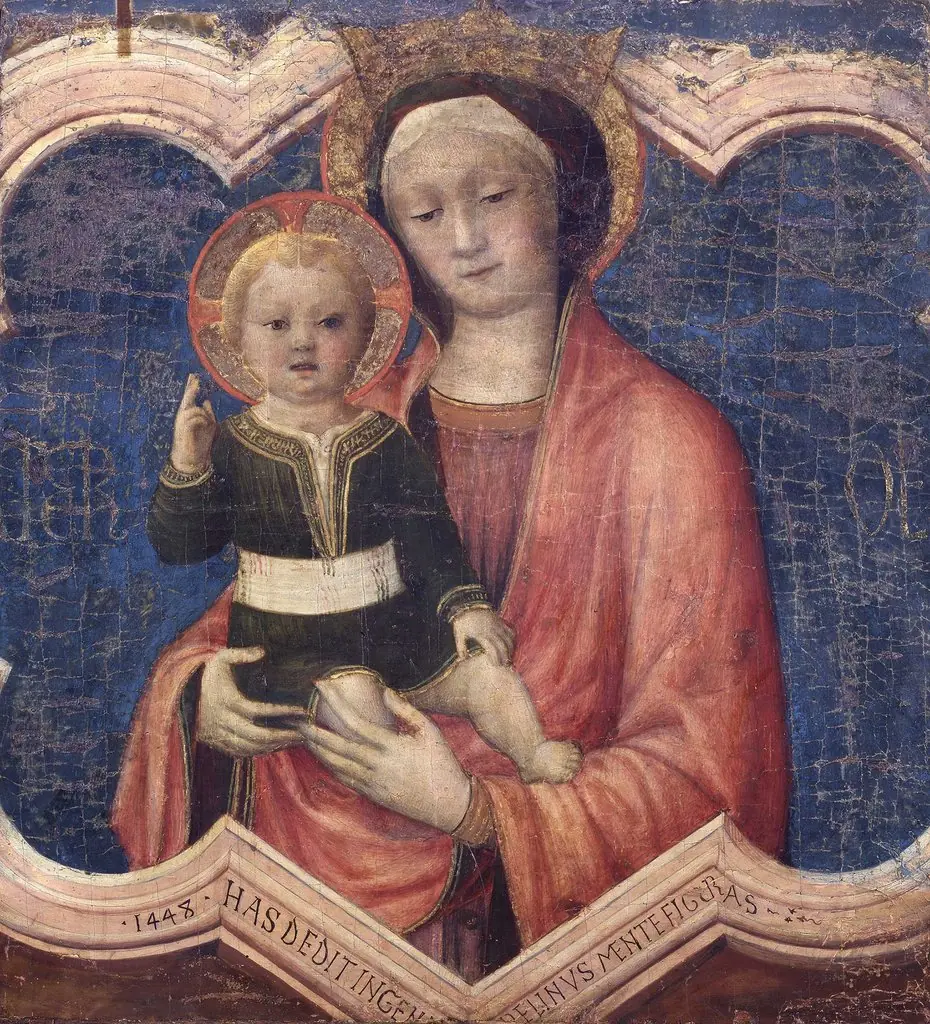
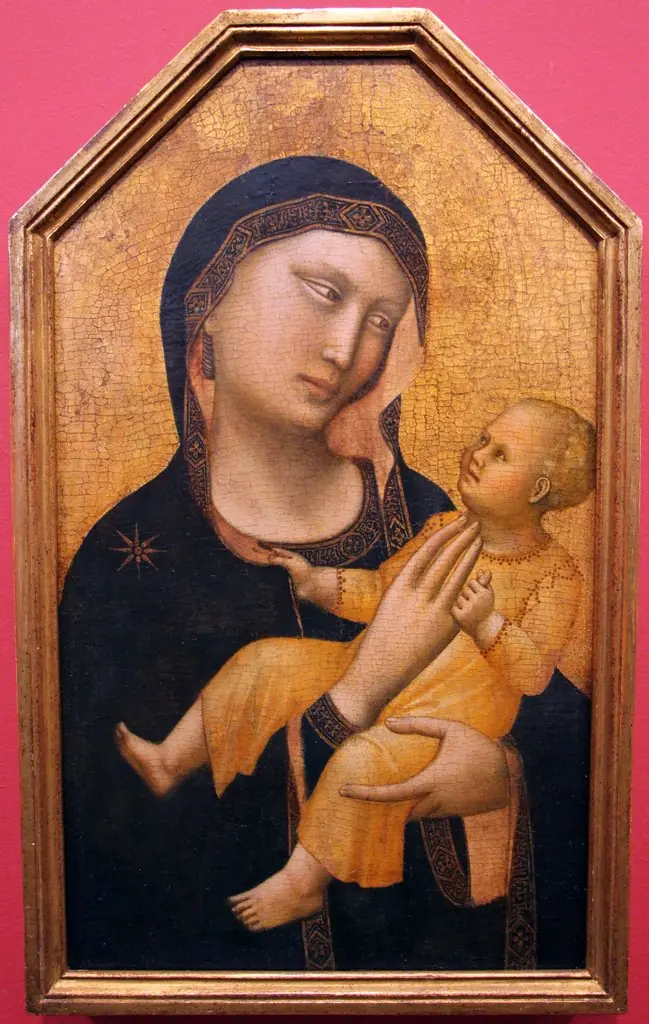
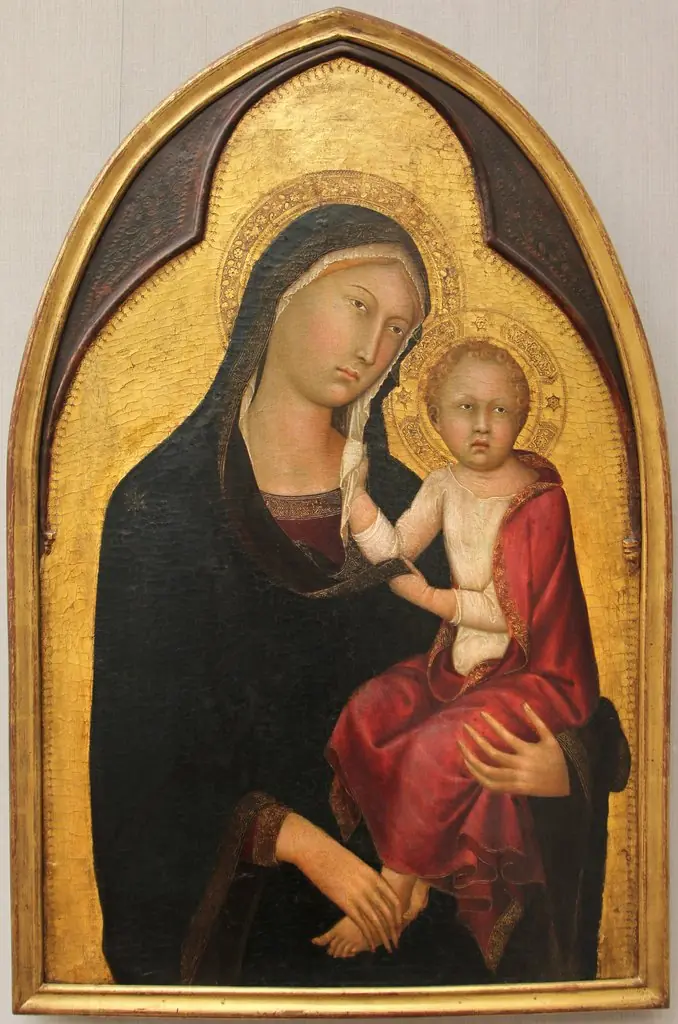
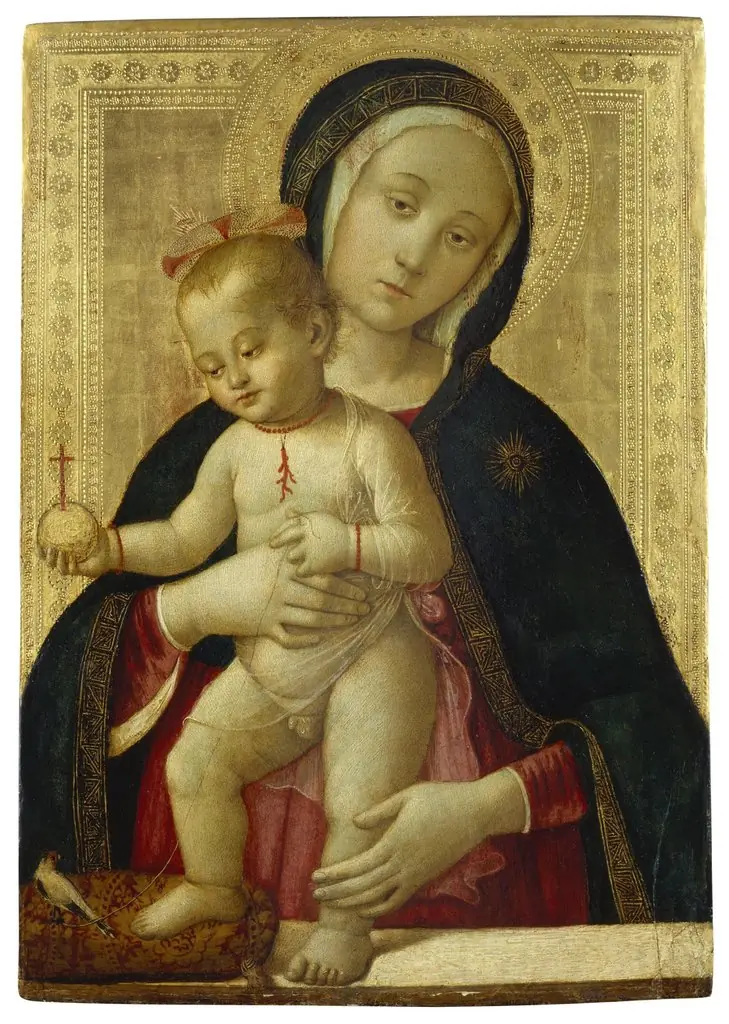
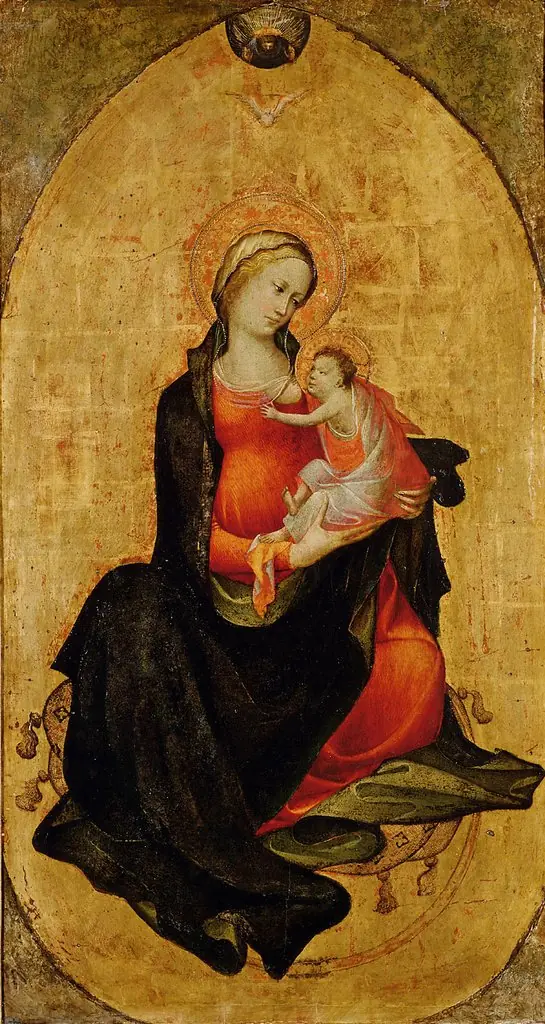
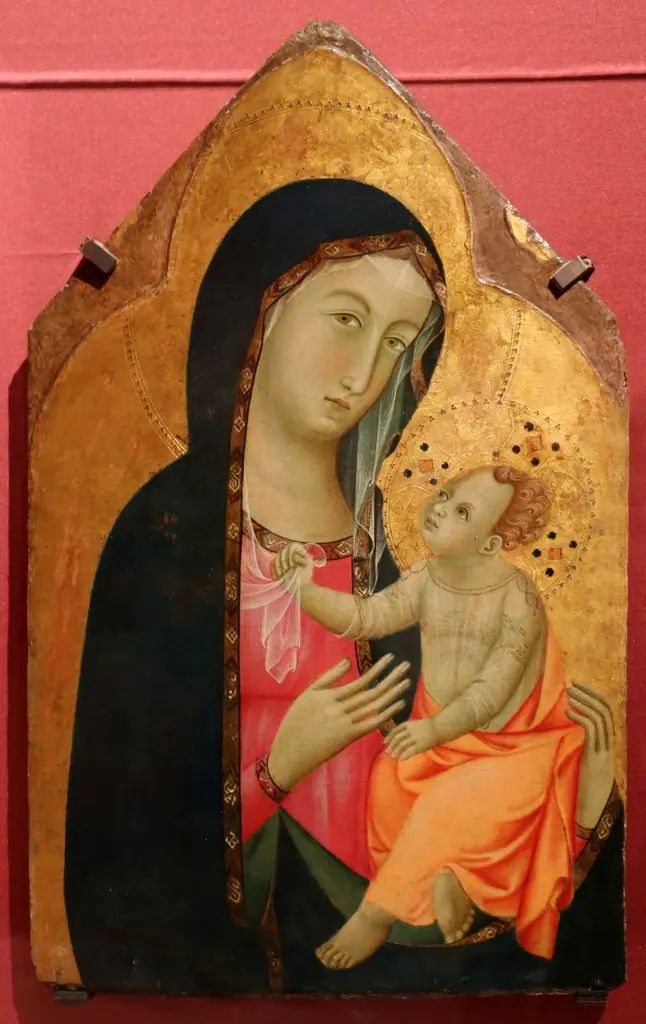
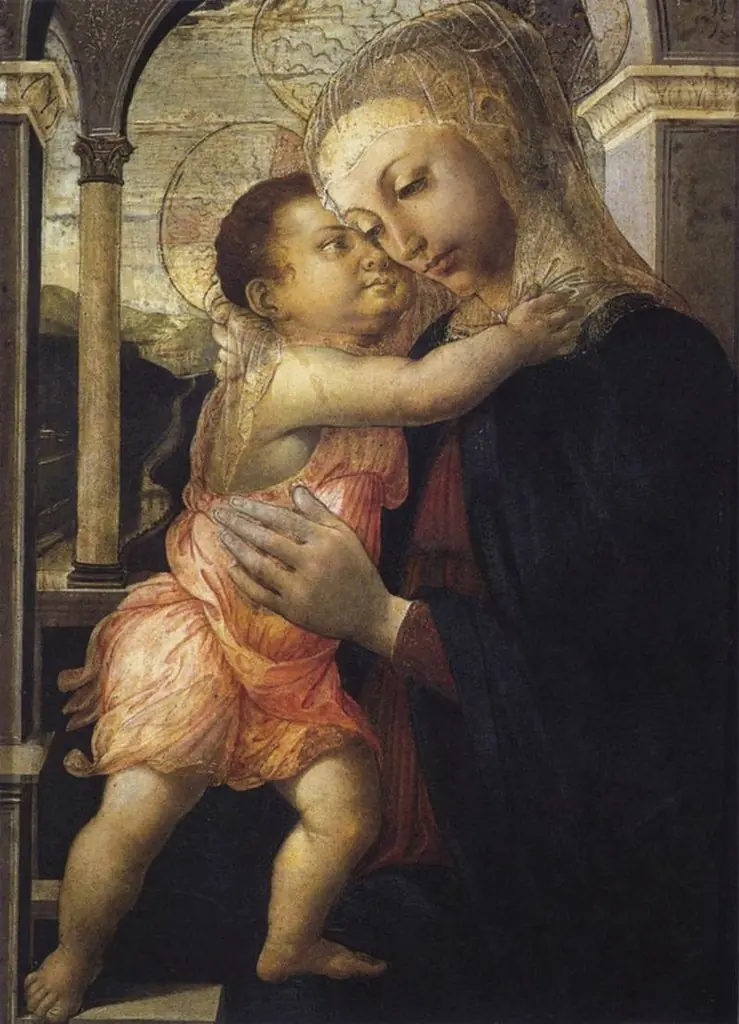
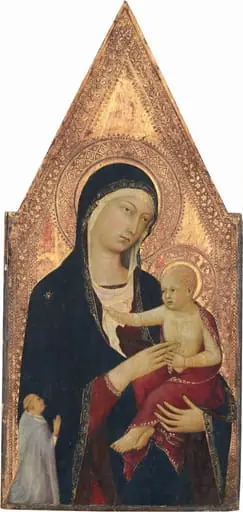
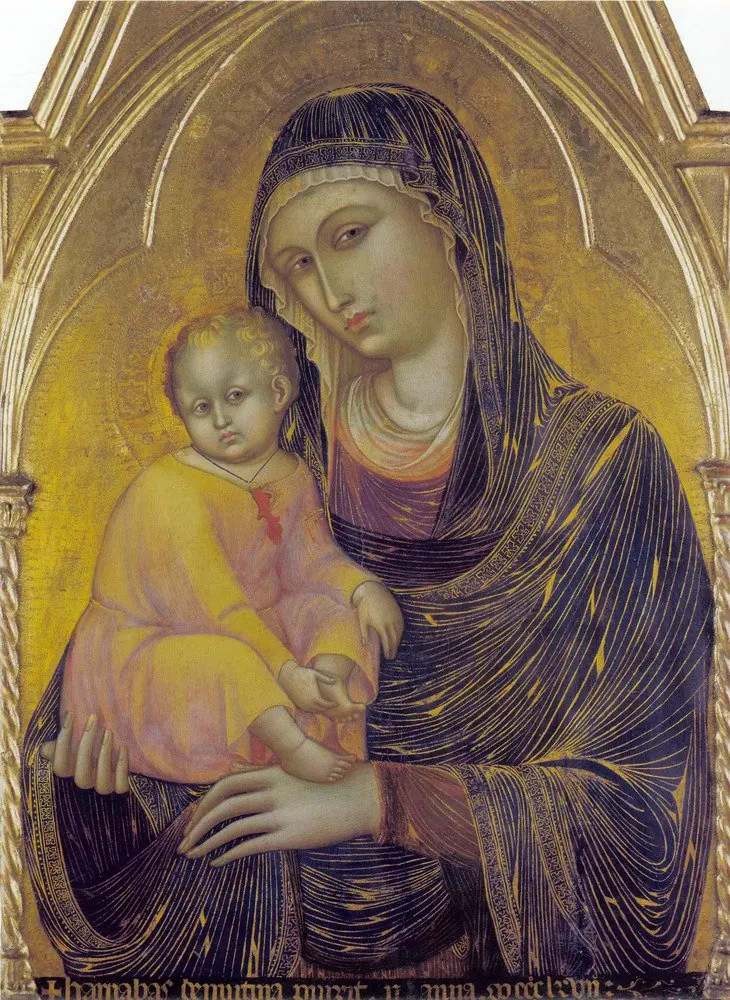
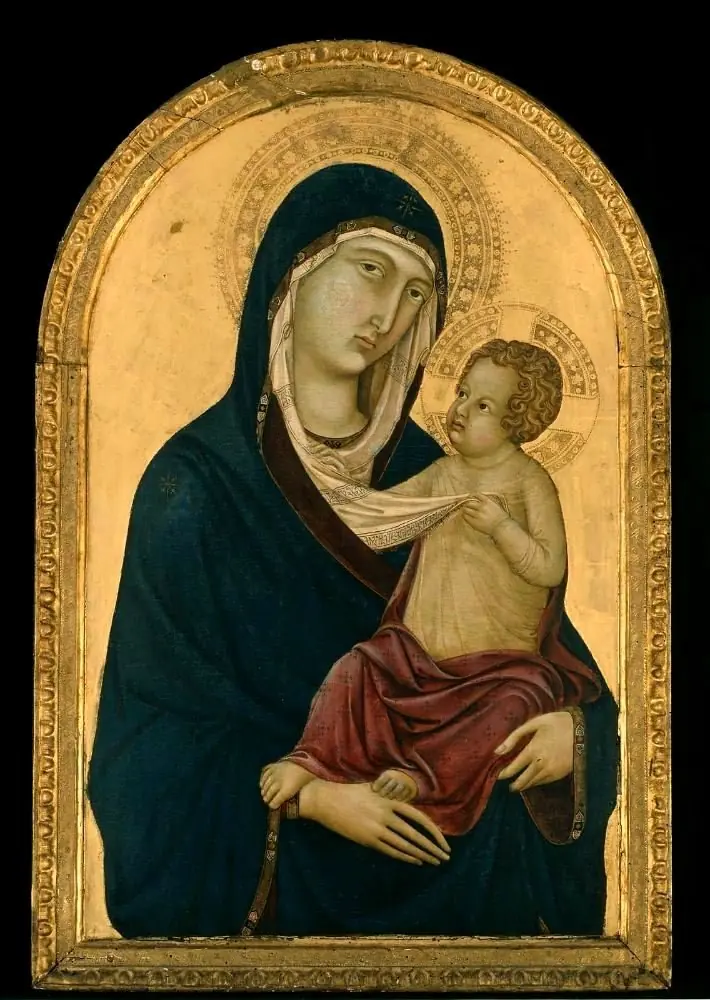
The composition presents a seated female figure, identified as the Virgin Mary, cradling an infant, presumed to be the Christ Child. Mary is shown in a modest white headdress edged in red, her dark robe layered over a red undergarment, while the child wears a dark mantle and a golden halo. Their subdued gestures and downward gazes emphasize intimacy and devotion.
Technique & Style
The figures are rendered with delicate modeling that suggests volume against a dark, undefined background.
Bellini employed egg tempera, allowing fine detailing and a luminous surface. The figures are rendered with delicate modeling that suggests volume against a dark, undefined background. The framing, resembling a window with a low parapet, hints at Flemish influences and recalls a similar motif in Bellini’s later work at the Gallerie dell’Accademia. The overall effect balances linear clarity with subtle spatial depth.
History & Provenance
The panel’s early life is traced to a monastic setting in Lucca, where it remained until the early twentieth century. Antiquarian Costantini first noted the painting, and in 1906 Corrado Ricci purchased it for the Uffizi. Contemporary newspapers reported the transaction, reflecting the period’s heightened interest in Renaissance acquisitions.
Context
Created during Bellini’s Renaissance phase, the work shows the impact of Masolino da Panicale, who worked in Lucca between 1435 and 1440. Bellini absorbed Masolino’s compositional ideas through the intermediary of Antonio Vivarini, integrating them with his own emerging style. The piece thus occupies a transitional moment between Gothic conventions and the burgeoning naturalism of the Italian Renaissance.
Artist & collection
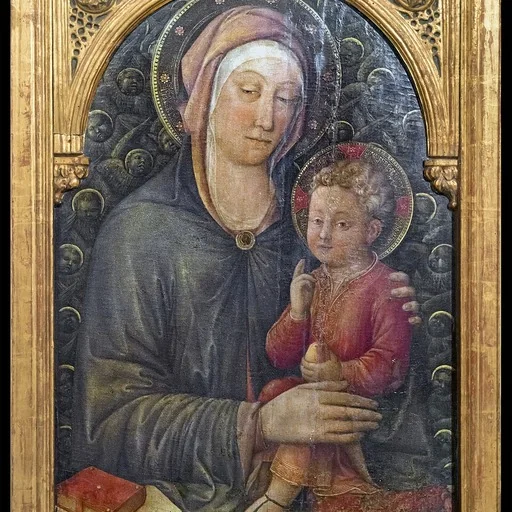
Artist
Jacopo Bellini (c. 1400 – c. 1470) was one of the founders of the Renaissance style of painting in Venice and northern Italy. His sons Gentile and Giovanni Bellini, and his son-in-law Andrea Mantegna, were also famous…