Artwork
Battle Scene
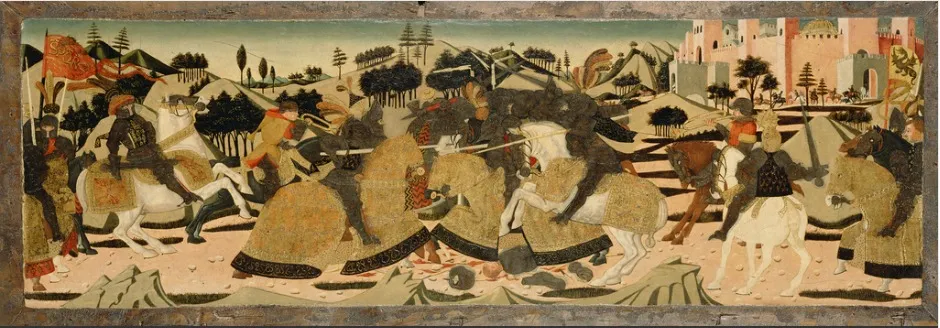
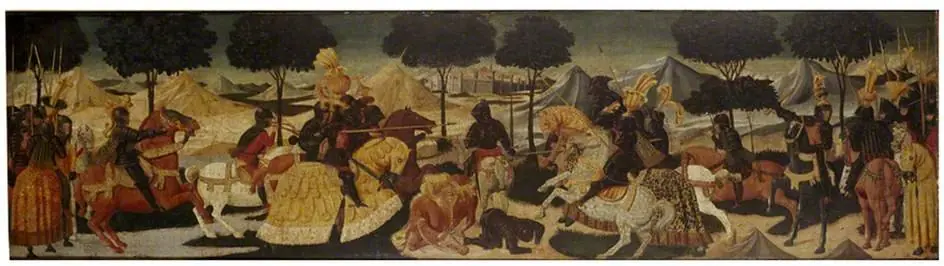
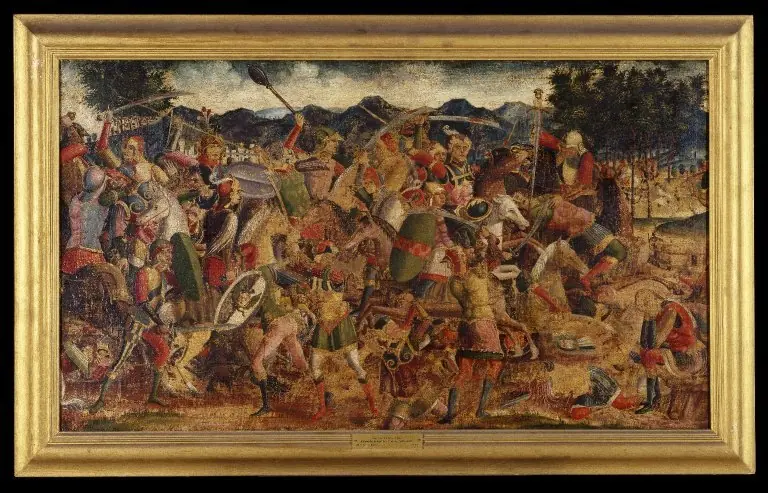
Battle Scene is a tempera painting by the Early Renaissance artist Giovanni di ser Giovanni Guidi. It dates from 1450 and is held in the collection of the J. Paul Getty Museum.
About this work
Overview
Battle Scene, a tempera painting from around 1450, is an early Renaissance history painting by Italian artist Lo Scheggia (Giovanni di ser Giovanni Guidi). Characterized by a chaotic depiction of warfare, the piece showcases the artist's skill in capturing dynamic scenes.
Subject & Meaning
The painting portrays a tumultuous battle with numerous figures on horseback, clad in antiquated armor and wielding swords and spears. The subject's specificity is unclear, but it exemplifies the Renaissance interest in historical and mythological themes.
Technique & Style
Executed in tempera, a medium utilizing egg yolks as a pigment binder, the work features vibrant, colorful attire (notably red, orange, and yellow) against a detailed hilly landscape backdrop. The style reflects Lo Scheggia's Florentine training, with attention to detail and composition.
History & Provenance
Created by Lo Scheggia (1406-1486), younger brother of Masaccio, this painting is atypical of his usual output (primarily cassone panels and religious works). The artist's activity spanned over five decades, influencing Florentine art.
Context
As an early Renaissance piece, Battle Scene situates itself within a broader revival of interest in classical themes and dynamic storytelling in art. The choice of tempera, a traditional medium, contrasts with the emerging use of oil paints during this period.
Legacy
While not as renowned as his brother Masaccio's works, Lo Scheggia's Battle Scene contributes to the understanding of early Renaissance artistic practices and the diverse output of lesser-known figures from the period.
Artist & collection
Artist
Giovanni di ser Giovanni Guidi
Giovanni di Ser Giovanni, (1406 – 1486) also known as Lo Scheggia, or "the Splinter" was an Italian Renaissance painter in Florence who was born in San Giovanni Valdarno and was the younger brother of the famous Masaccio.

 Battle Piece
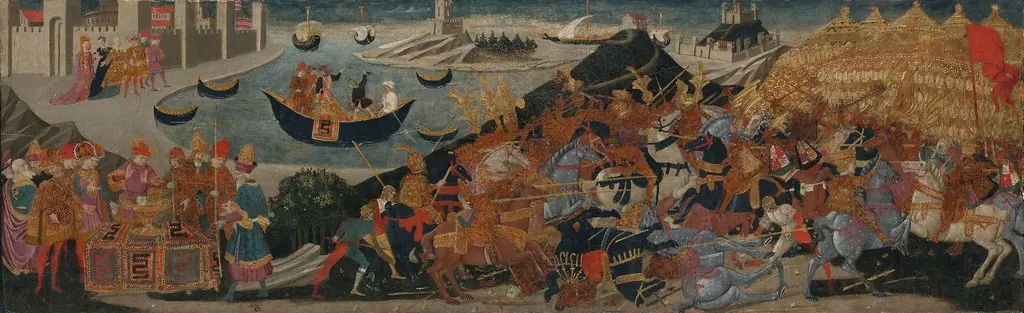 The Battle of Pharsalus and the Death of Pompey
 The Battle of Pharsalus and the Death of Pompey
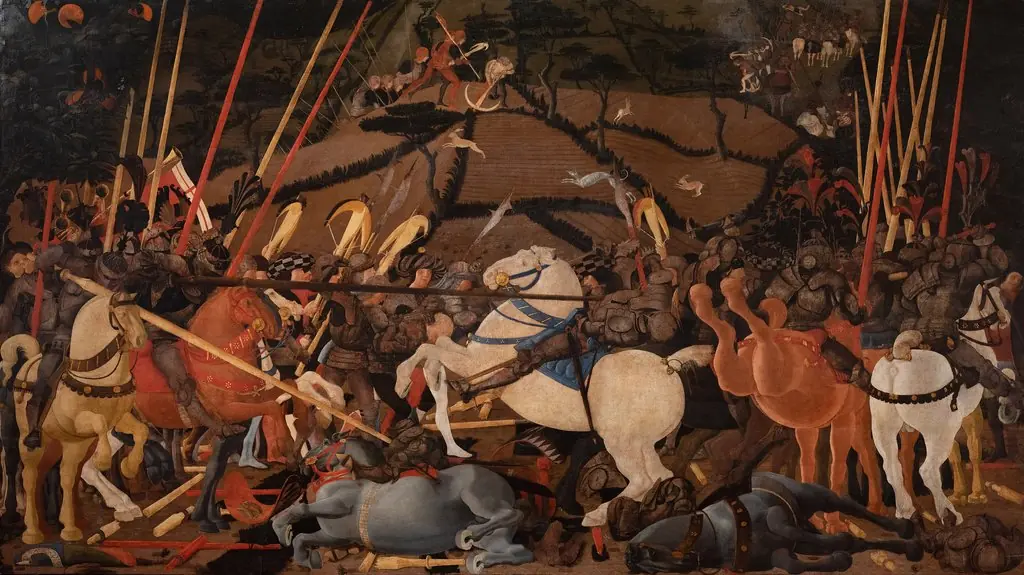 Niccolò Mauruzi da Tolentino unseats Bernardino della Ciarda at the Battle of San Romano
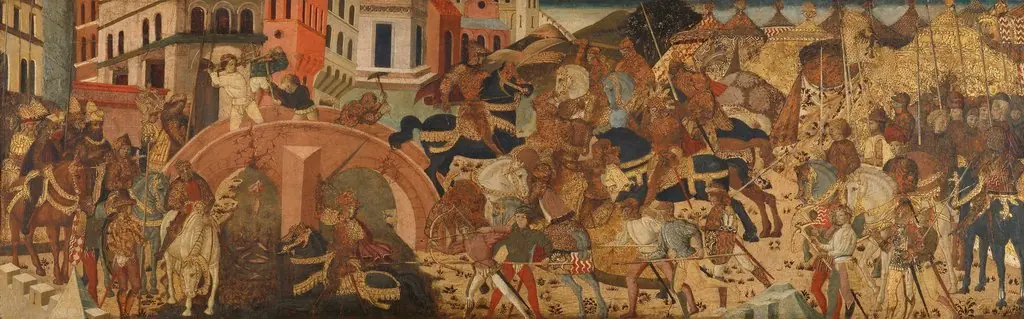 Horatius Cocles Defending the Sublician Bridge
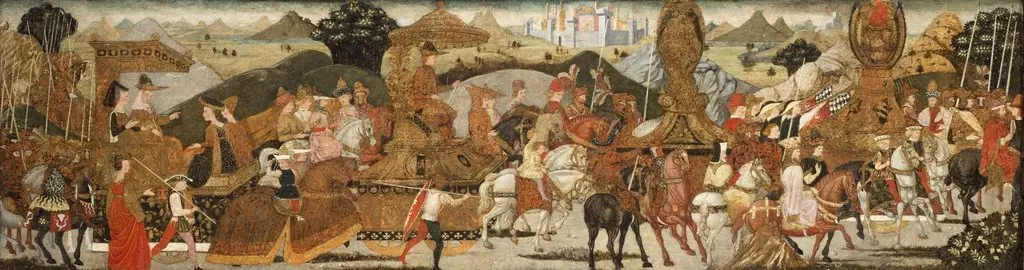 The Triumph of Alexander
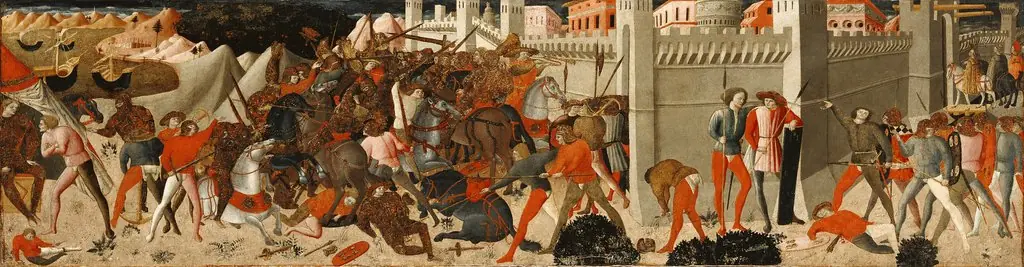 Battle Before a Walled City
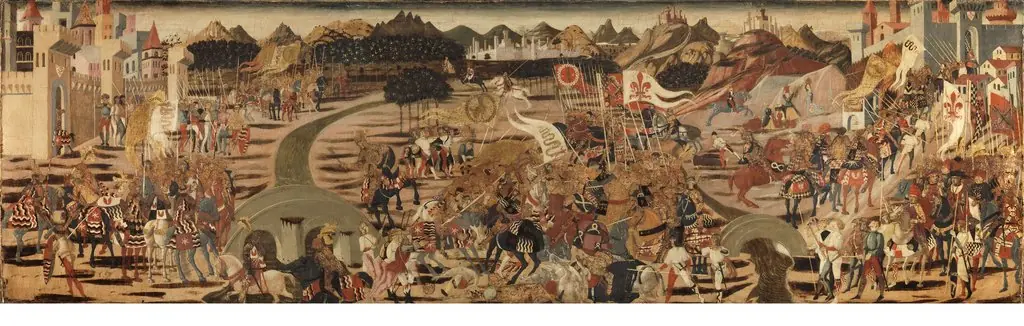 The Battle of Anghiari
 Sf. Gheorghe, ucigând balaurul
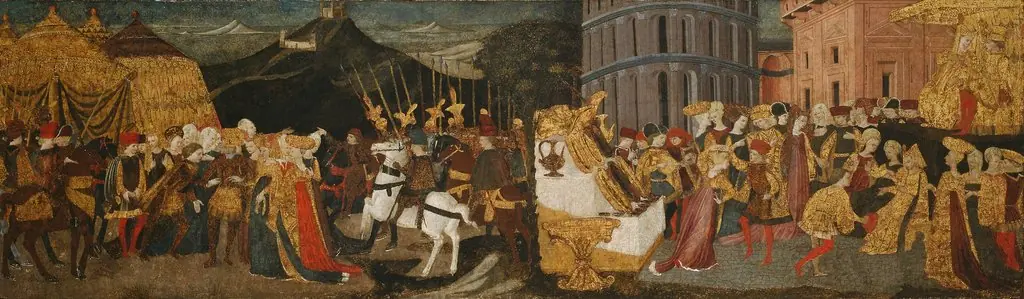 The Continence of Scipio
 A Battle Scene