Artwork
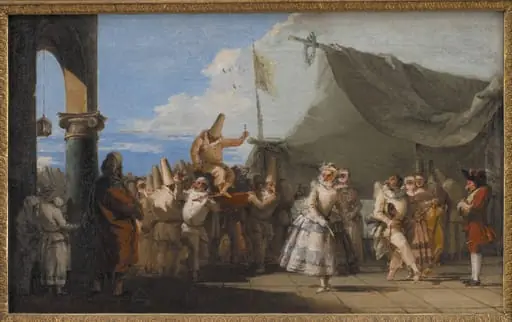
The Triumph of Pulcinella
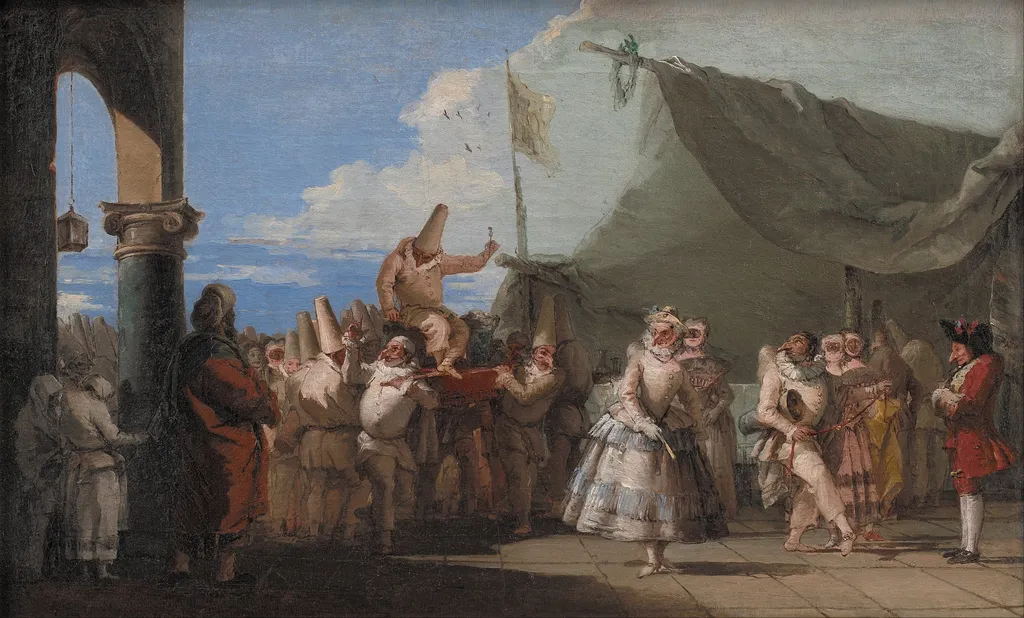
The Triumph of Pulcinella is an oil painting by the Rococo painting artist Giovanni Domenico Tiepolo. It dates from 1765 and is held in the collection of the Statens Museum for Kunst.
About this work
Overview
Created in 1765 by Giovanni Domenico Tiepolo, *The Triumph of Pulcinella* is an oil on canvas that now resides in the Statens Museum for Kunst. Executed during the late Rococo period, the painting presents a lively theatrical tableau built around the iconic commedia dell’arte figure Pulcinella.
Subject & Meaning
The composition centers on Pulcinella, the mischievous, hunch‑backed clown who epitomized popular theater in 18th‑century Italy. By placing him at the heart of a celebratory procession, the work underscores the character’s cultural resonance as a symbol of wit, subversion, and the collective joy of performance.
Technique & Style
Tiepolo employs the light, airy brushwork typical of Rococo painting, using a bright palette to convey movement and festivity. The figures are rendered with fluid contours and delicate modeling, allowing the scene to unfold with a sense of spontaneity while maintaining the compositional balance inherited from his father’s academic training.
History & Provenance
Giovanni Domenico Tiepolo, the younger son of the renowned Giovanni Battista Tiepolo, produced this work as part of his own artistic output in the mid‑1760s. After changing hands among private collectors, the painting entered the Statens Museum for Kunst’s collection, where it is displayed as a representative example of late Rococo theatrical genre painting.
Artist & collection
Artist
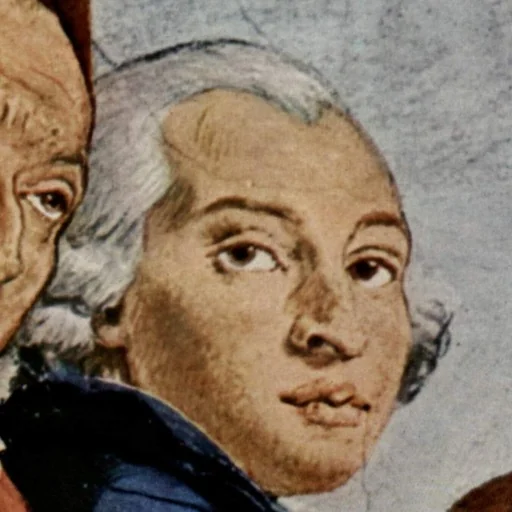
Giovanni Domenico Tiepolo (August 30, 1727 – March 3, 1804) was an Italian painter and printmaker in etching. He was the son of artist Giovanni Battista Tiepolo and elder brother of Lorenzo Baldissera Tiepolo.

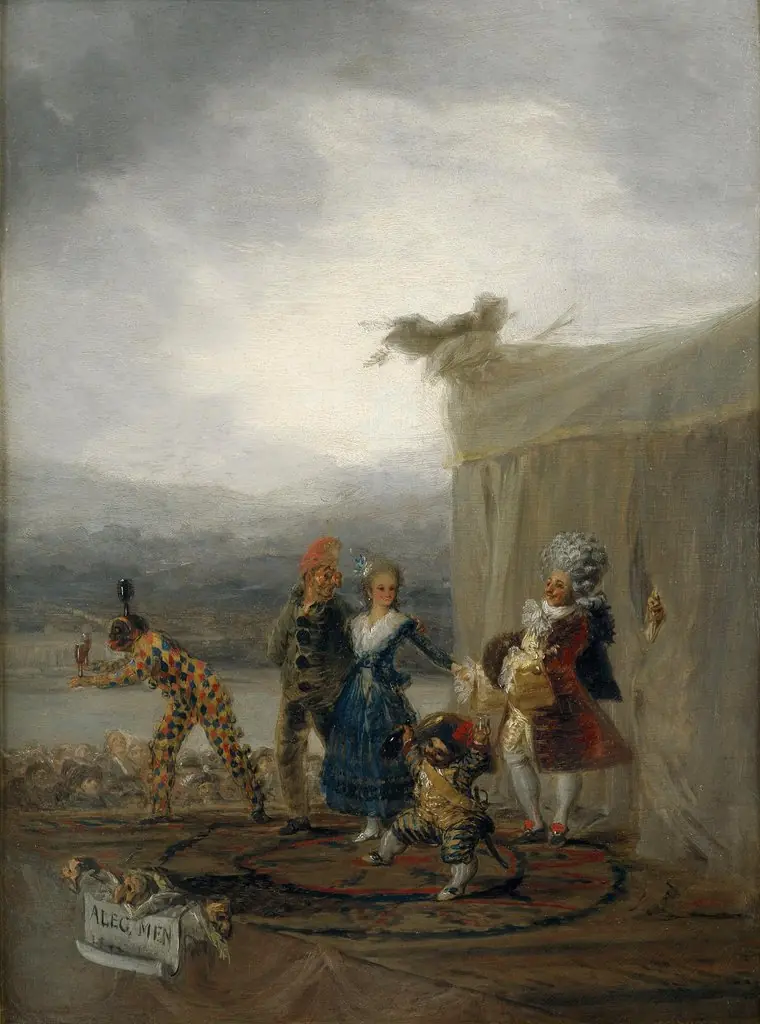 The Strolling Players
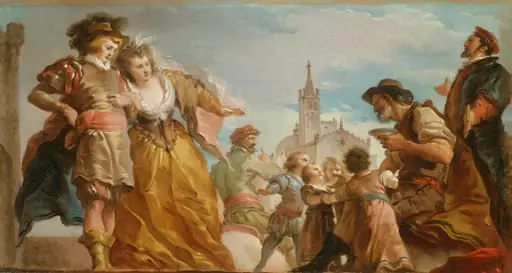 The Meeting of Gautier, Count of Antwerp, and his Daughter, Violante
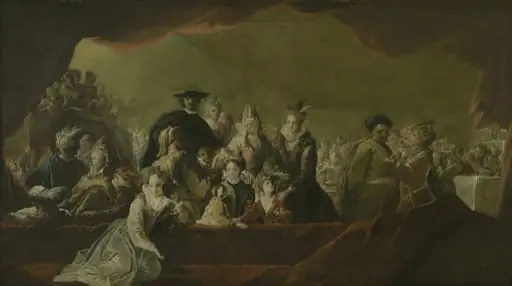 A Fancy-Dress Ball
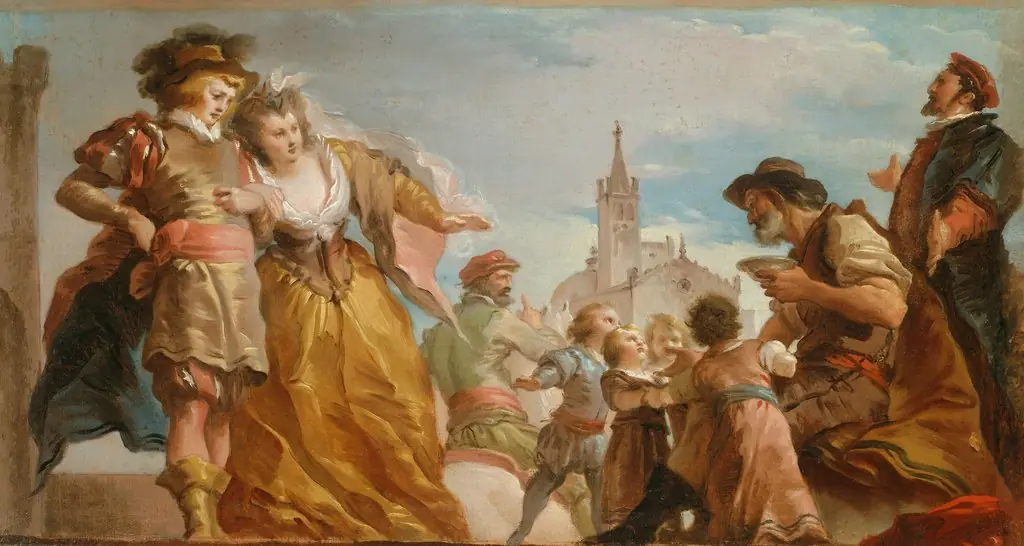 The Meeting of Gautier, Count of Antwerp, and his Daughter, Violante
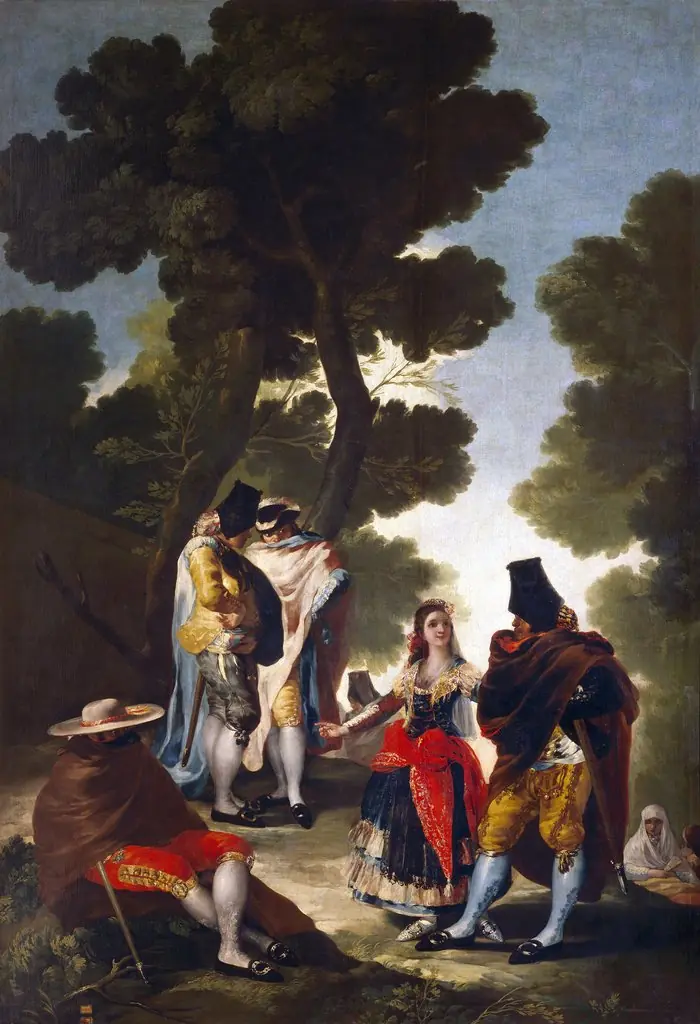 The Pretty Woman and the Masked Men (The Road of Andalusia)
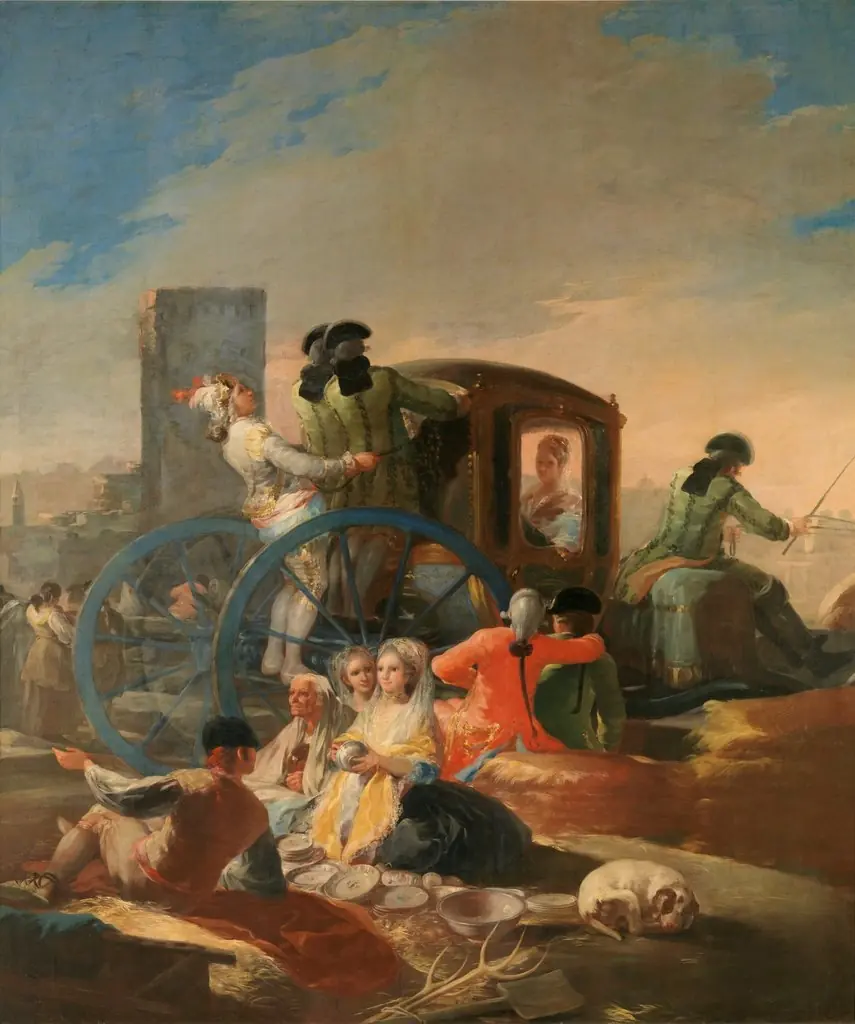 The Crockery Vendor
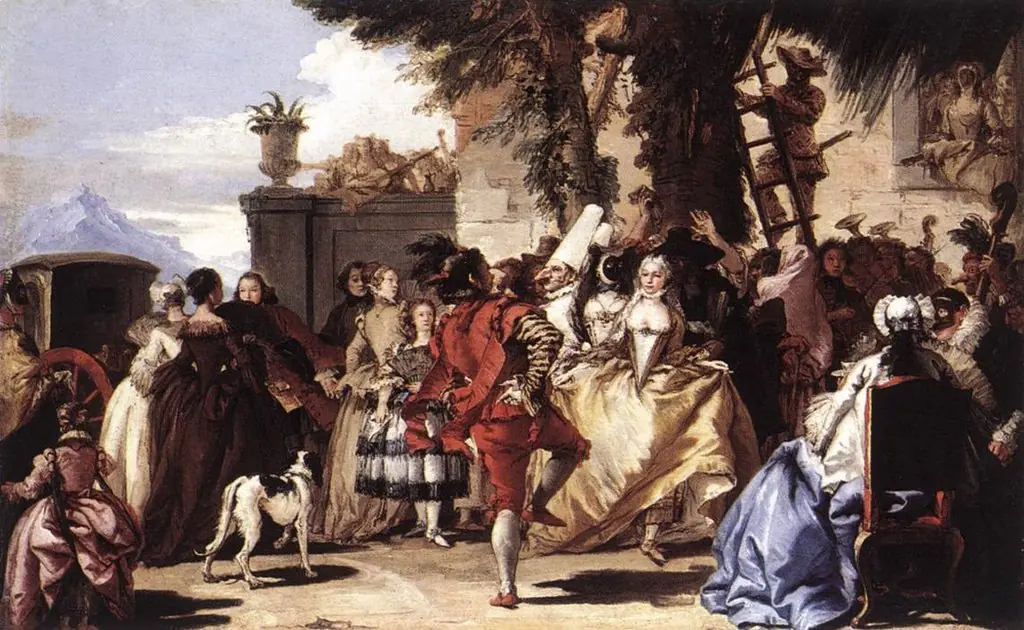
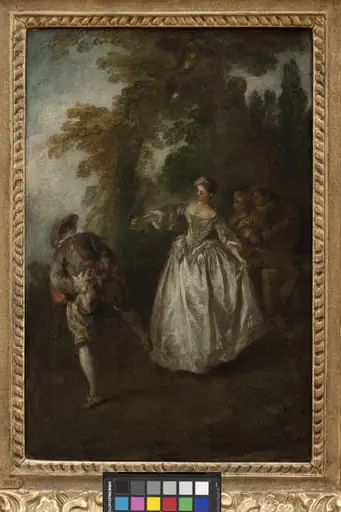 Open Air Dance
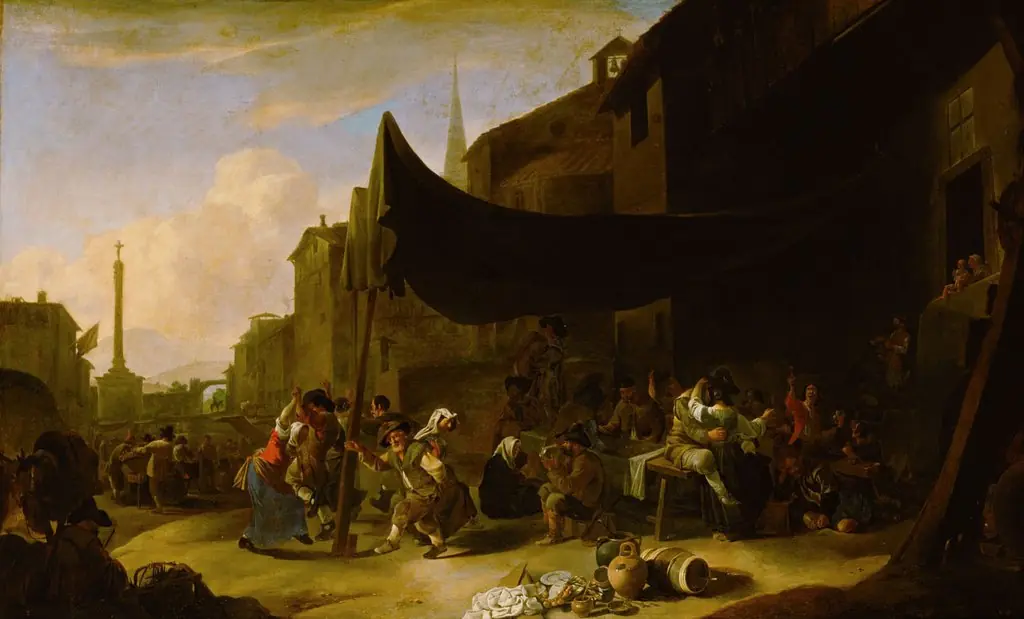 Bauernfest in der Römischen Campagna
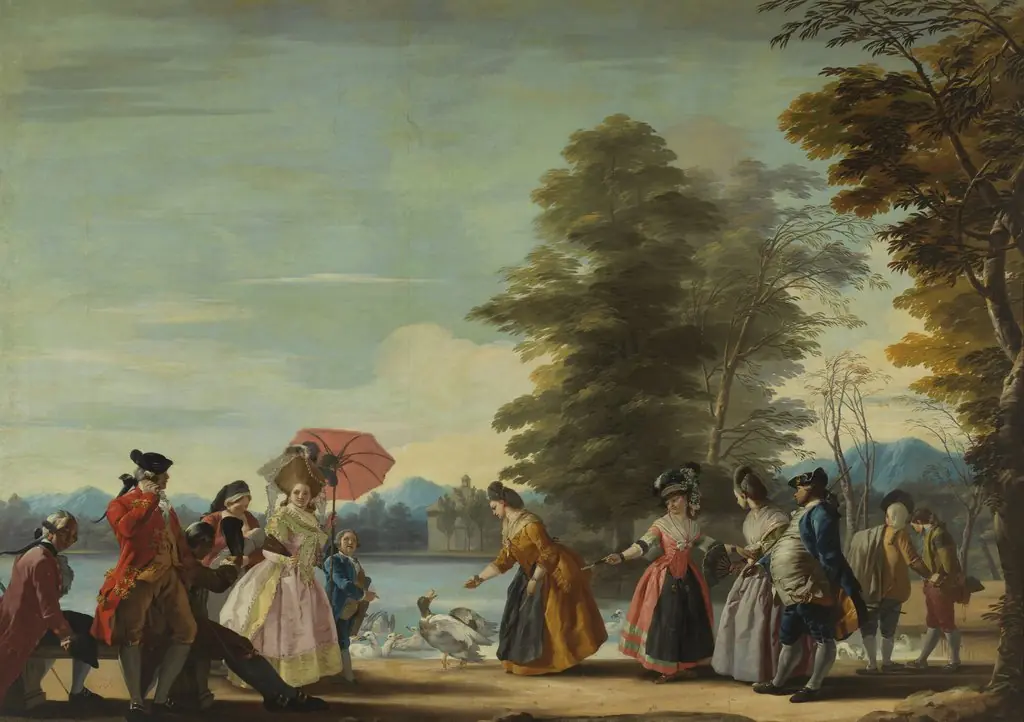 Un paseo a la orilla del Estanque del Retiro
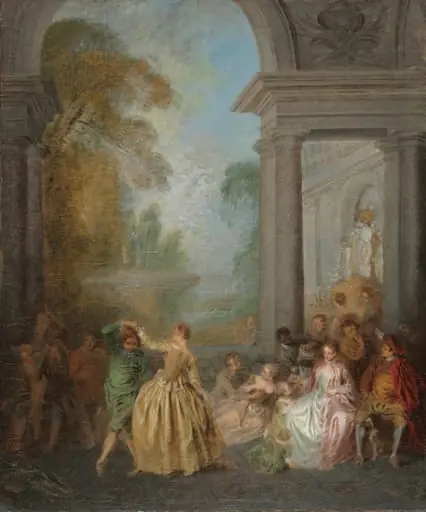 Dancers in a Pavilion
 The Triumph of Pulcinella