Artwork
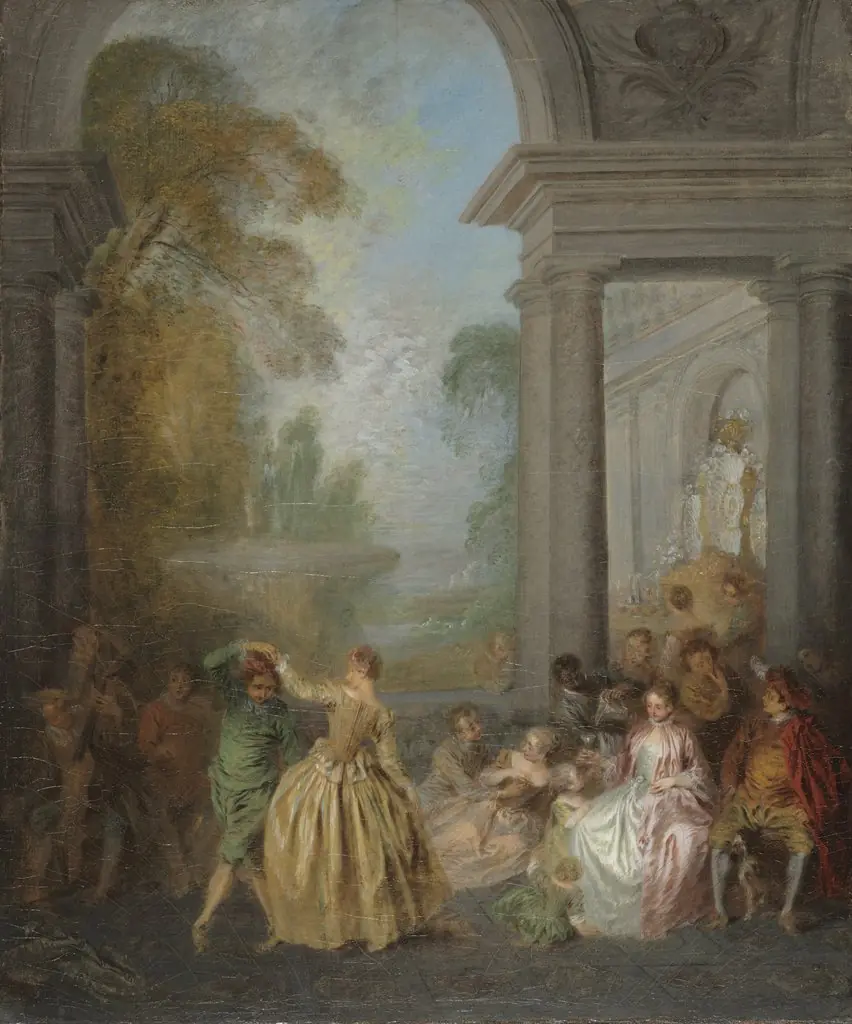
Dancers in a Pavilion
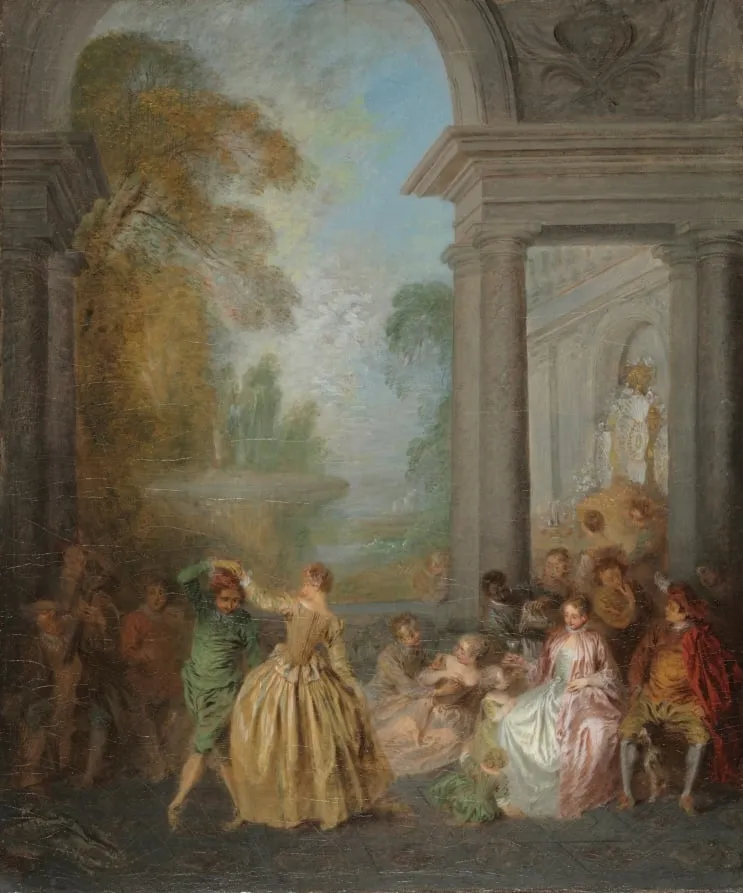
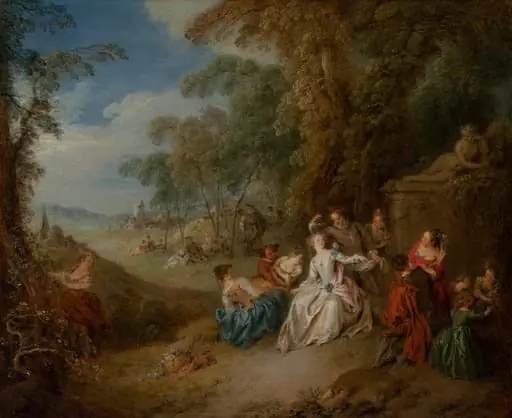
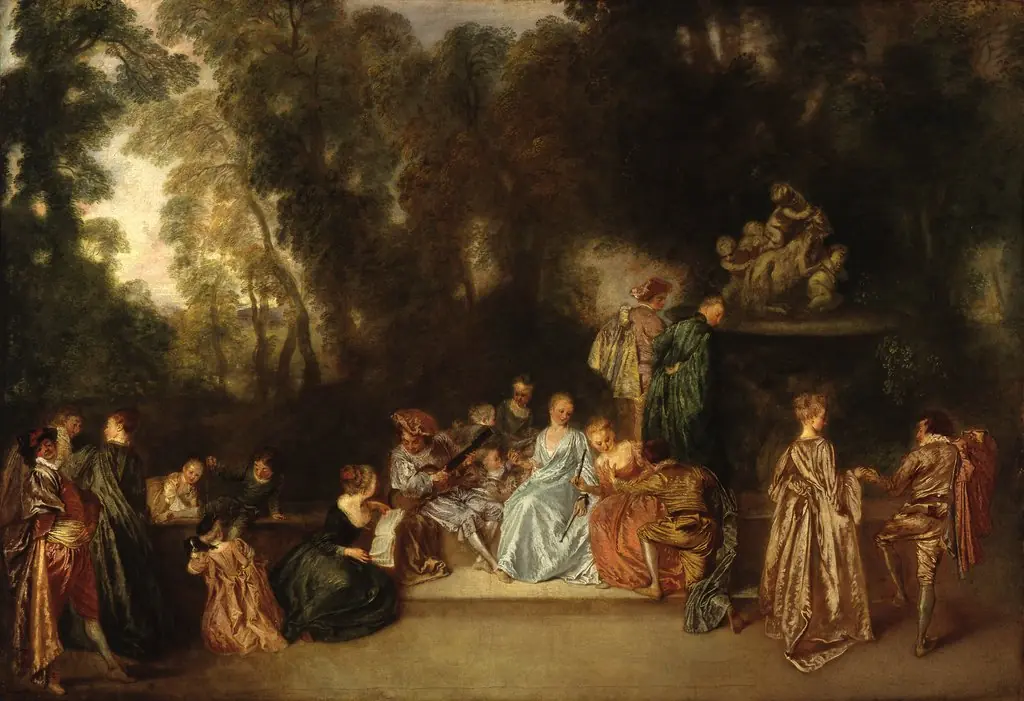
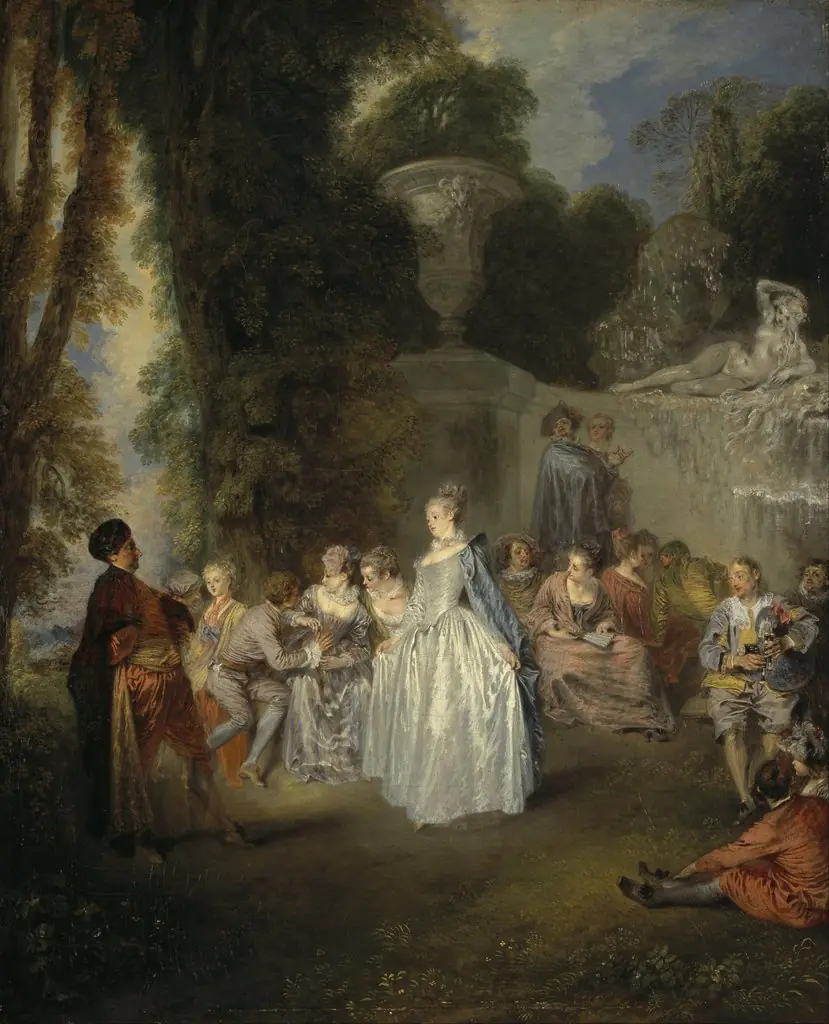
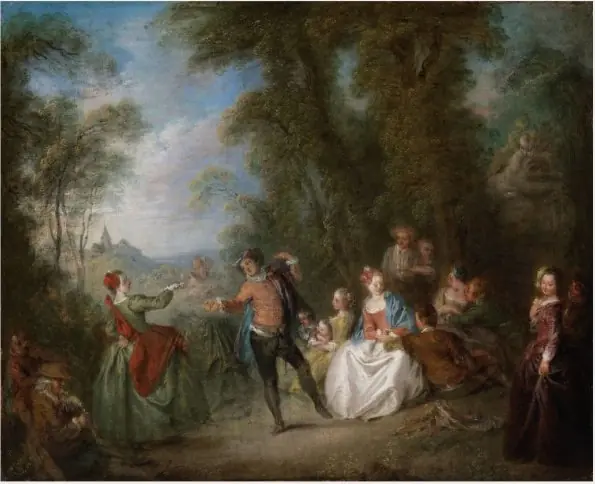
Dancers in a Pavilion is an unspecified painting by the Baroque artist Jean-Baptiste Pater. It dates from 1724 and is held in the collection of the Cleveland Museum of Art.
About this work
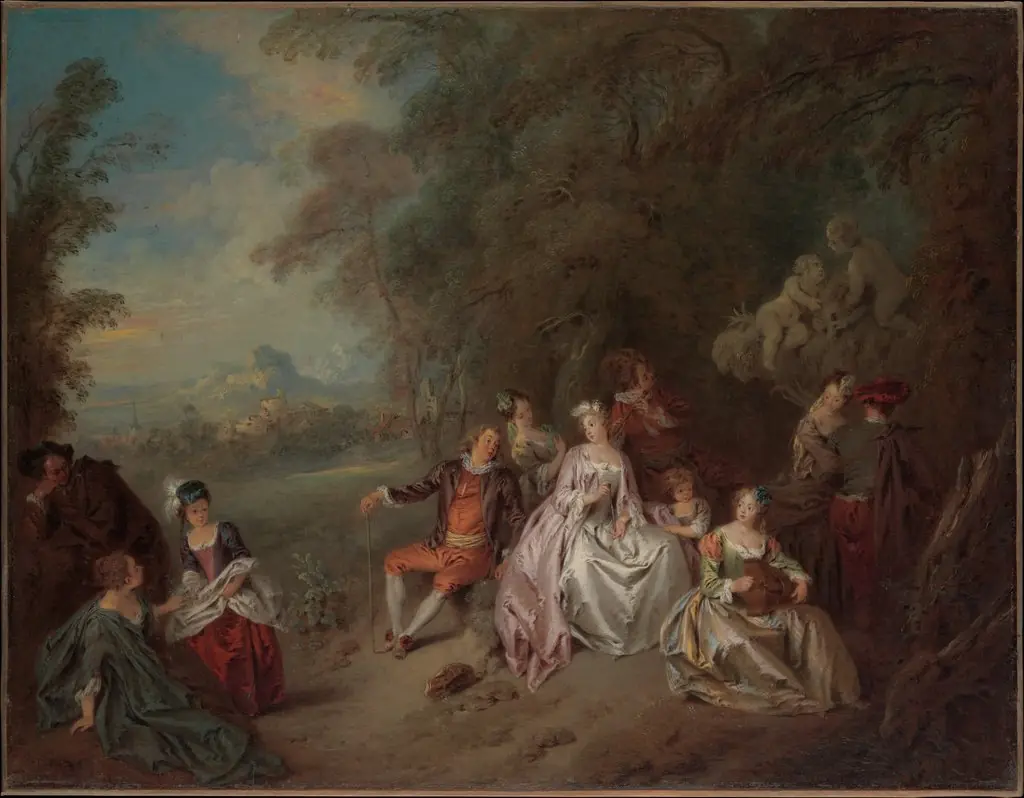
You see a group of finely dressed men and women lounging in a garden pavilion, chatting, flirting, and listening to music.
You see a group of finely dressed men and women lounging in a garden pavilion, chatting, flirting, and listening to music.
Pater painted these scenes after his teacher, Watteau, died. He copied Watteau’s style so well that buyers couldn’t always tell the difference. The soft light and fluttering fabrics make the party feel light and easy—like a dream of aristocratic life.
Look up the subject: france, 18th century.
Overview
Jean-Baptiste Pater’s canvas presents a leisurely gathering within a garden pavilion, where elegantly attired men and women converse, flirt, and listen to music. The scene captures the refined atmosphere of aristocratic recreation in early eighteenth‑century France, emphasizing the genteel pleasures of social interaction and dance.
Subject & Meaning
At the centre of the composition a couple appears to be executing a minuet, a dance associated with courtly flirtation and subtle courtship. Their poised gestures and attentive gazes suggest a moment of intimate exchange, reflecting the fête galante’s preoccupation with love, conversation, and the art of polite amusement.
Technique & Style
Pater adopts the delicate palette and airy brushwork characteristic of his mentor Antoine Watteau, rendering soft illumination and billowing fabrics that lend the scene a dream‑like quality. The subtle modeling of figures and the harmonious integration of architecture and landscape demonstrate his skill in emulating the Rococo aesthetic.
History & Provenance
After Watteau’s death in 1721, Pater completed unfinished works and produced copies of his master’s compositions, positioning himself to meet the continued demand for fête galante paintings. This work, a pastiche of several Watteau motifs, was marketed to collectors who often could not distinguish Pater’s hand from that of his teacher.
Context
The painting belongs to the broader cultural practice of aristocratic fêtes, elaborate entertainments designed to provide respite from the rigidity of court life. Such gatherings celebrated music, dance, and conversation, embodying the social ideals of the French elite during the early 1700s.
Artist & collection
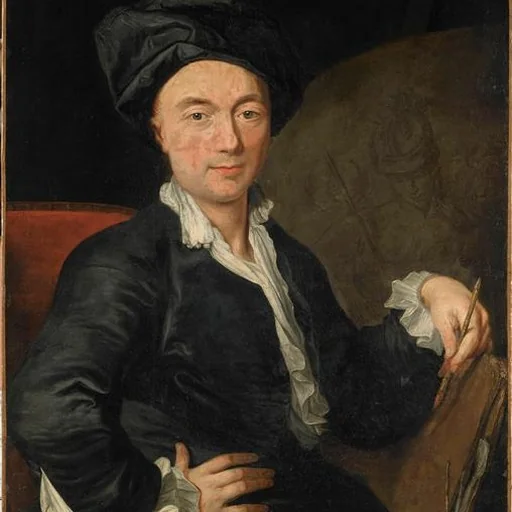
Artist
Jean-Baptiste Pater (December 29, 1695 – July 25, 1736) was a French rococo painter.