Artwork
The Conversion of Saint Paul
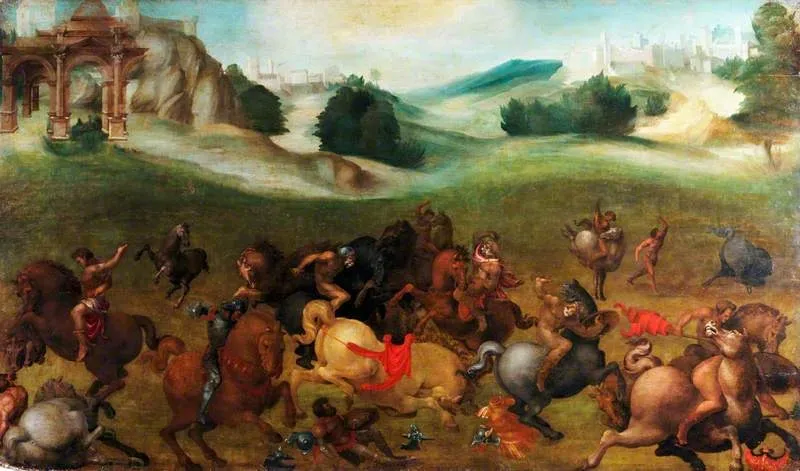
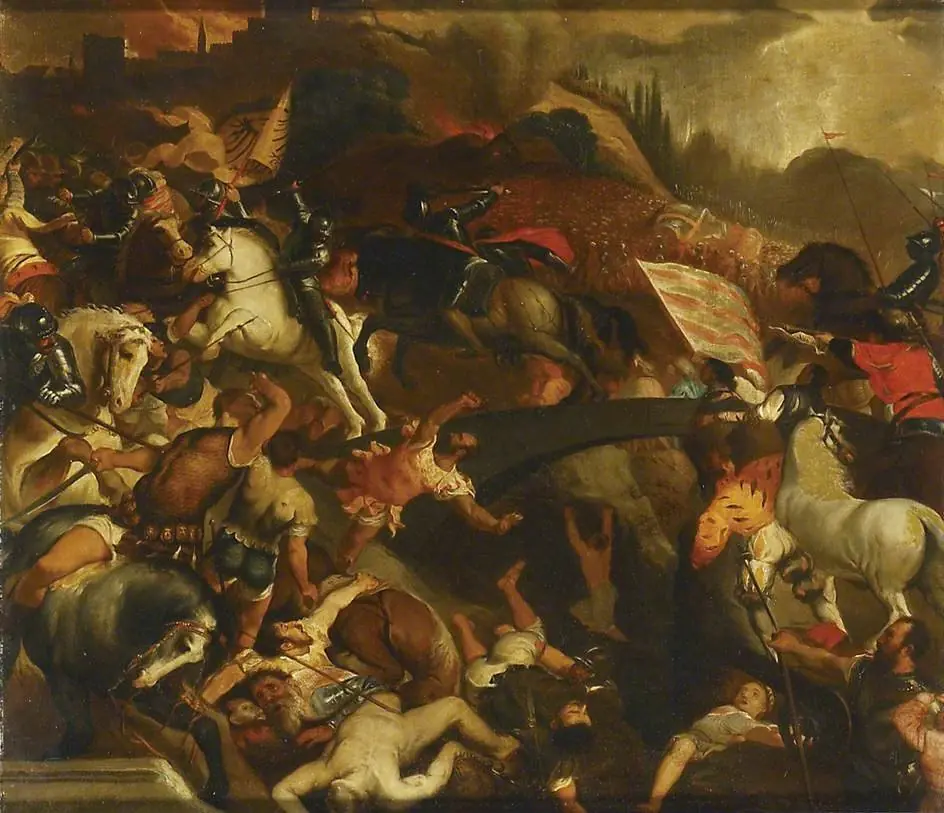
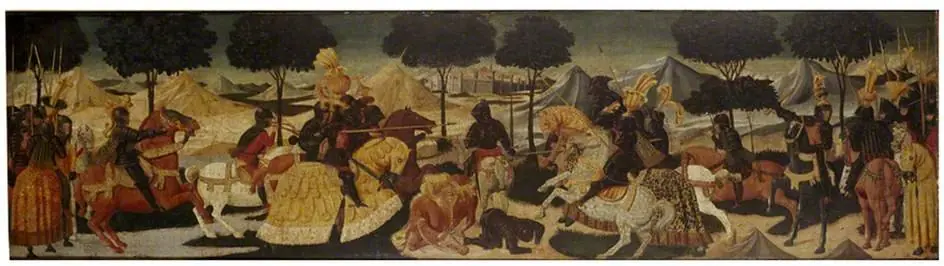
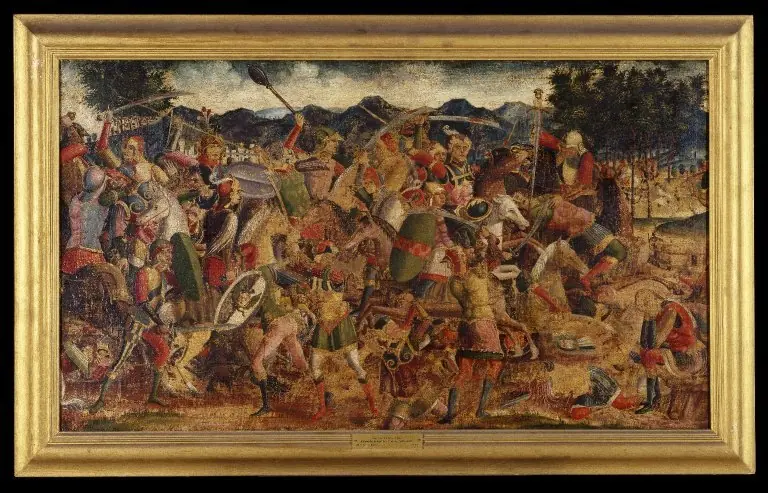
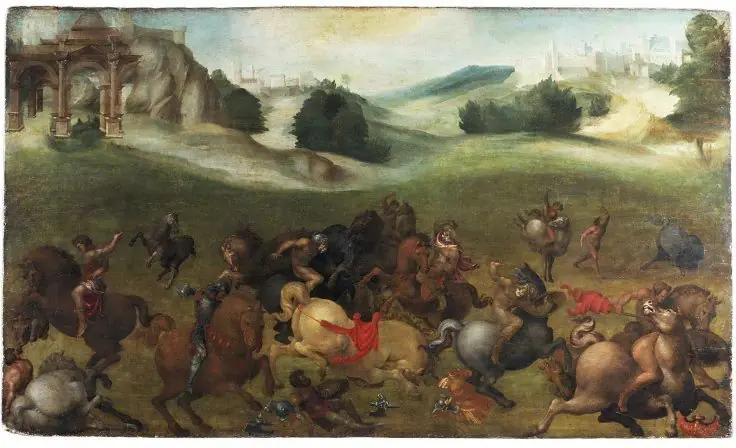
The Conversion of Saint Paul is an oil painting by the Mannerist artist Giovanni Francesco Rustici. It dates from 1525 and is held in the collection of the Victoria and Albert Museum.
About this work
Overview
Created in 1525 by Florentine artist Giovanni Francesco Rustici, this oil painting portrays the dramatic moment of Saint Paul’s conversion. Executed during the early Mannerist era, the work is part of the Victoria and Albert Museum’s collection and reflects Rustici’s lifelong engagement with biblical themes.
Subject & Meaning
The composition captures the instant when a horse‑mounted figure, identified as Paul, is struck by divine light. His outstretched arms and the startled reactions of surrounding riders convey the sudden spiritual awakening that defines the narrative of Paul’s transformation from persecutor to apostle.
Technique & Style
Rustici employs a vivid palette that juxtaposes golden‑brown tones on the armor and horses with cooler blues and greens in the sky and distant architecture. The brushwork emphasizes kinetic energy, freezing the rearing animals and tense postures of the figures, a hallmark of the expressive Mannerist approach.
History & Provenance
Trained in the workshop of Andrea del Verrocchio, Rustici later assisted Leonardo da Vinci on bronze projects for the Florence Baptistery, experiences that informed his compositional confidence. The painting entered the Victoria and Albert Museum’s holdings in the early twentieth century, where it remains on display.
Context
The work reflects the period’s fascination with dramatic religious episodes, aligning with Counter‑Reformation interests in vivid visual storytelling. Rustici’s background in both painting and sculpture allowed him to render the scene with a sculptural sense of volume and movement, typical of Florentine Mannerist art.
Artist & collection
Artist
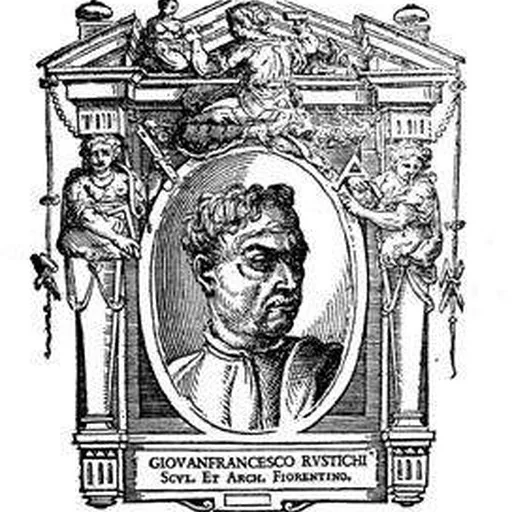
Giovan Francesco Rustici, or Giovanni Francesco Rustici, (1475–1554) was an Italian Renaissance painter and sculptor.