Artwork
Goats against landscape
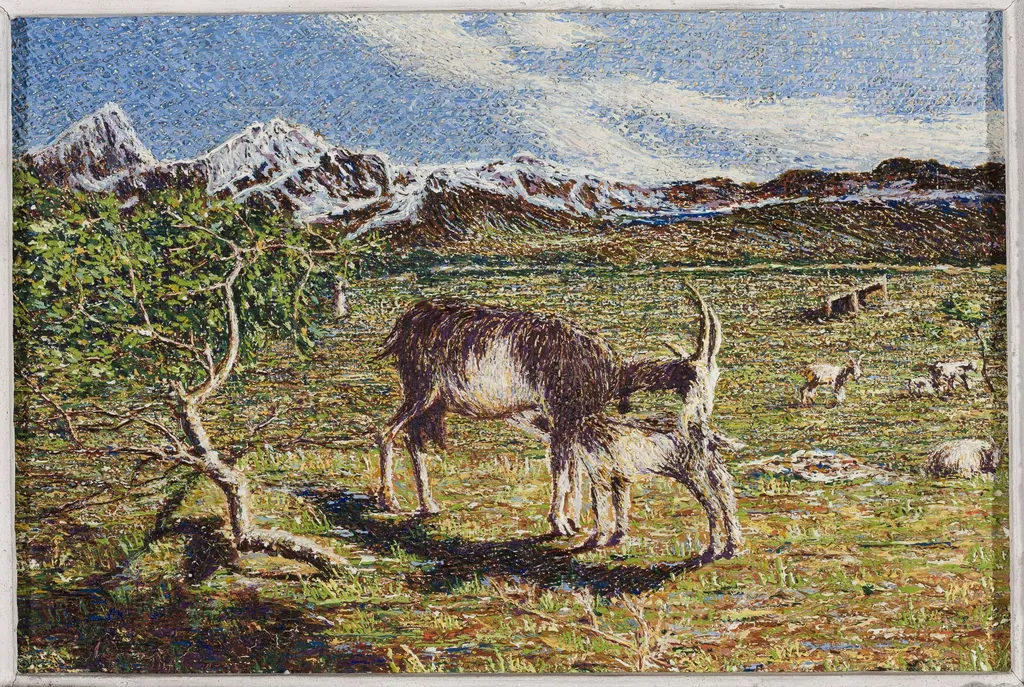
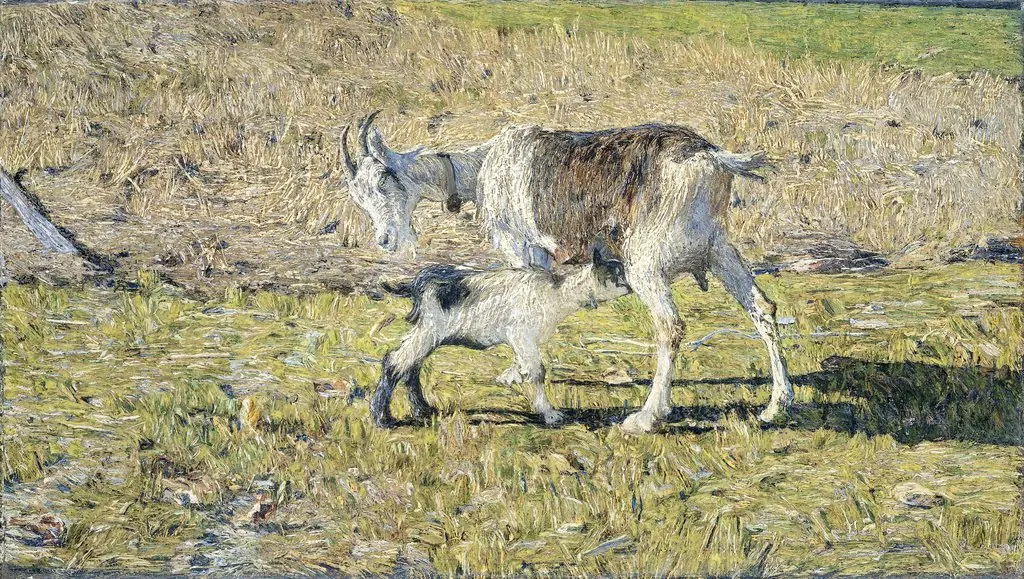
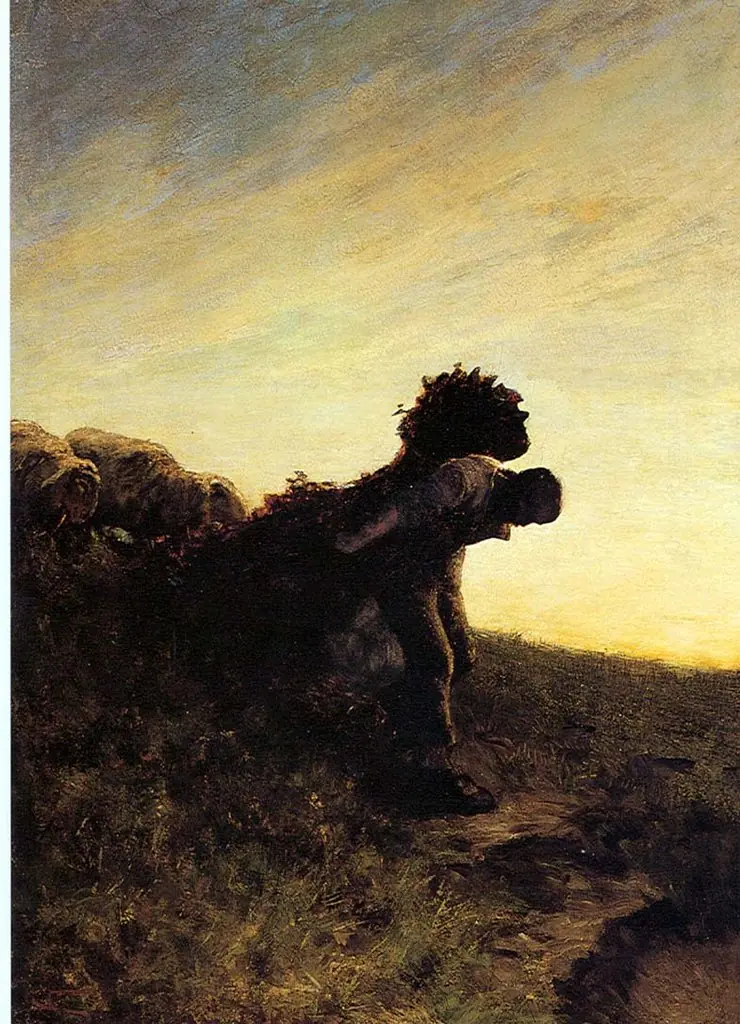
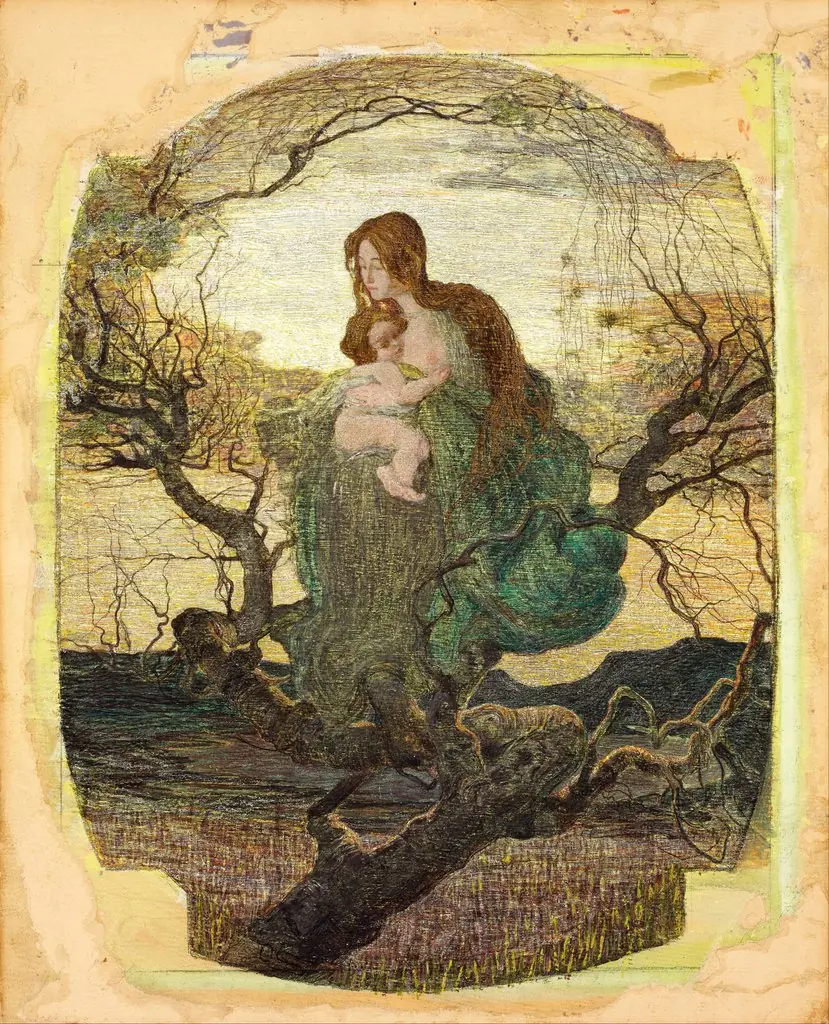
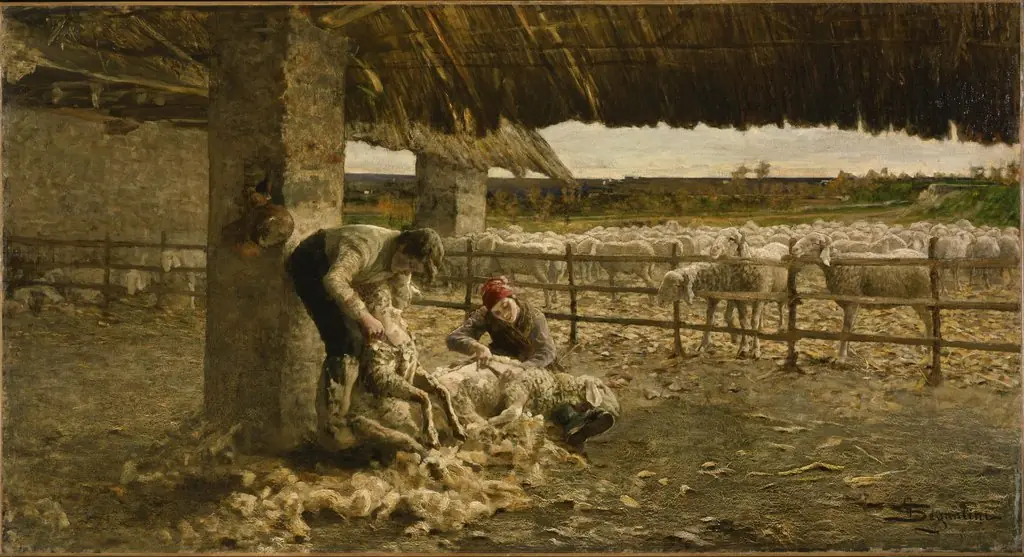
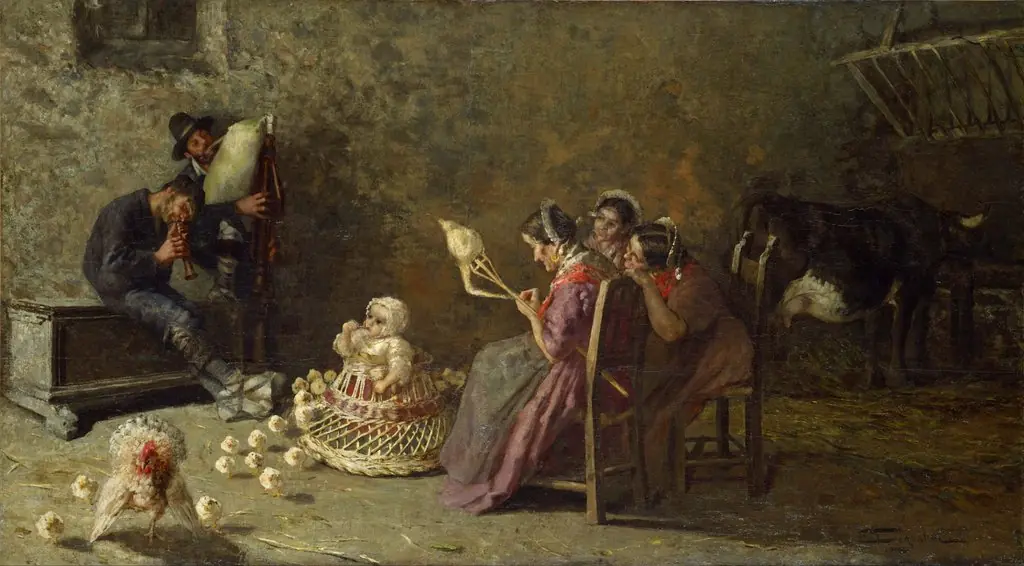
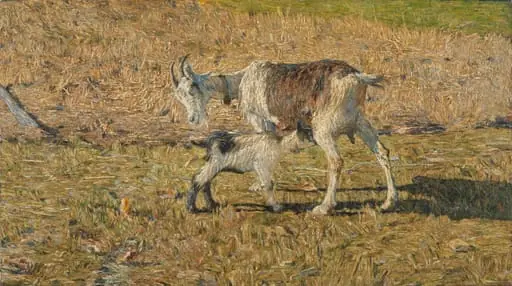
Goats against landscape is an oil painting by the Post-Impressionist artist Giovanni Segantini. It dates from 1896 and is held in the collection of the National Museum in Warsaw.
About this work
Overview
Painted in 1896 by Giovanni Segantini, *Goats against Landscape* is an oil-on-canvas work reflecting the artist’s deep engagement with Alpine environments.
Painted in 1896 by Giovanni Segantini, *Goats against Landscape* is an oil-on-canvas work reflecting the artist’s deep engagement with Alpine environments. Though born in Austria, Segantini spent much of his career in the Italian and Swiss Alps, where he developed a distinctive style merging natural observation with spiritual undertones. The painting is part of the National Museum in Warsaw’s collection and exemplifies his mature phase, bridging post-Impressionism and Symbolism.
Subject & Meaning
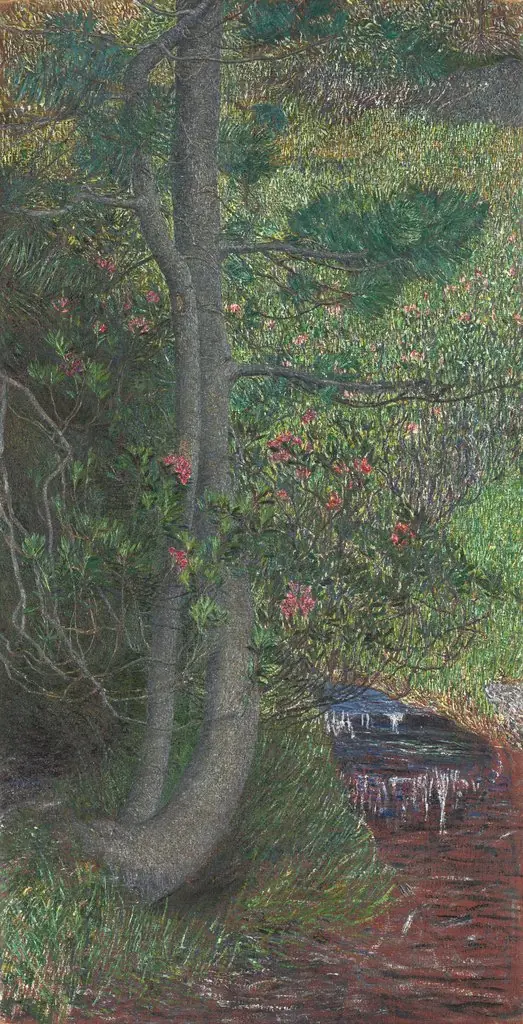
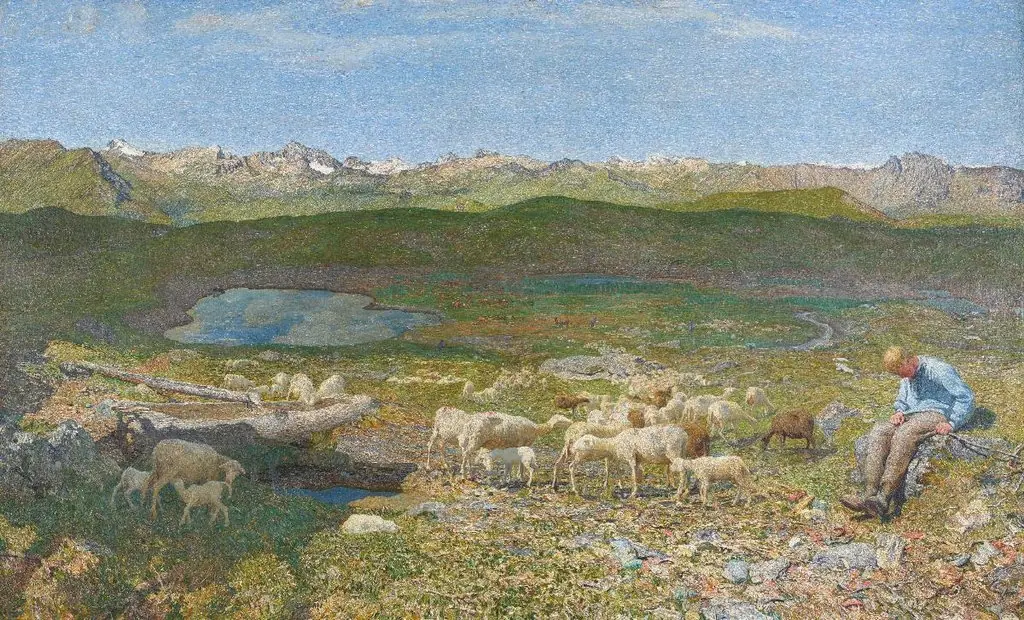
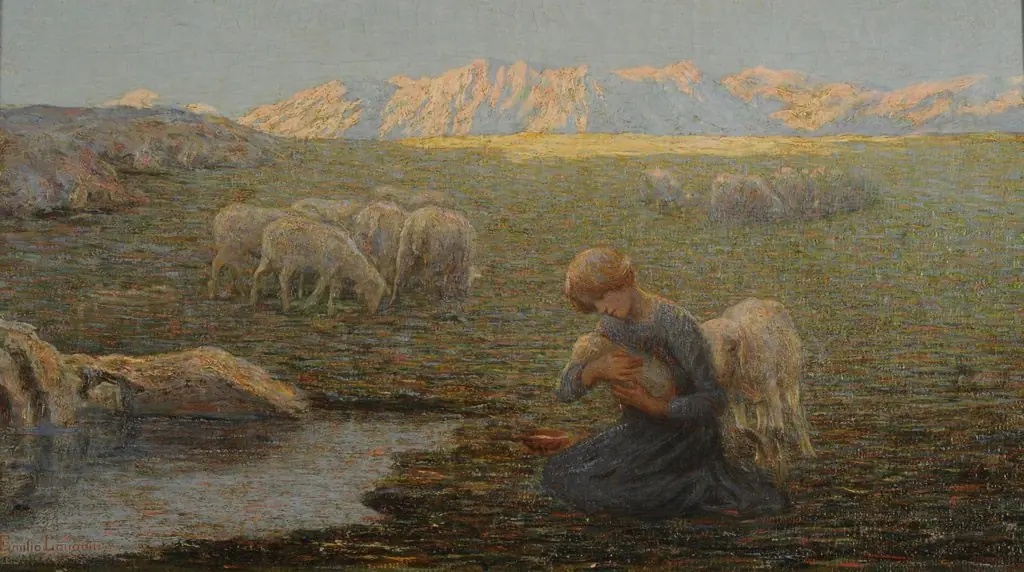
The scene portrays a quiet Alpine meadow where goats graze peacefully, framed by distant peaks and a soft sky. Rather than a mere pastoral record, the composition suggests a contemplative harmony between animals and nature. Segantini imbued such scenes with symbolic weight, implying a quiet reverence for rural life and the sublime presence of the mountains, aligning with Symbolist ideals of nature as a spiritual refuge.
Technique & Style
Segantini employed Divisionist brushwork, applying small, distinct strokes of pure color to build form and luminosity. The visible texture of the paint enhances the tactile quality of grass, rock, and foliage. Light is carefully modulated to suggest atmospheric depth, with cool blues and warm earth tones interacting to evoke morning clarity. The technique avoids soft blending, instead relying on optical mixing to heighten the scene’s radiant stillness.
History & Provenance
Created during Segantini’s final years, the painting was completed shortly before his death in 1899. It entered the National Museum in Warsaw’s collection in the early 20th century, likely through acquisitions of European art during a period of expanding institutional holdings. Its journey from the Alps to Poland reflects broader patterns of art circulation in Europe after the 19th century, though specific acquisition details remain undocumented.
Context
In the late 19th century, artists across Europe turned to rural life as a counterpoint to industrialization. Segantini’s work aligned with this trend but stood apart through his scientific approach to color and light, influenced by contemporary optical theories. His Alpine subjects resonated with broader cultural interests in mountain spirituality and national identity, particularly in regions like Lombardy and the Engadin Valley.
Legacy
Segantini’s fusion of scientific color theory with poetic subject matter influenced later Symbolist and modernist painters seeking emotional depth through structured technique. While less widely known than his French or Italian contemporaries, his work remains a significant example of how regional landscapes could carry universal themes. *Goats against Landscape* continues to be studied for its quiet intensity and technical precision.
Artist & collection
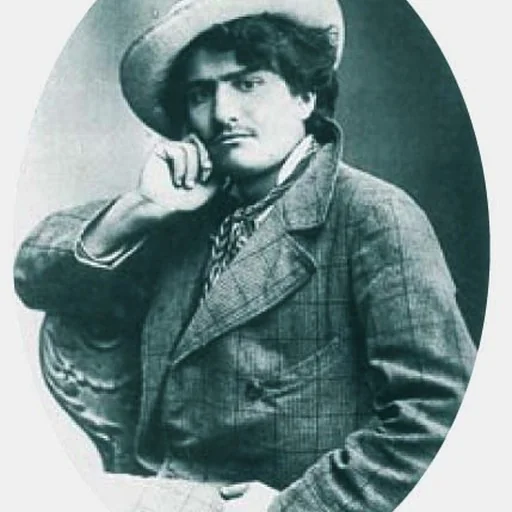
Artist
Giovanni Segantini (15 January 1858 – 28 September 1899) was an Austrian then stateless painter known for his large pastoral landscapes of the Alps.