Artwork
Valmont and Emilie
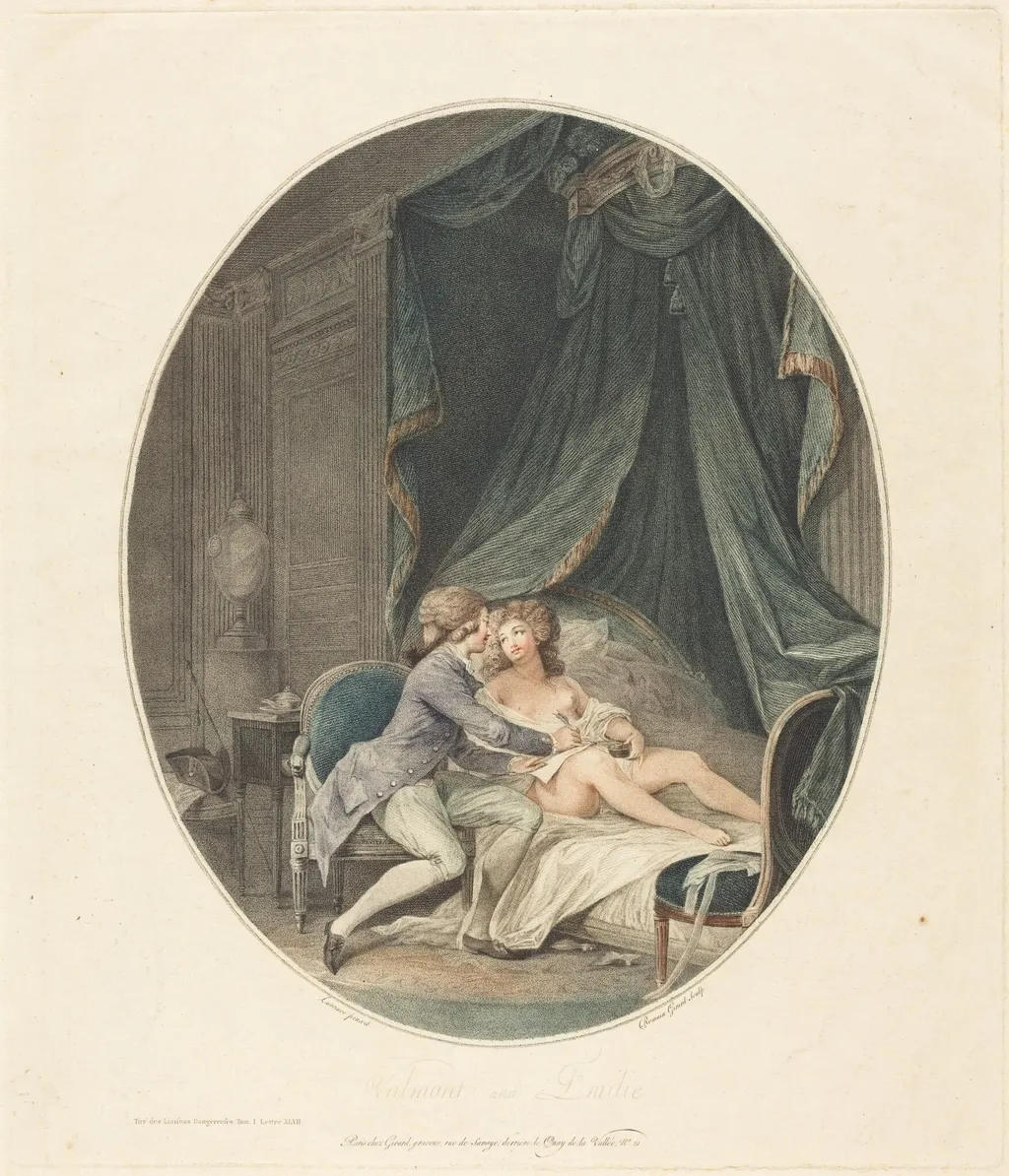
Valmont and Emilie is an ink print by the Romanticist artist Romain Girard. It dates from 1788 and is held in the collection of the National Gallery of Art.
About this work
Overview
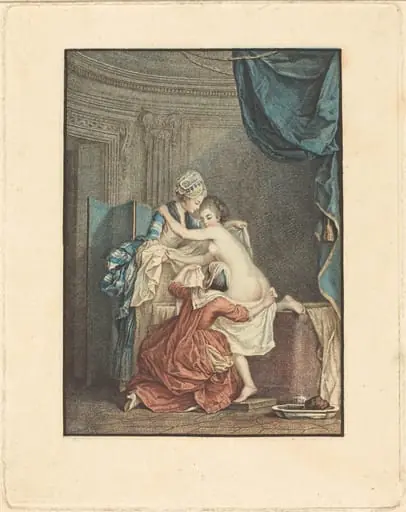
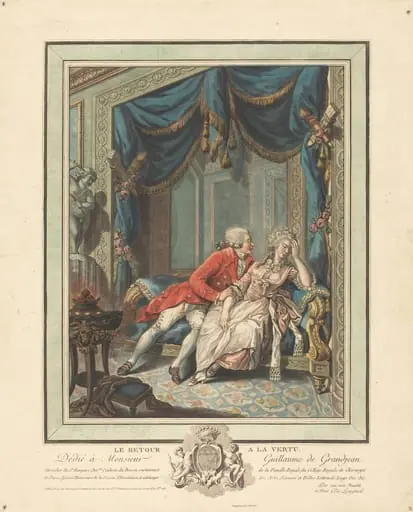
Created in 1788 by French printmaker Romain Girard, *Valmont and Emilie* is a color stipple and etching on paper. The work presents a compact interior scene rendered in muted tones, characteristic of late‑18th‑century printmaking.
Subject & Meaning
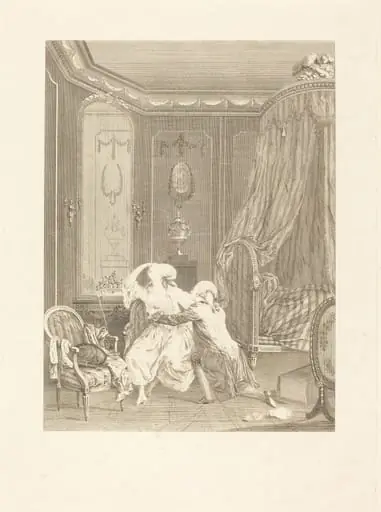
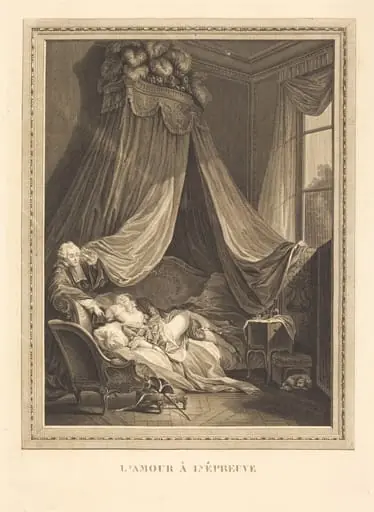
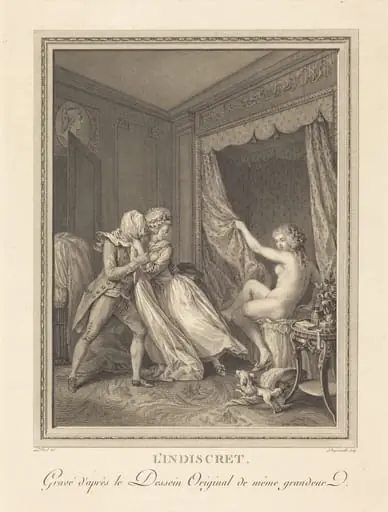
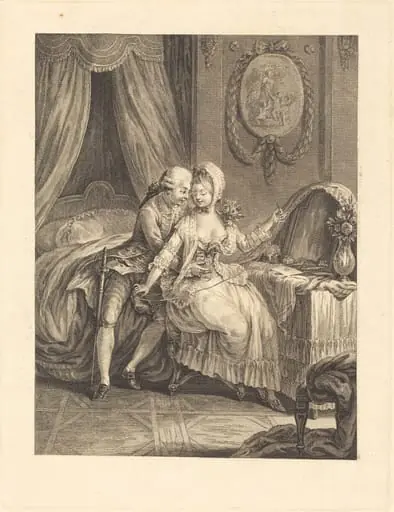
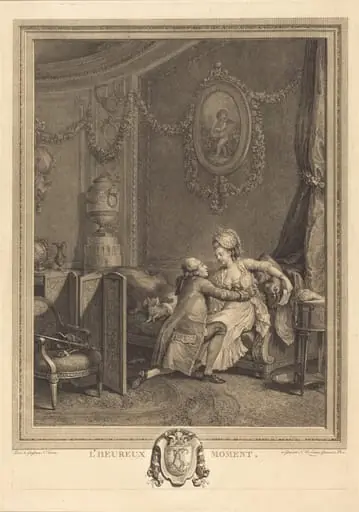
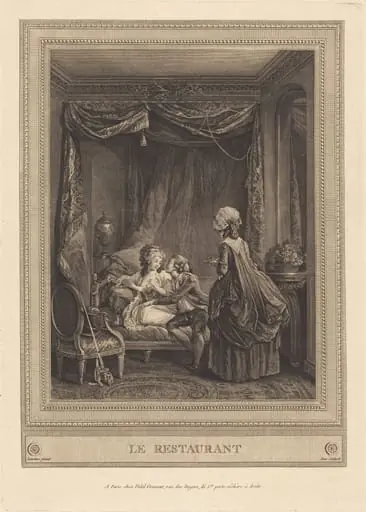
The composition depicts a man in a dark coat kneeling beside a reclining woman on a couch, while a second woman watches from a nearby seat. Heavy drapery, a lamp‑lit table, and a mirror frame the tableau, suggesting an intimate, possibly narrative moment drawn from contemporary literature.
Technique & Style
Girard combined traditional line etching with drypoint and aquatint, then applied color stippling to achieve subtle gradations of light and shadow. The interplay of etched lines and stippled washes creates a sense of depth and tactile texture within the confined interior space.
History & Provenance
The print was issued in Paris during the waning years of the Ancien Régime, a period when illustrated books and literary subjects were popular among collectors. No specific ownership records have been traced beyond its appearance in 19th‑century catalogues of French prints.
Context
The title references the characters Valmont and Émilie from Pierre Choderlos de Laclos’s novel *Les Liaisons dangereuses*, published in 1782. By the late 1780s, the novel’s scandalous themes were frequently visualized in prints, reflecting contemporary fascination with moral intrigue.
Legacy
While not as widely reproduced as other illustrations from the novel, Girard’s print exemplifies the transitional use of color stipple in French etching, marking a step toward the richer chromatic techniques that would dominate 19th‑century book illustration.
Artist & collection