Artwork
L'Indiscret
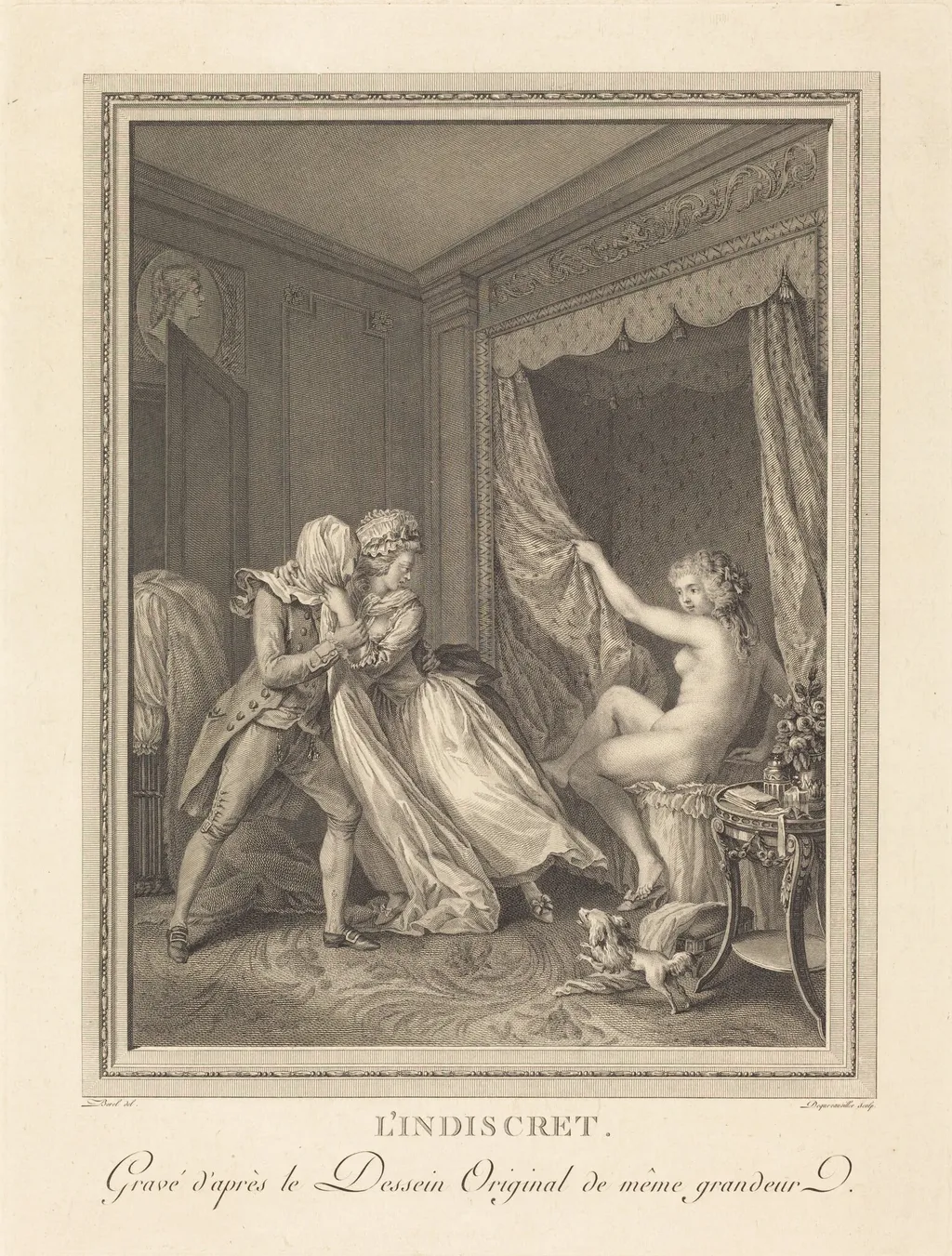
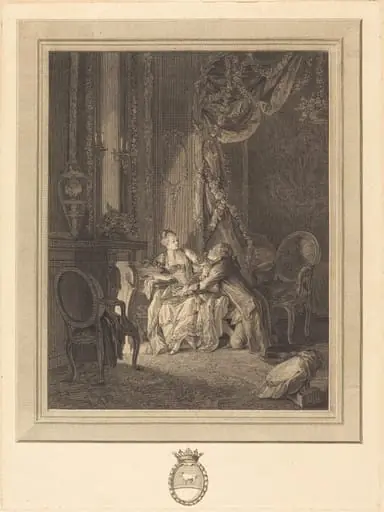
L'Indiscret is an ink print by the Romanticist artist Francois-Nicolas-Barthelemy Dequevauviller. It dates from 1786 and is held in the collection of the National Gallery of Art.
About this work
Overview
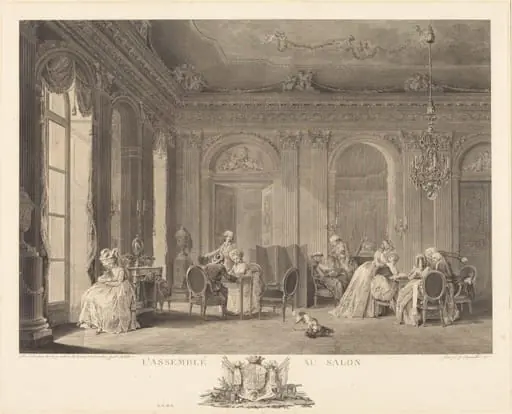
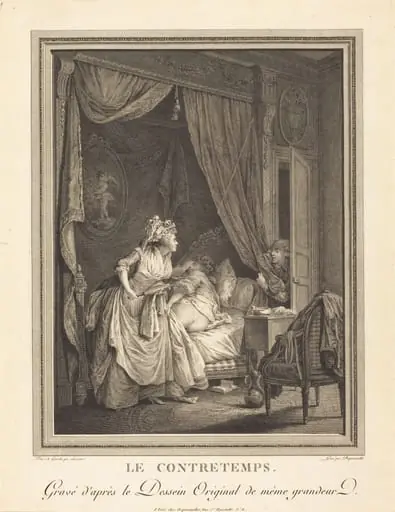
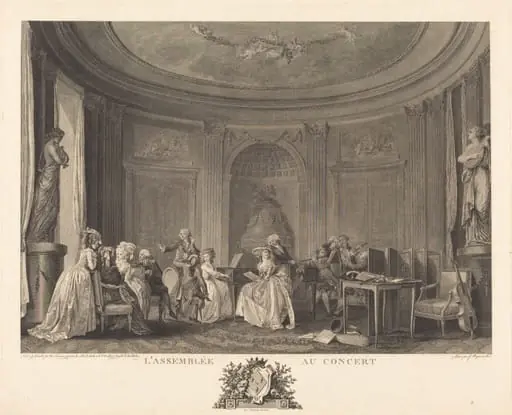
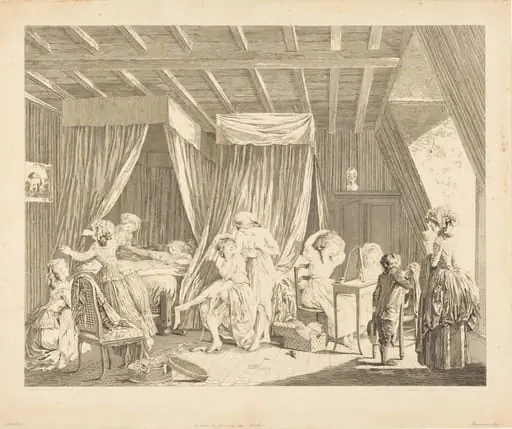
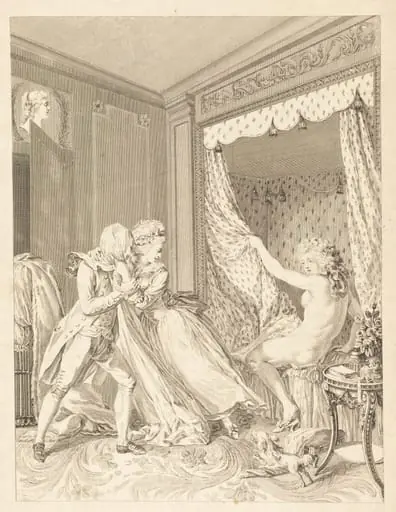
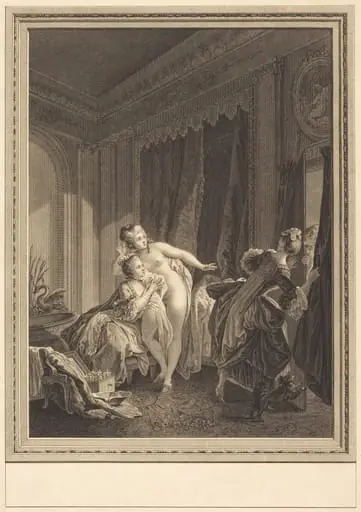
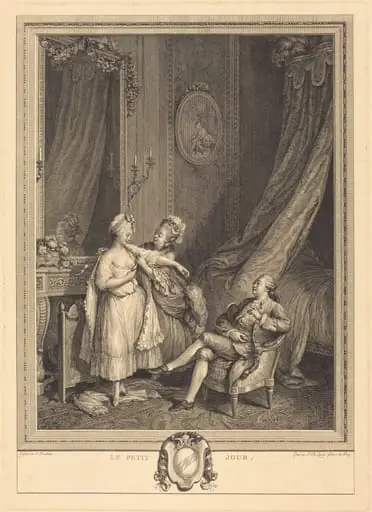
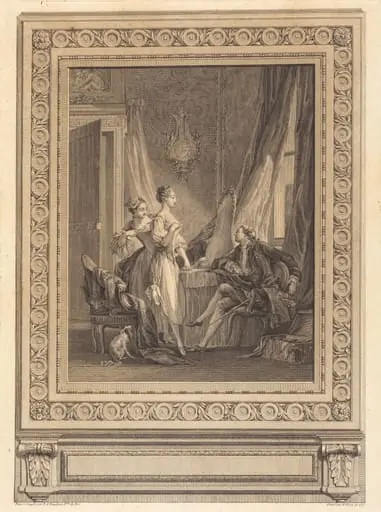
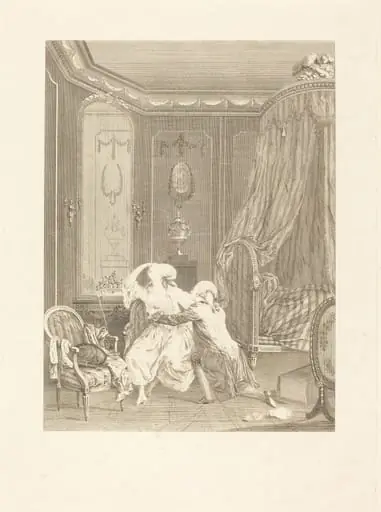
L'Indiscret is an 18th‑century print executed in 1786 by the French engraver Francois‑Nicolas‑Barthelemy Dequevauviller. Rendered as an engraving, the work presents a domestic interior populated by elegantly dressed figures and a discreetly exposed nude, all arranged to suggest a moment of private revelation.
Subject & Meaning
The composition juxtaposes a gentleman and lady in fashionable attire standing beside a draped bed with a partially concealed woman who peers from behind curtains, clutching a candle. The title, translating to “The Indiscreet,” implies an intrusion upon a secretive scene, inviting viewers to contemplate themes of voyeurism and social propriety.
Technique & Style
Dequevauviller employs fine line engraving to model forms, using delicate cross‑hatching to render soft shadows and give the figures a three‑dimensional presence. The contrast between the richly detailed costume work and the more fluid rendering of the nude underscores the artist’s skill in manipulating tonal variation within a single plate.
Context
Produced during the late Ancien Régime, the print reflects contemporary fascination with interior genre scenes that blend moralizing narratives with erotic undertones. The inclusion of ornamental moldings, a lamp‑lit table, and a domestic dog situates the image within the affluent bourgeois milieu of pre‑revolutionary France.
Legacy
While not as widely reproduced as later French prints, L'Indiscret exemplifies the technical proficiency of late‑18th‑century French engraving and contributes to the visual record of period costume and interior design. Its nuanced handling of light and shadow continues to be cited in studies of the era’s printmaking practices.
Artist & collection

Artist
Francois-Nicolas-Barthelemy Dequevauviller
Francois-Nicolas-Barthelemy Dequevauviller (1786–1786) was an artist.