Artwork
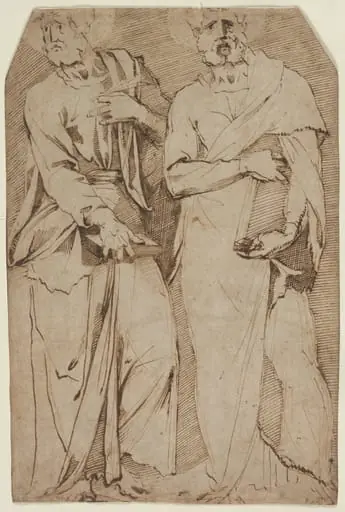
Saint Jerome and Saint Catherine of Alexandria Standing in a Landscape
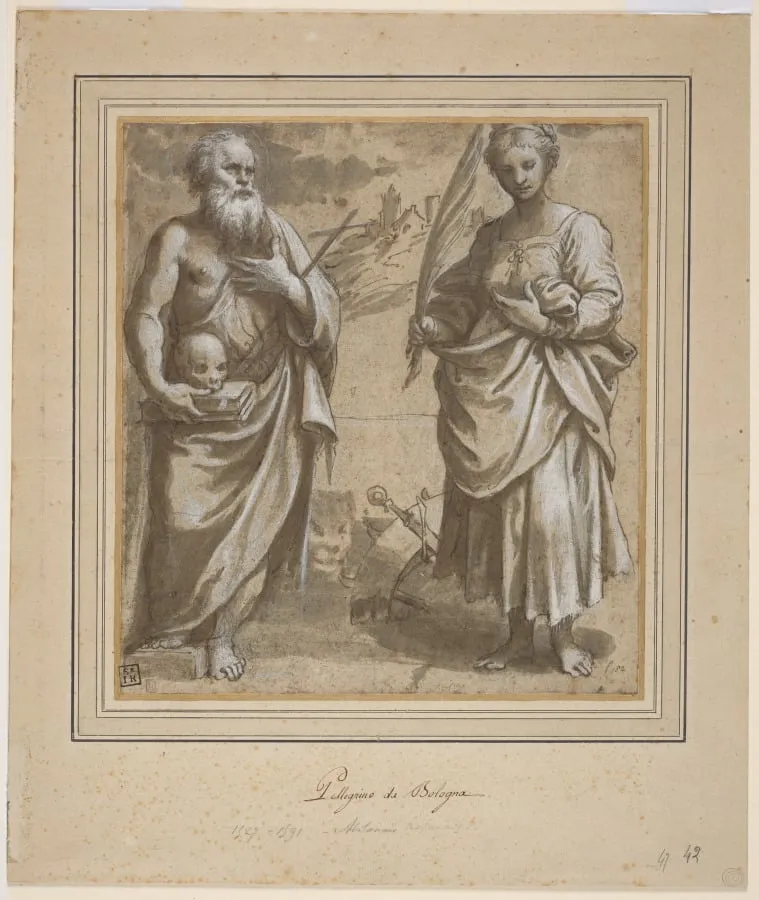
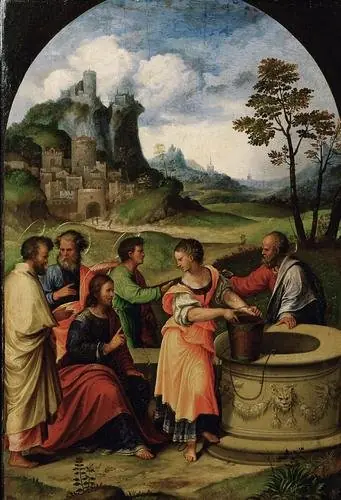
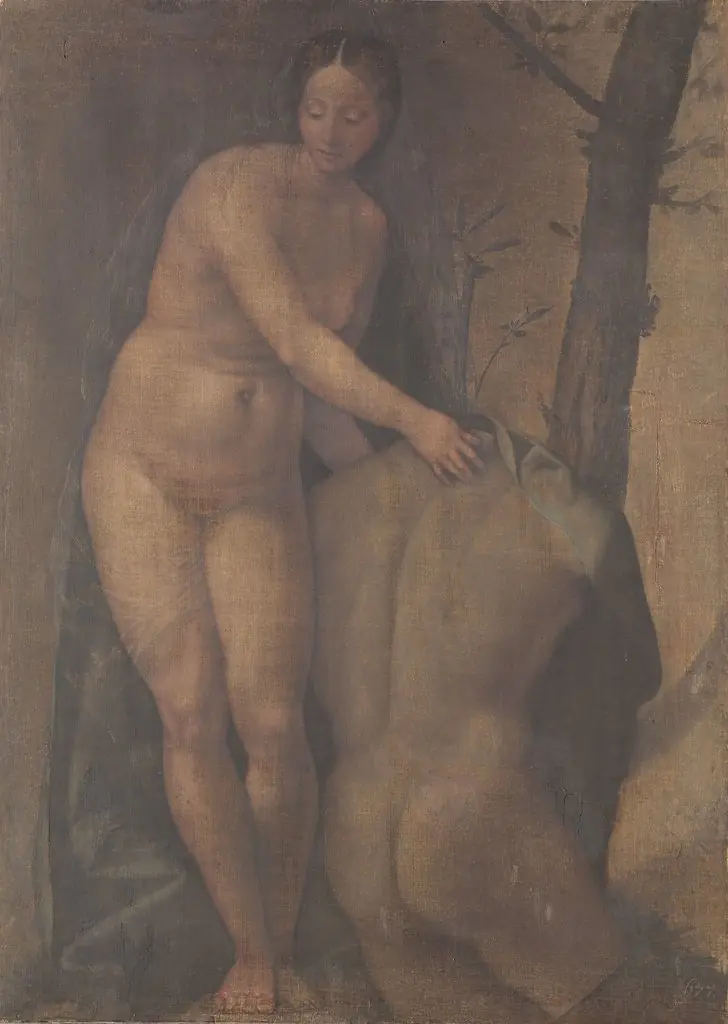
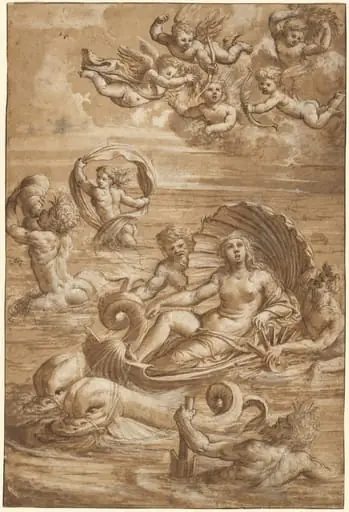
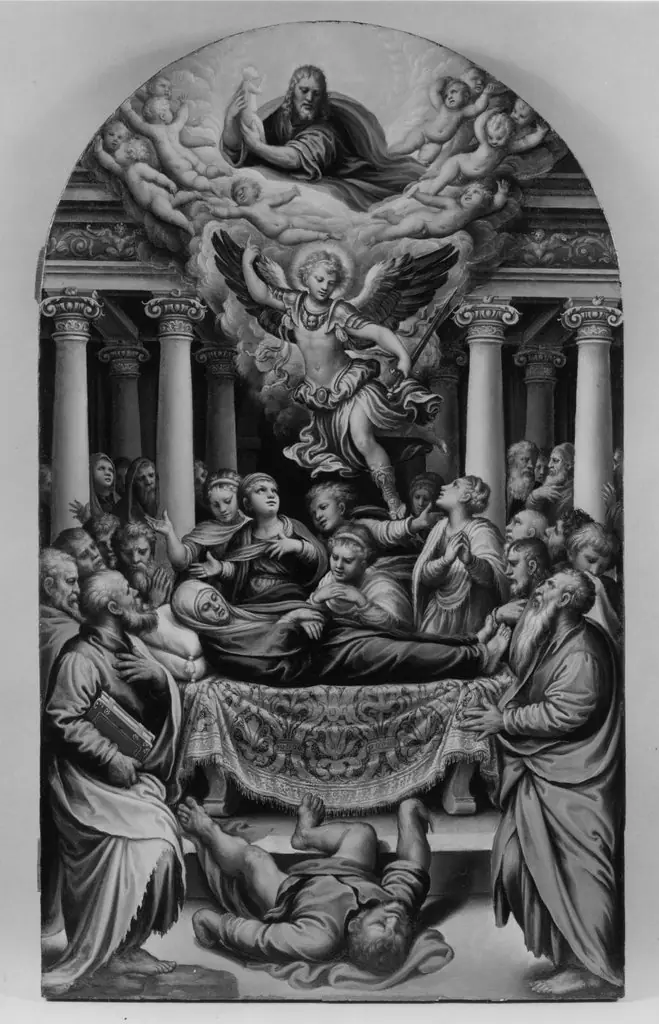
Saint Jerome and Saint Catherine of Alexandria Standing in a Landscape is a drawing by the Renaissance artist Girolamo da Treviso the Younger. It dates from 1530 and is held in the collection of the Cleveland Museum of Art.
About this work
Overview
This drawing by Girolamo da Treviso the Younger was made as a preparatory study for a larger altarpiece in the Church of Santissimo Salvatore in Bologna.
This drawing by Girolamo da Treviso the Younger was made as a preparatory study for a larger altarpiece in the Church of Santissimo Salvatore in Bologna. Executed on colored paper, it employs ink, wash, and white gouache to define two standing saints within a quiet, rolling landscape. The composition follows the sacra conversazione tradition, which places holy figures in harmonious, non-narrative proximity, emphasizing spiritual presence over dramatic action.
Subject & Meaning
Saint Jerome, identifiable by the book he holds and the faint outline of a lion at his feet, represents scholarship and the translation of sacred texts. Saint Catherine, leaning on the broken wheel of her martyrdom, symbolizes wisdom and divine endurance. Their coexistence in a tranquil setting reflects a theological ideal: saints united in contemplation, not dialogue, embodying a shared sacred space beyond earthly time.
Technique & Style
The artist used ink wash to model the figures with subtle gradations, while white highlights accentuate volume and texture against the colored paper. The lion is rendered with loose, almost sketchlike brushwork, contrasting with the more defined forms of the saints. This interplay of precision and spontaneity creates a sculptural presence, suggesting three-dimensionality without heavy outline, echoing the soft transitions associated with sfumato.
History & Provenance
Created during Girolamo’s time in Bologna, the drawing served as a working model for a commissioned altarpiece at Santissimo Salvatore. Though the final painting is now lost, this study survives as evidence of his process. Its preservation suggests it was valued not merely as a draft but as a refined artistic statement in its own right, reflecting the workshop practices of early 16th-century Italy.
Context
The sacra conversazione genre, pioneered in Venetian altarpieces, spread across Italy as a way to depict holy figures in unified, serene settings. Girolamo adapted this format to a drawn medium, aligning with Bolognese tendencies toward naturalism and spatial coherence. The landscape, though simplified, grounds the saints in a tangible world, bridging devotional tradition with emerging Renaissance ideals of observed nature.
Legacy
This drawing exemplifies how preparatory studies could achieve aesthetic completeness independent of their final paintings. Its careful balance of spontaneity and control influenced later draftsmen in Bologna, where the integration of landscape and sacred figures became a hallmark of regional practice. Though not widely known, it remains a quiet testament to the intellectual rigor of workshop-based artmaking in the early Renaissance.
Artist & collection
Artist
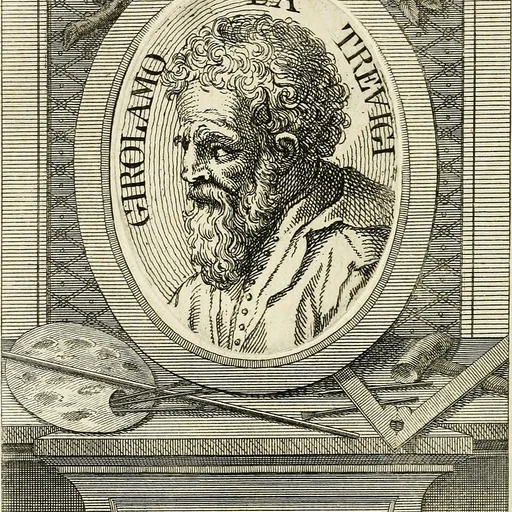
Girolamo da Treviso the Younger
Girolamo da Treviso (Treviso, 1498 – Boulogne-sur-Mer, September 10, 1544), also known as Girolamo di Tommaso da Treviso the Younger and Girolamo Trevigi, was an Italian Renaissance sculptor and painter in Henry VIII's court in England.